
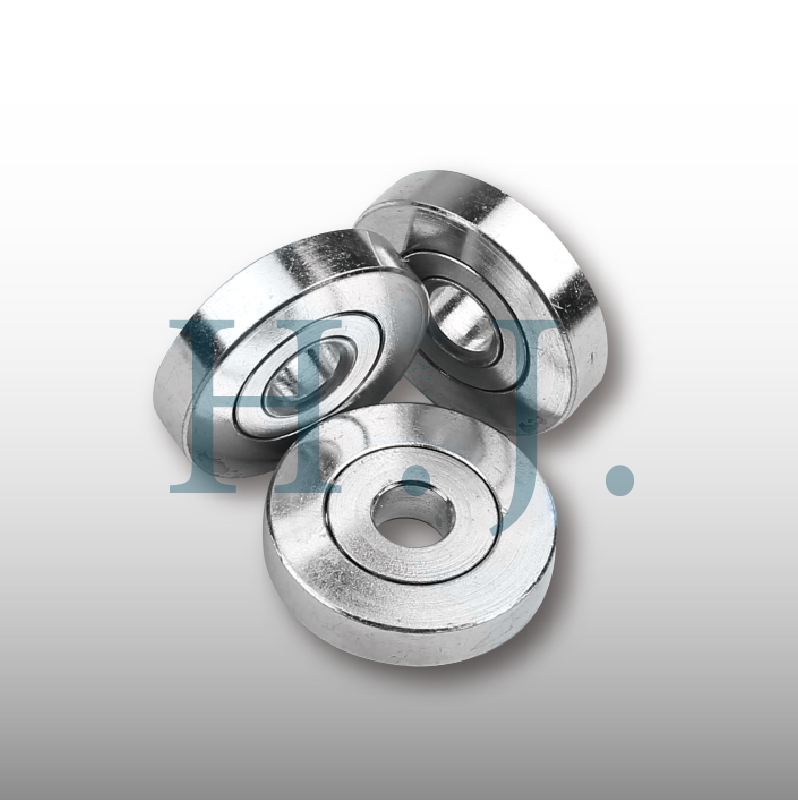
 Conveyor roller bearings manufacturer
Conveyor Roller Bearings Manufacturer – Custom Bearing Solutions for Conveyor Rollers
Choosing a reliable conveyor roller bearings manufacturer is important for conveyor equipment manufacturers, roller manufacturers, packaging machinery companies, material-handling system integrators, warehouse automation suppliers, and industrial machinery manufacturers. Conveyor roller bearings are small mechanical components, but they directly influence roller movement, friction, noise, load capacity, operating efficiency, and service life.
Conveyor systems are widely used in factories, warehouses, distribution centers, packaging lines, assembly lines, logistics facilities, food-processing plants, and automated production systems. Depending on the application, hundreds or even thousands of rollers may operate within a single conveyor installation. Consistent bearing quality is therefore essential for reliable conveyor operation.
HSIAN JI BEARING CO., LTD. is a Taiwan bearing manufacturer specializing in bearing solutions for different mechanical applications. Its product portfolio includes ball bearings, slide bearings, plastic bearings, stamped bearings, thrust bearings, special bearings, and non-standard bearings. Conveyor equipment is among the applications identified in HSIAN JI's product information.
For customers looking for a conveyor roller bearings manufacturer, HSIAN JI can evaluate standard, special, custom, and non-standard bearing requirements according to engineering drawings, physical samples, bearing dimensions, roller dimensions, shaft diameter, load, rotational speed, operating environment, materials, and production quantities.
What Are Conveyor Roller Bearings?
Conveyor roller bearings are bearings installed inside or at the ends of conveyor rollers.
They allow the roller tube to rotate around a shaft with reduced friction while supporting the load transferred through the conveyor.
A typical conveyor roller assembly may include:
-
Roller tube
-
Bearing
-
Shaft
-
Axle
-
Bearing housing
-
End cap
-
Retaining components
The exact structure varies according to the conveyor design.
What Does a Conveyor Roller Bearings Manufacturer Do?
A conveyor roller bearings manufacturer produces bearings designed or selected for roller-based conveyor systems.
Manufacturing requirements may include:
-
Standard bearing sizes
-
Custom bearing dimensions
-
Special bearing structures
-
Non-standard bearings
-
Plastic bearing components
-
Stamped bearing designs
-
OEM bearing production
-
Replacement bearings
The manufacturer should understand how bearing dimensions interact with the roller tube, shaft, housing, load, and operating speed.
Why Are Bearings Important in Conveyor Rollers?
A conveyor roller rotates repeatedly whenever products or materials move across the conveyor.
Suitable bearings help provide:
-
Low rolling resistance
-
Smooth rotation
-
Stable roller movement
-
Load support
-
Reduced wear
-
Lower noise
-
Reliable repeated operation
Poor bearing selection can increase friction, heat, vibration, noise, and maintenance requirements.
Ball Bearings for Conveyor Rollers
Ball bearings are widely used in rotating machinery because rolling balls reduce friction between moving bearing components.
In conveyor rollers, ball bearings can support smooth rotation around the roller shaft.
Important parameters include:
-
Inner diameter
-
Outer diameter
-
Width
-
Radial load
-
Axial load
-
Rotational speed
-
Lubrication
-
Sealing
The bearing must also fit accurately inside the roller assembly.
Slide Bearings for Conveyor Equipment
Not every conveyor mechanism requires a conventional rolling bearing.
Slide bearings can support and guide moving components where sliding or linear motion is required.
Potential applications include:
-
Conveyor guides
-
Positioning systems
-
Transfer mechanisms
-
Linear moving components
-
Packaging machinery
HSIAN JI produces slide bearings in addition to conventional ball-bearing solutions.
Plastic Bearings for Conveyor Rollers
Plastic bearings can provide useful characteristics in selected conveyor environments.
Potential advantages include:
-
Corrosion resistance
-
Low weight
-
Reduced noise
-
Low friction
-
Material flexibility
Plastic bearing solutions may be considered for humid environments, lightweight conveyors, or applications where conventional steel corrosion is undesirable.
Actual suitability depends on load, speed, temperature, wear, and chemical exposure.
Stamped Bearings for Conveyor Rollers
Stamped bearings can offer compact and economical structures for certain roller designs.
Potential applications include:
-
Light-duty rollers
-
Guide rollers
-
Packaging conveyors
-
Material-handling equipment
-
Compact conveyor mechanisms
The bearing configuration should be evaluated according to the roller and shaft structure.
Custom Conveyor Roller Bearings
Standard bearing sizes are not suitable for every conveyor roller.
Custom requirements may involve:
-
Special inner diameter
-
Special outer diameter
-
Custom width
-
Flanged geometry
-
Integrated housing features
-
Special materials
-
Application-specific structures
Custom bearings can help machinery manufacturers design the roller around the required installation space and operating conditions.
Small Conveyor Roller Bearings
Compact conveyors and packaging equipment may require small bearings.
Small conveyor roller bearings can be used where:
-
Roller diameter is limited
-
Installation space is restricted
-
Product size is small
-
Conveyor design is compact
Accurate dimensions become especially important as bearing and roller sizes decrease.
Heavy-Duty Conveyor Roller Bearings
Heavy industrial conveyors may transport:
-
Metal components
-
Machinery parts
-
Containers
-
Crates
-
Industrial products
-
Heavy assemblies
Bearing selection should consider the actual load transmitted through each roller.
Important information includes:
-
Total conveyor load
-
Load per roller
-
Number of supporting rollers
-
Radial load
-
Shock load
-
Speed
The roller tube, shaft, and bearing should be evaluated together.
High-Speed Conveyor Roller Bearings
High-speed packaging, sorting, and automation systems can require rollers to rotate rapidly.
High-speed bearing selection should consider:
-
RPM
-
Bearing precision
-
Lubrication
-
Heat generation
-
Load
-
Balance
Customers should provide actual operating speed rather than simply specifying "high speed."
Low-Noise Conveyor Roller Bearings
Noise can be an important consideration in automated warehouses, packaging facilities, electronics factories, offices, and other indoor environments.
Bearing noise can be influenced by:
-
Bearing precision
-
Lubrication
-
Roller material
-
Shaft alignment
-
Bearing fit
-
Contamination
Low-noise requirements should be identified during product development.
Sealed Conveyor Roller Bearings
Conveyor systems may operate in environments containing:
-
Dust
-
Fibers
-
Packaging debris
-
Dirt
-
Moisture
Sealed bearing configurations can help reduce contamination entering the bearing.
However, sealing can also influence friction and operating speed.
The correct configuration depends on the application.
Corrosion-Resistant Conveyor Roller Bearings
Some conveyors operate in wet, humid, outdoor, or chemically exposed environments.
Potential applications include:
-
Food-processing conveyors
-
Wash-down equipment
-
Outdoor conveyors
-
Chemical-processing equipment
-
High-humidity production areas
Potential material solutions may include engineering plastics, stainless steel, or other corrosion-resistant configurations.
The exact environment should be specified.
Conveyor Roller Bearing Inner Diameter
The bearing inner diameter is normally related to the shaft or axle dimensions.
Incorrect fit can result in:
-
Excessive clearance
-
Difficult assembly
-
Misalignment
-
Bearing movement
-
Premature wear
Shaft tolerances should therefore be considered together with bearing dimensions.
Conveyor Roller Bearing Outer Diameter
The outer diameter must match the roller housing, tube, or end component.
An incorrect fit can cause:
-
Loose bearings
-
Excessive press fit
-
Housing deformation
-
Poor rotation
Customers should provide the complete roller drawing whenever possible.
Conveyor Roller Bearing Width
Bearing width affects:
-
Installation space
-
Load distribution
-
Roller-end geometry
-
Housing design
Compact roller designs may require narrow bearings.
Shaft Design for Conveyor Roller Bearings
The shaft or axle supports the bearing and roller.
Important parameters include:
-
Shaft diameter
-
Material
-
Straightness
-
Surface finish
-
Fit
-
Alignment
Poor shaft design can shorten bearing life even when the bearing itself is correctly selected.
Conveyor Roller Tube Design
Bearing selection should also consider the roller tube.
Important factors include:
-
Tube inside diameter
-
Tube outside diameter
-
Wall thickness
-
Material
-
Bearing-seat geometry
The bearing and roller tube should function as one integrated assembly.
Bearings for Gravity Roller Conveyors
Gravity roller conveyors move products using gravity or manual force rather than powered drive systems.
Low rolling resistance can be especially important because the transported product must rotate the rollers without direct motor power.
Suitable bearings can help improve starting movement and smooth product transfer.
Bearings for Powered Roller Conveyors
Powered roller conveyors use motors or drive systems to rotate rollers.
Bearing requirements may include:
-
Continuous operation
-
Higher speed
-
Drive load
-
Repeated starting and stopping
The complete drive system should be considered during bearing selection.
Bearings for Belt Conveyor Rollers
Belt conveyors use rollers to support and guide a moving belt.
Bearings may be used in:
-
Support rollers
-
Idler rollers
-
Guide rollers
-
Drive rollers
-
Return rollers
Bearing performance can affect belt movement and overall conveyor efficiency.
Bearings for Packaging Conveyor Rollers
Packaging lines often operate at high cycle rates.
Rollers may transport:
-
Bottles
-
Boxes
-
Cartons
-
Bags
-
Containers
-
Finished products
Smooth roller movement helps maintain consistent product flow between packaging machines.
Bearings for Warehouse Conveyors
Warehouse and distribution-center conveyors can operate for long periods and transport large quantities of packages.
Bearing requirements can include:
-
Reliable continuous operation
-
Low maintenance
-
Low noise
-
Consistent dimensions
-
Suitable load capacity
Automated warehouses can contain very large numbers of rollers, making bearing consistency particularly important.
Bearings for Sorting Conveyors
Sorting systems use rollers and transfer mechanisms to direct packages toward different destinations.
Applications include:
-
Logistics centers
-
Distribution warehouses
-
Parcel systems
-
Packaging facilities
Reliable bearing performance helps support accurate and consistent product movement.
Bearings for Assembly-Line Conveyors
Manufacturing assembly lines use conveyors to move components between production stations.
Applications can include:
-
Automotive parts
-
Electronics
-
Appliances
-
Metal products
-
Plastic products
Bearing requirements depend on product weight, conveyor speed, and operating hours.
Conveyor Roller Bearings for Packaging Machinery
Packaging machines often combine conveyor rollers with:
-
Guide rollers
-
Drive rollers
-
Feed rollers
-
Transfer rollers
-
Positioning mechanisms
Custom bearing solutions can help machinery manufacturers optimize compact equipment designs.
Conveyor Roller Bearings from Engineering Drawings
HSIAN JI can evaluate customer-specific requirements from technical information such as:
-
2D drawings
-
3D CAD models
-
Bearing drawings
-
Roller drawings
-
Shaft drawings
-
Assembly drawings
-
Material specifications
-
Tolerances
Assembly drawings are particularly useful because they show how the bearing fits inside the complete roller.
Conveyor Roller Bearings from Physical Samples
When drawings are unavailable, customers may provide an existing bearing or roller sample.
A physical sample can help determine:
-
Bearing dimensions
-
Roller dimensions
-
Shaft size
-
Housing structure
-
Existing design
Application information should also be provided.
Replacement Conveyor Roller Bearings
Older conveyor equipment may use bearings that are discontinued or difficult to source.
A replacement project can begin with:
-
Original bearing
-
Existing roller
-
Physical sample
-
Original drawing
-
Equipment information
Special or non-standard replacements can then be evaluated.
Prototype Conveyor Roller Bearings
Prototype development can be useful when designing new conveyor equipment or rollers.
Prototype testing can verify:
-
Bearing fit
-
Shaft fit
-
Roller rotation
-
Noise
-
Load
-
Installation
Testing under actual conveyor conditions is recommended.
OEM Conveyor Roller Bearings
Conveyor and machinery manufacturers may require bearings produced according to proprietary specifications.
OEM projects can involve:
-
Custom dimensions
-
Customer drawings
-
Special materials
-
Customer part numbers
-
Packaging requirements
-
Repeat production
Approved designs can potentially proceed from prototype to regular production.
Low-Volume Custom Conveyor Bearings
Special machinery and replacement projects may require relatively small production quantities.
Low-volume requirements can be evaluated according to:
-
Bearing design
-
Dimensions
-
Materials
-
Tooling
-
Quantity
Conveyor Roller Bearing Quality Control
Quality control can include:
-
Inner diameter inspection
-
Outer diameter inspection
-
Width inspection
-
Rotation checking
-
Fit inspection
-
Appearance inspection
-
Customer-specific requirements
Dimensional consistency is particularly important when large numbers of bearings are installed across a conveyor line.
How to Choose a Conveyor Roller Bearings Manufacturer
When selecting a conveyor roller bearings manufacturer, buyers should consider:
-
Bearing manufacturing experience
-
Custom bearing capability
-
Non-standard bearing development
-
Ability to work from drawings
-
Ability to work from samples
-
Material options
-
Prototype support
-
Quality control
-
OEM production capability
The manufacturer should also understand how the bearing interacts with the roller, shaft, housing, load, and operating environment.
HSIAN JI – Conveyor Roller Bearings Manufacturer in Taiwan
HSIAN JI BEARING CO., LTD. is a Taiwan manufacturer providing ball bearings, slide bearings, plastic bearings, stamped bearings, thrust bearings, special bearings, and non-standard bearing solutions.
Conveyor and conveyor-equipment applications are included within HSIAN JI's published bearing applications.
For conveyor roller bearings manufacturer inquiries, customers can provide:
-
2D engineering drawing
-
3D CAD model
-
Physical sample
-
Bearing inner diameter
-
Bearing outer diameter
-
Bearing width
-
Roller inside diameter
-
Roller outside diameter
-
Shaft diameter
-
Radial load
-
Axial load
-
Rotational speed
-
Operating hours
-
Temperature
-
Dust conditions
-
Moisture conditions
-
Material requirements
-
Required quantity
-
Estimated annual demand
HSIAN JI can evaluate standard, custom, special, and non-standard bearing solutions for conveyor rollers, guide rollers, drive rollers, packaging conveyors, sorting equipment, material-handling systems, and industrial automation machinery.
Conveyor Roller Bearings Manufacturer FAQ
What is a conveyor roller bearings manufacturer?
A conveyor roller bearings manufacturer produces bearings used inside conveyor rollers, guide rollers, drive rollers, idler rollers, and other rotating components of conveyor equipment.
Does HSIAN JI manufacture bearings for conveyor applications?
Yes. Conveyor and conveyor-equipment applications are included among HSIAN JI's published bearing applications.
What are conveyor roller bearings used for?
They allow conveyor rollers to rotate around shafts or axles while reducing friction and supporting the applied load.
What types of bearings are used in conveyor rollers?
Depending on the application, possible solutions include:
-
Ball bearings
-
Plastic bearings
-
Stamped bearings
-
Special bearings
-
Non-standard bearings
Other bearing types may be used in related conveyor mechanisms.
Are ball bearings suitable for conveyor rollers?
Yes.
Ball bearings are commonly used where smooth rotational movement and load support are required.
Can plastic bearings be used in conveyor rollers?
Potentially.
Plastic bearings can provide corrosion resistance, low weight, and reduced noise in suitable applications.
Can stamped bearings be used in conveyor rollers?
Potentially.
Stamped designs may be suitable for compact or cost-sensitive roller systems depending on load and speed requirements.
Can conveyor roller bearings be customized?
Yes.
Custom requirements may include:
-
Inner diameter
-
Outer diameter
-
Width
-
Flange dimensions
-
Materials
-
Special structures
Can HSIAN JI manufacture non-standard conveyor bearings?
Non-standard bearing requirements can be evaluated according to customer drawings, samples, dimensions, and operating conditions.
Can you manufacture conveyor bearings from drawings?
Yes.
Engineering drawings are recommended for custom projects.
Can you work from an existing bearing sample?
Yes.
A physical sample can provide dimensional and construction information when original drawings are unavailable.
Can you work from a complete conveyor roller sample?
Potentially.
A complete roller provides additional information about the bearing seat, shaft, tube, and assembly structure.
Can you reproduce discontinued conveyor roller bearings?
Potentially.
Provide the original bearing, sample, dimensions, machine information, and required quantity.
Can bearing inner diameter be customized?
Potentially.
The required shaft size and fit should be provided.
Can bearing outer diameter be customized?
Potentially.
The roller or housing dimensions should be provided.
Can bearing width be customized?
Potentially.
Manufacturing feasibility depends on the complete bearing design.
Can you manufacture small conveyor roller bearings?
Compact bearing requirements can be evaluated according to drawings and application specifications.
Can you manufacture heavy-duty conveyor bearings?
Heavy-load requirements can be evaluated when actual load information is provided.
What load information should I provide?
Provide:
-
Radial load
-
Axial load
-
Static load
-
Dynamic load
-
Shock conditions
If exact bearing load is unknown, provide the conveyor and roller configuration.
Can conveyor roller bearings operate continuously?
Potentially.
Bearing design should account for load, speed, temperature, lubrication, and expected operating hours.
Can conveyor bearings operate at high speed?
Yes, depending on bearing specifications.
Customers should provide actual RPM.
Why is RPM important?
Higher rotational speed can increase:
-
Heat
-
Lubrication demands
-
Wear
-
Noise
Bearing speed capability should match the application.
Can conveyor roller bearings be low noise?
Yes.
Noise can be influenced by bearing precision, lubrication, shaft alignment, roller design, and contamination.
Can conveyor roller bearings be sealed?
Yes, depending on bearing configuration.
Seals can help reduce dust, dirt, and moisture contamination.
Are sealed conveyor bearings maintenance-free?
Not necessarily.
Maintenance requirements depend on the bearing design, environment, duty cycle, and equipment.
Can conveyor roller bearings be corrosion resistant?
Yes.
Different materials can be considered according to the operating environment.
Can stainless steel conveyor bearings be manufactured?
Stainless steel bearing requirements can be evaluated for applications requiring improved corrosion resistance.
Can plastic bearings be used in wet conveyors?
Potentially.
The specific plastic material must be compatible with load, temperature, water, and chemicals.
Can conveyor bearings be used in dusty factories?
Yes, but contamination protection should be considered.
Seals and equipment design may help reduce dust entering the bearing.
Can conveyor bearings be used in packaging machinery?
Yes.
Packaging machinery commonly uses conveyor rollers, guide rollers, drive rollers, and transfer rollers.
Can conveyor bearings be used in food packaging machinery?
Potentially.
Food-related applications may require special materials, lubricants, cleaning resistance, or regulatory requirements.
Customers should specify all applicable requirements.
Can conveyor bearings be used in warehouse automation?
Yes.
Automated warehouses use large numbers of conveyor and sorting rollers.
Can conveyor bearings be used in logistics equipment?
Yes.
Applications can include sorting, transfer, parcel handling, and warehouse conveyor systems.
Can conveyor bearings be used in belt conveyors?
Yes.
Bearings can support idler rollers, guide rollers, return rollers, and other rotating components.
Can conveyor bearings be used in gravity rollers?
Yes.
Low rolling resistance can be particularly useful for gravity conveyors.
Can conveyor bearings be used in powered rollers?
Yes.
Powered roller applications should specify load, speed, and drive conditions.
What is the difference between gravity and powered conveyor roller bearings?
The bearing principle can be similar, but operating conditions differ.
Gravity conveyors depend heavily on low rolling resistance, while powered conveyors may involve greater speed, drive loads, and continuous operation.
What causes conveyor roller bearing failure?
Possible causes include:
-
Excessive load
-
Contamination
-
Incorrect installation
-
Poor lubrication
-
Misalignment
-
Corrosion
-
Excessive speed
-
High temperature
The complete operating environment should be evaluated.
Why do conveyor rollers become noisy?
Possible causes include:
-
Worn bearings
-
Contamination
-
Poor shaft alignment
-
Damaged roller tubes
-
Lubrication problems
-
Incorrect bearing fit
Why does a conveyor roller stop rotating smoothly?
Possible causes include contamination, bearing damage, excessive load, misalignment, corrosion, or deformation of the roller assembly.
Does shaft diameter affect bearing selection?
Yes.
The bearing bore and shaft fit must be compatible.
Does roller diameter affect bearing selection?
Yes.
Roller size determines available installation space and can influence rotational speed.
Does conveyor speed affect bearing life?
Yes.
Speed affects lubrication, heat generation, and operating conditions.
Does conveyor load affect bearing life?
Yes.
Excessive or uneven loads can shorten bearing service life.
Does temperature affect conveyor roller bearings?
Yes.
Temperature can affect:
-
Lubricant
-
Seals
-
Materials
-
Internal clearance
-
Service life
Can conveyor bearings operate in high temperatures?
Special bearing configurations may be required.
Provide continuous and maximum temperatures for evaluation.
Can I request prototype conveyor bearings?
Prototype requirements can be evaluated before regular production.
How should prototype conveyor bearings be tested?
Testing can include:
-
Fit
-
Rotation
-
Load
-
Speed
-
Noise
-
Temperature
-
Service-cycle testing
Actual machine testing provides the most useful information.
Can custom conveyor bearings be produced in small quantities?
Small-batch requirements can be evaluated depending on design, materials, tooling, and quantity.
Can HSIAN JI support OEM production?
Custom and non-standard requirements can be evaluated for OEM machinery and conveyor manufacturers.
What information should I provide for a quotation?
For a conveyor roller bearings manufacturer inquiry, provide:
-
2D bearing drawing
-
3D CAD model
-
Physical sample
-
Bearing ID
-
Bearing OD
-
Bearing width
-
Roller ID
-
Roller OD
-
Roller length
-
Shaft diameter
-
Bearing load
-
Conveyor load
-
Rotational speed
-
Operating hours
-
Operating temperature
-
Dust conditions
-
Water or moisture exposure
-
Chemical exposure
-
Material requirements
-
Required quantity
-
Estimated annual demand
Complete roller and operating information helps improve technical evaluation.
What is the difference between a conveyor roller bearing and a conveyor roller?
The conveyor roller is the cylindrical component that contacts and supports the transported product or conveyor belt.
The bearing is installed inside or at the end of the roller and allows it to rotate around the shaft.
What is the difference between conveyor roller bearings and ordinary bearings?
The basic bearing principles may be similar, but conveyor roller bearings must be selected according to roller geometry, shaft fit, load, speed, contamination, operating hours, and conveyor environment.
Why choose HSIAN JI as a conveyor roller bearings manufacturer?
HSIAN JI provides multiple bearing technologies, including ball bearings, slide bearings, plastic bearings, stamped bearings, special bearings, and non-standard bearings. Conveyor equipment is among the applications identified in the company's product information.
The ability to evaluate customer drawings, samples, special dimensions, and non-standard requirements is particularly useful for conveyor roller manufacturers whose designs cannot always use conventional catalogue bearings.
For conveyor roller bearings manufacturer requirements involving gravity conveyors, powered rollers, belt conveyors, packaging lines, warehouse automation, sorting systems, or custom industrial machinery, customers can send HSIAN JI their bearing drawings, roller drawings, samples, load, speed, environment, and production quantities for evaluation.