
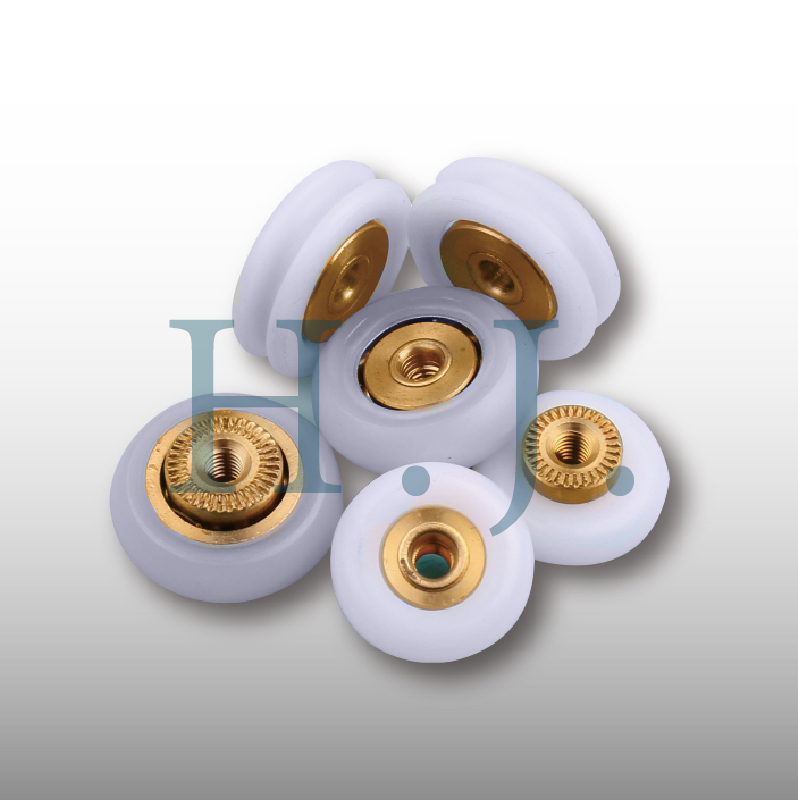
 Precision plastic bearings for medical
Precision Plastic Bearings for Medical Equipment – Custom Low-Friction Bearing Solutions
Precision plastic bearings for medical equipment are specialized mechanical components used where smooth movement, low friction, compact dimensions, corrosion resistance, low noise, and consistent mechanical performance are important.
Medical equipment can contain bearings in sliding mechanisms, adjustment systems, guide components, rollers, drawers, positioning mechanisms, movable assemblies, and other precision mechanical systems. Depending on the design, traditional metal bearings may not always be the preferred solution. Engineering-plastic bearing components can offer useful characteristics for applications where weight, corrosion, noise, or material properties are important considerations.
HSIAN JI BEARING CO., LTD. is a Taiwan bearing manufacturer offering plastic bearings, slide bearings, ball bearings, stamped bearings, thrust bearings, special bearings, and non-standard bearings. HSIAN JI's current Plastic Bearings catalogue directly lists medical equipment among the applications for multiple bearing models.
For customers requiring precision plastic bearings for medical equipment, HSIAN JI can evaluate standard, custom, special, and non-standard bearing requirements according to engineering drawings, physical samples, bearing dimensions, shaft and housing dimensions, load, movement, speed, material requirements, operating environment, and production quantities.
What Are Precision Plastic Bearings for Medical Equipment?
Precision plastic bearings are bearing components manufactured from engineering plastics or incorporating plastic bearing structures for controlled mechanical movement.
They may be used to:
-
Reduce friction
-
Guide movement
-
Support rotating components
-
Support sliding mechanisms
-
Reduce noise
-
Reduce weight
-
Improve resistance to corrosion
The exact bearing structure depends on the medical equipment.
Why Use Plastic Bearings in Medical Equipment?
Plastic bearings can offer several potential advantages compared with conventional metallic solutions.
Depending on the material, benefits may include:
-
Corrosion resistance
-
Reduced weight
-
Lower operating noise
-
Low friction
-
Design flexibility
-
Resistance to selected chemicals
These characteristics can be useful in medical-equipment mechanisms where smooth and quiet movement is required.
However, plastic bearing suitability must always be evaluated according to actual load, speed, temperature, wear, chemical exposure, and dimensional requirements.
HSIAN JI Plastic Bearings for Medical Equipment
HSIAN JI's current Plastic Bearings catalogue directly lists medical equipment among the applications for multiple models, including H20, H18, H15, H14, H45 and other products.
The same products are also used in office equipment, conveyors, machinery, packaging, transportation, hardware, and other mechanical applications.
This gives HSIAN JI an existing product foundation for customers developing plastic-bearing solutions for medical equipment.
Precision Requirements in Medical Equipment
The word "precision" should refer to measurable mechanical characteristics rather than simply being a marketing description.
Important characteristics can include:
-
Bearing inner diameter tolerance
-
Bearing outer diameter tolerance
-
Width tolerance
-
Shaft fit
-
Housing fit
-
Alignment
-
Clearance
-
Smoothness of movement
Customers should identify critical dimensions on the engineering drawing.
Plastic Bearings for Low-Friction Movement
Reducing friction can help improve movement quality in medical equipment.
Potential applications include:
-
Adjustable mechanisms
-
Sliding components
-
Guide systems
-
Equipment drawers
-
Positioning components
The actual coefficient of friction depends on the bearing material, mating surface, load, temperature, lubrication condition, and movement type.
Low-Noise Plastic Bearings
Noise can be important in hospitals, clinics, diagnostic environments, and healthcare facilities.
Plastic bearing materials can potentially help reduce mechanical noise in appropriate applications.
Noise may also be influenced by:
-
Bearing clearance
-
Shaft alignment
-
Surface finish
-
Load
-
Movement speed
-
Equipment structure
Low-noise requirements should therefore be evaluated as part of the complete assembly.
Corrosion-Resistant Plastic Bearings
Plastic materials do not corrode in the same way as conventional carbon steel.
This can make plastic bearings useful where equipment may encounter:
-
Humidity
-
Water
-
Cleaning processes
-
Certain chemicals
However, chemical compatibility varies significantly between engineering plastics.
Customers should provide information about the actual chemicals used in cleaning or operation.
Lightweight Medical Equipment Bearings
Plastic bearings can reduce component weight compared with some metallic bearing designs.
Weight reduction may be relevant to:
-
Portable medical equipment
-
Mobile medical equipment
-
Hand-operated devices
-
Adjustable assemblies
The bearing still needs to meet mechanical load and wear requirements.
Plastic Bearings for Medical Carts
Medical carts may include:
-
Drawers
-
Guides
-
Adjustment mechanisms
-
Internal rollers
-
Sliding assemblies
Plastic bearings can potentially be considered where low noise, corrosion resistance, or compact dimensions are required.
Plastic Bearings for Medical Drawers
Medical carts and storage equipment may contain drawers that are opened frequently.
Bearing requirements can include:
-
Smooth movement
-
Low noise
-
Low friction
-
Repeated operation
-
Compact size
Custom bearing dimensions can be useful where standard products do not fit the drawer mechanism.
Plastic Bearings for Adjustable Medical Equipment
Adjustable medical equipment may include mechanical systems for:
-
Height adjustment
-
Position adjustment
-
Angle adjustment
-
Component movement
Plastic bearings can potentially guide or support some of these movements.
The exact bearing design depends on load direction and movement.
Plastic Bearings for Medical Positioning Systems
Medical equipment may require components to move repeatedly to defined positions.
Precision plastic bearings may help support:
-
Linear guidance
-
Rotational movement
-
Low-friction adjustment
-
Controlled travel
The required tolerances should be clearly specified.
Plastic Bearings for Diagnostic Equipment
Diagnostic equipment can contain moving assemblies, guides, drawers, or adjustment systems.
Plastic bearings may be considered where their mechanical and environmental characteristics meet the equipment requirements.
However, regulatory or special equipment requirements should always be defined separately.
Medical Imaging Equipment Considerations
HSIAN JI's Slide Bearings page identifies MRI and X-ray machines as examples of medical-equipment applications and emphasizes high-precision linear movement.
However, a plastic or metal bearing should never automatically be described as MRI-compatible simply because it is used in medical equipment.
MRI applications can require strict evaluation of:
-
Magnetic properties
-
Materials
-
Safety requirements
-
Equipment-specific standards
The complete component must be evaluated for the intended environment.
Plastic Bearings for X-Ray Equipment
X-ray equipment may contain moving or positioning mechanisms.
Bearing requirements can depend on:
-
Movement accuracy
-
Load
-
Equipment geometry
-
Cleaning environment
-
Service life
Custom dimensions may be needed for proprietary designs.
Plastic Bearings for Portable Medical Equipment
Portable equipment can benefit from lightweight mechanical components.
Plastic bearings may be useful where the design requires:
-
Reduced weight
-
Compact size
-
Low noise
-
Corrosion resistance
Load and wear requirements must still be verified.
Small Precision Plastic Bearings
Medical equipment often has limited installation space.
Small plastic bearings may require:
-
Small inner diameter
-
Small outer diameter
-
Narrow width
-
Precise fit
-
Controlled clearance
The surrounding shaft and housing should be designed together with the bearing.
Miniature Plastic Bearings
Miniature bearing requirements may arise in compact instruments or small mechanisms.
Customers should provide:
-
Bearing dimensions
-
Shaft dimensions
-
Housing dimensions
-
Load
-
Speed
-
Expected movement frequency
Miniaturization can increase sensitivity to dimensional variation.
Custom Precision Plastic Bearings
Standard plastic-bearing dimensions may not fit proprietary medical-equipment designs.
Custom requirements can include:
-
Special bore diameter
-
Special outside diameter
-
Custom width
-
Flange geometry
-
External features
-
Mounting details
Engineering drawings provide the best basis for evaluation.
Non-Standard Plastic Bearings
HSIAN JI also maintains a dedicated Non-standard Bearings category.
Non-standard bearing development can be useful where:
-
Standard dimensions do not fit
-
Installation space is limited
-
Equipment geometry is proprietary
-
Special mounting features are needed
Medical equipment is directly included among HSIAN JI's published bearing applications.
Special Plastic Bearing Designs
Some projects may require special bearing configurations involving:
-
Bearing
-
Shaft
-
Housing
-
Guide
-
Roller
-
Spacer
The complete assembly should be evaluated whenever possible.
Plastic Bearing Material Selection
Different engineering plastics offer different mechanical characteristics.
Selection should consider:
-
Load capacity
-
Wear resistance
-
Friction
-
Temperature resistance
-
Chemical compatibility
-
Dimensional stability
-
Moisture absorption
Customers should identify any required material specification.
Chemical Resistance
Medical equipment may be exposed to cleaning agents or disinfectants.
Plastic compatibility can vary significantly depending on the chemical.
Customers should provide:
-
Chemical name
-
Concentration
-
Exposure time
-
Temperature
This information helps determine whether a material is appropriate.
Cleaning and Disinfection
Medical equipment can undergo repeated cleaning.
Potential effects on bearing components can include:
-
Material swelling
-
Surface degradation
-
Lubricant removal
-
Dimensional change
Cleaning requirements should therefore be included in the bearing evaluation.
Temperature Considerations
Plastic mechanical properties can change with temperature.
Important information includes:
-
Normal operating temperature
-
Maximum temperature
-
Cleaning temperature
-
Storage temperature
Temperature limits should be evaluated together with load.
Load Capacity of Plastic Bearings
Plastic bearings generally have different load characteristics from metallic bearings.
Customers should provide:
-
Radial load
-
Axial load
-
Static load
-
Dynamic load
-
Shock load
A plastic bearing should not be selected only because of corrosion resistance or low weight.
Speed Requirements
Operating speed can affect:
-
Friction
-
Heat
-
Wear
-
Service life
Customers should provide actual rotational speed or movement rate where applicable.
Dry-Running Plastic Bearings
Some engineering-plastic bearing designs may operate with limited or no external lubrication.
However, this should never be assumed for every plastic bearing.
Suitability depends on:
-
Material
-
Load
-
Speed
-
Mating surface
-
Temperature
-
Wear requirements
The exact design must be evaluated.
Lubrication Requirements
Depending on the bearing material and application, lubrication may or may not be required.
If lubrication is used, customers should consider:
-
Compatibility with plastic
-
Medical-equipment requirements
-
Cleaning processes
-
Maintenance
Any lubricant-related requirements should be specified.
Shaft Materials for Plastic Bearings
Plastic bearings can run against different shaft materials.
Potential shaft materials may include:
-
Stainless steel
-
Steel
-
Aluminum
-
Other application-specific materials
Shaft hardness, surface finish, and straightness can influence wear and friction.
Shaft Surface Finish
The mating shaft surface can significantly affect plastic-bearing performance.
A rough surface may increase:
-
Friction
-
Wear
-
Heat
Critical surface-finish requirements should be defined in the technical drawing.
Shaft Fit and Clearance
Plastic materials can respond differently to temperature and moisture than metal.
Correct clearance is therefore important.
Too little clearance can cause binding.
Too much clearance can cause looseness or poor positioning.
The operating environment should be considered when defining fit.
Housing Fit
The plastic bearing must also fit correctly inside the housing.
Potential issues from incorrect fit include:
-
Deformation
-
Movement
-
Excessive interference
-
Poor alignment
Housing material and tolerance should be supplied.
Dimensional Stability
Dimensional stability is important in precision applications.
Plastic dimensions can potentially be influenced by:
-
Temperature
-
Moisture
-
Mechanical load
-
Material composition
The chosen plastic should therefore match the required precision.
Wear Resistance
Repeated movement can gradually wear the bearing surface.
Wear depends on:
-
Load
-
Speed
-
Shaft finish
-
Material
-
Temperature
-
Contamination
Expected operating cycles should be specified.
Service Life
The service life of a precision plastic bearing depends on the complete operating condition.
Important factors include:
-
Load
-
Speed
-
Duty cycle
-
Alignment
-
Temperature
-
Material
-
Chemical exposure
Actual equipment testing is valuable for verifying performance.
Precision Plastic Bearings from Engineering Drawings
Customers can provide:
-
2D bearing drawings
-
3D CAD models
-
Assembly drawings
-
Shaft drawings
-
Housing drawings
-
Material specifications
-
Tolerances
Critical dimensions should be clearly marked.
Precision Plastic Bearings from Physical Samples
When drawings are unavailable, physical samples can provide useful information.
A sample can help identify:
-
Dimensions
-
Geometry
-
Mounting
-
Existing construction
However, the original material or mechanical properties may not always be identifiable from appearance alone.
Application information should also be provided.
Prototype Plastic Bearings
Prototype manufacturing can help verify a custom bearing before regular production.
Testing can include:
-
Dimensions
-
Shaft fit
-
Housing fit
-
Movement
-
Noise
-
Friction
-
Load
Testing in the actual equipment is recommended.
OEM Precision Plastic Bearings for Medical Equipment
Medical-equipment manufacturers may require proprietary plastic-bearing components.
OEM projects can involve:
-
Customer drawings
-
Custom dimensions
-
Dedicated tolerances
-
Material specifications
-
Customer part numbers
-
Packaging requirements
-
Repeat production
The approved drawing should become the production reference.
Low-Volume Medical Plastic Bearings
Prototype equipment, specialized machinery, and replacement projects may require smaller quantities.
Feasibility depends on:
-
Geometry
-
Material
-
Tooling
-
Tolerances
-
Quantity
Initial and annual quantities should be provided.
Mass Production of Plastic Bearings
After sample approval, OEM customers may require repeat production.
Important information includes:
-
Batch size
-
Monthly demand
-
Annual demand
-
Inspection requirements
-
Packaging
-
Delivery schedule
Quality Control for Precision Plastic Bearings
Potential inspection items include:
-
Inner diameter
-
Outer diameter
-
Width
-
Flange dimensions
-
Critical geometry
-
Fit
-
Appearance
-
Material
For precision applications, tolerances should be measurable and agreed upon before production.
Medical Regulatory Considerations
A plastic bearing used inside medical equipment is not automatically a medical-grade or certified medical-device bearing.
If the application requires specific:
-
ISO standards
-
FDA-related documentation
-
Biocompatibility
-
Material certification
-
Traceability
-
Cleanliness
-
Sterilization resistance
-
Quality-system documentation
these requirements must be specified explicitly.
Sterilization Requirements
Some medical devices may require sterilization.
Different sterilization methods can have very different effects on plastics.
Potential methods may include:
-
Steam
-
Chemical sterilization
-
Radiation
-
Other processes
A bearing should never be claimed as sterilization-resistant without verification for the required process.
Biocompatibility Requirements
A bearing used inside medical equipment does not necessarily contact the patient.
If the plastic component has direct or indirect patient contact, the required biocompatibility standard should be specified.
Do not assume that ordinary engineering plastic automatically satisfies medical biocompatibility requirements.
How to Choose Precision Plastic Bearings for Medical Equipment
Customers should consider:
-
Bearing dimensions
-
Load
-
Speed
-
Movement type
-
Shaft material
-
Surface finish
-
Temperature
-
Chemicals
-
Cleaning
-
Required precision
-
Noise
-
Expected service life
Material selection and dimensional design should be evaluated together.
HSIAN JI – Precision Plastic Bearing Solutions for Medical Equipment
HSIAN JI's official Plastic Bearings catalogue directly lists medical equipment among the applications for multiple models.
HSIAN JI's broader product portfolio includes Plastic Bearings, Slide Bearings, Ball Bearings, Stamped Bearings, Special Bearings, and Non-standard Bearings. Its Slide Bearings are also described as providing high-precision linear motion and are explicitly used in medical equipment applications.
For precision plastic bearings for medical equipment, customers can provide:
-
2D engineering drawing
-
3D CAD model
-
Physical sample
-
Bearing inner diameter
-
Bearing outer diameter
-
Bearing width
-
Shaft dimensions
-
Housing dimensions
-
Radial load
-
Axial load
-
Speed
-
Operating temperature
-
Cleaning chemicals
-
Material requirements
-
Precision requirements
-
Noise requirements
-
Regulatory requirements
-
Initial quantity
-
Estimated annual demand
HSIAN JI can evaluate standard, custom, special, and non-standard plastic-bearing requirements according to the actual equipment design.
Precision Plastic Bearings for Medical FAQ
What are precision plastic bearings for medical equipment?
Precision plastic bearings for medical equipment are bearing components made from or incorporating engineering plastics and designed for controlled mechanical movement in medical-equipment applications.
Does HSIAN JI manufacture plastic bearings for medical equipment?
HSIAN JI's current Plastic Bearings catalogue directly lists medical equipment among the applications for multiple models.
What HSIAN JI plastic-bearing models list medical equipment as an application?
The current Plastic Bearings page lists models including H20, H18, H15, H14, and H45 with medical equipment among their applications.
Why use plastic bearings in medical equipment?
Potential advantages include:
-
Corrosion resistance
-
Reduced weight
-
Lower noise
-
Low friction
-
Design flexibility
The suitability depends on the specific application.
Are plastic bearings more corrosion resistant than steel bearings?
Plastic does not rust like conventional steel, which can provide an advantage in humid or chemically exposed environments.
However, plastic can still be affected by chemicals, temperature, or wear.
Can precision plastic bearings operate quietly?
Potentially.
Plastic materials can help reduce mechanical noise in certain applications, but bearing clearance, shaft finish, alignment, load, and machine structure also matter.
Are plastic bearings maintenance-free?
Not automatically.
Maintenance requirements depend on material, load, speed, environment, and design.
Can plastic bearings operate without grease?
Some plastic-bearing materials may be suitable for dry operation, but this should not be assumed for every product.
The specific material and operating condition must be evaluated.
Can medical plastic bearings be customized?
Yes.
Potential customization includes:
-
Inner diameter
-
Outer diameter
-
Width
-
Flange geometry
-
External shape
-
Mounting features
Can HSIAN JI manufacture non-standard plastic bearings?
HSIAN JI has a dedicated Non-standard Bearings category and can evaluate customer-specific bearing requirements.
Can you manufacture from customer drawings?
Custom bearing requirements can be evaluated from engineering drawings and technical specifications.
Can you work from a 3D CAD model?
Yes.
A 3D model helps communicate geometry and assembly relationships.
A dimensioned 2D drawing is also recommended.
Can you work from a physical sample?
Yes.
A physical sample can help identify dimensions, geometry, and construction.
Can you reproduce an obsolete plastic bearing?
Potentially.
Provide the original sample, equipment information, dimensions, material requirements, and required quantity.
Can plastic bearings be used in medical carts?
Potentially.
Possible applications include drawer systems, guides, rollers, and adjustment mechanisms.
Can plastic bearings be used in medical drawers?
Yes, depending on load and mechanical design.
Low noise and corrosion resistance may be useful characteristics.
Can plastic bearings be used in diagnostic equipment?
Potentially.
The exact mechanism and regulatory requirements must be defined.
Can plastic bearings be used in MRI equipment?
Do not assume this automatically.
HSIAN JI lists medical equipment including MRI equipment as an application for Slide Bearings, but MRI compatibility requires specific material and magnetic-property evaluation.
Can plastic bearings be used in X-ray equipment?
Potentially.
The application should be evaluated according to load, movement, materials, cleanliness, and equipment requirements.
Are plastic bearings non-magnetic?
Some plastic materials are inherently non-magnetic, but the complete bearing assembly may contain metallic components.
The full assembly must be evaluated where magnetic properties matter.
Can plastic bearings be used in portable medical equipment?
Potentially.
Low weight and corrosion resistance may provide useful benefits.
Can plastic bearings be miniature?
Yes, subject to manufacturing feasibility and mechanical requirements.
How small can a plastic bearing be?
This depends on the required geometry, material, load, tolerance, and production process.
Customers should provide the actual dimensions.
Can bearing ID be customized?
Potentially.
The required shaft dimensions and fit should be supplied.
Can bearing OD be customized?
Potentially.
Housing dimensions should also be provided.
Can bearing width be customized?
Potentially.
The full bearing design and manufacturing method must be evaluated.
What is the best plastic for medical bearings?
There is no single best material.
Selection depends on:
-
Load
-
Wear
-
Friction
-
Temperature
-
Chemicals
-
Moisture
-
Regulatory requirements
Can POM be used for medical bearings?
Potentially, depending on the specific grade and application.
Do not assume that all POM materials meet medical or regulatory requirements.
Can PEEK be used for medical bearings?
Potentially.
PEEK is used in demanding engineering applications, but the specific grade, mechanical requirements, regulatory needs, and manufacturing feasibility must be verified.
Can PTFE be used in bearings?
PTFE and PTFE-containing materials can provide low-friction characteristics, but mechanical load and wear must be considered.
Can plastic bearings resist disinfectants?
It depends on the exact plastic and disinfectant.
Customers should specify the chemical name, concentration, temperature, and exposure time.
Can plastic bearings resist alcohol cleaning?
Some engineering plastics may tolerate alcohol exposure, but compatibility depends on material grade and exposure conditions.
Verification is recommended.
Can plastic bearings resist chlorine cleaners?
Compatibility varies significantly by plastic material and concentration.
The cleaning chemical must be specified.
Can medical plastic bearings be sterilized?
Potentially, depending on material and sterilization method.
Steam, radiation, chemical sterilization, and other methods affect plastics differently.
Are HSIAN JI plastic bearings sterilization certified?
Do not assume so unless a specific product has corresponding documentation.
Sterilization requirements should be provided for evaluation.
Are these medical-grade plastic bearings?
A bearing being suitable for medical equipment does not automatically mean it is "medical grade."
Medical-grade claims require clearly defined material, regulatory, or quality documentation.
Are these FDA-approved bearings?
No such general claim should be made without product-specific documentation.
Are the materials biocompatible?
Biocompatibility depends on the exact material grade and required standard.
Customers requiring patient-contact applications must provide the applicable biocompatibility requirements.
Can material certificates be requested?
If specific material certification or documentation is required, it should be specified during the inquiry.
Can traceability be required?
Potentially.
Traceability requirements should be discussed before production and included in the quality specification.
Can precision tolerances be specified?
Yes.
Customers should provide numerical tolerances for critical dimensions.
What does precision mean for a plastic bearing?
Precision can involve controlled:
-
Inner diameter
-
Outer diameter
-
Width
-
Clearance
-
Alignment
-
Fit
The required tolerance should be specified rather than using only the term "precision."
Does temperature affect plastic bearing dimensions?
Yes.
Plastic materials can expand or contract with temperature and may respond differently from metal.
Operating temperature should therefore be considered when determining clearance.
Does humidity affect plastic bearings?
Potentially.
Some plastics absorb moisture, which can affect dimensions or mechanical properties.
Material selection should consider the operating environment.
Does shaft surface finish matter?
Yes.
A rough shaft can increase wear and friction.
Does shaft material matter?
Yes.
The bearing and shaft work as a mating pair, so shaft material, hardness, finish, and corrosion resistance should be evaluated.
Can stainless steel shafts be used with plastic bearings?
Potentially.
Stainless steel is commonly considered where corrosion resistance is important, but the grade and surface finish should be specified.
Can aluminum shafts be used?
Potentially.
Wear, hardness, surface finish, and load should be considered.
Can precision plastic bearings handle high loads?
Some engineering plastics can support significant mechanical loads, but capacity depends strongly on material, geometry, temperature, speed, and duty cycle.
Actual loads should be supplied.
Can plastic bearings operate at high speed?
Potentially.
Speed increases frictional heat and wear, so RPM and load should be evaluated together.
Can plastic bearings be sealed?
Plastic bearing systems can use different protective configurations depending on design.
Not all plastic bearings require conventional seals.
Can plastic bearings be used in clean environments?
Potentially.
If the application has specific particle-generation, cleanliness, or cleanroom requirements, those requirements must be defined separately.
Can plastic bearings be used in vacuum equipment?
Potentially only after detailed material evaluation.
Outgassing and vacuum compatibility cannot be assumed from ordinary plastic-bearing suitability.
Can I request a prototype?
Yes.
Prototype evaluation can help verify:
-
Fit
-
Clearance
-
Movement
-
Noise
-
Friction
-
Equipment compatibility
How should prototype plastic bearings be tested?
Potential testing includes:
-
Dimensional inspection
-
Load
-
Wear
-
Friction
-
Temperature
-
Chemical exposure
-
Actual equipment operation
Can medical plastic bearings be produced in small quantities?
Small-batch requirements can be evaluated according to geometry, material, tooling, tolerance, and quantity.
Can they be mass produced?
Potentially.
After sample and specification approval, repeat production can be evaluated.
Can HSIAN JI support OEM medical-equipment projects?
HSIAN JI's Plastic Bearings catalogue directly lists medical equipment among its applications, while the company also offers special and non-standard bearing categories.
What information should I provide for a quotation?
For precision plastic bearings for medical equipment, provide:
-
2D engineering drawing
-
3D CAD model
-
Physical sample
-
Bearing inner diameter
-
Bearing outer diameter
-
Bearing width
-
Shaft dimensions
-
Housing dimensions
-
Required clearance
-
Radial load
-
Axial load
-
Speed
-
Movement frequency
-
Operating temperature
-
Humidity
-
Cleaning chemicals
-
Sterilization method, if applicable
-
Material requirements
-
Required tolerances
-
Regulatory or documentation requirements
-
Initial quantity
-
Estimated annual demand
Complete application information is particularly important because plastic-bearing performance depends strongly on material and environment.
What is the difference between precision plastic bearings and standard plastic bearings?
Standard plastic bearings use predetermined catalogue dimensions and materials.
Precision or custom plastic bearings may require tighter dimensional control, customer-specific geometry, defined clearance, or proprietary sizes.
What is the difference between plastic bearings and metal ball bearings?
Plastic bearings can offer benefits such as lower weight, corrosion resistance, and potentially lower noise.
Metal ball bearings can provide different load, speed, stiffness, and rolling characteristics.
The correct choice depends on the application.
What is the difference between precision plastic bearings and slide bearings?
A plastic bearing describes material or construction.
A slide bearing describes the type of relative motion.
A plastic bearing can itself be a type of sliding bearing depending on its design.
Why choose HSIAN JI for precision plastic bearings for medical equipment?
HSIAN JI has a direct published connection to both plastic-bearing and medical-equipment applications. Its current Plastic Bearings catalogue repeatedly lists medical equipment among the applications for multiple models.
HSIAN JI also manufactures Slide Bearings that are described as providing high-precision linear motion and are used in medical equipment.
If you require precision plastic bearings for medical equipment such as carts, drawers, guides, positioning mechanisms, diagnostic equipment, portable systems, replacement components, or custom OEM products, send HSIAN JI your engineering drawings, bearing dimensions, shaft and housing information, load, operating environment, chemical exposure, required tolerances, and production quantities for technical evaluation.