
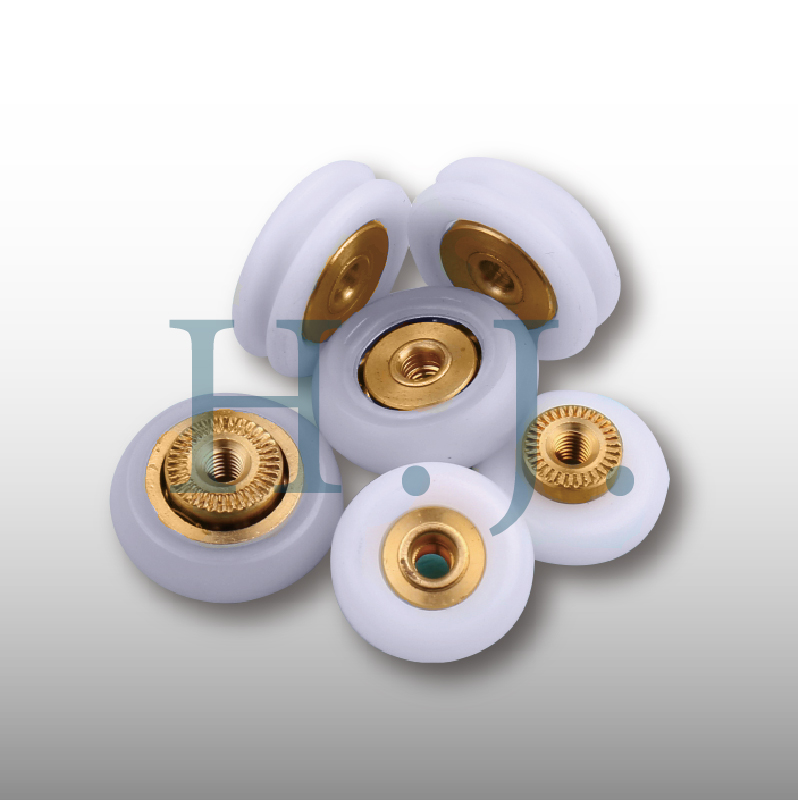
 Custom roller bearings
Custom Roller Bearings – Custom Bearing Manufacturer in Taiwan
Custom roller bearings provide specialized bearing solutions for applications where standard bearing dimensions, configurations, or mechanical structures cannot fully meet specific requirements. For OEM manufacturers, machinery designers, equipment manufacturers, and industrial buyers, customized bearing development can provide greater flexibility when designing new products or replacing special and non-standard components.
HSIAN JI BEARING CO., LTD. is a bearing manufacturer in Taiwan with experience in the development and production of bearing products. Established in 1995, we focus on providing bearing solutions for a wide range of industrial and commercial applications.
In addition to standard products, HSIAN JI develops and manufactures special and non-standard bearings according to customer requirements and samples. For customers looking for custom roller bearings, we can evaluate drawings, samples, dimensions, applications, operating conditions, and quantity requirements to determine an appropriate manufacturing solution.
What Are Custom Roller Bearings?
Roller bearings use rolling elements to support movement and reduce friction between mechanical components. Depending on the bearing design and application, roller-type solutions can be used in various mechanical systems where controlled movement and load support are required.
Custom roller bearings are developed according to application-specific requirements rather than relying exclusively on commonly available catalog products.
Customization may involve:
-
Inner diameter
-
Outer diameter
-
Bearing width
-
Roller dimensions
-
Overall configuration
-
Mounting dimensions
-
Housing configuration
-
Special external structures
-
Application-specific dimensions
-
Integration with surrounding components
The appropriate configuration depends on the mechanical design and intended operating conditions.
Why Choose Custom Roller Bearings?
Standard bearings are usually the most convenient option when their specifications meet the requirements of an application.
However, not every mechanical system is designed around standard bearing dimensions.
OEM manufacturers may have limited installation space. Existing equipment may use a special bearing that is difficult to replace. A new product may require a unique bearing configuration to integrate with other components.
In these situations, custom roller bearings may provide a practical alternative.
Custom development can be considered when:
-
Standard bearings do not fit
-
Non-standard dimensions are required
-
Installation space is restricted
-
A unique mounting method is necessary
-
Existing special bearings are difficult to source
-
A discontinued component requires replacement
-
A new OEM product requires a dedicated bearing
-
A customer has an existing sample for reproduction
Instead of redesigning an entire product around an available bearing, a customized bearing can be evaluated around the application.
Custom Roller Bearing Design
Successful custom bearing development starts with understanding the application.
Dimensions are important, but they represent only part of the information required to evaluate a bearing.
Customers should also consider load conditions, movement, installation method, available space, surrounding components, operating environment, and expected production quantity.
For a custom roller bearings project, useful information may include:
-
Technical drawings
-
3D models
-
Physical samples
-
Required dimensions
-
Shaft dimensions
-
Installation space
-
Bearing configuration
-
Load conditions
-
Operating speed
-
Operating environment
-
Required quantity
-
Special requirements
Providing detailed technical information allows the manufacturer to evaluate the project more efficiently.
Custom Size Roller Bearings
Dimensional requirements are one of the most common reasons for developing custom bearings.
Many OEM products use unique mechanical structures that cannot accommodate standard bearing dimensions.
Custom-size roller bearing requirements may involve a special inner diameter, outer diameter, width, roller configuration, or overall assembly dimension.
This can be particularly useful for compact equipment and specialized mechanical products.
Rather than modifying several surrounding components to accommodate a catalog bearing, engineers can evaluate whether custom roller bearings can be designed around the existing mechanical structure.
Manufacturing feasibility should always be evaluated according to the specific design and production requirements.
Custom Roller Bearings from Customer Samples
Technical drawings are not always available.
This is especially common with older machinery, imported equipment, discontinued components, or specialized products developed many years ago.
A customer may only have the original bearing or mechanical component.
HSIAN JI has experience developing products according to customer requirements and samples.
Customers can provide a physical sample together with available information such as dimensions, application, installation conditions, operating environment, and required quantity.
Sample-based development can therefore provide a possible route for sourcing special or non-standard bearing components.
Custom Roller Bearings for OEM Applications
OEM products frequently require specialized components.
A bearing may represent only a small part of the finished product, but its dimensions and configuration can influence the overall mechanical design.
Customized bearings can provide additional flexibility for OEM manufacturers.
Potential applications may include:
-
Industrial machinery
-
Conveyor equipment
-
Furniture hardware
-
Sliding mechanisms
-
Doors and windows
-
Office equipment
-
Medical equipment
-
Kitchen equipment
-
Bathroom equipment
-
Fitness equipment
-
Sporting goods
-
Transportation products
-
Packaging equipment
-
General hardware
-
Specialized mechanical products
Each application should be evaluated individually because operating conditions can vary considerably.
Special and Non-Standard Roller Bearings
A standard bearing follows commonly available dimensions and configurations.
A non-standard bearing differs from these conventional specifications, while a special bearing may incorporate an application-specific design or structure.
Many custom roller bearings fall into one or both of these categories.
For example, an OEM manufacturer may require a roller bearing with an unusual external configuration to fit into a particular housing. Another customer may need a bearing with dimensions matching an existing discontinued component.
HSIAN JI's experience with special and non-standard bearing products allows us to evaluate requirements that extend beyond conventional catalog bearings.
Custom Bearing Development Process
Developing a custom roller bearing generally requires close communication between the customer and manufacturer.
Depending on project complexity, the process may include:
-
Reviewing customer requirements
-
Evaluating drawings or samples
-
Confirming critical dimensions
-
Reviewing the application
-
Evaluating manufacturing feasibility
-
Developing samples or prototypes
-
Testing and verification
-
Trial production
-
Production preparation
-
Mass production
Not every project requires exactly the same development process.
Simple dimensional modifications may be relatively straightforward, while completely new non-standard bearing configurations can require additional development and testing.
Quality Control for Custom Roller Bearings
Quality consistency is important for bearing products because dimensional variation can influence installation, movement, noise, and mechanical performance.
Custom products require particular attention because specifications may be unique to an individual customer.
Quality control may include incoming material inspection, process control, dimensional inspection, product testing, final inspection, and production monitoring.
For custom roller bearings, inspection requirements can also be established according to customer drawings, samples, technical specifications, and mutually agreed criteria.
Maintaining consistent production is particularly important for OEM customers that require repeat orders over an extended period.
Custom Roller Bearing Manufacturing in Taiwan
Taiwan has developed a strong industrial supply chain for machinery, hardware, precision components, metalworking, plastics, and OEM manufacturing.
Working with a Taiwan bearing manufacturer can provide international customers with access to product development capabilities, manufacturing flexibility, technical communication, and established supply-chain resources.
HSIAN JI BEARING CO., LTD. was established in 1995 and has extensive experience in bearing product development.
Our existing product categories include ball bearings, plastic bearings, thrust bearings, stamped bearings, slide bearings, special bearings, and non-standard bearings.
This experience provides a foundation for evaluating customized and application-specific bearing requirements.
Request Custom Roller Bearings from HSIAN JI
If standard products cannot satisfy your application, a customized bearing may provide another option.
To begin a custom roller bearings project, customers are encouraged to provide:
-
2D technical drawings
-
3D CAD files when available
-
Existing samples
-
Critical dimensions
-
Application information
-
Installation requirements
-
Operating conditions
-
Estimated order quantities
-
Special technical requirements
Even if complete drawings are unavailable, an existing sample together with detailed application information can provide a useful starting point.
If you are looking for custom roller bearings, special bearings, non-standard bearings, or other customized bearing solutions, contact HSIAN JI with your project requirements.
We can evaluate your application and discuss an appropriate bearing manufacturing solution.
Custom Roller Bearings FAQ
1. What are custom roller bearings?
Custom roller bearings are bearing products developed according to specific customer dimensions, configurations, applications, or other technical requirements.
Unlike standard catalog bearings, customized products can be evaluated around the mechanical design of a particular product or piece of equipment.
They are especially useful when standard bearing dimensions or structures cannot satisfy the application.
2. When should I consider custom roller bearings?
Custom development may be appropriate when a standard bearing cannot meet your dimensional, installation, or mechanical requirements.
Common situations include restricted installation space, unusual dimensions, special mounting structures, new OEM product development, discontinued bearings, and replacement of difficult-to-source components.
If a suitable standard bearing is available, it may remain the simplest option. Customization is generally considered when conventional products cannot adequately satisfy the requirements.
3. Can HSIAN JI develop custom roller bearings?
HSIAN JI develops bearing products according to different customer requirements and samples.
For a custom roller bearing inquiry, customers can provide drawings, physical samples, dimensions, application information, operating conditions, and estimated quantities.
The proposed product can then be evaluated for technical and manufacturing feasibility.
4. Can you manufacture custom size roller bearings?
Non-standard dimensional requirements can be evaluated.
Customers requiring custom roller bearings should provide critical dimensions such as the inner diameter, outer diameter, width, shaft dimensions, available installation space, and other relevant measurements.
Providing a detailed drawing or physical sample can make the initial evaluation more efficient.
5. Can custom roller bearings be made from my drawing?
A customer drawing can provide the basis for evaluating a custom bearing project.
The drawing should identify critical dimensions and any important structural or technical requirements.
In addition to the drawing, customers should provide application information, operating conditions, and required quantities whenever possible.
These details allow the manufacturer to better understand the complete project.
6. Can a roller bearing be developed from a physical sample?
Sample-based product development can be evaluated.
This is particularly useful when an existing bearing needs to be replaced but original drawings are unavailable.
Customers can provide the physical sample together with known dimensions, application details, operating conditions, and estimated quantity.
The manufacturer can then evaluate the sample and determine the appropriate development approach.
7. What information should I provide for custom roller bearings?
Useful information includes:
-
2D technical drawings
-
3D CAD files
-
Existing samples
-
Inner and outer dimensions
-
Width
-
Shaft dimensions
-
Installation dimensions
-
Load conditions
-
Operating speed
-
Operating environment
-
Required quantity
-
Special requirements
Complete information can reduce unnecessary communication and help improve the efficiency of project evaluation.
8. What is the difference between standard and custom roller bearings?
Standard bearings are manufactured according to commonly available sizes and configurations.
Custom roller bearings are developed according to specific customer or application requirements.
The differences may involve dimensions, external configuration, mounting arrangements, or other structural characteristics.
Custom manufacturing is particularly useful when the surrounding mechanical system cannot accommodate an available standard product.
9. Are custom roller bearings considered non-standard bearings?
Many custom roller bearings can be considered non-standard bearings because their dimensions or configurations differ from commonly available catalog products.
However, "custom" emphasizes that the product is developed according to customer requirements, while "non-standard" primarily indicates that the bearing differs from conventional standardized specifications.
The terms can therefore overlap.
10. What are special roller bearings?
Special roller bearings are generally bearing products designed for particular mechanical applications or unusual requirements.
They may feature application-specific dimensions, external structures, mounting configurations, or other characteristics.
A special roller bearing can also be a custom and non-standard product if it is developed specifically for an individual customer.
11. Can custom roller bearings be used for OEM products?
Yes. OEM applications are one of the situations where customized bearing development can be particularly useful.
OEM manufacturers often design unique products that cannot always accommodate standard bearing dimensions.
A custom solution can be evaluated according to the product's available space, mechanical structure, installation requirements, and operating conditions.
12. What applications can use custom roller bearings?
Depending on the design and technical requirements, customized roller bearing solutions may be evaluated for industrial machinery, conveyor equipment, sliding systems, furniture hardware, doors and windows, office equipment, medical equipment, fitness equipment, transportation products, packaging equipment, and other mechanical applications.
The actual suitability of a bearing depends on its intended operating conditions.
13. Can you replace an obsolete or discontinued roller bearing?
Potentially, depending on the product and manufacturing feasibility.
If the original bearing is no longer available, customers can provide the existing sample, technical drawing, dimensions, and application information.
A custom bearing manufacturer can then evaluate whether a replacement product can be developed.
This can be particularly useful for older machinery or specialized equipment.
14. Can I request custom roller bearings without a technical drawing?
A technical drawing is highly recommended, but an existing physical sample may provide an alternative starting point.
When submitting a sample, customers should also explain where and how the bearing is used.
Providing information about dimensions, installation, movement, operating conditions, and required quantity can improve the accuracy of the evaluation.
15. How are custom roller bearings developed?
Development generally starts with reviewing the customer's technical requirements.
Depending on the project, subsequent stages may include design evaluation, dimensional confirmation, manufacturing feasibility analysis, prototype development, testing, trial production, and mass production.
The exact process depends on the complexity of the bearing and the customer's requirements.
16. Can I get a prototype before mass production?
Depending on the project, sample or prototype development may be part of the custom bearing development process.
Samples can help customers evaluate dimensions, installation compatibility, and functional requirements before proceeding to volume production.
More complex custom roller bearings may require additional evaluation or testing before final production approval.
17. How is the quality of custom roller bearings controlled?
Quality control can involve material inspection, manufacturing process control, dimensional inspection, testing, final inspection, and ongoing production monitoring.
For customized products, additional inspection criteria may be established according to customer drawings and agreed specifications.
Maintaining consistent dimensions and manufacturing processes is especially important for repeat OEM orders.
18. What quantity of custom roller bearings can I order?
Order quantity depends on the bearing design, tooling requirements, manufacturing process, dimensions, and other project factors.
Customers should provide an estimated initial order quantity and expected future demand when requesting a quotation.
This information helps the manufacturer evaluate an appropriate production method and overall project feasibility.
19. Why source custom roller bearings from Taiwan?
Taiwan has an established manufacturing ecosystem supporting machinery, metalworking, precision components, plastics, hardware, and OEM production.
For international buyers, a Taiwan manufacturer can provide access to product development capabilities and an established industrial supply chain.
For customized bearing projects, technical communication, quality consistency, development support, and stable repeat production are important supplier-selection factors.
20. Why contact HSIAN JI for custom roller bearings?
HSIAN JI BEARING CO., LTD. has been engaged in bearing product development and manufacturing in Taiwan since 1995.
Our product portfolio includes multiple bearing categories as well as special and non-standard bearing solutions.
We can evaluate products according to different customer requirements and samples, making us a potential manufacturing partner for OEM customers requiring customized bearing components.
If you are searching for custom roller bearings for a new product, special mechanical application, replacement component, or non-standard requirement, send HSIAN JI your drawing, sample, dimensions, application information, and estimated quantity.
Our team can evaluate your project and discuss a suitable custom bearing solution.