
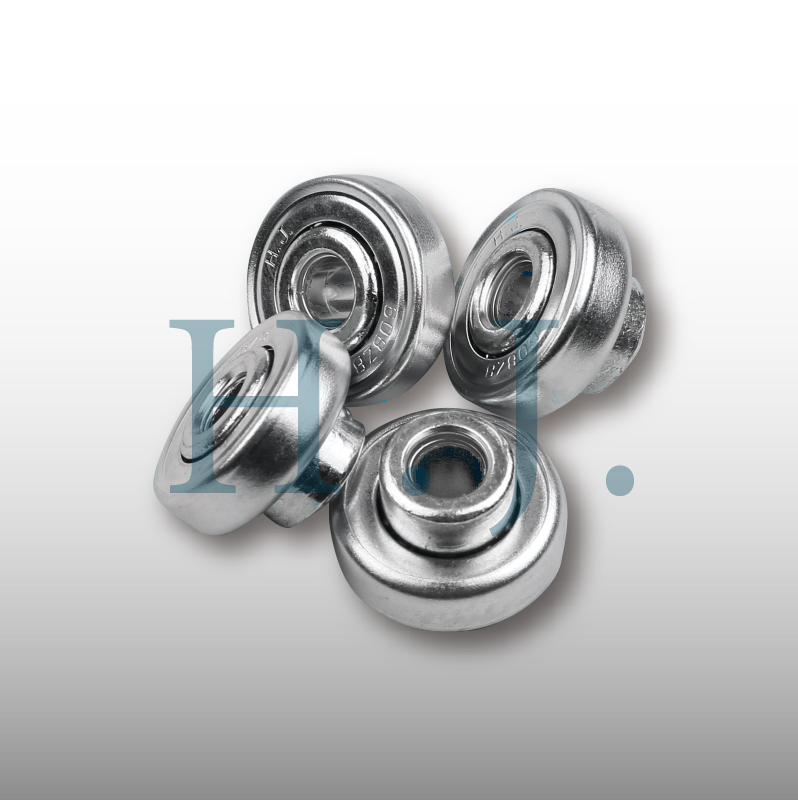
 Office equipment roller parts
Office Equipment Roller Parts – Custom Roller and Bearing Solutions for Office Machines
Office equipment roller parts are mechanical components used to support, guide, feed, rotate, slide, or transfer materials inside printers, copiers, scanners, document-handling systems, office furniture, cash drawers, keyboard trays, and other office-related equipment.
Although many office equipment rollers are small, their performance can directly affect machine smoothness, feeding accuracy, operating noise, friction, positioning, and long-term reliability. A poorly matched roller, bearing, shaft, or guide can result in noise, slipping, inconsistent movement, excessive wear, or reduced equipment performance.
HSIAN JI BEARING CO., LTD. is a Taiwan bearing manufacturer providing ball bearings, slide bearings, plastic bearings, stamped bearings, thrust bearings, special bearings, and non-standard bearings. Office equipment is directly listed among the applications for numerous HSIAN JI products. The company's Stamped Bearings information also specifically identifies printers, copiers, and scanners as office-equipment applications.
For customers requiring office equipment roller parts, HSIAN JI can evaluate custom roller-bearing components according to engineering drawings, physical samples, roller dimensions, bearing dimensions, shaft size, load, speed, materials, noise requirements, precision, and production quantities.
What Are Office Equipment Roller Parts?
Office equipment roller parts are rotating or guiding components used inside office machines and furniture systems.
Typical examples include:
-
Printer rollers
-
Copier rollers
-
Scanner rollers
-
Document-feed rollers
-
Guide rollers
-
Transfer rollers
-
Drawer rollers
-
Keyboard tray rollers
-
Cash drawer rollers
-
Office furniture rollers
A typical roller assembly can include:
-
Roller body
-
Bearing
-
Shaft
-
Axle
-
Spacer
-
Housing
-
Retaining components
The exact structure depends on the equipment design.
What Do Office Equipment Rollers Do?
Rollers can perform several functions inside office equipment.
These include:
-
Feeding paper
-
Guiding documents
-
Supporting rotating components
-
Transferring materials
-
Positioning parts
-
Supporting drawers
-
Reducing friction
The roller and bearing should be selected according to their actual function.
Office Equipment Applications from HSIAN JI
Office equipment is repeatedly listed as an application across HSIAN JI's current product catalogue.
HSIAN JI's Stamped Bearings page also states that stamped bearings are used in office equipment such as:
-
Printers
-
Copiers
-
Scanners
This creates a direct connection between HSIAN JI's bearing products and office-machine roller applications.
Printer Roller Parts
Printers contain multiple rollers used to feed, guide, and transfer paper.
Potential roller applications include:
-
Paper-feed rollers
-
Guide rollers
-
Transfer rollers
-
Exit rollers
-
Internal transport rollers
Bearing requirements depend on:
-
Roller diameter
-
Shaft size
-
Speed
-
Load
-
Noise
-
Required precision
Smooth rotation can help support consistent paper movement.
Copier Roller Parts
Copiers use multiple mechanical roller systems to move paper through copying processes.
Potential components can include:
-
Feed rollers
-
Guide rollers
-
Transport rollers
-
Output rollers
Bearing and roller dimensions must match the machine structure accurately.
HSIAN JI's official Stamped Bearings information specifically lists copiers among office-equipment applications.
Scanner Roller Parts
Scanners may use rollers to move documents across scanning mechanisms.
Potential requirements include:
-
Consistent document feeding
-
Low vibration
-
Smooth rotation
-
Accurate alignment
-
Low noise
HSIAN JI also explicitly identifies scanners among applications for its stamped-bearing products.
Document Feed Rollers
Document-feed systems can be used in:
-
Printers
-
Copiers
-
Scanners
-
Multifunction machines
-
Document-handling equipment
The roller must maintain enough contact to move the paper while avoiding excessive resistance.
Bearing quality can influence rotational smoothness.
Guide Rollers for Office Equipment
Guide rollers help maintain the position and direction of paper, documents, or moving components.
Important characteristics include:
-
Roller diameter
-
Surface geometry
-
Alignment
-
Bearing fit
-
Shaft fit
-
Runout
Guide rollers should rotate consistently without unnecessary vibration.
Transfer Rollers for Office Machines
Transfer rollers can help move paper or internal components from one stage to another.
Bearing requirements depend on:
-
Speed
-
Roller load
-
Required movement accuracy
-
Machine duty cycle
Custom sizes may be needed for proprietary equipment.
Ball Bearings for Office Equipment Rollers
Ball bearings can be integrated into roller assemblies where low-friction rotational movement is required.
Potential advantages include:
-
Smooth rotation
-
Reduced friction
-
Stable repeated movement
-
Compact construction
HSIAN JI's Ball Bearings catalogue includes office equipment among its product applications.
Stamped Bearings for Office Equipment
Stamped bearings are particularly relevant to this application.
HSIAN JI directly states that stamped bearings are used in office equipment such as printers, copiers, and scanners.
Potential benefits can include:
-
Compact structure
-
Low weight
-
Efficient production
-
Integration into small mechanisms
Actual suitability still depends on load, speed, and dimensions.
Slide Bearings for Office Equipment
Slide bearings are designed to support and guide linear motion. HSIAN JI describes them as providing smooth linear movement and also identifies electronic equipment such as printers and scanners among their applications.
Potential office-equipment uses include:
-
Sliding trays
-
Document guides
-
Drawer systems
-
Adjustment mechanisms
-
Positioning assemblies
Plastic Bearings for Office Equipment Rollers
Plastic bearings may provide useful characteristics in selected office-equipment mechanisms.
Potential advantages include:
-
Low weight
-
Reduced noise
-
Corrosion resistance
-
Design flexibility
Material selection should consider:
-
Load
-
Speed
-
Wear
-
Temperature
-
Operating cycles
Small Office Equipment Rollers
Many office machines have very limited internal installation space.
Small roller components may require:
-
Small roller OD
-
Narrow width
-
Small bearing bore
-
Compact shaft dimensions
Accurate manufacturing becomes especially important as part dimensions decrease.
Miniature Office Equipment Roller Parts
Miniature roller assemblies may be used where space is extremely restricted.
Customers should provide:
-
Available installation space
-
Roller diameter
-
Bearing dimensions
-
Shaft diameter
-
Required load
-
Speed
The smallest possible roller is not always the most reliable solution, so performance should be considered together with size.
Low-Noise Office Equipment Rollers
Low noise is important in office environments.
Roller noise can be affected by:
-
Bearing precision
-
Surface quality
-
Roller material
-
Shaft alignment
-
Lubrication
-
Contamination
Low-noise requirements should be specified during product development.
Low-Friction Roller Parts
Low friction helps reduce mechanical resistance.
Potential advantages include:
-
Easier rotation
-
Lower energy loss
-
Reduced wear
-
Smooth movement
Bearing type, material, load, and lubrication all affect friction.
Precision Office Equipment Rollers
Some office-machine mechanisms require accurate roller rotation.
Important characteristics can include:
-
Diameter tolerance
-
Concentricity
-
Runout
-
Shaft alignment
-
Bearing fit
Customers should provide measurable tolerances rather than only using the term "precision."
Roller Runout
Runout describes how much a roller surface deviates during rotation.
Excessive runout can result in:
-
Uneven feeding
-
Vibration
-
Noise
-
Inconsistent contact
Where runout is critical, an acceptable limit should be specified.
Roller Concentricity
Concentricity can influence rotational stability.
In small document-handling mechanisms, poor concentricity can affect paper movement and component alignment.
The required tolerance should be defined in the engineering drawing.
Shaft Fit for Office Equipment Rollers
The shaft must fit correctly inside the bearing.
Incorrect shaft fit can cause:
-
Excessive looseness
-
Difficult assembly
-
Heat
-
Noise
-
Wear
Shaft dimensions and tolerance should be specified together with the bearing.
Bearing Fit Inside the Roller
The bearing outer diameter must also fit correctly inside the roller or housing.
Excessive press fit can deform the bearing, while loose fit can allow movement.
The roller bore and bearing OD should therefore be designed together.
Office Equipment Roller Materials
Roller materials depend on function.
Potential material categories can include:
-
Engineering plastics
-
Steel
-
Stainless steel
-
Other application-specific materials
Material selection should consider:
-
Wear
-
Weight
-
Noise
-
Friction
-
Strength
-
Cost
Plastic Roller Components
Plastic roller bodies may be useful where low weight or quiet contact is important.
Different engineering plastics provide different:
-
Wear resistance
-
Strength
-
Friction
-
Temperature resistance
The correct material should be selected according to the mechanism.
Metal Roller Components
Metal rollers may provide useful rigidity and durability in certain mechanisms.
However, material, surface finish, noise, and weight should be evaluated together.
Rollers for Office Drawers
Office desks and storage systems can use rollers and bearings inside drawer mechanisms.
Important requirements can include:
-
Smooth movement
-
Low noise
-
Compact size
-
Repeated operation
HSIAN JI's current product catalogue also directly lists drawers and office equipment among applications.
Rollers for Keyboard Drawers
Keyboard drawers are repeatedly listed among HSIAN JI bearing applications.
Roller requirements may include:
-
Small size
-
Smooth motion
-
Low friction
-
Stable guidance
-
Low noise
Custom dimensions can be useful for proprietary furniture systems.
Rollers for Cash Boxes
Cash boxes and cash drawers can use rollers or pulley mechanisms to support repeated opening and closing.
HSIAN JI directly lists cash boxes among the applications for many of its bearing products.
Cash Register Pulley Parts
Cash register pulleys are also repeatedly listed in HSIAN JI's product applications.
Potential requirements include:
-
Compact size
-
Smooth movement
-
Repeated operation
-
Low noise
Custom Office Equipment Roller Parts
Standard roller dimensions may not fit proprietary office-equipment designs.
Customization can involve:
-
Roller OD
-
Roller width
-
Bearing ID
-
Bearing OD
-
Bearing width
-
Shaft diameter
-
Groove geometry
-
Flange dimensions
Engineering drawings provide the best basis for evaluation.
Office Equipment Roller Parts from Engineering Drawings
Customers can submit:
-
2D roller drawings
-
3D CAD models
-
Bearing drawings
-
Shaft drawings
-
Assembly drawings
-
Material specifications
-
Tolerances
Critical dimensions should be clearly identified.
Roller Parts from Physical Samples
If drawings are unavailable, existing roller parts can provide useful reference information.
A physical sample can help determine:
-
Roller dimensions
-
Bearing size
-
Shaft size
-
Geometry
-
Mounting method
Customers should also provide application information.
Prototype Office Equipment Roller Parts
Prototype manufacturing can help verify:
-
Dimensions
-
Rotation
-
Shaft fit
-
Bearing fit
-
Noise
-
Equipment compatibility
Testing inside the actual office machine is recommended.
Replacement Office Equipment Rollers
Older printers, scanners, copiers, drawers, or cash-handling systems may contain roller components that are difficult to source.
A replacement project can begin with:
-
Original roller
-
Bearing sample
-
Drawing
-
Equipment model
-
Required quantity
A special or non-standard solution can then be evaluated.
Obsolete Roller Parts Replacement
Custom development may be useful when:
-
Original parts are discontinued
-
Equipment remains in service
-
Dimensions are unusual
-
Sufficient quantity is required
The replacement should always be verified in the actual machine.
OEM Office Equipment Roller Parts
Office-equipment manufacturers may require proprietary roller and bearing assemblies.
OEM requirements can involve:
-
Custom dimensions
-
Customer drawings
-
Customer part numbers
-
Materials
-
Dedicated tolerances
-
Packaging
-
Repeat production
Approved drawings can provide the production reference.
Small-Batch Office Equipment Rollers
Prototype or replacement applications may require relatively small quantities.
Feasibility depends on:
-
Roller design
-
Bearing design
-
Materials
-
Tooling
-
Quantity
Mass Production of Office Equipment Roller Parts
After prototype approval, OEM customers may require regular production.
Important information includes:
-
Order quantity
-
Monthly demand
-
Annual demand
-
Inspection requirements
-
Packaging requirements
Consistent specifications help maintain repeatability.
Quality Control for Office Equipment Roller Parts
Potential inspection items can include:
-
Roller OD
-
Roller width
-
Bearing dimensions
-
Shaft fit
-
Runout
-
Concentricity
-
Rotation
-
Surface finish
The final inspection requirements should reflect the equipment application.
How to Choose Office Equipment Roller Parts
Customers should consider:
-
Roller function
-
Dimensions
-
Bearing type
-
Shaft size
-
Load
-
Speed
-
Noise
-
Precision
-
Material
-
Service life
A printer paper-feed roller and a cash-drawer roller may require very different specifications.
HSIAN JI – Office Equipment Roller Parts Supplier from Taiwan
HSIAN JI BEARING CO., LTD. provides ball bearings, slide bearings, plastic bearings, stamped bearings, thrust bearings, special bearings, and non-standard bearings. Office equipment is explicitly included among its current product applications.
Most importantly for this page, HSIAN JI's Stamped Bearings information specifically states that these bearings are used in printers, copiers, and scanners, while its Slide Bearings information also identifies printers and scanners among electronic-equipment applications.
For office equipment roller parts inquiries, customers can provide:
-
2D engineering drawing
-
3D CAD model
-
Physical sample
-
Roller outside diameter
-
Roller width
-
Bearing ID
-
Bearing OD
-
Bearing width
-
Shaft diameter
-
Runout tolerance
-
Concentricity tolerance
-
Surface finish
-
Load
-
RPM
-
Noise requirements
-
Material
-
Required quantity
-
Estimated annual demand
HSIAN JI can evaluate ball-bearing, slide-bearing, stamped-bearing, plastic-bearing, special, and non-standard solutions for printers, copiers, scanners, document-handling systems, drawers, keyboard trays, cash boxes, and other office equipment.
Office Equipment Roller Parts FAQ
What are office equipment roller parts?
Office equipment roller parts are rotating or guiding mechanical components used in office machines, document-handling systems, drawers, cash boxes, and related equipment.
Does HSIAN JI supply products for office equipment?
Yes. Office equipment is directly listed among the applications for numerous HSIAN JI bearing models.
Does HSIAN JI have bearings used in printers?
Yes. HSIAN JI's Stamped Bearings page specifically identifies printers among office-equipment applications.
Does HSIAN JI have bearings used in copiers?
Yes. Copiers are also specifically listed on HSIAN JI's Stamped Bearings page.
Does HSIAN JI have bearings used in scanners?
Yes. Scanners are explicitly listed among applications for stamped bearings, while HSIAN JI's Slide Bearings page also identifies scanners among electronic-equipment applications.
What types of bearings can be used in office equipment rollers?
Depending on the mechanism, possible solutions include:
-
Ball bearings
-
Slide bearings
-
Stamped bearings
-
Plastic bearings
-
Special bearings
-
Non-standard bearings
Can ball bearings be used in office equipment rollers?
Yes, depending on the design.
HSIAN JI's Ball Bearings catalogue directly lists office equipment among product applications.
Can stamped bearings be used in printers and copiers?
Yes. HSIAN JI specifically identifies printers, copiers, and scanners as stamped-bearing applications.
Can slide bearings be used in office equipment?
Yes.
Slide bearings can support and guide linear movement, and HSIAN JI also lists printers and scanners as applications.
Can plastic bearings be used in office equipment?
Potentially.
Plastic-bearing suitability depends on load, speed, wear, temperature, and required noise level.
Can office equipment rollers be customized?
Yes.
Custom dimensions can include:
-
Roller diameter
-
Roller width
-
Bearing dimensions
-
Shaft diameter
-
Groove profile
-
Flange geometry
Can you manufacture roller parts from customer drawings?
Custom projects can be evaluated from engineering drawings and dimensional specifications.
Can you work from 3D CAD files?
Yes.
A 3D model can help show the assembly relationship, while a dimensioned 2D drawing is recommended for manufacturing.
Can you work from a physical sample?
A physical sample can provide useful dimensional and structural information when drawings are unavailable.
Can you reproduce discontinued office equipment rollers?
Potentially.
Provide the original roller, bearing, equipment information, dimensions, and required quantity.
Can printer roller parts be customized?
Yes, depending on the component and manufacturing requirements.
Can copier roller parts be customized?
Potentially.
Customers should provide drawings or physical samples.
Can scanner roller parts be customized?
Potentially.
Important dimensions, shaft fit, precision, and application conditions should be supplied.
Can document-feed rollers use bearings?
Yes, depending on machine design.
A bearing can help the roller rotate smoothly around a shaft.
Can guide rollers use ball bearings?
Yes, depending on dimensions, load, and speed.
Can transfer rollers use custom bearings?
Potentially.
Custom bearing sizes can be evaluated when standard catalogue dimensions do not fit.
Can office equipment rollers be miniature?
Yes.
Compact equipment may require small or miniature roller assemblies.
Can roller diameter be customized?
Potentially.
Manufacturing feasibility depends on material, design, and tolerance.
Can roller width be customized?
Potentially.
The complete surrounding assembly should be considered.
Can bearing ID be customized?
Potentially.
Customers should provide shaft dimensions and fit requirements.
Can bearing OD be customized?
Potentially.
The roller bore or housing dimensions should be provided.
Can office equipment rollers be low noise?
Yes.
Noise can depend on bearing quality, roller material, surface finish, alignment, lubrication, and machine structure.
Can plastic rollers reduce noise?
Potentially.
Some engineering plastics provide quieter contact than metal, depending on the application.
Can office equipment rollers be precision components?
Yes.
Precision requirements can include controlled diameter, runout, concentricity, surface finish, and bearing fit.
What is roller runout?
Runout is the variation of the roller surface as it rotates.
Excessive runout can affect smoothness and document feeding.
What is concentricity?
Concentricity describes how closely cylindrical features share the same central axis.
It can influence rotation quality.
Does shaft tolerance matter?
Yes.
Poor shaft fit can cause noise, looseness, excessive interference, or premature wear.
Does bearing fit inside the roller matter?
Yes.
Incorrect fit can deform the bearing or allow the bearing to move inside the roller.
Can office equipment rollers be corrosion resistant?
Potentially.
Material selection should reflect the actual environment.
Can stainless steel be used?
Potentially.
The required grade should be specified.
Can office roller parts be made from plastic?
Potentially.
Engineering plastics can be considered depending on strength, wear, noise, and temperature requirements.
Can office equipment rollers be sealed?
The bearing inside the roller can potentially use a sealed configuration.
Seal friction should also be considered.
Can office equipment rollers be used in drawers?
Yes.
HSIAN JI's current bearing catalogue directly lists drawers and office equipment among applications.
Can they be used in keyboard drawers?
Yes.
Keyboard drawers are repeatedly listed among HSIAN JI product applications.
Can office roller parts be used in cash boxes?
Yes.
Cash boxes are directly listed among HSIAN JI bearing applications.
Can they be used in cash register pulleys?
Yes.
Cash register pulleys are explicitly included in HSIAN JI product applications.
Can HSIAN JI manufacture non-standard office equipment bearings?
HSIAN JI's current catalogue includes numerous bearing models for office equipment, and custom/non-standard requirements can be evaluated according to drawings and specifications.
Can I request a prototype?
Yes.
Prototype development can help verify dimensions, fit, rotation, noise, and equipment compatibility.
How should prototype rollers be tested?
Potential testing can include:
-
Dimensions
-
Rotation
-
Runout
-
Noise
-
Shaft fit
-
Bearing fit
-
Actual machine operation
Can office equipment roller parts be produced in small quantities?
Small-batch requirements can be evaluated according to design, materials, tooling, and quantity.
Can custom rollers be mass produced?
Potentially.
After specification and prototype approval, repeat OEM production can be evaluated.
Can HSIAN JI support OEM office equipment manufacturers?
Custom roller and bearing requirements can be evaluated according to drawings, samples, specifications, quantities, and application conditions.
Can I use my own part number?
Customer-specific part numbers and packaging requirements can be discussed as part of an OEM project.
What causes office equipment rollers to become noisy?
Possible causes include:
-
Worn bearings
-
Dirty rollers
-
Misalignment
-
Surface damage
-
Poor lubrication
-
Incorrect shaft fit
Why does a printer roller stop rotating smoothly?
Possible causes include bearing wear, contamination, shaft misalignment, roller deformation, or excessive friction.
Does roller speed affect bearing selection?
Yes.
Higher speed can influence friction, heat, vibration, and bearing life.
Does load affect roller life?
Yes.
Excessive or uneven load can increase wear and reduce service life.
Does surface finish affect performance?
Yes.
Surface finish can influence friction, paper contact, noise, and wear.
What information should I provide for a quotation?
For an office equipment roller parts inquiry, provide:
-
2D engineering drawing
-
3D CAD model
-
Physical sample
-
Roller outside diameter
-
Roller width
-
Bearing ID
-
Bearing OD
-
Bearing width
-
Shaft diameter
-
Runout tolerance
-
Concentricity tolerance
-
Surface finish
-
Load
-
RPM
-
Noise requirements
-
Material requirements
-
Initial quantity
-
Estimated annual demand
Complete assembly information helps improve technical evaluation.
What is the difference between office equipment rollers and bearings?
The roller is the rotating component that contacts paper, documents, rails, or other surfaces.
The bearing is often installed inside the roller to allow smooth rotation around the shaft.
What is the difference between office equipment roller parts and printer rollers?
Office equipment roller parts is a broader category covering rollers used in printers, copiers, scanners, document systems, drawers, cash boxes, and other office mechanisms.
Printer rollers are specifically used inside printers.
What is the difference between office equipment roller parts and office equipment bearings?
Office equipment bearings are the bearing components themselves.
Office equipment roller parts can include the roller, bearing, shaft, spacer, housing, or complete roller assembly.
Why choose HSIAN JI for office equipment roller parts projects?
HSIAN JI's existing product portfolio has a direct connection to this market. Office equipment is repeatedly listed among its bearing applications, while the company's Stamped Bearings page specifically identifies printers, copiers, and scanners as office-equipment applications.
HSIAN JI's Slide Bearings information also identifies printers and scanners among applications and describes slide bearings as components for smooth linear motion.
If you require office equipment roller parts for printers, copiers, scanners, document-feeding systems, office drawers, keyboard trays, cash boxes, or custom OEM equipment, send HSIAN JI your engineering drawings, physical samples, roller dimensions, bearing specifications, tolerances, materials, and production quantities for technical evaluation.