
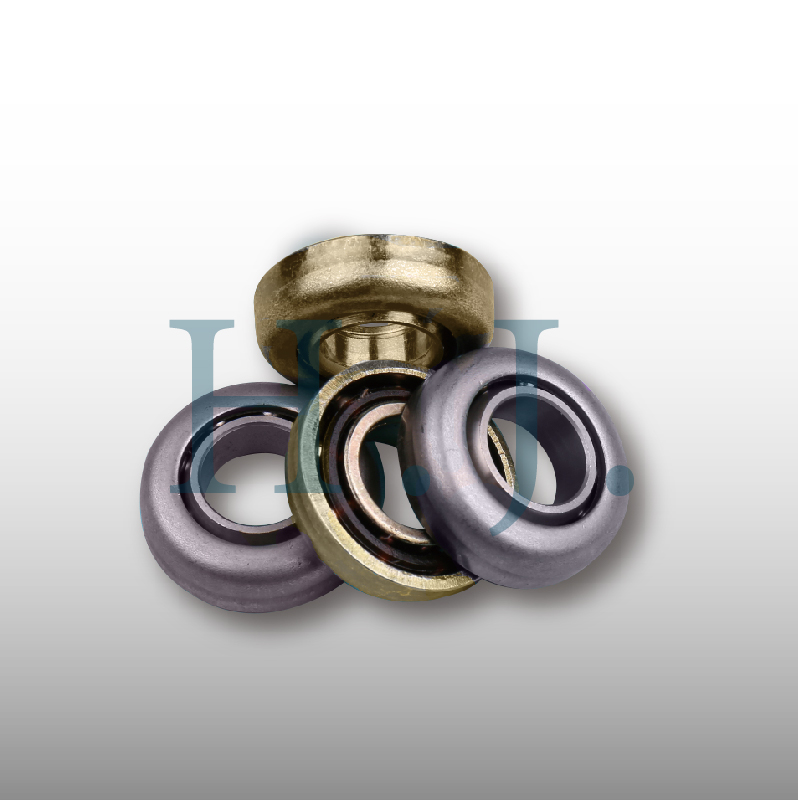
 Ceramic bearing manufacturer
Ceramic Bearing Manufacturer – Custom Ceramic Bearing Solutions for Specialized Applications
Selecting a reliable ceramic bearing manufacturer is important for applications that require characteristics beyond those offered by conventional all-steel bearings. Ceramic bearing components can be considered for specialized mechanical systems involving high speed, electrical insulation, reduced weight, low friction, corrosion resistance, temperature-related requirements, or other demanding operating conditions.
However, the term "ceramic bearing" covers several different bearing constructions. Some bearings use ceramic rolling elements combined with metal rings, while others may use more extensive ceramic components depending on the application. Material selection, bearing geometry, load, speed, lubrication, shaft fit, housing fit, and operating environment must therefore be evaluated together.
HSIAN JI BEARING CO., LTD. is a Taiwan bearing manufacturer established in 1995. Its published product range includes ball bearings, plastic bearings, thrust bearings, stamped bearings, slide bearings, special bearings, and non-standard bearings.
For customers searching for a ceramic bearing manufacturer, HSIAN JI can evaluate special and non-standard bearing projects according to customer drawings, samples, material specifications, dimensional requirements, applications, and production quantities.
What Is a Ceramic Bearing?
A ceramic bearing is a bearing that uses ceramic material in one or more important components.
Depending on the design, ceramic materials may be considered for:
-
Rolling elements
-
Bearing rings
-
Specialized structural components
One common configuration is the hybrid ceramic bearing, which combines ceramic rolling elements with metal bearing rings.
Other applications may require more extensive ceramic construction.
The appropriate design depends on the mechanical and environmental requirements of the application.
What Does a Ceramic Bearing Manufacturer Do?
A ceramic bearing manufacturer or custom bearing supplier evaluates whether ceramic materials are appropriate for a specific mechanical application.
The evaluation may include:
-
Bearing dimensions
-
Bearing type
-
Load
-
Operating speed
-
Temperature
-
Electrical requirements
-
Corrosion environment
-
Lubrication
-
Shaft and housing dimensions
-
Production quantity
For customized projects, material selection should never be considered independently from the mechanical design.
Why Use Ceramic Bearing Components?
Ceramic materials can provide useful characteristics for certain specialized applications.
Depending on ceramic type and bearing construction, potential advantages may include:
-
Lower density than many steels
-
Electrical insulation
-
Corrosion resistance
-
Reduced rolling-element mass
-
High hardness
-
Suitability for certain high-speed applications
-
Reduced sensitivity to some environmental conditions
However, ceramics also have different mechanical characteristics from metals.
The complete bearing design must therefore be evaluated carefully.
Ceramic Bearings vs. Steel Bearings
Conventional steel bearings are suitable for a very broad range of mechanical applications.
Ceramic-bearing solutions are generally considered when the application has specific requirements that justify different materials.
Differences can involve:
-
Density
-
Electrical conductivity
-
Corrosion resistance
-
Thermal behavior
-
Hardness
-
Cost
-
Impact sensitivity
-
Manufacturing complexity
Ceramic is not automatically the better material for every bearing application.
The correct choice depends on the operating conditions.
Hybrid Ceramic Bearings
Hybrid ceramic bearings typically combine ceramic rolling elements with metal bearing rings.
This construction can provide some of the characteristics of ceramic rolling elements while maintaining conventional metallic ring structures.
Potential applications may involve:
-
High-speed rotating equipment
-
Electrical equipment
-
Specialized motors
-
Precision machinery
-
Application-specific mechanical systems
Customers should provide complete load, speed, dimensions, temperature, and environment information before selecting a hybrid ceramic configuration.
Full Ceramic Bearings
A full ceramic bearing generally uses ceramic material for more of the primary bearing components.
These products may be considered for applications where electrical insulation, corrosion resistance, chemical compatibility, or other specialized material properties are important.
However, full ceramic bearings can have very different characteristics from conventional steel bearings.
Manufacturing feasibility and application suitability should be reviewed individually.
Ceramic Ball Bearing Manufacturing
Ball bearings are among the most common structures associated with ceramic rolling elements.
A ceramic ball bearing project may require evaluation of:
-
Ball material
-
Ring material
-
Bore diameter
-
Outside diameter
-
Width
-
Load
-
Speed
-
Lubrication
-
Operating environment
HSIAN JI currently lists ball bearings as one of its core product categories.
For projects involving ceramic-material requirements, customers should provide complete specifications for technical evaluation.
Custom Ceramic Bearing Dimensions
Standard ceramic-bearing dimensions may not suit every mechanical product.
OEM and special-equipment manufacturers may require:
-
Custom inner diameter
-
Custom outer diameter
-
Special width
-
Special flange
-
Unique mounting features
-
Non-standard external geometry
Custom dimensions should always be evaluated together with the bearing material and expected operating conditions.
Changing one dimension can influence the entire bearing structure.
Ceramic Bearings for High-Speed Applications
Ceramic rolling elements are often considered in applications where rotational speed is an important engineering factor.
Lower rolling-element mass may be beneficial in certain high-speed designs.
However, bearing speed capability also depends on:
-
Bearing geometry
-
Cage design
-
Lubrication
-
Load
-
Precision
-
Temperature
-
Shaft balance
-
Housing alignment
Customers should provide actual operating speed and application requirements rather than relying only on material selection.
Ceramic Bearings for Electrical Insulation
Ceramic materials are electrically insulating compared with conventional bearing steels.
This can make ceramic-bearing configurations relevant to certain motors, generators, and electrical equipment where unwanted electrical current through the bearing is a concern.
However, the complete bearing construction must be considered.
If electrical insulation is critical, customers should specify the required electrical characteristics and operating conditions.
Ceramic Bearings for Corrosive Environments
Some ceramic materials provide excellent corrosion resistance compared with many metals.
This can make them interesting for applications exposed to:
-
Moisture
-
Water
-
Chemicals
-
Corrosive atmospheres
However, corrosion resistance depends on the exact ceramic material and the other components in the bearing.
A hybrid bearing may still contain metal rings, cages, or other metallic components.
Customers should therefore describe the complete exposure conditions.
Ceramic Bearings for Temperature-Related Applications
Ceramic materials can maintain useful properties under temperature conditions that may differ from conventional bearing steels.
However, a bearing is a complete system.
Temperature capability can also be limited by:
-
Lubrication
-
Cage material
-
Seals
-
Metal components
-
Fits and thermal expansion
Customers requiring bearings for elevated or reduced temperatures should provide the complete temperature range.
Ceramic Bearings for Precision Applications
Precision mechanical systems can benefit from careful material and bearing selection.
Potential applications can include:
-
Precision machinery
-
High-speed equipment
-
Specialized instruments
-
Motors
-
Automation systems
Important requirements can include:
-
Dimensional accuracy
-
Rotational accuracy
-
Load
-
Speed
-
Vibration
-
Noise
-
Temperature
Ceramic material alone does not determine bearing precision.
The complete design and manufacturing specification are important.
Ceramic Bearings for Motors
Electric motors are one area where hybrid ceramic bearings may be considered.
Potential reasons can include:
-
Electrical insulation
-
High rotational speed
-
Reduced rolling-element mass
-
Specialized durability requirements
The correct bearing should be selected according to motor speed, radial and axial loads, shaft dimensions, housing fit, temperature, lubrication, and electrical conditions.
Ceramic Bearings for Industrial Machinery
Industrial machinery can have specialized operating conditions that make ceramic-bearing components worth evaluating.
Applications may involve:
-
High-speed shafts
-
Electrically sensitive equipment
-
Corrosive environments
-
Precision assemblies
-
Specialized processing machines
Customers should provide complete mechanical and environmental requirements before a bearing material is selected.
Ceramic Bearings for OEM Products
OEM manufacturers may require ceramic-bearing solutions developed specifically around their products.
An OEM project can involve:
-
Custom dimensions
-
Special materials
-
Dedicated housing
-
Unique shaft size
-
High-speed requirements
-
Electrical insulation
-
Corrosion resistance
OEM customers should provide engineering drawings, material requirements, application information, initial quantities, and estimated annual demand.
Ceramic Bearings Based on Engineering Drawings
Engineering drawings provide an effective technical foundation for a custom bearing project.
Customers can provide:
-
2D technical drawings
-
3D CAD models
-
Assembly drawings
-
Required ceramic material
-
Ring material
-
Critical dimensions
-
Required tolerances
-
Load
-
Speed
-
Mounting information
If the ceramic material has already been specified by the customer's engineer, the exact material specification should be included.
Ceramic Bearing Development from Physical Samples
Some projects involve replacing or reproducing an existing ceramic or hybrid bearing.
Customers may have:
-
An original bearing
-
An imported bearing
-
A discontinued component
-
A hard-to-find product
-
A proprietary OEM bearing
A physical sample can provide useful dimensional and structural information.
However, it may not be possible to determine the exact ceramic composition or original performance specification from appearance alone.
Original material documentation should be provided whenever available.
Special Ceramic Bearings
Special bearing applications may require both unconventional geometry and ceramic-material requirements.
A special ceramic-bearing project can potentially involve:
-
Special bore dimensions
-
Custom outside diameter
-
Unique width
-
Application-specific mounting
-
Dedicated material combination
HSIAN JI lists Special Bearings as one of its published product categories.
Projects involving ceramic materials should be submitted for technical evaluation rather than assumed to be standard production items.
Non-Standard Ceramic Bearings
Non-standard bearing projects are particularly relevant when standard catalogue products cannot satisfy dimensions, mounting, or material requirements.
HSIAN JI also lists Non-standard Bearings as a dedicated product category.
A non-standard ceramic-bearing inquiry should include:
-
Drawing
-
Dimensions
-
Ceramic material
-
Ring material
-
Load
-
Speed
-
Environment
-
Quantity
This allows the manufacturer to determine whether the project is feasible.
Prototype Ceramic Bearing Development
Prototype manufacturing can help verify a new ceramic-bearing design before larger production quantities are considered.
A prototype can be evaluated for:
-
Dimensions
-
Shaft fit
-
Housing fit
-
Installation
-
Rotational movement
-
Assembly compatibility
For specialized applications, the customer should also perform appropriate functional testing within the actual equipment.
Testing Ceramic Bearings
Testing requirements depend on the bearing application.
Potential evaluation can include:
-
Dimensional inspection
-
Rotational verification
-
Fit checking
-
Speed testing
-
Temperature testing
-
Customer application testing
Where electrical insulation or chemical resistance is critical, application-specific testing requirements should be defined in advance.
Low Volume Ceramic Bearing Projects
Specialized ceramic-bearing projects may initially require relatively small quantities.
Possible applications include:
-
Prototype equipment
-
R&D projects
-
Specialized machinery
-
Replacement components
-
Initial OEM production
HSIAN JI's official FAQ states that it does not have one universal minimum order quantity for every product; the quantity depends on the product type.
Customers should therefore provide the actual required quantity for evaluation.
Quality Control for Ceramic Bearing Projects
Custom ceramic-bearing projects require clearly defined specifications.
Quality control can involve:
-
Material verification
-
Dimensional inspection
-
Manufacturing-process control
-
Finished-product inspection
-
Functional verification
-
Customer-defined testing
For custom products, approved drawings and technical specifications provide important production references.
How to Choose a Ceramic Bearing Manufacturer
When searching for a ceramic bearing manufacturer, buyers should consider:
-
Bearing engineering experience
-
Custom-development capability
-
Material understanding
-
Drawing evaluation
-
Prototype support
-
Special and non-standard bearing capability
-
Quality control
-
Production flexibility
-
Technical communication
The manufacturer should be willing to evaluate whether ceramic is actually appropriate for the application rather than simply offering it as a universal replacement for steel.
HSIAN JI – Ceramic Bearing Project Evaluation from Taiwan
HSIAN JI BEARING CO., LTD. was established in Taiwan in 1995 and currently publishes a bearing range including ball bearings, plastic bearings, thrust bearings, stamped bearings, slide bearings, special bearings, and non-standard bearings. The company also states that it is a factory and works with additional suppliers to provide a wider range of products.
For customers searching for a ceramic bearing manufacturer, HSIAN JI can evaluate ceramic, hybrid, special, and non-standard bearing requirements according to project specifications.
Please provide:
-
2D engineering drawing
-
3D CAD model
-
Physical sample
-
Bearing dimensions
-
Ceramic material specification
-
Ring material specification
-
Required tolerances
-
Load
-
Speed
-
Temperature
-
Electrical requirements
-
Chemical or moisture exposure
-
Required quantity
-
Estimated annual demand
HSIAN JI can review the project and discuss an appropriate bearing sourcing, development, or manufacturing solution according to technical feasibility.
Ceramic Bearing Manufacturer FAQ
What is a ceramic bearing manufacturer?
A ceramic bearing manufacturer produces or develops bearings that incorporate ceramic materials in rolling elements, rings, or other bearing components.
The exact construction depends on the application and material requirements.
What are ceramic bearings?
Ceramic bearings are bearings that use ceramic material in one or more components.
They can include hybrid ceramic bearings as well as more extensively ceramic-bearing constructions.
What is a hybrid ceramic bearing?
A hybrid ceramic bearing generally combines ceramic rolling elements with metal bearing rings.
This allows the bearing to use certain properties of ceramic rolling elements while maintaining metallic rings.
What is a full ceramic bearing?
A full ceramic bearing generally uses ceramic materials for a greater proportion of the primary bearing structure.
The exact design can vary by manufacturer and application.
Does HSIAN JI currently list ceramic bearings as a standard product category?
HSIAN JI's current public website lists plastic, thrust, stamped, slide, ball, special, and non-standard bearings. Ceramic bearings are not shown as a separate standard product category in the current published product list.
Ceramic-material requirements should therefore be submitted as a special project for evaluation.
Can HSIAN JI evaluate ceramic bearing projects?
HSIAN JI states that it develops and manufactures products and that it is a factory working with multiple suppliers to offer a wider range of products.
Customers can submit ceramic-bearing specifications for feasibility evaluation.
What are the advantages of ceramic bearings?
Depending on the ceramic material and bearing construction, potential characteristics can include:
-
Low density
-
High hardness
-
Electrical insulation
-
Corrosion resistance
-
Suitability for certain high-speed applications
Actual benefits depend on the complete bearing design.
Are ceramic bearings always better than steel bearings?
No.
Steel bearings are highly suitable for many mechanical applications.
Ceramic-bearing configurations are usually selected when specific material characteristics provide an advantage for the intended operating conditions.
Are ceramic bearings lighter than steel bearings?
Ceramic rolling elements can have lower density than steel rolling elements, depending on the ceramic material.
However, the weight of the complete bearing depends on all components.
Are ceramic bearings suitable for high speed?
Ceramic rolling elements can be advantageous in certain high-speed applications because of properties such as lower mass.
However, speed capability also depends on bearing geometry, lubrication, cage design, precision, load, and temperature.
Are ceramic bearings electrically insulating?
Ceramic materials commonly used in bearing applications can provide electrical insulation.
Hybrid ceramic bearings may therefore be considered for some electrical machinery applications.
The complete bearing construction and required insulation performance should be evaluated.
Are ceramic bearings corrosion resistant?
Some ceramic materials offer excellent corrosion resistance.
However, hybrid bearings may still contain metal rings or cages that can corrode.
The complete material combination should therefore be evaluated.
Are ceramic bearings waterproof?
Ceramic material itself does not automatically make a bearing waterproof.
Water ingress depends on the bearing's sealing design.
Material corrosion resistance and waterproof sealing are different requirements.
Are ceramic bearings chemical resistant?
Chemical resistance depends on the specific ceramic material and chemical environment.
Customers should identify the chemical, concentration, temperature, and exposure conditions.
Can ceramic bearings operate at high temperatures?
Some ceramic materials can tolerate high temperatures, but complete bearing temperature capability may be limited by lubricants, cages, seals, and other components.
Customers should provide the full operating temperature range.
Can ceramic bearings be used at low temperatures?
Potentially, depending on the bearing construction, lubrication, material combination, and application.
Low-temperature requirements should be defined during technical evaluation.
Can ceramic bearings be used in electric motors?
Hybrid ceramic bearings are often considered for certain electric motor applications where speed or electrical insulation is important.
The correct selection depends on the motor design and operating requirements.
Can ceramic bearings be used in industrial machinery?
Yes, they may be considered for specialized industrial applications.
Customers should provide dimensions, load, speed, environment, and required material characteristics.
Can ceramic bearings be used in precision equipment?
Potentially.
Precision applications require evaluation of bearing tolerances, rotational accuracy, speed, vibration, load, and complete mechanical design.
Ceramic material alone does not determine precision performance.
Can you manufacture custom-size ceramic bearings?
Custom-size requirements can be submitted for evaluation.
Possible requirements may involve:
-
Inner diameter
-
Outer diameter
-
Width
-
Mounting features
-
External geometry
Manufacturing feasibility depends on material, design, and quantity.
Can you manufacture special ceramic bearings?
Special ceramic-bearing projects can be evaluated according to dimensions, material requirements, geometry, operating conditions, and quantity.
HSIAN JI currently publishes Special Bearings as one of its product categories.
Can you manufacture non-standard ceramic bearings?
Non-standard ceramic-bearing requirements can be submitted for evaluation.
HSIAN JI also publishes a dedicated Non-standard Bearings category.
The feasibility of adding ceramic-material requirements depends on the project.
Can ceramic bearing dimensions be based on my drawing?
Yes. Engineering drawings provide the best basis for custom project evaluation.
Customers should specify dimensions, tolerances, ceramic materials, metal materials, and critical operating requirements.
Can you work from a 3D CAD model?
Yes, a 3D CAD model can help communicate geometry and assembly relationships.
A dimensioned 2D drawing is also recommended for tolerance and manufacturing specifications.
Can you reproduce a ceramic bearing from a physical sample?
A physical sample can help establish dimensions and structure.
However, the exact ceramic material or original engineering specifications may not be identifiable from appearance alone.
Material documentation should be supplied whenever available.
Can ceramic bearings replace obsolete bearings?
Potentially.
If an obsolete bearing used ceramic components, customers can provide the original sample, drawings, dimensions, materials, load, speed, and application information for evaluation.
Can ceramic bearings be produced in low volumes?
Low-volume requirements can be submitted for evaluation.
HSIAN JI's official FAQ states that minimum-order requirements depend on the product type rather than one universal quantity.
Can I order a ceramic bearing prototype?
Prototype requirements can be submitted for technical and commercial evaluation.
Prototype feasibility depends on the bearing design, ceramic components, tooling, quantity, and manufacturing process.
What ceramic material should I choose?
Material selection depends on the application.
Customers should provide requirements involving:
-
Load
-
Speed
-
Temperature
-
Electrical insulation
-
Corrosion
-
Chemicals
-
Wear
-
Environment
If an engineering specification already defines a ceramic grade, it should be included in the drawing.
What information should I provide for a ceramic bearing quotation?
For a ceramic bearing manufacturer inquiry, provide:
-
Bearing type
-
2D drawing
-
3D CAD model
-
Physical sample
-
Inner diameter
-
Outer diameter
-
Width
-
Ceramic material
-
Ring material
-
Cage material, if specified
-
Required tolerances
-
Load
-
Speed
-
Operating temperature
-
Electrical requirements
-
Chemical or moisture exposure
-
Required quantity
-
Estimated annual demand
The more complete the information, the more accurately the project can be evaluated.
Are ceramic bearings maintenance-free?
Not necessarily.
Maintenance requirements depend on bearing construction, lubrication, seals, load, speed, and environment.
Ceramic materials do not automatically eliminate the need for lubrication or maintenance.
Are ceramic bearings more expensive than steel bearings?
Ceramic-bearing components are often more costly than conventional steel components because of material and manufacturing requirements.
Actual cost depends on design, material, precision, quantity, and complexity.
What is the difference between ceramic bearings and hybrid ceramic bearings?
Ceramic bearings is a broad term.
Hybrid ceramic bearings specifically combine ceramic rolling elements with metal rings.
Other ceramic-bearing designs may use more ceramic components.
What is the difference between ceramic bearings and stainless steel bearings?
Ceramic and stainless steel are different material approaches.
Stainless steel bearings are generally selected for corrosion-resistant metallic construction.
Ceramic bearings may be selected for characteristics such as electrical insulation, low rolling-element mass, hardness, corrosion resistance, or specialized operating requirements.
Why choose a Taiwan ceramic bearing manufacturer or supplier?
Taiwan has a strong precision-manufacturing ecosystem covering bearings, machinery, metalworking, plastics, and OEM components.
International customers can use Taiwan suppliers for custom engineering, special materials, non-standard dimensions, prototype evaluation, and repeat production.
Why contact HSIAN JI for ceramic bearing requirements?
HSIAN JI BEARING CO., LTD. was established in 1995 and is a Taiwan bearing factory with published capabilities covering ball, plastic, thrust, stamped, slide, special, and non-standard bearings. The company also works with multiple suppliers to broaden the product solutions it can provide.
If you are searching for a ceramic bearing manufacturer for a custom, hybrid, special, non-standard, prototype, or OEM application, send HSIAN JI your drawings, ceramic-material requirements, dimensions, operating conditions, and production quantities for technical evaluation.