
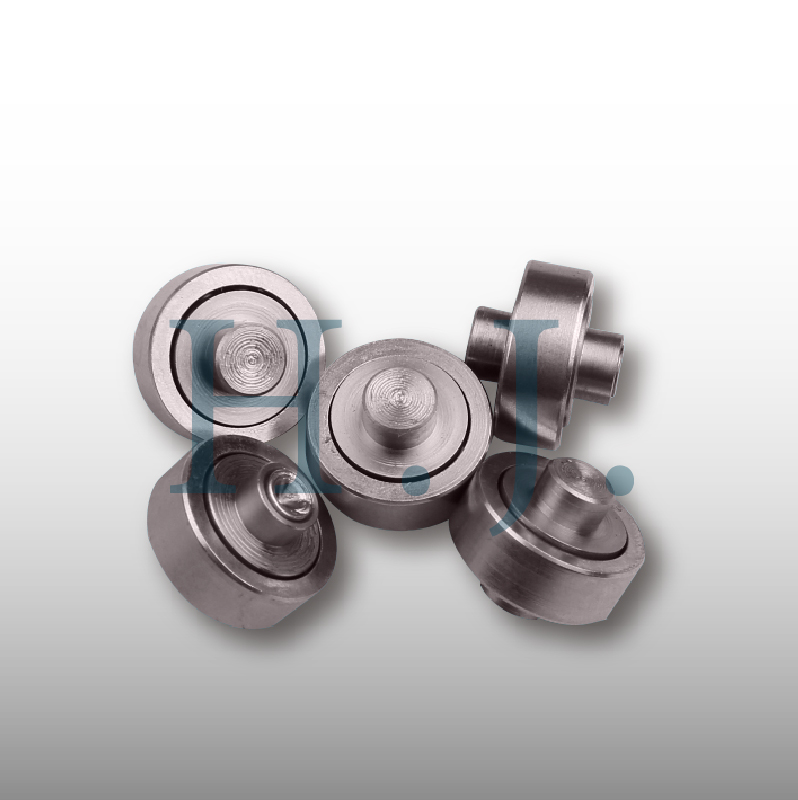
 Prototype bearing manufacturing
Prototype Bearing Manufacturing – From Custom Bearing Design to Production
Developing a new bearing product often begins long before mass production. When a standard catalogue bearing cannot meet the dimensional, structural, material, or application requirements of a mechanical product, prototype bearing manufacturing provides an important step between initial design and regular production.
A bearing prototype allows engineers and OEM manufacturers to physically evaluate dimensions, installation, movement, fit, assembly compatibility, and other functional requirements before committing to larger production quantities. This can be particularly important for custom, special, non-standard, and application-specific bearing projects.
HSIAN JI BEARING CO., LTD. is a bearing manufacturer based in Taiwan. Established in 1995, HSIAN JI develops and manufactures bearing products including ball bearings, plastic bearings, thrust bearings, stamped bearings, slide bearings, special bearings, and non-standard bearings.
For customers requiring prototype bearing manufacturing, HSIAN JI can evaluate projects according to engineering drawings, physical samples, dimensions, materials, application information, operating conditions, and expected production quantities.
What Is Prototype Bearing Manufacturing?
Prototype bearing manufacturing is the process of producing an initial physical bearing or small development batch before regular production begins.
The purpose is to verify whether the proposed design can meet the customer's technical and application requirements.
A prototype may be used to evaluate:
-
Dimensions
-
Fit
-
Installation
-
Movement
-
Assembly compatibility
-
Mounting
-
Material suitability
-
Mechanical interaction
-
Application requirements
The prototype stage can identify potential issues before the project moves into trial production or mass manufacturing.
Why Is Bearing Prototyping Important?
A technical drawing can describe dimensions and geometry, but it does not always show how a bearing will behave inside the actual product.
A prototype provides a physical reference that can be installed and evaluated.
This is especially useful when:
-
The bearing has custom dimensions
-
Installation space is limited
-
The product is a new OEM design
-
The bearing has unusual mounting features
-
A standard bearing has been modified
-
A non-standard bearing is being developed
-
An obsolete bearing is being replaced
Prototype development can reduce the risk of discovering fit or assembly problems after larger quantities have already been manufactured.
Prototype Bearing Manufacturing from Engineering Drawings
Engineering drawings are one of the most effective starting points for prototype development.
Customers can provide:
-
2D technical drawings
-
3D CAD models
-
Assembly drawings
-
Material specifications
-
Critical dimensions
-
Required tolerances
-
Mounting requirements
The drawing should clearly identify dimensions that are important to fit and function.
An assembly drawing can be especially useful because it shows how the bearing interacts with shafts, housings, wheels, rollers, rails, brackets, and other mechanical components.
Prototype Bearings from Physical Samples
Not every development project begins with a drawing.
Customers may have an existing bearing or mechanical component that needs to be reproduced, modified, or redesigned.
Physical samples can be useful for:
-
Replacement bearings
-
Older machinery
-
Imported equipment
-
Discontinued products
-
Existing OEM components
-
Hard-to-find bearings
HSIAN JI supports product and sample development according to customer requirements.
Customers should also provide application information because a physical sample may not reveal all original specifications.
Prototype Ball Bearing Manufacturing
Ball bearings are widely used in rotational mechanical applications.
A prototype ball bearing may be required when standard dimensions cannot meet the application.
Customers should provide:
-
Inner diameter
-
Outer diameter
-
Width
-
Shaft dimensions
-
Housing dimensions
-
Load
-
Operating speed
-
Installation conditions
-
Required quantity
HSIAN JI manufactures ball bearing products and can evaluate customer-specific development projects.
Prototype Plastic Bearing Manufacturing
Plastic bearings can be useful for applications requiring lightweight construction, corrosion resistance, reduced noise, moisture resistance, or design flexibility.
Prototype development can help determine whether the selected material and dimensions are suitable for the application.
Customers should provide:
-
Plastic material requirements
-
Load
-
Speed
-
Temperature
-
Moisture
-
Chemical exposure
-
Movement
-
Installation conditions
Testing the prototype within the actual product can provide valuable application feedback.
Prototype Thrust Bearing Manufacturing
Thrust bearings are primarily designed to support axial loads.
A prototype thrust bearing may be useful when a customer requires special dimensions or a non-standard configuration.
Important information can include:
-
Inner diameter
-
Outer diameter
-
Thickness
-
Axial load
-
Operating speed
-
Shaft dimensions
-
Installation space
-
Material requirements
Prototype verification can help confirm fit and assembly before regular production.
Prototype Slide Bearing Manufacturing
Slide bearings support and guide linear movement.
For custom slide bearing projects, prototype development can be particularly important because the bearing must interact correctly with a rail, guide, housing, bracket, or frame.
HSIAN JI maintains slide bearings as a dedicated product category.
Customers should provide assembly drawings whenever possible so the complete movement system can be evaluated.
Prototype Stamped Bearing Manufacturing
Stamped bearings can be used in mechanical, hardware, furniture, equipment, and industrial applications.
Prototype stamped-bearing projects may involve:
-
Special stamped geometry
-
Custom dimensions
-
Dedicated mounting features
-
Unique housing structures
-
Application-specific configurations
HSIAN JI includes stamped bearings among its product categories.
Customers can submit drawings, samples, materials, and quantities for evaluation.
Prototype Special and Non-Standard Bearings
Prototype manufacturing is particularly relevant to special and non-standard bearings because these products often differ from standard catalogue designs.
HSIAN JI maintains dedicated special and non-standard bearing categories. Its non-standard bearing range serves applications including machinery, conveyors, medical equipment, office equipment, transportation, packaging, furniture, bicycles, scooters, and skates.
A prototype can help verify whether a proposed custom design works correctly within the intended application.
Prototype Bearing Design Review
Before manufacturing a prototype, the technical information should be reviewed.
This evaluation may consider:
-
Bearing type
-
Dimensions
-
Material
-
Manufacturing method
-
Application
-
Load
-
Speed
-
Installation
-
Quantity
-
Future production requirements
The objective is to identify potential design or manufacturing issues before the prototype is produced.
Custom Dimensions for Prototype Bearings
Prototype development is often required because standard bearing dimensions are unsuitable.
Customization can involve:
-
Inner diameter
-
Outer diameter
-
Width
-
Thickness
-
Flange dimensions
-
Mounting dimensions
-
Overall geometry
Customers should provide complete dimensional information.
Changing one dimension can influence other parts of the bearing, so the complete structure should be reviewed rather than considering individual dimensions independently.
Material Selection During Prototype Development
Material selection can influence bearing performance, wear, corrosion resistance, weight, noise, and environmental suitability.
Customers should provide information about:
-
Load
-
Speed
-
Temperature
-
Moisture
-
Chemicals
-
Corrosion
-
Indoor or outdoor use
-
Wear requirements
If the material is already specified, it should be clearly identified on the drawing.
If not, application conditions can provide the basis for technical evaluation.
Prototype Bearings for OEM Product Development
OEM manufacturers often require prototype bearings while developing a new product.
At this stage, the complete product may still be evolving.
A prototype can help engineers determine whether the bearing fits the intended:
-
Shaft
-
Housing
-
Mechanical layout
-
Product dimensions
-
Assembly sequence
-
Movement
OEM customers should also consider future production quantities during prototype development so the proposed bearing can be evaluated for manufacturability.
Prototype Bearings for ODM Projects
Some customers begin with an application or concept rather than a finished bearing design.
HSIAN JI's official Design and Product Development page describes product development as a process that includes product design, prototyping, testing, production, and launch.
A typical development path may include:
-
Application review
-
Requirement analysis
-
Product concept
-
Bearing design
-
Material selection
-
Prototype manufacturing
-
Testing and verification
-
Design adjustment
-
Production preparation
-
Trial production
-
Regular manufacturing
This approach connects engineering development with production feasibility.
Testing Prototype Bearings
After the prototype is manufactured, testing can begin.
Depending on the application, prototype evaluation can include:
-
Dimensional inspection
-
Fit checking
-
Installation testing
-
Movement evaluation
-
Assembly verification
-
Customer-defined functional testing
Customers may also install the bearing in the actual product or machine for further verification.
The purpose is to identify whether any design changes are required before production.
Modifying a Prototype After Testing
Prototype development is often an iterative process.
If testing identifies issues, adjustments may be required.
Possible modifications can involve:
-
Inner diameter
-
Outer diameter
-
Width
-
Mounting features
-
Material
-
External geometry
-
Assembly relationship
The revised design can then be evaluated again before production preparation.
This flexibility is one of the main advantages of prototype manufacturing.
Prototype Bearing Inspection
Inspection provides objective dimensional information before the sample is approved.
Depending on the product, inspection may include:
-
Inner diameter
-
Outer diameter
-
Width
-
Thickness
-
Flange dimensions
-
Mounting dimensions
-
Customer-defined critical features
Customers should identify critical dimensions and tolerances on the engineering drawing.
From Prototype to Trial Production
A successful prototype does not automatically mean the product is ready for large-scale manufacturing.
Trial production can help confirm whether the approved design can be produced consistently.
Trial production may evaluate:
-
Manufacturing procedures
-
Production consistency
-
Inspection methods
-
Assembly
-
Process stability
-
Manufacturing efficiency
This step provides a bridge between prototype development and regular production.
From Trial Production to Mass Production
Once the manufacturing process is confirmed, the bearing can move into regular production.
For OEM and recurring projects, production planning can consider:
-
Initial order quantity
-
Annual demand
-
Order frequency
-
Production forecasts
-
Packaging requirements
-
Delivery requirements
The approved prototype, drawings, and specifications can provide references for future production batches.
Low Volume Prototype Bearing Manufacturing
Prototype projects generally begin with relatively small quantities.
However, low-volume production requirements can vary significantly depending on the bearing.
Factors affecting feasibility include:
-
Bearing structure
-
Material
-
Manufacturing process
-
Tooling
-
Required tolerances
-
Quantity
Customers should provide both the prototype quantity and expected future production demand.
This helps the manufacturer understand the full project rather than evaluating only the initial sample.
Replacement Bearing Prototypes
Prototype development can also be useful for replacement projects.
An existing bearing may be:
-
Obsolete
-
Discontinued
-
Hard to find
-
Custom-made
-
Unusual in size
-
No longer supported by the original supplier
A replacement prototype can be developed from the original bearing, available drawings, shaft dimensions, housing dimensions, and application information.
The prototype can then be tested before further production.
Prototype Bearings for Hard-to-Find Components
A difficult-to-source bearing may not have a direct catalogue replacement.
Prototype manufacturing provides a way to evaluate a custom alternative.
Customers should provide:
-
Original bearing
-
Part number, if available
-
Drawings
-
Dimensions
-
Shaft and housing information
-
Application
-
Load
-
Speed
-
Required quantity
The manufacturer can then evaluate whether custom replacement manufacturing is feasible.
Quality Control During Prototype Bearing Manufacturing
Prototype quality is important because the sample becomes a reference for future production.
Quality control can include:
-
Raw material verification
-
Manufacturing process control
-
Dimensional inspection
-
Product testing
-
Finished-sample inspection
-
Documentation
Clear approval criteria should be established before moving into trial or mass production.
Applications for Prototype Bearing Manufacturing
Prototype bearings can be developed for applications including:
-
Industrial machinery
-
Automation equipment
-
Conveyors
-
Packaging systems
-
Medical equipment
-
Office equipment
-
Furniture systems
-
Sliding doors
-
Windows
-
Hardware products
-
Transportation products
-
Bicycles
-
Scooters
-
Fitness equipment
-
Sporting goods
-
Specialized OEM products
HSIAN JI's product range serves many of these mechanical and industrial applications.
Why Choose Prototype Bearing Manufacturing in Taiwan?
Taiwan has a mature manufacturing ecosystem supporting bearings, machinery, metalworking, precision components, plastics, hardware, tooling, and OEM development.
For international customers, working with a Taiwan bearing manufacturer can be useful when projects require:
-
Engineering communication
-
Custom dimensions
-
Prototype development
-
Sample evaluation
-
Testing
-
Trial production
-
Repeat manufacturing
HSIAN JI has been involved in bearing development and manufacturing since 1995.
HSIAN JI – Prototype Bearing Manufacturing in Taiwan
HSIAN JI manufactures and develops ball bearings, plastic bearings, thrust bearings, stamped bearings, slide bearings, special bearings, and non-standard bearings.
For prototype bearing manufacturing, customers can provide:
-
2D engineering drawings
-
3D CAD models
-
Assembly drawings
-
Physical samples
-
Required dimensions
-
Materials
-
Critical tolerances
-
Load
-
Speed
-
Movement
-
Operating environment
-
Prototype quantity
-
Estimated future production quantity
If you are developing a new bearing, replacing a difficult-to-source component, or preparing an OEM product for production, HSIAN JI can evaluate your prototype bearing requirements and discuss a suitable development-to-production solution.
Prototype Bearing Manufacturing FAQ
What is prototype bearing manufacturing?
Prototype bearing manufacturing is the production of an initial bearing sample or development quantity before regular manufacturing begins.
The prototype is used to verify design, dimensions, installation, movement, and application requirements.
Why should I make a bearing prototype before mass production?
A prototype allows the bearing to be physically tested inside the actual product or machine.
It can help identify dimensional, installation, assembly, or functional issues before larger quantities are manufactured.
Does HSIAN JI provide bearing prototype development?
HSIAN JI's official Design and Product Development page describes product development as including product design, prototyping, testing, production, and launch.
Custom bearing projects can therefore be submitted for development evaluation.
What types of prototype bearings can HSIAN JI evaluate?
HSIAN JI's product categories include:
-
Plastic bearings
-
Thrust bearings
-
Stamped bearings
-
Slide bearings
-
Ball bearings
-
Special bearings
-
Non-standard bearings
These categories are listed on the official website.
Can you manufacture prototype ball bearings?
HSIAN JI manufactures ball bearing products.
Prototype ball-bearing requirements can be evaluated according to dimensions, shaft and housing relationships, load, speed, installation, and quantity.
Can you manufacture prototype plastic bearings?
Plastic bearings are one of HSIAN JI's product categories.
Customers should provide dimensional, material, load, speed, temperature, moisture, and environmental requirements.
Can you manufacture prototype thrust bearings?
Thrust bearings are included in HSIAN JI's product range.
Customers should provide inner diameter, outer diameter, thickness, axial load, speed, material, and application information.
Can you manufacture prototype slide bearings?
HSIAN JI manufactures slide bearings.
Custom slide-bearing prototypes can be evaluated according to rail, guide, mounting, movement, dimensions, load, and assembly requirements.
Can you manufacture prototype stamped bearings?
Stamped bearings are part of HSIAN JI's product range.
Customers can provide drawings, samples, dimensions, materials, geometry, and prototype quantities for evaluation.
Can you manufacture prototype non-standard bearings?
Yes. HSIAN JI maintains a dedicated non-standard bearing product category.
Non-standard prototype requirements can be submitted with drawings, samples, application information, and quantities.
Can you make a prototype from my engineering drawing?
Engineering drawings are an effective starting point for prototype development.
Customers should provide dimensions, materials, tolerances, geometry, mounting features, and application information.
Can you work from a 3D CAD model?
A 3D CAD model can help communicate product geometry and assembly relationships.
A 2D drawing with critical dimensions and tolerances is also recommended for manufacturing evaluation.
Can you create a prototype from a physical bearing sample?
A physical sample can provide useful dimensional and structural information when original drawings are unavailable.
Customers should also provide operating conditions and application requirements whenever possible.
Can you prototype a replacement for an obsolete bearing?
Potentially.
Customers can provide the original bearing, available drawings, shaft dimensions, housing dimensions, load, speed, and application information for evaluation.
Can you prototype a hard-to-find bearing?
A difficult-to-source bearing may be suitable for custom prototype development if no standard replacement is available.
Physical samples and complete dimensional information are especially useful.
Can prototype bearing dimensions be customized?
Yes, custom dimensions can be evaluated according to product design and manufacturing feasibility.
These may include inner diameter, outer diameter, width, flange dimensions, mounting features, and other geometry.
Can a prototype be modified after testing?
Yes.
If the initial prototype does not meet fit, installation, movement, or functional requirements, modifications can be evaluated before production preparation.
How are prototype bearings tested?
Testing depends on the application and may include:
-
Dimensional inspection
-
Fit verification
-
Installation testing
-
Movement testing
-
Assembly checking
-
Customer-defined functional tests
The customer may also conduct testing in the actual equipment.
Do you inspect prototypes before shipment?
Prototype projects should include inspection according to agreed technical requirements.
Critical dimensions and tolerances should be clearly identified on the engineering drawing.
Can I order only one prototype bearing?
Prototype quantity feasibility depends on the product, structure, material, manufacturing process, tooling requirements, and other technical factors.
Customers should provide the actual required quantity for evaluation.
Is there a minimum order quantity for prototype bearings?
HSIAN JI does not publish one universal MOQ for every bearing type in the sources reviewed. Project quantity requirements should therefore be confirmed according to the individual product.
Providing both prototype quantity and future demand is recommended.
Can you produce a small batch after prototype approval?
After prototype approval, a small trial or initial production quantity can potentially be evaluated according to the manufacturing process and project requirements.
This can provide another verification stage before larger-scale manufacturing.
What is the difference between prototype production and trial production?
Prototype production focuses primarily on verifying the product design.
Trial production focuses more on verifying whether the approved product can be manufactured consistently using regular production processes.
Both stages can be important for customized bearings.
Can a prototype bearing move into mass production?
Yes.
A successful custom bearing project can progress from prototype development to testing, production preparation, trial production, and regular manufacturing.
HSIAN JI's official product-development information describes a workflow that includes prototyping, testing, and production.
Can prototype bearings be used for OEM product development?
Yes.
OEM manufacturers can use prototypes to verify how the bearing integrates with the complete product before production specifications are finalized.
Customers should also provide expected future production quantities.
Can prototype bearing manufacturing support ODM projects?
Yes, prototype development is especially relevant to projects that begin with an application or concept rather than a completed production design.
HSIAN JI's development capabilities include product design, prototyping, testing, and production.
What information should I provide for a prototype bearing quotation?
For a prototype bearing manufacturing inquiry, provide as much of the following information as possible:
-
Bearing type
-
2D technical drawing
-
3D CAD model
-
Assembly drawing
-
Physical sample
-
Inner diameter
-
Outer diameter
-
Width
-
Materials
-
Required tolerances
-
Load
-
Speed
-
Movement
-
Operating environment
-
Prototype quantity
-
Estimated annual production quantity
Complete information helps make technical and commercial evaluation more efficient.
How long does prototype bearing manufacturing take?
Lead time depends on bearing design, materials, tooling requirements, manufacturing processes, testing, and prototype quantity.
The schedule should be confirmed after the manufacturer reviews the complete project information.
Are prototype bearings more expensive per piece than mass-produced bearings?
Prototype unit costs can be higher because development, tooling, setup, engineering review, and low quantities may be involved.
Actual cost depends on the specific product and manufacturing requirements.
What industries use prototype bearing manufacturing?
Prototype bearing development can be relevant to industrial machinery, automation systems, conveyors, packaging equipment, medical equipment, furniture systems, sliding products, transportation components, sporting goods, and specialized OEM products.
HSIAN JI's non-standard bearing products already serve a broad range of these applications.
What happens after prototype approval?
After prototype approval, the next stages may include production preparation, trial production, process verification, and regular manufacturing.
The exact sequence depends on project complexity and customer requirements.
Why choose HSIAN JI for prototype bearing manufacturing?
HSIAN JI BEARING CO., LTD. was established in 1995 and manufactures ball, plastic, thrust, stamped, slide, special, and non-standard bearings.
Its official Design and Product Development information specifically includes prototyping and testing as part of the process from concept to production.
If you need prototype bearing manufacturing for a custom bearing, OEM product, non-standard design, replacement component, or new mechanical application, send HSIAN JI your drawings, samples, specifications, prototype quantity, and future production requirements for evaluation.