
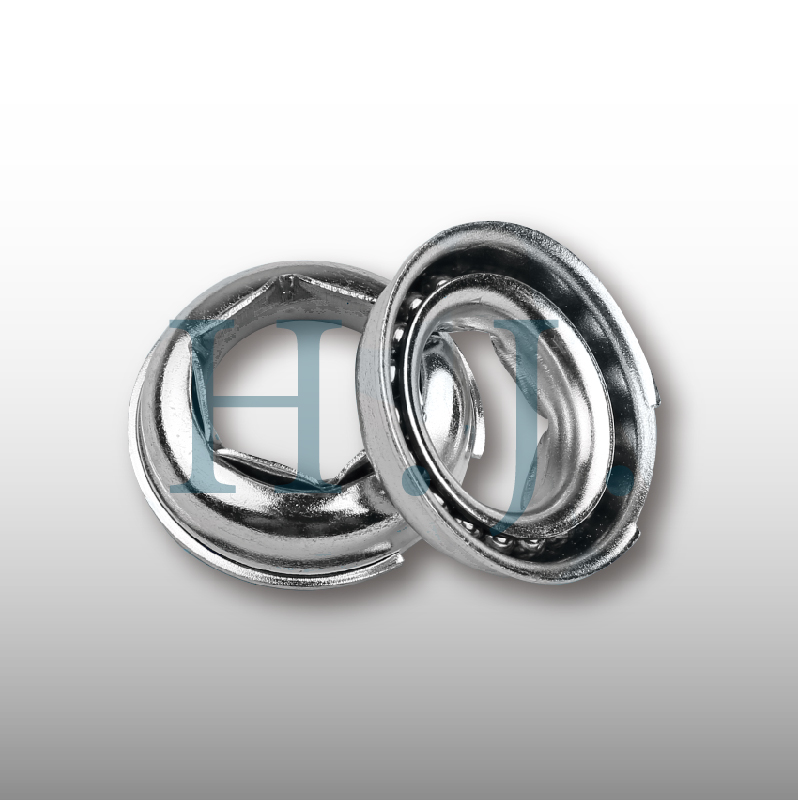
 High temperature bearing supplier
High Temperature Bearing Supplier – Custom Bearing Solutions for Elevated Temperature Applications
Selecting a reliable high temperature bearing supplier is important for machinery and equipment operating under elevated-temperature conditions. Heat can affect bearing materials, lubrication, seals, cages, dimensional stability, hardness, wear, and overall service life. As a result, bearings used in hot environments should be evaluated according to the complete operating condition rather than selected only by size.
High-temperature bearing requirements can vary significantly from one application to another. A bearing exposed to moderately elevated ambient temperature may require a different solution from a bearing located close to a furnace, heating element, drying chamber, industrial oven, or other continuous heat source.
HSIAN JI BEARING CO., LTD. is a Taiwan bearing manufacturer established in 1995. The company's published product range includes ball bearings, plastic bearings, thrust bearings, stamped bearings, slide bearings, special bearings, and non-standard bearings. HSIAN JI also maintains dedicated design and product-development and production and quality-assurance functions.
For customers searching for a high temperature bearing supplier, HSIAN JI can evaluate special and non-standard bearing projects according to technical drawings, samples, dimensions, material requirements, operating temperature, load, speed, lubrication, and production quantity.
What Are High Temperature Bearings?
High temperature bearings are bearing products selected or engineered for mechanical applications operating at temperatures above the normal conditions expected for conventional bearing systems.
The exact temperature range cannot be defined by one universal number because bearing capability depends on the entire product, including:
-
Bearing material
-
Heat treatment
-
Cage material
-
Lubricant
-
Seals
-
Internal clearance
-
Load
-
Speed
-
Exposure time
For this reason, customers should always provide both normal operating temperature and maximum expected temperature.
Why Does Temperature Matter for Bearings?
Heat can affect several important characteristics of a bearing.
Potential effects include:
-
Lubricant degradation
-
Changes in material hardness
-
Thermal expansion
-
Changes in bearing clearance
-
Seal deterioration
-
Cage deterioration
-
Increased wear
-
Reduced service life
The bearing should therefore be considered as a complete mechanical system rather than only a steel component.
Choosing a High Temperature Bearing Supplier
A professional high temperature bearing supplier should ask for more information than simply the bearing model.
Important questions include:
-
What is the continuous operating temperature?
-
What is the maximum temperature?
-
How long is the bearing exposed to heat?
-
What is the rotational speed?
-
What load does the bearing support?
-
Is the environment dry, humid, or chemically aggressive?
-
Is lubrication permitted?
-
Is the bearing exposed directly to a heat source?
These factors help determine whether a standard-type bearing, special bearing, or custom solution should be evaluated.
High Temperature Ball Bearing Applications
Ball bearings are widely used in rotating machinery.
When ball bearings operate at elevated temperatures, the complete bearing configuration should be evaluated.
Important factors can include:
-
Ring material
-
Ball material
-
Cage
-
Lubrication
-
Seal configuration
-
Internal clearance
-
Load
-
Speed
HSIAN JI manufactures ball bearing products as part of its published product range.
High-temperature requirements should be submitted as application-specific projects with detailed technical information.
High Temperature Thrust Bearings
Thrust bearings primarily support axial loads.
Temperature can influence both bearing materials and surrounding mechanical components.
Customers requiring a high-temperature thrust-bearing solution should provide:
-
Inner diameter
-
Outer diameter
-
Thickness
-
Axial load
-
Speed
-
Continuous temperature
-
Maximum temperature
-
Lubrication requirements
-
Quantity
HSIAN JI includes thrust bearings among its current bearing categories.
High Temperature Special Bearings
Special bearings can be appropriate when conventional bearing configurations cannot satisfy the combined dimensional and environmental requirements of an application.
A high-temperature special bearing project may involve:
-
Special materials
-
Custom dimensions
-
Dedicated mounting features
-
Unusual bearing structures
-
Different cage requirements
-
Special lubrication arrangements
HSIAN JI currently maintains Special Bearings as a dedicated product category and supports product development.
High Temperature Non-Standard Bearings
Some applications require both unusual dimensions and elevated-temperature capability.
A non-standard project may involve:
-
Custom bore diameter
-
Special outside diameter
-
Unique width
-
Non-standard mounting
-
Application-specific materials
-
High-temperature operating requirements
HSIAN JI lists Non-standard Bearings as one of its principal bearing categories.
Customers should provide drawings and operating conditions so feasibility can be reviewed.
Bearing Materials for High Temperature Applications
Material selection is an important part of high-temperature bearing design.
The appropriate material depends on:
-
Maximum temperature
-
Continuous temperature
-
Load
-
Speed
-
Wear
-
Corrosion
-
Required service life
Customers should provide a specific material requirement if one has already been defined by their engineers.
If material has not been predetermined, complete operating information should be provided for evaluation.
Lubrication for High Temperature Bearings
Lubrication can be one of the most critical factors in high-temperature applications.
Conventional grease may degrade more quickly at elevated temperatures.
Lubricant selection should consider:
-
Temperature
-
Speed
-
Load
-
Bearing type
-
Relubrication interval
-
Environmental conditions
-
Contamination
A bearing material may tolerate a particular temperature while the lubricant does not.
Therefore, bearing temperature capability should never be judged only by the ring or rolling-element material.
High Temperature Grease Bearings
Some applications can use specially selected grease designed for elevated temperatures.
However, grease life can decrease significantly as temperature increases.
Customers should specify:
-
Operating temperature
-
Maximum temperature
-
Speed
-
Load
-
Desired maintenance interval
Lubrication requirements should be confirmed before the final bearing specification is established.
High Temperature Bearings Without Conventional Grease
Certain applications may require alternative lubrication concepts or special bearing structures because conventional grease is unsuitable.
The correct approach depends heavily on:
-
Bearing speed
-
Load
-
Application
-
Temperature
-
Environment
-
Maintenance expectations
Such applications should be treated as specialized engineering projects.
Bearing Internal Clearance at Elevated Temperature
Thermal expansion can change the relationship between bearing rings, shaft, and housing.
If the inner and outer rings experience different temperatures, the effective internal clearance may change during operation.
Engineers should therefore consider:
-
Shaft temperature
-
Housing temperature
-
Bearing temperature
-
Materials
-
Fits
-
Temperature gradients
For demanding applications, complete assembly information should be provided.
High Temperature Bearings for Industrial Ovens
Industrial ovens can create challenging conditions for bearings located near heated chambers, conveyor systems, doors, rollers, or mechanical guides.
Important requirements can include:
-
Continuous temperature
-
Radiant heat
-
Bearing location
-
Speed
-
Load
-
Lubrication
-
Maintenance frequency
Customers should distinguish between oven chamber temperature and the actual temperature experienced by the bearing.
High Temperature Bearings for Drying Equipment
Drying machinery can expose rotating or sliding components to sustained elevated temperatures.
Potential applications include:
-
Industrial drying systems
-
Textile equipment
-
Coating lines
-
Processing machinery
-
Heated conveyors
Bearing suitability depends on the actual temperature at the mounting location.
High Temperature Bearings for Conveyor Systems
Conveyors used in heating or drying applications may require bearings located close to hot production zones.
HSIAN JI's published special-bearing applications include conveyors.
Customers should provide:
-
Roller dimensions
-
Shaft dimensions
-
Bearing location
-
Conveyor speed
-
Load
-
Temperature
-
Operating cycle
The bearing should be evaluated together with the roller and shaft assembly.
High Temperature Bearings for Furnaces
Bearings located around furnace-related equipment may experience extreme thermal conditions.
In many cases, the bearing itself may be positioned outside the hottest area, while shafts or rollers extend into the heated zone.
Customers should clearly identify:
-
Furnace temperature
-
Actual bearing temperature
-
Distance from heat source
-
Shaft temperature
-
Cooling arrangements
This distinction is essential for correct bearing evaluation.
High Temperature Bearings for Packaging Equipment
Some packaging processes involve heating, sealing, shrink tunnels, or thermal processing.
Bearings in these machines can be exposed to higher-than-normal temperatures.
Potential applications can include:
-
Heat-sealing equipment
-
Shrink equipment
-
Heated rollers
-
Packaging conveyors
HSIAN JI's special-bearing applications also include packaging equipment.
High Temperature Bearings for Machinery
Industrial machinery can generate significant heat from:
-
Process temperature
-
Friction
-
Motors
-
Heating elements
-
Nearby equipment
Customers should determine whether the bearing temperature comes primarily from the external environment or from the bearing's own operating conditions.
This information can affect material and lubrication selection.
Custom High Temperature Bearings
Standard high-temperature bearing products may not fit every mechanical design.
Customers may require:
-
Custom inner diameter
-
Custom outer diameter
-
Special width
-
Unique mounting
-
Special housing geometry
-
Application-specific materials
HSIAN JI can develop, produce, and manufacture customer-oriented products and maintains design and product-development capabilities.
High-temperature projects should be submitted with complete specifications for evaluation.
High Temperature Bearings from Engineering Drawings
Engineering drawings provide an effective foundation for custom bearing evaluation.
Customers can submit:
-
2D drawings
-
3D CAD models
-
Assembly drawings
-
Material requirements
-
Critical dimensions
-
Required tolerances
-
Shaft fit
-
Housing fit
The drawing should be accompanied by operating-temperature information.
High Temperature Bearing Development from Samples
Some customers may have an existing bearing from older or imported equipment but no original drawing.
A physical sample can provide dimensional and structural information.
However, it may not reveal:
-
Original heat treatment
-
Lubricant specification
-
Material grade
-
Temperature rating
-
Original internal clearance
Application and operating data are therefore essential.
High Temperature Replacement Bearings
An older machine may use a bearing intended for elevated temperatures that has become discontinued or difficult to source.
Replacement projects should include:
-
Original bearing
-
Part number
-
Drawing
-
Physical sample
-
Actual temperature
-
Load
-
Speed
-
Lubrication
-
Quantity
If no direct replacement is available, a special or non-standard solution can potentially be evaluated.
Prototype High Temperature Bearings
Prototype development can be useful when a custom bearing must be verified before larger production quantities.
A prototype can help confirm:
-
Dimensions
-
Shaft fit
-
Housing fit
-
Assembly
-
Movement
However, high-temperature performance should also be validated under representative application conditions.
Testing High Temperature Bearing Solutions
Testing requirements depend on the application.
Potential evaluation can involve:
-
Dimensional inspection
-
Rotational testing
-
Temperature exposure
-
Lubrication evaluation
-
Customer machine testing
For demanding applications, testing should reproduce actual operating conditions as closely as practical.
Low Volume High Temperature Bearing Projects
Specialized high-temperature equipment may require relatively low quantities.
HSIAN JI's official FAQ states that the company does not apply one universal minimum order quantity to every product; order requirements depend on product type.
Customers should provide:
-
Initial quantity
-
Expected annual demand
-
Replacement frequency
This allows commercial feasibility to be evaluated together with technical requirements.
Quality Control for High Temperature Bearing Projects
HSIAN JI's production and quality-assurance information describes controls from raw-material procurement through manufacturing, inspection, and final-product testing.
For high-temperature projects, quality requirements may include:
-
Material verification
-
Dimensional inspection
-
Process control
-
Finished-product inspection
-
Customer-defined testing
Approved drawings and specifications should provide the production reference.
HSIAN JI – High Temperature Bearing Supplier Project Evaluation
HSIAN JI BEARING CO., LTD. was established in 1995 and currently publishes product categories covering plastic, thrust, stamped, slide, ball, special, and non-standard bearings. The company also states that it is a factory and works with multiple suppliers to provide a wider range of bearing products.
For customers searching for a high temperature bearing supplier, HSIAN JI can evaluate custom, special, or non-standard projects according to technical feasibility.
Please provide:
-
Bearing type
-
2D engineering drawing
-
3D CAD model
-
Physical sample
-
Inner diameter
-
Outer diameter
-
Width
-
Material requirements
-
Continuous operating temperature
-
Maximum temperature
-
Load
-
Speed
-
Lubrication requirements
-
Operating environment
-
Required quantity
-
Estimated annual demand
Complete information allows HSIAN JI to evaluate an appropriate bearing sourcing, development, or manufacturing solution for elevated-temperature applications.
High Temperature Bearing Supplier FAQ
What is a high temperature bearing supplier?
A high temperature bearing supplier provides or evaluates bearing solutions for applications operating at elevated temperatures.
The supplier should consider bearing materials, lubrication, cage, seals, load, speed, and actual operating temperature.
Does HSIAN JI currently list high temperature bearings as a standard product category?
HSIAN JI's current published product categories are plastic bearings, thrust bearings, stamped bearings, slide bearings, ball bearings, special bearings, and non-standard bearings. High-temperature bearings are not currently listed as a separate standard product category.
High-temperature requirements should therefore be submitted as special or custom projects for evaluation.
Can HSIAN JI evaluate high temperature bearing requirements?
HSIAN JI states that it can develop, produce, and manufacture products and maintains dedicated design/product-development and production/quality-assurance functions.
Customers can submit high-temperature application requirements for feasibility evaluation.
What temperature is considered high temperature for a bearing?
There is no single universal temperature that defines every high-temperature bearing.
Suitability depends on:
-
Bearing material
-
Lubricant
-
Cage
-
Seals
-
Load
-
Speed
-
Duration of exposure
Customers should provide the actual continuous and maximum temperatures.
Why can't I select a bearing based only on temperature?
Because the complete bearing system determines performance.
A bearing material may tolerate the temperature while the grease, seal, cage, or surrounding components may not.
Load and speed must also be considered.
Can standard bearings be used at elevated temperatures?
Some standard bearing configurations can operate at moderately elevated temperatures depending on their materials, lubrication, seals, and application.
The actual operating condition should be reviewed before making a selection.
Can ball bearings be used at high temperatures?
Potentially.
Ball-bearing suitability depends on material, lubricant, cage, internal clearance, load, speed, and operating temperature.
HSIAN JI currently manufactures ball bearing products as part of its published range.
Can thrust bearings be used at high temperatures?
Potentially.
Customers should provide dimensions, axial load, speed, temperature, lubricant requirements, and application information.
Can special bearings be developed for high temperatures?
High-temperature requirements can be submitted as special-bearing projects.
HSIAN JI currently maintains Special Bearings as a dedicated product category.
Can non-standard bearings be developed for high-temperature applications?
Potentially.
Non-standard projects combining unusual dimensions and elevated-temperature requirements can be submitted for technical evaluation.
Can bearing dimensions be customized?
Custom dimensional requirements can be evaluated depending on bearing design and manufacturing feasibility.
These can include:
-
Inner diameter
-
Outer diameter
-
Width
-
Mounting features
-
External geometry
What materials are used in high temperature bearings?
Material selection depends on application requirements.
Potential factors include:
-
Temperature
-
Hardness
-
Load
-
Wear
-
Corrosion
-
Manufacturing process
Customers should provide required material specifications where applicable.
Is stainless steel suitable for high-temperature bearings?
Stainless steel may be suitable for some elevated-temperature applications, but suitability depends on the specific grade, heat treatment, load, speed, corrosion requirements, and complete bearing design.
Stainless steel should not automatically be assumed to be the best high-temperature material.
Are ceramic bearings suitable for high temperatures?
Some ceramic materials have attractive high-temperature properties.
However, complete bearing capability may still be limited by rings, cages, lubrication, seals, and mounting conditions.
The entire bearing system must be evaluated.
Is high-temperature grease required?
It may be.
Lubricant selection depends on temperature, speed, load, relubrication interval, and operating environment.
Conventional grease may have a reduced service life at elevated temperatures.
Can high-temperature bearings operate without grease?
Some specialized applications may use alternative lubrication or bearing concepts.
Whether this is appropriate depends on load, speed, material, temperature, and expected service life.
What happens to bearing grease at high temperatures?
Heat can accelerate lubricant oxidation and degradation.
This can reduce lubrication life and increase friction and wear.
Exact performance depends on the lubricant formulation and operating conditions.
Does high temperature affect bearing clearance?
Yes.
Thermal expansion of the shaft, housing, and bearing rings can change effective internal clearance.
Temperature differences between components should be considered.
Can high-temperature bearings be sealed?
Potentially, but seal material itself must tolerate the application temperature.
Customers should provide temperature and environmental requirements so sealing feasibility can be evaluated.
Are high-temperature bearings suitable for industrial ovens?
They may be, depending on actual bearing temperature.
Customers should distinguish between oven temperature and the temperature at the bearing mounting position.
Can high-temperature bearings be used in furnaces?
Bearing locations around furnaces can be evaluated, but the actual bearing temperature, distance from the heat source, shaft temperature, and cooling arrangement must be known.
Can high-temperature bearings be used in drying machines?
Potentially.
Drying equipment can create sustained elevated temperatures, so bearing material, lubrication, speed, load, and mounting should be reviewed.
Can high-temperature bearings be used on conveyors?
Yes, depending on the operating temperature and conveyor design.
HSIAN JI lists conveyors among applications for its special-bearing products.
Can high-temperature bearings be used in packaging equipment?
Potentially.
Applications involving heated rollers, sealing equipment, or shrink systems should be evaluated according to actual bearing temperature and mechanical requirements.
Can high-temperature bearings be custom made?
Custom projects can be evaluated according to dimensions, materials, temperature, load, speed, and production quantity.
HSIAN JI maintains design and product-development capability for customer-specific products.
Can you manufacture high-temperature bearings from my drawing?
Engineering drawings can provide the basis for technical evaluation.
Customers should also provide temperature, load, speed, material, lubrication, and environmental requirements.
Can you work from a physical sample?
A physical sample can help identify dimensions and structure.
However, it may not reveal the original temperature rating, lubricant, material grade, or heat treatment.
Operating information should also be supplied.
Can you replace a discontinued high-temperature bearing?
Potentially.
Customers should provide the original bearing, drawing, dimensions, actual operating temperature, load, speed, lubricant requirements, and quantity.
Can high-temperature bearings be manufactured in low quantities?
Low-quantity projects can be submitted for evaluation.
HSIAN JI states that minimum order requirements depend on the product type rather than one universal MOQ.
Can I request a prototype first?
Prototype requirements can be evaluated for custom projects.
HSIAN JI's site includes a dedicated Design and Product Development function supporting product development.
Prototype bearings should be tested under representative application conditions.
How should a high-temperature bearing be tested?
Testing can involve:
-
Dimensional inspection
-
Rotational testing
-
Temperature exposure
-
Lubrication evaluation
-
Application testing
Exact test methods should reflect the real operating environment.
What information should I provide for a quotation?
For a high temperature bearing supplier inquiry, provide:
-
Bearing type
-
2D drawing
-
3D CAD model
-
Physical sample
-
Inner diameter
-
Outer diameter
-
Width
-
Material
-
Continuous operating temperature
-
Maximum temperature
-
Load
-
Speed
-
Lubrication requirements
-
Sealing requirements
-
Operating environment
-
Required quantity
-
Estimated annual demand
Complete information allows a more reliable technical evaluation.
How does HSIAN JI control product quality?
HSIAN JI's published quality-assurance process covers raw-material procurement, manufacturing-process control, finished-product inspection, and testing.
Custom projects can also use customer-approved drawings and specifications as production references.
What is the difference between a high temperature bearing and a heat-resistant bearing?
The terms are often used similarly.
Both generally describe bearings intended for elevated-temperature environments.
Actual capability should always be expressed through specific operating-temperature and application requirements rather than relying only on terminology.
What is the difference between a high temperature bearing supplier and manufacturer?
A manufacturer directly produces bearing components or assemblies.
A supplier may manufacture products directly, source specialized components, or combine internal manufacturing with external supply capabilities.
HSIAN JI states that it is a factory and also collaborates with multiple suppliers to offer a wider product range.
Why choose HSIAN JI for high-temperature bearing requirements?
HSIAN JI BEARING CO., LTD. was established in 1995 and manufactures a published range covering ball, plastic, thrust, stamped, slide, special, and non-standard bearings. It also maintains product-development and quality-assurance capabilities and collaborates with other suppliers to broaden its product offering.
For customers searching for a high temperature bearing supplier, this provides a basis for evaluating special, custom, and non-standard projects without assuming that every high-temperature configuration is a standard stocked product.
Send HSIAN JI your drawings, operating temperatures, material requirements, load, speed, lubrication requirements, and quantities for technical evaluation.