
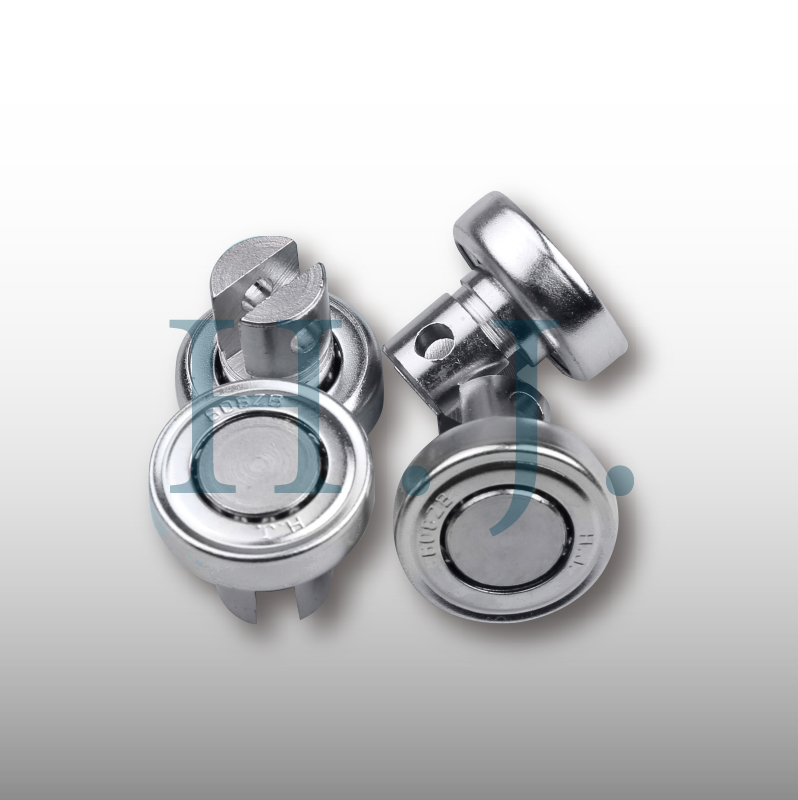
 Bearings for Medical, Office Equipment & Cash Boxes
Bearings for Medical, Office Equipment & Cash Boxes – Custom Bearing Solutions from Taiwan
Bearings for Medical, Office Equipment & Cash Boxes are specialized mechanical components used to provide smooth rotation, sliding movement, load support, positioning, and reliable motion in a wide variety of equipment. Although these bearings are often relatively small, their performance can directly influence the smoothness, noise level, durability, precision, and user experience of the final product.
Medical equipment may require bearings for movable mechanisms, rollers, carts, drawers, adjustment systems, and positioning components. Office equipment can use bearings in drawers, sliding mechanisms, document-handling equipment, office furniture, and other moving assemblies. Cash boxes, cash drawers, and cash-register mechanisms can also depend on bearings, rollers, and pulleys to provide reliable opening and closing movement.
HSIAN JI BEARING CO., LTD. is a Taiwan bearing manufacturer providing ball bearings, slide bearings, plastic bearings, stamped bearings, thrust bearings, special bearings, and non-standard bearings.
HSIAN JI's current product catalogue directly identifies medical equipment, office equipment, cash boxes, and cash register pulleys among the applications for numerous bearing models.
For manufacturers requiring Bearings for Medical, Office Equipment & Cash Boxes, HSIAN JI can evaluate standard, special, custom, and non-standard bearing requirements according to customer drawings, physical samples, dimensions, materials, loads, speeds, installation space, and production quantities.
Bearings for Medical Equipment
Medical equipment contains many mechanical systems that require controlled movement.
Potential bearing applications can include:
-
Medical carts
-
Equipment drawers
-
Adjustable mechanisms
-
Sliding components
-
Guide rollers
-
Positioning systems
-
Mobile equipment
-
Mechanical accessories
Bearing requirements depend heavily on the actual equipment.
Important considerations can include low noise, smooth movement, compact dimensions, load capacity, corrosion resistance, and reliable repeated operation.
HSIAN JI's current product catalogue explicitly identifies medical equipment as an application for numerous bearing models.
Bearings for Medical Carts and Mobile Equipment
Medical carts and mobile equipment may contain drawers, sliding mechanisms, rollers, and other moving components.
Bearings can help provide:
-
Smooth movement
-
Low friction
-
Reduced operating noise
-
Reliable repeated motion
-
Load support
For custom medical-equipment projects, customers should provide the complete mechanical requirements rather than selecting a bearing only by outside dimensions.
Bearings for Medical Equipment Drawers
Medical cabinets, carts, and equipment can include drawers that are opened and closed frequently.
Bearing or roller systems can help provide smooth drawer movement.
Important factors include:
-
Drawer load
-
Travel distance
-
Opening frequency
-
Installation space
-
Noise requirements
Compact or non-standard bearings may be useful where conventional bearing dimensions do not fit the drawer mechanism.
Low-Noise Bearings for Medical Equipment
Noise can be particularly important in medical environments.
Bearing noise can be affected by:
-
Bearing precision
-
Lubrication
-
Load
-
Shaft alignment
-
Roller material
-
Installation
-
Contamination
Where low-noise operation is important, the requirement should be identified during product development.
Plastic Bearings for Medical Equipment
Plastic bearings may provide useful characteristics for selected medical-equipment mechanisms.
Potential advantages can include:
-
Low weight
-
Corrosion resistance
-
Reduced noise
-
Low friction
-
Material flexibility
However, suitability depends on load, speed, temperature, chemicals, cleaning methods, and other operating conditions.
HSIAN JI maintains a dedicated Plastic Bearings category, with numerous models listing medical equipment among their applications.
Ball Bearings for Medical Equipment
Ball bearings can support rotating shafts, rollers, wheels, and other moving components.
Potential applications include:
-
Equipment rollers
-
Adjustment mechanisms
-
Moving assemblies
-
Guide systems
-
Mechanical components
HSIAN JI's Ball Bearings catalogue includes multiple models specifically listing medical equipment as an applicable area.
Bearings for Office Equipment
Office equipment can contain many small moving mechanisms that depend on bearings, rollers, guides, or pulleys.
Potential applications include:
-
Office furniture
-
Drawers
-
Keyboard drawers
-
Sliding mechanisms
-
Storage systems
-
Document-handling equipment
-
Mechanical office accessories
HSIAN JI's published bearing applications directly include office equipment.
Bearings for Office Drawers
Office desks and storage furniture often contain drawers that need to move smoothly.
Bearing-based drawer mechanisms can provide:
-
Smooth travel
-
Low resistance
-
Stable movement
-
Reduced noise
-
Long-term repeated operation
The bearing should be selected according to drawer load, dimensions, and expected operating frequency.
Bearings for Keyboard Drawers
Keyboard drawers are another application directly identified throughout HSIAN JI's current product catalogue.
Compact bearing or pulley systems can help keyboard trays slide smoothly in and out.
Important requirements can include:
-
Compact size
-
Smooth movement
-
Low noise
-
Consistent dimensions
-
Suitable load capacity
Custom bearing dimensions may be considered for proprietary drawer designs.
Bearings for Office Furniture
Office furniture can contain bearings in:
-
Drawer systems
-
Sliding panels
-
Mobile storage
-
Adjustable furniture
-
Rolling mechanisms
Different bearing technologies may be considered according to the required movement.
Slide Bearings for Office Equipment
Slide bearings are particularly relevant to equipment involving linear movement.
Potential applications can include:
-
Sliding drawers
-
Adjustable mechanisms
-
Guides
-
Moving panels
-
Positioning systems
HSIAN JI's Slide Bearings category includes numerous models listing office equipment, drawers, keyboard drawers, and cash boxes among their applications.
Low-Noise Bearings for Office Equipment
Office environments generally benefit from quiet mechanical operation.
Low-noise requirements may be important for:
-
Drawers
-
Sliding furniture
-
Office machines
-
Mobile storage systems
Bearing precision, material, lubrication, and installation can all influence operating noise.
Bearings for Cash Boxes
Cash boxes require reliable opening, closing, sliding, or rolling mechanisms.
Bearings may be incorporated into:
-
Cash drawers
-
Sliding trays
-
Internal guide mechanisms
-
Roller systems
-
Locking-related moving components
HSIAN JI's current bearing catalogue repeatedly identifies cash boxes as an applicable product category.
Bearings for Cash Register Pulleys
Cash register pulleys are another application specifically identified on HSIAN JI's product pages.
Small bearings or pulley-bearing assemblies can help provide smooth movement within cash register and cash drawer mechanisms.
Potential requirements include:
-
Small dimensions
-
Low friction
-
Low noise
-
Repeated operation
-
Dimensional consistency
Bearings for Cash Drawers
Cash drawers are opened and closed many times during normal commercial operation.
Bearing or roller mechanisms should provide reliable repeated movement.
Applications may include:
-
Retail cash drawers
-
POS drawers
-
Cash-register drawers
-
Security drawers
-
Commercial cash boxes
Bearing dimensions must match the drawer mechanism and available installation space.
Small Bearings for Cash Boxes
Cash boxes and cash-register mechanisms often have limited internal space.
Small bearings can be useful where the design requires:
-
Compact OD
-
Small bore
-
Narrow width
-
Integrated pulley structures
HSIAN JI's special and non-standard bearing capabilities can be relevant where standard catalogue bearings do not fit.
Stamped Bearings for Equipment Applications
Stamped bearings can provide compact bearing configurations for certain mechanisms.
Potential advantages can include:
-
Compact structure
-
Reduced weight
-
Manufacturing efficiency
-
Application-specific geometry
HSIAN JI's Stamped Bearings catalogue directly lists medical equipment, office equipment, cash boxes, and cash register pulleys among applications for multiple models.
Special Bearings for Medical and Office Equipment
Standard bearings cannot satisfy every equipment design.
Special bearings may be useful when customers require:
-
Unique dimensions
-
Special external geometry
-
Dedicated mounting features
-
Compact structures
-
Application-specific configurations
HSIAN JI maintains a dedicated Special Bearings product category, and its current special-bearing models directly list medical equipment, office equipment, and cash boxes among their applications.
Non-Standard Bearings for Cash Boxes and Equipment
Non-standard bearings are particularly useful when a machine or product has been designed around dimensions that do not correspond to common catalogue bearings.
Customization can potentially involve:
-
Inner diameter
-
Outer diameter
-
Width
-
Flange dimensions
-
Pulley geometry
-
External features
-
Mounting configuration
HSIAN JI's Non-standard Bearings catalogue directly lists medical equipment, office equipment, cash boxes, and cash register pulleys among applications.
Custom Bearing Development
Manufacturers developing new products may require bearings according to proprietary dimensions.
A custom project can begin with:
-
Engineering drawing
-
CAD model
-
Existing bearing
-
Physical sample
-
Assembly drawing
-
Application specifications
The more complete the technical information, the easier it is to evaluate an appropriate bearing solution.
Bearings Manufactured from Customer Drawings
Engineering drawings are the preferred starting point for custom bearing development.
Customers should specify:
-
Inner diameter
-
Outer diameter
-
Width
-
Tolerances
-
Materials
-
Special geometry
-
Critical dimensions
Assembly drawings are also useful because they show how the bearing interacts with surrounding components.
Bearings Developed from Physical Samples
When original drawings are unavailable, an existing bearing or component can provide useful reference information.
A physical sample can help identify:
-
Dimensions
-
Geometry
-
Mounting structure
-
Bearing configuration
Customers should also provide information about the final application.
Prototype Bearings
Prototype development can help manufacturers verify a bearing before regular production.
Testing may include:
-
Dimensional fit
-
Rotation
-
Sliding movement
-
Noise
-
Load
-
Assembly compatibility
Actual equipment testing is recommended before final approval.
Replacement Bearings for Existing Equipment
Older medical equipment, office equipment, and cash-handling products may contain bearings that are difficult to source.
Replacement projects can begin with:
-
Original bearing
-
Original part number
-
Physical sample
-
Equipment model
-
Bearing dimensions
A special or non-standard bearing may then be evaluated as a replacement.
OEM Bearings for Equipment Manufacturers
OEM manufacturers may require bearings manufactured according to proprietary specifications.
OEM requirements can include:
-
Custom dimensions
-
Customer drawings
-
Special materials
-
Customer part numbers
-
Dedicated packaging
-
Repeat production
This approach allows the bearing to become an integrated component of the manufacturer's equipment.
Small-Batch Custom Bearings
New product development, replacement applications, and specialized equipment may initially require relatively small quantities.
Small-batch feasibility depends on:
-
Bearing design
-
Dimensions
-
Materials
-
Tooling
-
Quantity
Customers should provide both initial order quantity and estimated future demand.
Mass Production of Equipment Bearings
After samples and specifications are approved, repeat production may be required.
Important information includes:
-
Order quantity
-
Monthly demand
-
Annual demand
-
Quality requirements
-
Packaging requirements
-
Delivery schedule
Consistent specifications help maintain stable assembly across production batches.
Quality Control for Equipment Bearings
Potential quality-control items can include:
-
Inner diameter
-
Outer diameter
-
Width
-
Critical dimensions
-
Rotation
-
Fit
-
Appearance
-
Customer-specific requirements
The actual inspection standard should be defined according to the application.
How to Select Bearings for Medical, Office Equipment & Cash Boxes
Bearing selection should consider:
-
Type of movement
-
Load
-
Speed
-
Installation space
-
Shaft dimensions
-
Housing dimensions
-
Noise requirements
-
Operating environment
-
Expected service life
A small cash-drawer pulley and a bearing used in medical equipment may have very different requirements even if their external dimensions are similar.
HSIAN JI – Bearing Manufacturer in Taiwan
HSIAN JI BEARING CO., LTD. provides multiple bearing categories, including ball bearings, slide bearings, plastic bearings, stamped bearings, thrust bearings, special bearings, and non-standard bearings.
Most importantly for this application page, HSIAN JI's current official product catalogue directly lists medical equipment, office equipment, cash boxes, and cash register pulleys among the applications for numerous bearing models.
For Bearings for Medical, Office Equipment & Cash Boxes, customers can provide:
-
2D engineering drawing
-
3D CAD model
-
Physical sample
-
Bearing inner diameter
-
Bearing outer diameter
-
Bearing width
-
Shaft dimensions
-
Housing dimensions
-
Load
-
Speed
-
Operating environment
-
Material requirements
-
Noise requirements
-
Required quantity
-
Estimated annual demand
HSIAN JI can evaluate ball-bearing, slide-bearing, plastic-bearing, stamped-bearing, special, and non-standard bearing solutions according to the customer's actual equipment requirements.
Bearings for Medical, Office Equipment & Cash Boxes FAQ
What are bearings for medical, office equipment and cash boxes?
Bearings for Medical, Office Equipment & Cash Boxes are bearing components used to support rotating, sliding, rolling, or guiding mechanisms in medical devices and equipment, office equipment, furniture mechanisms, cash boxes, cash drawers, and cash-register systems.
Does HSIAN JI manufacture bearings for medical equipment?
HSIAN JI's official product catalogue lists medical equipment among the applications for numerous ball, slide, plastic, stamped, special, and non-standard bearing models.
Does HSIAN JI manufacture bearings for office equipment?
Yes. Office equipment is directly listed among the applications of numerous HSIAN JI bearing products.
Does HSIAN JI provide bearings for cash boxes?
Yes. Cash boxes are specifically listed among the applications for many HSIAN JI bearing models.
Does HSIAN JI provide bearings for cash register pulleys?
Yes. Cash register pulleys are also explicitly identified as an application in HSIAN JI's current product catalogue.
What types of bearings can be used in medical equipment?
Depending on the mechanism, potential options include:
-
Ball bearings
-
Slide bearings
-
Plastic bearings
-
Stamped bearings
-
Thrust bearings
-
Special bearings
-
Non-standard bearings
The appropriate type depends on the actual equipment design.
Are ball bearings suitable for medical equipment?
They can be suitable for rotating mechanisms, rollers, shafts, wheels, and other moving assemblies, depending on the technical requirements.
Can plastic bearings be used in medical equipment?
Potentially.
Plastic bearings may offer low weight, corrosion resistance, and reduced noise, but the exact material must be evaluated according to the application.
Are these medical-device-certified bearings?
Not automatically.
A bearing being suitable mechanically for medical equipment does not by itself establish regulatory or medical-device certification. Customers with regulatory requirements should specify the applicable standards and documentation during the inquiry.
Can bearings be used in medical carts?
Yes, depending on the mechanical design.
Potential applications include drawers, guides, adjustment mechanisms, rollers, and other moving assemblies.
Can bearings be used in medical cabinet drawers?
Yes.
Bearing or roller mechanisms can support smooth repeated opening and closing.
Can medical-equipment bearings be low noise?
Yes, depending on bearing design, precision, materials, lubrication, installation, and operating conditions.
Can bearings be used in office drawers?
Yes.
Drawers are directly listed among HSIAN JI's current bearing applications.
Can bearings be used in keyboard drawers?
Yes.
Keyboard drawers are also explicitly listed among HSIAN JI bearing applications.
Can bearings be used in office furniture?
Potentially.
Applications can include drawers, sliding systems, adjustable components, and rolling mechanisms.
Can slide bearings be used in office equipment?
Yes, depending on the required motion.
Slide bearings are suitable for mechanisms requiring guided linear or sliding movement.
Can plastic bearings be used in office equipment?
Potentially.
They may be useful where reduced weight, low noise, corrosion resistance, or other material characteristics are beneficial.
Can bearings be used in cash drawers?
Yes.
Bearing, roller, or pulley mechanisms can support smooth opening and closing movement.
Can bearings be used in POS cash drawers?
Potentially.
The bearing should be selected according to the actual POS drawer mechanism, dimensions, load, and operating frequency.
What is a cash register pulley bearing?
It is a bearing or bearing-related pulley component used in the moving mechanism of a cash register or cash drawer.
HSIAN JI specifically lists cash register pulleys among applications for numerous products.
Are small bearings available for cash boxes?
Yes, depending on the required dimensions.
Compact applications may require small or non-standard bearing configurations.
Can cash-box bearings be customized?
Yes.
Custom requirements can potentially include:
-
Inner diameter
-
Outer diameter
-
Width
-
Pulley dimensions
-
Flange dimensions
-
Mounting geometry
Can office-equipment bearings be customized?
Yes.
Custom bearing requirements can be evaluated from engineering drawings, dimensions, samples, and application information.
Can medical-equipment bearings be customized?
Yes, from a mechanical manufacturing perspective.
However, any regulatory, cleanliness, material, documentation, or medical-device-specific requirements should be clearly specified by the customer.
Can HSIAN JI manufacture non-standard bearings?
Yes. HSIAN JI has a dedicated Non-standard Bearings category, and numerous products in that category list medical equipment, office equipment, cash boxes, and cash register pulleys among their applications.
Can HSIAN JI provide special bearings?
Yes.
HSIAN JI has a dedicated Special Bearings category, with multiple models listing these application areas.
Can bearings be manufactured according to my drawing?
Custom requirements can be evaluated from customer engineering drawings.
Can you work from a 3D CAD model?
A 3D model can help show the bearing geometry and assembly relationship.
A dimensioned 2D drawing is also recommended for manufacturing evaluation.
Can you work from an existing bearing sample?
Yes.
A physical sample can provide useful information about dimensions, geometry, and construction.
Can you replace an obsolete bearing?
Potentially.
Provide the original bearing, sample, drawing, dimensions, application information, and required quantity.
Can you reproduce a discontinued cash-box bearing?
Potentially.
Non-standard manufacturing may be useful when the original component is no longer commercially available.
Can bearings be manufactured in small quantities?
Small-batch requirements can be evaluated according to bearing design, materials, tooling, and quantity.
Can custom bearings be mass produced?
Potentially.
After sample approval, repeat or volume production can be evaluated according to the required specifications and quantities.
Can I order a prototype first?
Prototype requirements can be evaluated before regular production.
What should be tested during prototype evaluation?
Potential tests include:
-
Dimensional fit
-
Rotation
-
Sliding movement
-
Noise
-
Load
-
Installation
-
Actual equipment operation
Can bearings be made for compact equipment?
Yes.
Special and non-standard bearings can be particularly useful when installation space is limited.
Can bearing width be customized?
Potentially.
Manufacturing feasibility depends on the complete bearing design.
Can bearing inner diameter be customized?
Potentially.
Customers should provide shaft dimensions and fit requirements.
Can bearing outer diameter be customized?
Potentially.
Housing, roller, or pulley dimensions should also be provided.
Can bearings be designed for low-friction movement?
Bearing type, materials, lubrication, load, and installation can all influence friction.
Customers should identify the operating requirements during development.
Can bearings be designed for repeated opening and closing?
Yes, depending on the bearing and mechanism.
Applications such as drawers and cash boxes involve repeated movement, so expected cycle frequency should be considered.
Can bearings be corrosion resistant?
Potentially.
Material options should be evaluated according to moisture, chemicals, cleaning procedures, and operating environment.
Can stainless steel bearings be used?
Potentially.
Customers should specify the required material grade and environmental conditions.
Can bearings operate without lubrication?
This depends on bearing type, material, load, speed, and application.
It should not be assumed that every bearing can operate without lubrication.
Can bearings be sealed?
Yes, depending on bearing configuration.
Sealing may help protect against dust or contamination.
Can office-equipment bearings be maintenance-free?
This depends on bearing design and operating conditions.
Maintenance requirements should be evaluated for the specific application.
Can cash-box bearings withstand frequent use?
Yes, if correctly selected for the load, dimensions, cycle frequency, and mechanism.
Commercial cash drawers may be opened many times per day, making repeated-operation requirements important.
What causes bearings in drawers to become noisy?
Possible causes include:
-
Wear
-
Dirt
-
Misalignment
-
Insufficient lubrication
-
Damaged rollers
-
Incorrect fit
What causes a cash drawer to stop moving smoothly?
Potential causes include worn bearings, contaminated tracks, misalignment, damaged rollers, excessive load, or deformation of the mechanism.
Does bearing size affect equipment performance?
Yes.
Bearing dimensions influence fit, load capacity, installation space, and mechanical movement.
Does load affect bearing life?
Yes.
Excessive load can increase wear and shorten bearing service life.
Does operating speed matter?
Yes.
Speed can influence friction, temperature, lubrication, noise, and bearing life.
Does alignment matter?
Yes.
Poor alignment can create uneven loading, friction, vibration, and premature wear.
What information should I provide for a quotation?
For Bearings for Medical, Office Equipment & Cash Boxes, provide:
-
2D engineering drawing
-
3D CAD model
-
Physical sample
-
Bearing type
-
Inner diameter
-
Outer diameter
-
Width
-
Shaft dimensions
-
Housing dimensions
-
Radial load
-
Axial load
-
Speed
-
Operating frequency
-
Temperature
-
Environmental conditions
-
Material requirements
-
Special regulatory requirements
-
Required quantity
-
Estimated annual demand
Complete technical information helps improve bearing evaluation.
What is the difference between standard and custom equipment bearings?
Standard bearings have predetermined catalogue dimensions and specifications.
Custom or non-standard bearings can use dimensions, geometry, or features developed around a particular equipment design.
What is the difference between ball bearings and slide bearings?
Ball bearings use rolling elements to reduce friction during rotational movement.
Slide bearings support movement through sliding contact and can be useful in linear or guiding mechanisms.
The correct choice depends on the equipment.
Why choose HSIAN JI for Bearings for Medical, Office Equipment & Cash Boxes?
HSIAN JI has a particularly strong published connection to these applications. Its current product catalogue repeatedly and explicitly lists medical equipment, office equipment, cash boxes, and cash register pulleys among applications across multiple bearing categories, including ball bearings, slide bearings, plastic bearings, stamped bearings, special bearings, and non-standard bearings.
For manufacturers requiring Bearings for Medical, Office Equipment & Cash Boxes, HSIAN JI can evaluate standard, special, and non-standard requirements according to customer drawings, samples, dimensions, application conditions, and production quantities.