
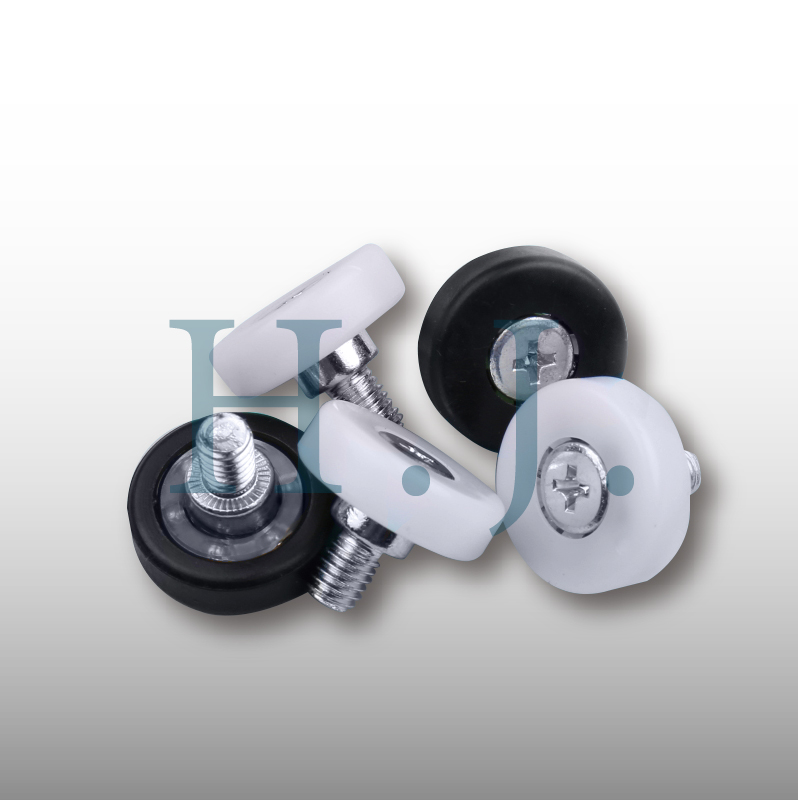
 Bearings for Fitness, Sports Equipment, Scooters & Skates
Bearings for Fitness, Sports Equipment, Scooters & Skates
Bearings for fitness, sports equipment, scooters & skates are essential mechanical components designed to provide smooth rotation, reduce friction, support loads, and improve the movement and durability of recreational and exercise equipment. From fitness machines and exercise equipment to scooters, skateboards, inline skates, roller skates, and other sporting products, the correct bearing can directly influence performance, operating noise, stability, and service life.
HSIAN JI BEARING CO., LTD. is a Taiwan bearing manufacturer established in 1995, specializing in the development and manufacturing of various bearing solutions. Our product range includes ball bearings, slide bearings, plastic bearings, stamped bearings, thrust bearings, special bearings, and non-standard bearings.
HSIAN JI bearings are suitable for a wide variety of applications, including fitness equipment, sports equipment, scooters, skates, and skateboards. We can also evaluate custom bearing requirements according to customer drawings, samples, dimensions, materials, loads, operating conditions, and production quantities.
Whether you need a standard bearing for a fitness machine or a customized bearing for a proprietary scooter or sports-equipment design, HSIAN JI provides flexible bearing solutions for OEM and industrial customers.
Bearings for Fitness Equipment
Fitness equipment contains many moving components that require bearings to provide smooth and controlled motion.
Typical applications can include:
-
Treadmills
-
Exercise bikes
-
Elliptical trainers
-
Rowing machines
-
Weight-training equipment
-
Pulley systems
-
Adjustable fitness machines
-
Home exercise equipment
-
Commercial gym equipment
Bearings may be installed in rotating shafts, rollers, pulleys, wheels, adjustment mechanisms, and other moving assemblies.
The appropriate bearing depends on the equipment design, load, speed, operating frequency, and expected service life.
Bearings for Sports Equipment
Sports equipment covers a broad range of products that use rotational or linear movement.
Potential applications include:
-
Exercise equipment
-
Training machines
-
Sports wheels
-
Rollers
-
Pulley mechanisms
-
Sliding systems
-
Recreational equipment
-
Skateboards
-
Scooters
-
Skates
Different sports products have very different bearing requirements.
A bearing used in a small skate wheel, for example, operates under different conditions from a bearing used in a large commercial fitness machine.
Bearings for Scooters
Scooters depend heavily on bearings for smooth wheel rotation.
Bearings may be used in:
-
Front wheels
-
Rear wheels
-
Steering mechanisms
-
Folding mechanisms
-
Other rotating components
Important bearing considerations can include:
-
Bearing dimensions
-
Wheel dimensions
-
Shaft diameter
-
Radial load
-
Speed
-
Impact
-
Contamination
-
Water exposure
The correct bearing should be selected according to the actual scooter design.
Scooter Wheel Bearings
Scooter wheel bearings support the wheel while allowing it to rotate around the axle.
Important characteristics can include:
-
Smooth rotation
-
Low friction
-
Suitable load capacity
-
Dimensional consistency
-
Durability
Wheel-bearing performance can influence how smoothly the scooter rolls.
However, overall scooter performance also depends on wheel material, wheel diameter, axle alignment, road conditions, and rider load.
Bearings for Skates
Skates use compact bearings inside their wheels.
Applications include:
-
Inline skates
-
Roller skates
-
Recreational skates
-
Training skates
Skate bearings generally need to provide smooth rotation while operating in a relatively small installation space.
Bearing selection should consider:
-
Wheel size
-
Axle size
-
Speed
-
Load
-
Impact
-
Dust
-
Moisture
Inline Skate Bearings
Inline skates can operate at relatively high wheel speeds.
Bearing performance may influence:
-
Rolling smoothness
-
Friction
-
Noise
-
Wheel response
However, bearing selection should not be based on speed alone.
Load, contamination, lubrication, wheel design, and axle alignment also affect performance.
Roller Skate Bearings
Roller skates generally use multiple wheels, with bearings installed inside each wheel.
Important considerations include:
-
Bearing fit
-
Axle fit
-
Wheel alignment
-
Lubrication
-
Sealing
-
Load
A consistent bearing specification can help provide more uniform wheel movement.
Bearings for Skateboards
Skateboards use bearings inside each wheel to allow free rotation around the truck axle.
Bearing requirements can include:
-
Compact dimensions
-
Smooth rotation
-
Impact resistance
-
Low friction
-
Reliable repeated operation
Skateboard bearings can encounter dust, road debris, vibration, and impact, making appropriate protection and maintenance important.
Ball Bearings for Sports Equipment
Ball bearings are commonly used where low-friction rotational movement is required.
Potential applications include:
-
Scooter wheels
-
Skate wheels
-
Skateboard wheels
-
Fitness rollers
-
Exercise-machine shafts
-
Pulley systems
Ball bearings can offer:
-
Smooth rotation
-
Low rolling friction
-
Compact construction
-
High running accuracy
The exact bearing design should match the application.
Plastic Bearings for Fitness and Sports Equipment
Plastic bearings may be considered for selected fitness and sports-equipment applications.
Potential advantages can include:
-
Low weight
-
Corrosion resistance
-
Low operating noise
-
Design flexibility
Possible applications may include:
-
Adjustment mechanisms
-
Guides
-
Low-load rollers
-
Sliding components
-
Equipment accessories
Plastic bearing suitability depends on load, speed, temperature, wear, and environmental conditions.
Stamped Bearings for Sports Equipment
Stamped bearings can provide compact and economical bearing solutions for certain equipment designs.
They may be considered for:
-
Small rollers
-
Pulley systems
-
Fitness equipment
-
Recreational equipment
-
Hardware mechanisms
The actual application should be evaluated according to dimensions, load, and movement requirements.
Slide Bearings for Fitness Equipment
Fitness machines often contain linear movement systems.
Slide bearings may be used in:
-
Adjustment mechanisms
-
Seat-positioning systems
-
Weight-training equipment
-
Sliding components
-
Guide mechanisms
Smooth linear movement can improve equipment operation and user experience.
Custom Bearings for Fitness Equipment
Fitness-equipment manufacturers often develop proprietary mechanical systems.
Standard bearings may not always provide the required dimensions or mounting geometry.
Custom requirements can involve:
-
Bearing ID
-
Bearing OD
-
Bearing width
-
Flange dimensions
-
Special external profiles
-
Custom materials
-
Special mounting features
HSIAN JI can evaluate customized bearing requirements based on customer drawings or samples.
Custom Bearings for Scooters
Scooter manufacturers may require bearings for proprietary:
-
Wheels
-
Axles
-
Steering systems
-
Folding mechanisms
-
Special rollers
Customers can provide engineering drawings or samples for evaluation.
Custom Bearings for Skates and Skateboards
Custom skate and skateboard products may require special bearing dimensions or structures.
Potential requirements can include:
-
Custom bore
-
Custom outside diameter
-
Special width
-
Special sealing
-
Special materials
The bearing should be evaluated together with the wheel and axle.
Non-Standard Sports Equipment Bearings
Non-standard bearings can be useful when:
-
Standard bearing dimensions do not fit
-
Installation space is limited
-
Equipment geometry is proprietary
-
A discontinued bearing must be replaced
-
Special mounting features are required
HSIAN JI provides non-standard bearing solutions for customer-specific applications.
Small Bearings for Sports Equipment
Many sports products require relatively small bearings.
Applications can include:
-
Skate wheels
-
Scooter wheels
-
Small rollers
-
Adjustment mechanisms
-
Pulley systems
Small bearing design requires careful consideration of shaft fit, housing fit, load, and speed.
High-Speed Bearings for Skates
Skate and scooter wheels can rotate at relatively high speeds.
Important factors can include:
-
Bearing precision
-
Lubrication
-
Clearance
-
Sealing
-
Alignment
-
Load
Higher speed can increase heat and wear if the bearing is not properly selected.
Heavy-Load Bearings for Fitness Equipment
Commercial fitness equipment may experience repeated and relatively high loads.
Bearing selection should consider:
-
User load
-
Machine load
-
Dynamic load
-
Impact load
-
Operating cycles
The manufacturer should provide actual load information whenever possible.
Low-Noise Bearings for Fitness Equipment
Noise is an important consideration for home fitness equipment and commercial gyms.
Bearing noise can be influenced by:
-
Bearing precision
-
Lubrication
-
Alignment
-
Contamination
-
Shaft fit
-
Wear
Low-noise requirements should be identified during product development.
Sealed Bearings for Sports Equipment
Scooters, skates, and skateboards can be exposed to:
-
Dust
-
Dirt
-
Moisture
-
Road debris
Sealed bearings can help reduce contamination entering the bearing.
However, sealing can also influence friction.
The appropriate seal configuration should match the operating environment.
Corrosion-Resistant Bearings
Outdoor sports equipment may encounter humidity and water.
Potential corrosion-resistant solutions can include:
-
Stainless steel
-
Plastic materials
-
Application-specific coatings or materials
Material selection depends on the actual environmental exposure.
Bearing Load for Fitness Equipment
Fitness equipment can produce complex bearing loads.
Loads may include:
-
Radial load
-
Axial load
-
Dynamic load
-
Shock load
-
Repeated load
The actual operating condition should be provided when selecting or developing a bearing.
Bearing Speed for Sports Equipment
Speed is particularly important for:
-
Skate wheels
-
Scooter wheels
-
Skateboard wheels
-
Fitness-machine rollers
-
Rotating pulleys
Customers should provide actual or estimated RPM when speed is a critical requirement.
Bearing Lubrication
Lubrication helps reduce friction and wear.
The appropriate lubricant depends on:
-
Bearing type
-
Speed
-
Load
-
Temperature
-
Environment
Outdoor equipment may require different considerations from indoor fitness machines.
Shaft Fit and Bearing Performance
Correct shaft fit is important for reliable bearing operation.
Incorrect fit may cause:
-
Looseness
-
Noise
-
Heat
-
Poor rotation
-
Premature wear
Customers should specify shaft diameter and tolerance.
Wheel Fit and Bearing Performance
For scooters, skates, and skateboards, the bearing must fit correctly inside the wheel.
Excessive interference can affect bearing rotation.
A loose fit may allow unwanted movement.
Wheel bore and bearing OD should therefore be considered together.
Bearings from Engineering Drawings
Custom bearing development can begin with:
-
2D technical drawings
-
3D CAD models
-
Bearing drawings
-
Wheel drawings
-
Shaft drawings
-
Assembly drawings
Critical dimensions and tolerances should be clearly identified.
Bearings from Physical Samples
When original drawings are unavailable, a physical sample can provide useful dimensional information.
A sample can help identify:
-
Bearing size
-
Shaft size
-
External geometry
-
Mounting structure
Application information should also be supplied.
Prototype Bearings for Sports Equipment
Prototype development can help verify a custom bearing before regular production.
Testing can include:
-
Dimensions
-
Fit
-
Rotation
-
Load
-
Noise
-
Speed
-
Equipment compatibility
Actual equipment testing is recommended.
OEM Bearings for Fitness and Sports Equipment
OEM manufacturers may require proprietary bearing solutions for new equipment.
OEM projects can include:
-
Customer drawings
-
Custom dimensions
-
Special materials
-
Customer part numbers
-
Dedicated tolerances
-
Packaging requirements
-
Repeat production
HSIAN JI can evaluate OEM requirements according to application and quantity.
Replacement Bearings for Sports Equipment
Older fitness machines or sports equipment may contain bearings that are difficult to source.
Replacement development can start with:
-
Original bearing
-
Physical sample
-
Equipment information
-
Bearing dimensions
-
Required quantity
A special or non-standard replacement may then be evaluated.
Quality Control for Sports Equipment Bearings
Potential inspection items can include:
-
Bearing ID
-
Bearing OD
-
Width
-
Rotation
-
Appearance
-
Critical dimensions
Customer-specific inspection requirements should be defined before production.
How to Choose Bearings for Fitness, Sports Equipment, Scooters & Skates
When selecting bearings for fitness, sports equipment, scooters & skates, consider:
-
Application
-
Bearing dimensions
-
Shaft size
-
Wheel dimensions
-
Radial load
-
Axial load
-
Speed
-
Impact
-
Operating environment
-
Noise
-
Expected service life
Different applications require different bearing solutions.
HSIAN JI – Bearing Manufacturer for Fitness and Sports Equipment
HSIAN JI BEARING CO., LTD. provides ball bearings, slide bearings, plastic bearings, stamped bearings, thrust bearings, special bearings, and non-standard bearings for a wide range of mechanical applications.
Fitness equipment, sports equipment, scooters, skates, and skateboards are directly included among HSIAN JI's published product applications.
For bearings for fitness, sports equipment, scooters & skates, customers can provide:
-
2D engineering drawing
-
3D CAD model
-
Physical sample
-
Bearing ID
-
Bearing OD
-
Bearing width
-
Shaft diameter
-
Wheel dimensions
-
Radial load
-
Axial load
-
Speed or RPM
-
Impact requirements
-
Material requirements
-
Environmental conditions
-
Required quantity
-
Estimated annual demand
HSIAN JI can evaluate standard, custom, special, and non-standard bearing solutions for fitness machines, sports equipment, scooters, inline skates, roller skates, skateboards, and related recreational products.
Bearings for Fitness, Sports Equipment, Scooters & Skates FAQ
What bearings are used in fitness and sports equipment?
Depending on the equipment, possible bearing types include:
-
Ball bearings
-
Slide bearings
-
Plastic bearings
-
Stamped bearings
-
Thrust bearings
-
Special bearings
-
Non-standard bearings
The correct type depends on load, movement, speed, dimensions, and environment.
Does HSIAN JI supply bearings for fitness equipment?
Yes. Fitness equipment is directly listed among HSIAN JI's published bearing applications.
Does HSIAN JI supply bearings for sports equipment?
Yes. Sports equipment is also directly listed among the company's applications.
Does HSIAN JI manufacture bearings for scooters?
Scooters are specifically listed among HSIAN JI's bearing applications.
Custom requirements can be evaluated according to drawings, samples, dimensions, and operating conditions.
Does HSIAN JI manufacture bearings for skates?
Skates are directly included among HSIAN JI's published applications.
Does HSIAN JI supply skateboard bearings?
Skateboards are also listed among HSIAN JI's bearing applications.
What bearings are commonly used in scooter wheels?
Ball bearings are commonly used where low-friction wheel rotation is required.
The correct bearing depends on:
-
Wheel size
-
Axle size
-
Load
-
Speed
-
Environment
What bearings are used in inline skates?
Inline skates typically use compact ball bearings installed inside each wheel.
Actual bearing specifications depend on the skate design.
What bearings are used in roller skates?
Roller skates can use ball bearings inside the wheels to provide smooth rotation around the axles.
What bearings are used in skateboards?
Skateboards typically use compact ball bearings installed in the wheel hubs.
Can fitness-machine bearings be customized?
Yes.
Custom requirements can include:
-
Bearing ID
-
Bearing OD
-
Width
-
Flanges
-
External profiles
-
Mounting features
Can scooter bearings be customized?
Potentially.
Customers should provide wheel, axle, bearing, load, and speed information.
Can skate bearings be customized?
Potentially.
Special dimensions, materials, or structures can be evaluated.
Can skateboard bearings be customized?
Potentially.
OEM manufacturers can provide drawings and specifications for evaluation.
Can you manufacture bearings from customer drawings?
Yes. Custom bearing projects can be evaluated from engineering drawings and technical specifications.
Can you work from a 3D CAD model?
Yes.
A 3D CAD model can help communicate the complete assembly.
A dimensioned 2D drawing is recommended for critical manufacturing dimensions.
Can you manufacture bearings from a physical sample?
A physical sample can provide useful dimensional and structural information when drawings are unavailable.
Can you reproduce discontinued fitness-equipment bearings?
Potentially.
Provide the original bearing, sample, equipment information, dimensions, and quantity.
Can you replace obsolete scooter or skate bearings?
Potentially.
A custom or non-standard bearing may be evaluated if standard replacements are unavailable.
Can sports-equipment bearings be small?
Yes.
Skates, scooters, skateboards, rollers, and compact fitness mechanisms often require relatively small bearings.
Can miniature bearings be customized?
Potentially.
Manufacturing feasibility depends on dimensions, structure, tolerances, and quantity.
Can sports-equipment bearings operate at high speed?
Potentially.
Speed capability depends on bearing design, lubrication, load, precision, and operating environment.
Are high-speed bearings better for skates?
Not automatically.
A suitable skate bearing should balance speed, load, durability, contamination resistance, lubrication, and fit.
Can fitness-equipment bearings handle heavy loads?
Potentially.
The actual radial, axial, dynamic, and impact loads should be provided.
Can sports-equipment bearings handle shock loads?
Some applications involve significant impact.
Bearing suitability should be evaluated using the actual impact and load conditions.
Are sealed bearings suitable for scooters?
They can be useful where dust, dirt, and moisture are concerns.
However, sealing can affect friction.
Are sealed bearings suitable for skates?
Potentially.
They can help protect the bearing from contamination.
Are sealed bearings suitable for skateboards?
Potentially.
Skateboards frequently encounter dust and road debris, so protection may be useful.
Can bearings be waterproof?
"Waterproof" should not be assumed simply because a bearing is sealed.
The required level of water exposure should be specified.
Can stainless steel bearings be used in sports equipment?
Potentially.
Stainless steel may be considered where corrosion resistance is important.
Can plastic bearings be used in fitness equipment?
Potentially.
Plastic bearings may provide benefits such as low weight, low noise, and corrosion resistance in suitable applications.
Can plastic bearings be used in scooters?
Potentially, depending on load, speed, and component function.
Wheel bearings and low-load guide bearings have very different requirements.
Can slide bearings be used in fitness machines?
Yes, depending on the mechanism.
Slide bearings can be useful for linear guides and adjustment systems.
Can stamped bearings be used in sports equipment?
Potentially.
Stamped bearings may be suitable for compact rollers, pulleys, and other mechanisms depending on load and speed.
What bearings are used in treadmills?
Treadmills can use bearings in:
-
Rollers
-
Motor systems
-
Pulleys
-
Adjustment mechanisms
The bearing specification depends on the treadmill design.
What bearings are used in exercise bikes?
Exercise bikes may contain bearings in:
-
Pedal systems
-
Flywheel assemblies
-
Rotating shafts
-
Adjustment mechanisms
What bearings are used in elliptical machines?
Potential applications include rotating joints, shafts, rollers, and guide mechanisms.
What bearings are used in rowing machines?
Rowing machines can contain bearings in seat rollers, pulley systems, flywheels, and other moving components.
Can bearings reduce fitness-equipment noise?
Correctly selected bearings can help reduce friction-related and rotation-related noise.
However, total machine noise also depends on alignment, structure, lubrication, and other components.
What causes a scooter bearing to become noisy?
Possible causes include:
-
Dirt
-
Water contamination
-
Bearing wear
-
Poor lubrication
-
Axle misalignment
-
Damage
What causes skate bearings to slow down?
Possible causes include contamination, lubricant condition, bearing damage, misalignment, or excessive preload.
What causes skateboard bearings to fail?
Potential causes include:
-
Dirt
-
Moisture
-
Impact
-
Excessive load
-
Poor maintenance
-
Incorrect installation
Does bearing lubrication affect skate performance?
Yes.
Lubrication affects friction, wear, heat, noise, and bearing life.
Does wheel alignment affect bearing life?
Yes.
Poor wheel or axle alignment can create uneven bearing loads and increase wear.
Does bearing fit affect wheel performance?
Yes.
Excessive interference can restrict bearing rotation, while a loose fit can create unwanted movement.
Does rider weight affect bearing selection?
Yes.
Rider weight contributes to the load applied to scooter, skate, and skateboard wheel bearings.
Dynamic and impact loads should also be considered.
Does wheel diameter affect bearing speed?
Yes.
For a given travel speed, smaller wheels generally rotate faster than larger wheels.
Therefore, wheel diameter can affect bearing RPM.
Can HSIAN JI manufacture non-standard sports bearings?
Yes. HSIAN JI provides non-standard bearing solutions that can be evaluated according to customer-specific requirements.
Can HSIAN JI develop special bearings?
Special bearing requirements can be evaluated based on drawings, samples, dimensions, materials, and quantities.
Can I request a prototype?
Yes.
Prototype development can help verify:
-
Dimensions
-
Fit
-
Rotation
-
Noise
-
Load
-
Equipment compatibility
How should prototype sports bearings be tested?
Potential testing can include:
-
Dimensional inspection
-
Rotation
-
Speed
-
Load
-
Impact
-
Noise
-
Wear
-
Actual equipment testing
Can custom bearings be produced in small quantities?
Small-batch requirements can be evaluated according to bearing design, tooling, material, and quantity.
Can custom sports bearings be mass produced?
Potentially.
After sample and specification approval, repeat OEM production can be evaluated.
Can HSIAN JI support OEM fitness-equipment manufacturers?
Yes. HSIAN JI's published applications directly include fitness and sports equipment, and customer-specific bearing requirements can be evaluated.
Can HSIAN JI support OEM scooter manufacturers?
Scooters are directly included among HSIAN JI's published applications, making this a relevant area for custom bearing evaluation.
Can HSIAN JI support OEM skate manufacturers?
Skates and skateboards are also directly included among HSIAN JI's applications.
What information should I provide for a quotation?
For bearings for fitness, sports equipment, scooters & skates, provide:
-
2D engineering drawing
-
3D CAD model
-
Physical sample
-
Bearing type
-
Bearing inner diameter
-
Bearing outer diameter
-
Bearing width
-
Shaft or axle diameter
-
Wheel dimensions
-
Radial load
-
Axial load
-
Maximum speed or RPM
-
Impact requirements
-
Operating temperature
-
Water or moisture exposure
-
Dust exposure
-
Material requirements
-
Noise requirements
-
Initial order quantity
-
Estimated annual demand
Providing complete application information helps determine a more appropriate bearing solution.
What is the difference between fitness-equipment bearings and skate bearings?
Fitness-equipment bearings can be used in large rollers, pulleys, shafts, adjustment systems, and linear mechanisms.
Skate bearings are generally smaller wheel bearings designed for compact, relatively high-speed rotational applications.
What is the difference between scooter bearings and skateboard bearings?
Both can be used inside wheels, but wheel diameter, axle design, speed, load, impact, and environmental exposure can differ.
Bearing selection should follow the actual product design.
Why choose HSIAN JI for bearings for fitness, sports equipment, scooters & skates?
HSIAN JI has a direct connection to these applications. The company's official website specifically lists skates, skateboards, scooters, fitness equipment, and sports equipment among the applications for its bearing products.
HSIAN JI also provides multiple bearing categories, including ball bearings, slide bearings, plastic bearings, stamped bearings, special bearings, and non-standard bearings.
For manufacturers developing fitness machines, exercise equipment, scooters, inline skates, roller skates, skateboards, sports equipment, replacement components, or proprietary OEM products, HSIAN JI can evaluate bearing requirements based on drawings, physical samples, dimensions, loads, speeds, materials, and production quantities.