
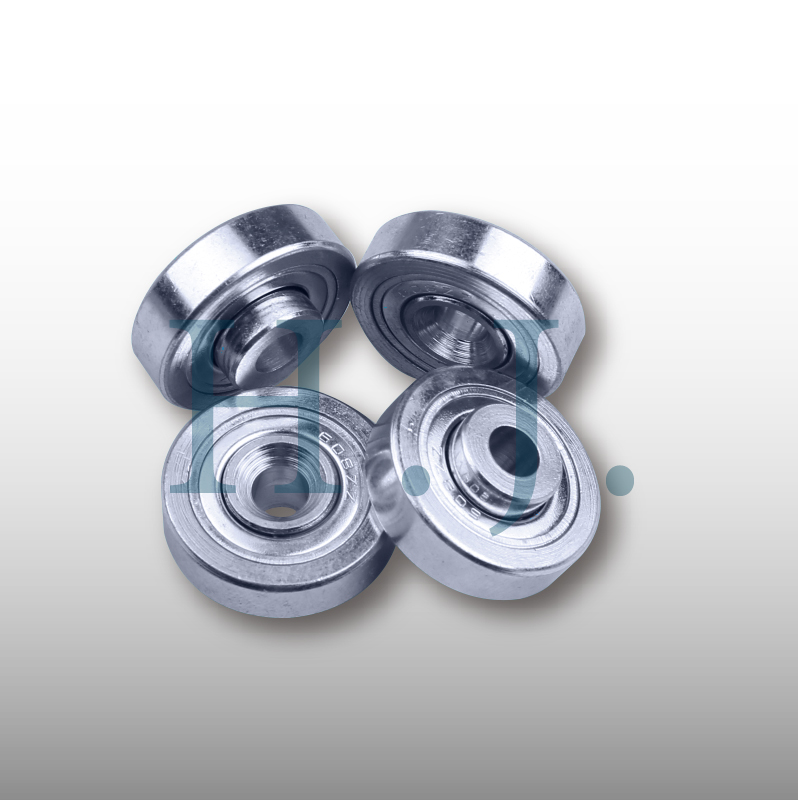
 Food grade custom bearings
Food Grade Custom Bearings – Custom Bearing Solutions for Food Processing Equipment
Food-processing machinery often operates under conditions that are very different from ordinary industrial equipment. Bearings may be exposed to water, humidity, frequent cleaning, detergents, food residues, temperature changes, corrosion, and repeated washdown. In these applications, food grade custom bearings may be required when standard bearing products cannot satisfy dimensional, material, hygiene, sealing, or environmental requirements.
Food-grade bearing selection should consider much more than the bearing material alone. The complete bearing system can include bearing rings, rolling elements, cages, seals, lubricants, housings, shafts, and surrounding mechanical components. Any food-related requirement should therefore be evaluated according to the actual application and the standards specified by the equipment manufacturer or end user.
HSIAN JI BEARING CO., LTD. is a Taiwan bearing manufacturer established in 1995. Its current product range includes plastic bearings, thrust bearings, stamped bearings, slide bearings, ball bearings, special bearings, and non-standard bearings. HSIAN JI also supports product development according to customer requirements.
For customers requiring food grade custom bearings, HSIAN JI can evaluate projects according to drawings, materials, operating environment, cleaning conditions, dimensions, load, speed, sealing requirements, and production quantity.
What Are Food Grade Custom Bearings?
Food grade custom bearings are bearing products developed or selected for food-processing or related equipment according to customer-specific mechanical and hygiene requirements.
Customization may involve:
-
Bearing dimensions
-
Material selection
-
Sealing
-
Lubrication
-
External geometry
-
Mounting
-
Housing design
-
Corrosion resistance
-
Washdown resistance
A food-related application may also require compliance with specific material or lubricant standards.
The required standards should always be identified by the customer before production.
Why Are Custom Bearings Needed in Food Processing?
Food-processing equipment can have unique mechanical layouts and demanding environmental conditions.
Standard bearings may be unsuitable because:
-
Installation space is limited
-
The machine uses special shaft dimensions
-
Frequent washdown is required
-
Corrosion resistance is important
-
Special seals are required
-
Lubricant restrictions apply
-
The bearing must fit a dedicated OEM design
Custom development allows these requirements to be considered together.
Food Processing Bearing Requirements
Important factors can include:
-
Water exposure
-
Cleaning frequency
-
Detergent exposure
-
Temperature
-
Humidity
-
Food contamination risk
-
Load
-
Speed
-
Lubrication
-
Sealing
-
Maintenance frequency
The exact bearing solution depends on the actual processing environment.
Plastic Bearings for Food Processing
HSIAN JI's official plastic-bearing page specifically notes that plastic bearings can be used in environments that corrode metal bearings, including food-processing plants.
Plastic bearings can provide potential advantages such as:
-
Corrosion resistance
-
Low weight
-
Low friction
-
Reduced noise
-
Moisture resistance
However, not every plastic is automatically food grade.
The specific polymer must be evaluated according to the applicable food-contact or machinery requirements.
Stainless Steel Bearings for Food Equipment
Stainless steel is commonly considered in food-processing machinery because of corrosion resistance and cleanability.
However, stainless steel grade matters.
Different grades provide different:
-
Corrosion resistance
-
Hardness
-
Mechanical strength
-
Chemical resistance
Customers should specify the required stainless steel grade when applicable.
Stainless steel construction alone does not automatically establish food-grade compliance.
Food Grade Bearing Lubrication
Lubrication is especially important in food-related equipment.
If incidental food contact is possible, customers may require lubricants suitable for food-processing environments.
The lubricant specification should consider:
-
Bearing speed
-
Load
-
Temperature
-
Water exposure
-
Cleaning
-
Relubrication interval
The customer should identify any required lubricant standard or certification.
Food Grade Bearing Seals
Seals can help protect bearings from:
-
Water
-
Food particles
-
Detergents
-
Dust
-
Other contaminants
Seal selection should consider:
-
Speed
-
Temperature
-
Cleaning chemicals
-
Friction
-
Water pressure
-
Exposure frequency
A stronger seal may improve contamination protection but can increase friction.
Bearings for Washdown Equipment
Food-processing machinery is often washed frequently.
Washdown requirements may include:
-
Low-pressure rinsing
-
High-pressure cleaning
-
Hot water
-
Detergents
-
Disinfectants
Customers should clearly define cleaning conditions.
A bearing suitable for humidity may not be suitable for direct high-pressure washdown.
Corrosion Resistant Food Processing Bearings
Corrosion resistance is an important consideration in food machinery.
Water, detergents, food acids, salt, and cleaning agents can attack conventional materials.
Possible approaches can involve:
-
Engineering plastics
-
Stainless steel
-
Special coatings
-
Sealed bearing designs
The correct material depends on the environment.
Chemical Resistant Bearings for Food Equipment
Cleaning chemicals can create a more aggressive environment than plain water.
Customers should provide:
-
Chemical name
-
Concentration
-
Temperature
-
Exposure time
Material compatibility should be evaluated before final bearing selection.
Custom Ball Bearings for Food Processing
Ball bearings are widely used in rotating equipment.
Custom ball-bearing requirements may involve:
-
Special dimensions
-
Stainless steel components
-
Seals
-
Lubrication
-
Corrosion-resistant materials
HSIAN JI currently manufactures ball bearings as part of its product range.
Food-processing requirements should be submitted with complete specifications.
Custom Plastic Bearings for Food Processing
Plastic bearings can be particularly useful in low-load or specialized applications where corrosion and moisture are important.
They may be considered for:
-
Guides
-
Rollers
-
Sliding systems
-
Conveyors
-
Packaging machinery
Material suitability should be evaluated according to load, speed, temperature, and applicable food requirements.
Custom Thrust Bearings for Food Equipment
Thrust bearings support axial loads.
A custom thrust bearing for food-processing equipment may require:
-
Special dimensions
-
Corrosion-resistant materials
-
Washdown compatibility
-
Appropriate lubrication
Customers should provide axial load, speed, temperature, cleaning conditions, and quantity.
Custom Slide Bearings for Food Equipment
Slide bearings support linear movement.
They may be used in:
-
Guides
-
Doors
-
Adjustment systems
-
Conveyor mechanisms
-
Processing machinery
HSIAN JI currently lists slide bearings among its main product categories.
Plastic or corrosion-resistant materials may be appropriate depending on the application.
Custom Special Bearings for Food Machinery
Special bearings can be useful when standard products cannot satisfy the combination of:
-
Dimensions
-
Hygiene
-
Washdown
-
Corrosion resistance
-
Mounting
-
Lubrication
HSIAN JI supports special and non-standard bearing product categories.
Projects should be evaluated individually.
Non-Standard Food Grade Bearing Solutions
Food-processing equipment may use unique mechanical layouts.
Non-standard projects may involve:
-
Special bore sizes
-
Custom outside diameters
-
Unique widths
-
Special mounting
-
Dedicated seals
Engineering drawings are recommended.
Food Grade Bearings for Conveyors
Conveyors are widely used in food manufacturing.
Bearing applications can include:
-
Rollers
-
Guides
-
Pulleys
-
Shafts
Requirements may include:
-
Washdown
-
Corrosion resistance
-
Moisture resistance
-
Sealing
-
Appropriate lubrication
The complete conveyor environment should be evaluated.
Bearings for Packaging Equipment
Food packaging machinery may involve:
-
High production speeds
-
Washdown
-
Temperature
-
Product residues
-
Frequent cleaning
Bearing requirements should consider both mechanical performance and hygiene-related conditions.
Bearings for Beverage Processing
Beverage equipment can experience:
-
Water exposure
-
Sugar residues
-
Cleaning agents
-
Humidity
-
Frequent washdown
Corrosion resistance and sealing can therefore be important.
Customers should define actual cleaning and operating conditions.
Bearings for Dairy Equipment
Dairy processing can involve frequent sanitation and cleaning.
Bearing applications may require:
-
Washdown resistance
-
Corrosion-resistant materials
-
Suitable seals
-
Compatible lubricants
Customer standards should be defined before development.
Bearings for Meat Processing Equipment
Meat-processing environments may involve moisture, cleaning agents, temperature variation, and frequent sanitation.
Bearing suitability should be evaluated according to:
-
Exposure
-
Load
-
Speed
-
Temperature
-
Cleaning chemistry
No bearing should be described as food grade without confirming applicable requirements.
Bearings for Bakery Equipment
Bakery machinery may involve heat, flour dust, grease, and cleaning.
Bearing selection may need to balance:
-
Temperature
-
Contamination protection
-
Lubrication
-
Load
-
Speed
Custom configurations can be evaluated when standard products are unsuitable.
Bearings for Food Mixing Equipment
Mixers and processing machines may use bearings around rotating shafts.
Important factors include:
-
Load
-
Speed
-
Cleaning
-
Moisture
-
Temperature
-
Shaft sealing
The bearing should be considered as part of the complete shaft system.
Food Grade Bearings from Engineering Drawings
Customers can provide:
-
2D drawings
-
3D CAD models
-
Assembly drawings
-
Material requirements
-
Seal specifications
-
Lubricant requirements
-
Applicable standards
Clear technical information improves project evaluation.
Food Grade Bearing Development from Samples
Some customers may have an existing bearing but no drawing.
A physical sample can provide useful information about:
-
Dimensions
-
Geometry
-
Mounting
-
Seal structure
HSIAN JI states that it can develop and manufacture products according to customer needs.
Customers should also provide food-processing requirements and operating conditions.
Prototype Food Grade Custom Bearings
Prototype development can be useful before production.
A prototype can help verify:
-
Fit
-
Installation
-
Movement
-
Dimensions
-
Assembly compatibility
Customers should also evaluate cleaning and environmental performance under representative conditions.
Quality Control
HSIAN JI maintains a dedicated Production and Quality Assurance function.
Custom food-processing bearing projects can include:
-
Material verification
-
Dimensional inspection
-
Process control
-
Finished-product inspection
-
Customer-defined testing
Any required regulatory documentation should be agreed upon before production.
Food Grade Certification Requirements
There is no single universal "food-grade bearing" certification that automatically applies to every application.
Depending on the market and equipment, requirements may involve:
-
Food-contact material rules
-
Lubricant standards
-
Customer specifications
-
Sanitation standards
-
Industry requirements
Customers should specify applicable regulations before development begins.
FDA Requirements
Some customers may require materials that comply with applicable U.S. FDA food-contact regulations.
However, FDA compliance depends on the specific material and intended use.
A complete bearing should not automatically be described as "FDA approved" unless appropriate documentation supports the claim.
NSF Requirements
Some applications may require NSF-related lubricant, material, or equipment requirements.
Customers should specify the exact standard required.
The bearing manufacturer can then evaluate whether suitable components and documentation can be provided.
EU Food Contact Requirements
European food-related equipment may require compliance with applicable EU material regulations or machinery standards.
Customers should identify required specifications in advance.
This helps prevent misunderstandings during product development.
OEM Food Grade Custom Bearings
OEM manufacturers often need dedicated bearing solutions for food-processing equipment.
OEM projects may include:
-
Custom dimensions
-
Washdown resistance
-
Material specifications
-
Sealing
-
Lubrication
-
Dedicated mounting
Customers should provide technical drawings, annual demand, and regulatory requirements.
Low Volume Food Grade Bearing Projects
Specialized food equipment may require relatively small quantities.
HSIAN JI can evaluate custom projects according to product design, materials, manufacturing method, and required quantity. Its site also shows dedicated product-development capability.
Replacement Bearings for Food Equipment
Existing food machinery may use a discontinued or specialized bearing.
Replacement projects can begin with:
-
Original bearing
-
Drawing
-
Physical sample
-
Dimensions
-
Material
-
Cleaning conditions
-
Food-grade requirements
A custom replacement can then be evaluated.
How to Choose Food Grade Custom Bearings
Customers should evaluate:
-
Bearing type
-
Load
-
Speed
-
Temperature
-
Water exposure
-
Cleaning chemicals
-
Sealing
-
Lubrication
-
Material requirements
-
Applicable regulations
The correct solution depends on both mechanical and hygiene requirements.
HSIAN JI – Food Grade Custom Bearing Project Evaluation
HSIAN JI BEARING CO., LTD. was established in 1995. Its current product categories include plastic, thrust, stamped, slide, ball, special, and non-standard bearings, supported by design/product-development and quality-assurance functions.
HSIAN JI's plastic-bearing information specifically identifies food-processing plants as an application environment where corrosion-resistant plastic bearings may be useful.
For food grade custom bearings, customers should provide:
-
Bearing type
-
Engineering drawing
-
Physical sample
-
Material requirements
-
Food-related standards
-
Lubricant requirements
-
Seal requirements
-
Load
-
Speed
-
Temperature
-
Water exposure
-
Cleaning chemicals
-
Required quantity
-
Estimated annual demand
HSIAN JI can evaluate whether plastic, stainless steel, sealed, special, or non-standard bearing approaches are appropriate for the application.
Food Grade Custom Bearings FAQ
What are food grade custom bearings?
Food grade custom bearings are customized bearing solutions developed for food-processing or related equipment according to mechanical, environmental, hygiene, material, lubrication, and sealing requirements.
Does HSIAN JI manufacture food grade bearings?
HSIAN JI's public product list does not currently show "food grade bearings" as a separate standard category. However, its plastic-bearing page specifically identifies food-processing plants as an application environment, and the company supports custom product development.
Food-grade projects should therefore be evaluated individually.
Are plastic bearings suitable for food processing?
Potentially.
HSIAN JI specifically states that plastic bearings can be used in environments that corrode metal bearings, including food-processing plants.
The exact plastic material must still meet the application's mechanical and regulatory requirements.
Are stainless steel bearings food grade?
Not automatically.
Stainless steel can provide corrosion resistance and cleanability, but food-grade suitability also depends on grade, lubrication, seals, and applicable standards.
What makes a bearing food grade?
A food-grade bearing solution may require appropriate:
-
Materials
-
Lubricants
-
Seals
-
Corrosion resistance
-
Cleanability
-
Regulatory compliance
Requirements depend on the application.
Are food grade bearings FDA approved?
Not automatically.
FDA-related compliance applies to specific materials and uses.
Customers should request appropriate documentation for any material or lubricant requiring FDA compliance.
What is food grade grease?
Food-grade grease is lubricant formulated for use under defined food-processing conditions and classifications.
Customers should specify the required lubricant standard, such as an applicable NSF classification, when needed.
Are food grade bearings waterproof?
Not necessarily.
Food-grade and waterproof are different requirements.
A food-processing bearing may need seals for washdown, but water resistance must be evaluated separately.
Are food grade bearings corrosion resistant?
Often corrosion resistance is desirable in food-processing machinery because of moisture and cleaning.
The level of resistance depends on material and environment.
Can food grade bearings withstand washdown?
Potentially.
Customers must specify water pressure, temperature, cleaning frequency, detergents, and disinfectants.
Can food grade bearings withstand high-pressure cleaning?
This requires specific seal and assembly evaluation.
High-pressure washdown can penetrate bearing systems that are adequate for normal splash conditions.
Can food grade bearings resist cleaning chemicals?
Compatibility depends on the bearing material, seals, lubricant, and chemical.
Customers should provide chemical name, concentration, temperature, and exposure time.
Can you manufacture custom-size food grade bearings?
Custom dimensions can be evaluated.
These may include:
-
Inner diameter
-
Outer diameter
-
Width
-
Flange dimensions
-
Mounting features
Can you manufacture non-standard food grade bearings?
HSIAN JI maintains a Non-standard Bearings product category and supports customer-specific development.
Projects combining special dimensions with food-processing requirements can be submitted for evaluation.
Can you manufacture special food grade bearings?
Special-bearing requirements can be evaluated according to material, sealing, dimensions, environment, and applicable standards.
Can you manufacture food grade ball bearings?
HSIAN JI manufactures ball bearings as one of its product categories.
Food-processing ball-bearing projects should include complete material, sealing, lubrication, and regulatory requirements.
Can you manufacture food grade plastic bearings?
Plastic-bearing projects can be evaluated for food-processing equipment.
Customers should specify the required plastic material and any applicable food-contact standard.
Can you manufacture food grade thrust bearings?
Thrust-bearing projects can be evaluated according to axial load, dimensions, materials, cleaning conditions, lubrication, and applicable requirements.
Can food grade bearings be used in conveyors?
Yes, depending on the conveyor application.
Food conveyors may require corrosion resistance, sealing, suitable lubrication, and washdown compatibility.
Can food grade bearings be used in beverage equipment?
Potentially.
Customers should provide water exposure, cleaning chemistry, speed, load, and hygiene requirements.
Can food grade bearings be used in dairy equipment?
Potentially.
Dairy machinery often involves frequent sanitation, so material, sealing, lubrication, and washdown conditions are important.
Can food grade bearings be used in meat-processing equipment?
Potentially.
The exact environment, cleaning chemicals, temperature, load, and speed should be defined.
Can food grade bearings be used in bakery equipment?
Potentially.
Bakery environments may involve heat, flour dust, grease, and cleaning, which should all be considered.
Can food grade bearings be used in packaging machines?
Yes, depending on the specific equipment.
Bearing selection should consider speed, contamination, temperature, cleaning, and product-contact requirements.
Can food grade bearings be manufactured from my drawing?
Yes. Engineering drawings can provide the basis for custom technical evaluation.
Customers should also specify food-related materials, seals, lubricant, and required standards.
Can you develop a bearing from a physical sample?
HSIAN JI states that it can develop and manufacture products according to different customer needs.
A physical sample can provide useful dimensional information, but compliance requirements must be specified separately.
Can I request a prototype food grade bearing?
Prototype projects can be evaluated.
The prototype should be tested for fit, function, cleaning, and environmental compatibility before regular production.
Can food grade custom bearings be produced in small quantities?
Small-quantity projects can be submitted for evaluation.
Feasibility depends on materials, seals, tooling, production process, compliance documentation, and quantity.
What material is best for food-processing bearings?
There is no single best material.
The choice may involve:
-
Engineering plastics
-
Stainless steel
-
Other application-specific materials
Selection should consider load, speed, corrosion, temperature, cleaning chemicals, and regulatory requirements.
Which plastic is best for food grade bearings?
The appropriate plastic depends on the application and required food-contact compliance.
Customers should specify the applicable regulation and operating conditions.
What stainless steel grade is best for food bearings?
The correct grade depends on corrosion exposure, mechanical requirements, cleaning agents, and customer specifications.
No stainless steel grade should be selected only by the term "food grade."
Do food grade bearings need seals?
Many food-processing applications benefit from seals because of water, food residues, and cleaning.
The exact seal type depends on speed, temperature, washdown, and friction requirements.
Do food grade bearings need special lubrication?
They may.
If lubricant can potentially come into contact with food, appropriate food-processing lubricant requirements may apply.
Customers should identify the required standard.
What information should I provide for a quotation?
For a food grade custom bearings inquiry, provide:
-
Bearing type
-
2D drawing
-
3D CAD model
-
Physical sample
-
Dimensions
-
Material requirement
-
Food-contact requirement
-
Required standard
-
Seal requirement
-
Lubricant requirement
-
Load
-
Speed
-
Temperature
-
Water exposure
-
Cleaning chemical
-
Required quantity
-
Estimated annual demand
Complete information helps prevent compliance misunderstandings.
How does HSIAN JI control quality?
HSIAN JI maintains a dedicated Production and Quality Assurance function alongside its design and product-development process.
Custom projects can include material, dimensional, inspection, and customer-defined documentation requirements.
What is the difference between food grade bearings and corrosion resistant bearings?
Corrosion-resistant bearings are selected to resist environmental degradation.
Food-grade bearings may also require corrosion resistance, but they additionally involve materials, lubrication, hygiene, and applicable food-related requirements.
What is the difference between food grade bearings and waterproof bearings?
Waterproof or water-resistant bearings focus on water ingress.
Food-grade bearings focus on suitability for food-processing applications.
A food-processing bearing may need both properties.
What is the difference between food grade bearings and sanitary bearings?
The terms may overlap, but sanitary equipment requirements can include broader machine-design factors such as cleanability, contamination prevention, surface design, and drainage.
The bearing is only one component in the complete sanitary system.
Why choose HSIAN JI for food grade custom bearing projects?
HSIAN JI BEARING CO., LTD. was established in 1995 and currently provides plastic, thrust, stamped, slide, ball, special, and non-standard bearing categories. It also supports customer-specific product development and quality-assurance processes.
Importantly, HSIAN JI's official plastic-bearing page explicitly identifies food-processing plants as an application environment for corrosion-resistant plastic bearings.
If you require food grade custom bearings for conveyors, food-processing machinery, beverage equipment, packaging equipment, washdown systems, or specialized OEM applications, send HSIAN JI your drawings, material requirements, food-related standards, cleaning conditions, sealing requirements, and production quantities for technical evaluation.