
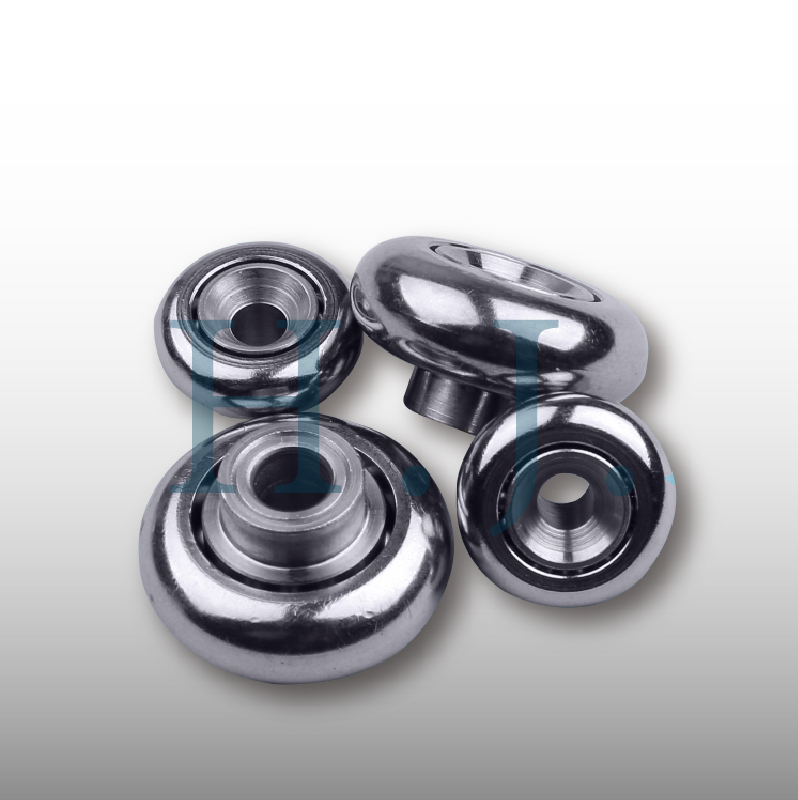
 Replacement non standard bearings
Replacement Non Standard Bearings – Custom Bearing Replacement Solutions
When a machine uses a standard bearing, finding a replacement is usually straightforward. However, older machinery, specialized equipment, imported systems, proprietary OEM products, and custom mechanical assemblies often use bearings that do not correspond to current catalogue sizes. When the original component becomes worn, discontinued, or unavailable, replacement non standard bearings can provide an alternative to modifying or replacing the entire machine.
Replacement non-standard bearings are developed according to the dimensional, structural, and application requirements of an existing bearing system. The project may begin with an engineering drawing, an original bearing sample, machine measurements, or information about the shaft, housing, load, speed, and operating environment.
HSIAN JI BEARING CO., LTD. is a bearing manufacturer based in Taiwan. Established in 1995, HSIAN JI manufactures and develops ball bearings, plastic bearings, thrust bearings, stamped bearings, slide bearings, special bearings, and non-standard bearings.
For customers requiring replacement non standard bearings, HSIAN JI can evaluate projects according to drawings, physical samples, dimensions, materials, application requirements, and production quantities.
What Are Replacement Non Standard Bearings?
Replacement non standard bearings are bearing products developed to replace an existing bearing that cannot be substituted directly with a conventional catalogue model.
The original bearing may differ from standard products in:
-
Inner diameter
-
Outer diameter
-
Width
-
Thickness
-
Flange dimensions
-
External geometry
-
Mounting features
-
Material
-
Bearing configuration
The objective is to develop a replacement that fits the existing mechanical system without requiring unnecessary redesign of the shaft, housing, frame, or surrounding components.
Why Are Non Standard Replacement Bearings Needed?
Machines and mechanical products can remain in use for decades.
During that time, the original bearing may become difficult to obtain because:
-
The bearing model has been discontinued
-
The original manufacturer no longer produces it
-
The original supplier is unavailable
-
No direct catalogue replacement exists
-
The bearing was custom-made for the equipment
-
The bearing dimensions are unusual
-
The machine uses a proprietary design
-
Replacement stock is no longer available
In these cases, custom manufacturing may provide another replacement option.
Replacement Bearings for Older Machinery
Older machinery is one of the most common applications for replacement non-standard bearings.
A machine may remain productive even though its original components are no longer widely supported.
Replacing the complete machine because one bearing is unavailable may be costly and unnecessary.
Customers should collect as much information as possible, including:
-
Original bearing sample
-
Machine model
-
Shaft dimensions
-
Housing dimensions
-
Available drawings
-
Load
-
Speed
-
Operating environment
-
Required quantity
This information can help determine whether a replacement bearing is feasible.
Replacement Bearings for Discontinued Models
A bearing may be discontinued even though the equipment that uses it remains in service.
When no direct cross-reference exists, a replacement project can begin by examining the original bearing.
Important information can include:
-
Bearing dimensions
-
Material
-
Mounting features
-
External structure
-
Shaft fit
-
Housing fit
-
Application
The objective is not simply to duplicate the appearance of the old component, but to understand how it functions within the equipment.
Replacement Bearings for Obsolete Equipment
Obsolete equipment can create unique maintenance challenges.
The machine manufacturer may no longer provide spare parts, or the bearing specification may no longer appear in modern catalogues.
A custom replacement may be evaluated when:
-
The machine cannot easily be modified
-
The original bearing is unavailable
-
A standard replacement does not fit
-
The equipment is still economically useful
Providing the original component can be particularly helpful when technical documentation is limited.
Replacement Bearings with Unusual Dimensions
Unusual dimensions are a common reason standard replacements cannot be used.
A bearing may require:
-
Unusual inner diameter
-
Special outer diameter
-
Non-standard width
-
Special flange size
-
Unique mounting dimensions
For example, a standard bearing may fit the shaft but not the housing, or it may have the correct outside diameter but the wrong width.
A non-standard replacement can potentially be developed around the complete dimensional combination.
Replacement Non Standard Ball Bearings
Ball bearings are widely used in rotational applications.
A replacement non-standard ball bearing may be required when an existing product has:
-
Special bore dimensions
-
Unusual outside diameter
-
Unique width
-
Proprietary mounting features
-
Non-standard external geometry
Customers should provide shaft dimensions, housing dimensions, load, speed, installation information, and quantity.
HSIAN JI includes ball bearings among its official product categories.
Replacement Non Standard Plastic Bearings
Plastic bearings may be used in applications where lightweight construction, corrosion resistance, reduced noise, moisture resistance, or design flexibility are important.
A replacement plastic bearing project should consider not only dimensions but also operating conditions.
Customers should provide:
-
Material information, if known
-
Load
-
Speed
-
Temperature
-
Moisture
-
Chemicals
-
Movement
-
Operating environment
If the original material is unknown, the physical sample and application information can provide a starting point for evaluation.
Replacement Non Standard Thrust Bearings
Thrust bearings primarily support axial loads.
A non-standard thrust bearing may become difficult to replace because of its inner diameter, outer diameter, thickness, or mounting configuration.
Customers should provide:
-
Inner diameter
-
Outer diameter
-
Thickness
-
Axial load
-
Speed
-
Installation space
-
Shaft dimensions
-
Material information
The replacement should be evaluated within the complete axial-load system.
Replacement Non Standard Slide Bearings
Slide bearings support and guide linear movement and often interact directly with rails, guides, brackets, frames, or housings.
Because these components may be unique to the machine, a standard replacement bearing may not fit.
HSIAN JI maintains slide bearings as one of its dedicated product categories.
For replacement projects, customers should provide information about both the bearing and the complete sliding mechanism.
Replacement Non Standard Stamped Bearings
Stamped bearings may have unique stamped housings or mounting structures.
When the original product becomes unavailable, a standard bearing may not match the existing mechanical design.
Replacement requirements can involve:
-
Stamped housing dimensions
-
Bore dimensions
-
External geometry
-
Mounting features
-
Material
-
Overall width
HSIAN JI includes stamped bearings among its official bearing categories.
Replacement Bearings from Physical Samples
A physical sample is one of the most useful references for non-standard replacement projects.
HSIAN JI states that it can develop and manufacture samples according to different customer needs.
A sample can provide information about:
-
Dimensions
-
General geometry
-
Mounting features
-
External structure
-
Component relationships
However, a sample may not reveal the original tolerance, load rating, material specification, or operating conditions.
Additional machine and application information should therefore be provided whenever possible.
Replacement Bearings from Engineering Drawings
Original engineering drawings provide an excellent basis for replacement development.
Useful documents include:
-
2D technical drawings
-
3D CAD models
-
Assembly drawings
-
Original specifications
-
Material information
-
Tolerances
-
Part numbers
Assembly drawings are especially valuable because they show how the bearing interacts with the shaft, housing, roller, rail, wheel, or other components.
Replacement Bearings Without Original Drawings
Many older machines no longer have complete technical documentation.
This does not necessarily prevent an initial evaluation.
Customers can provide:
-
Original bearing sample
-
Bearing measurements
-
Shaft measurements
-
Housing measurements
-
Machine photos
-
Application description
-
Load information
-
Speed information
The more complete the available information, the more effectively the replacement project can be assessed.
Reverse Engineering Considerations
A replacement project may require evaluating an existing component to establish its important dimensional and structural characteristics.
However, external measurements alone do not always reveal every original specification.
For this reason, customers should provide application information such as:
-
What the bearing supports
-
Type of movement
-
Operating speed
-
Load
-
Environment
-
Service conditions
This helps avoid treating the replacement as only a dimensional copying exercise.
Modified Standard Bearings as Replacements
A completely new non-standard bearing is not always necessary.
Sometimes a current standard bearing is close to the original component.
A replacement solution may potentially involve modifying:
-
Inner diameter
-
Outer diameter
-
Width
-
Flange
-
External geometry
-
Mounting features
If only limited changes are required, modifying an existing bearing concept can be evaluated as an alternative.
Custom Manufactured Replacement Bearings
When no existing bearing is sufficiently close to the required product, a custom replacement may be necessary.
Custom manufacturing can involve:
-
Special dimensions
-
Dedicated geometry
-
Special mounting features
-
Custom material requirements
-
Application-specific configurations
The manufacturing approach depends on technical feasibility, quantity, material, and production process.
Replacement Bearings for OEM Products
OEM products often use dedicated bearing components that may not be available through ordinary distributors.
If the original supplier changes or the component becomes unavailable, the OEM may require a replacement manufacturing source.
OEM customers should provide:
-
Original drawings
-
Physical samples
-
Product application
-
Critical dimensions
-
Materials
-
Quality requirements
-
Initial quantity
-
Estimated annual demand
This helps establish a stable basis for repeat manufacturing.
Replacement Bearings for Imported Equipment
Imported machinery may use bearing products that are difficult to source locally.
Shipping individual replacement components from the original country can also become difficult if the product is obsolete.
Customers can provide the original component and equipment information for local manufacturing evaluation.
The goal is to determine whether a technically suitable replacement can be developed.
Replacement Bearings for Specialized Machinery
Special-purpose machinery often uses components designed specifically around the machine.
Examples may include:
-
Custom production equipment
-
Conveyor systems
-
Packaging machinery
-
Automated equipment
-
Special sliding systems
When one of these components becomes unavailable, a non-standard replacement may help extend equipment service life.
Prototype Replacement Bearings
For a new replacement design, prototype manufacturing can help verify the proposed component before further production.
A prototype can be checked for:
-
Dimensions
-
Shaft fit
-
Housing fit
-
Installation
-
Movement
-
Assembly compatibility
The replacement can then be tested in the actual equipment.
If adjustments are needed, they can be evaluated before regular production.
Testing Replacement Non Standard Bearings
Replacement bearings should be evaluated according to the actual equipment.
Testing may include:
-
Dimensional inspection
-
Installation checking
-
Fit verification
-
Movement testing
-
Assembly testing
-
Customer application testing
The goal is to confirm that the replacement meets the agreed requirements before larger production quantities are manufactured.
From Replacement Prototype to Production
A replacement project may progress through:
-
Original component review
-
Drawing or sample evaluation
-
Application analysis
-
Prototype development
-
Dimensional inspection
-
Machine testing
-
Design adjustment
-
Production preparation
-
Trial production
-
Repeat production
HSIAN JI's official Design and Product Development information describes a process that includes product design, prototyping, testing, production, and launch.
Low Volume Replacement Bearings
Replacement projects often require relatively small quantities.
A customer may need bearings for:
-
One machine
-
Several machines
-
Maintenance stock
-
Future spare parts
The economic feasibility depends on the bearing design, materials, production method, tooling, and quantity.
Customers should provide both immediate demand and potential future requirements.
Repeat Production of Replacement Bearings
Once the replacement bearing has been verified, additional batches may be required over time.
This can be useful when a company operates several machines using the same obsolete component.
Approved drawings and specifications can provide references for repeat production.
Customers should provide expected annual demand and order frequency where available.
Quality Control for Replacement Non Standard Bearings
Quality consistency is important because a replacement must continue to fit an existing mechanical system.
HSIAN JI's Production and Quality Assurance page states that quality activities cover raw-material procurement, manufacturing processes, inspection, and final-product testing.
Quality control can include:
-
Raw material control
-
Dimensional inspection
-
Manufacturing-process control
-
Finished-product inspection
-
Product testing
-
Production monitoring
Approved samples and drawings can provide references for subsequent production.
Applications for Replacement Non Standard Bearings
Replacement non-standard bearings can be relevant to:
-
Industrial machinery
-
Conveyors
-
Automation equipment
-
Packaging machinery
-
Furniture systems
-
Sliding doors
-
Windows
-
Medical equipment
-
Office equipment
-
Hardware products
-
Transportation products
-
Fitness equipment
-
Sporting goods
-
Specialized OEM products
HSIAN JI officially maintains a dedicated non-standard bearing product category alongside its other bearing types.
Why Source Replacement Non Standard Bearings from Taiwan?
Taiwan has an established manufacturing ecosystem covering bearings, machinery, metalworking, plastics, precision components, hardware, and OEM production.
For international customers, a Taiwan bearing manufacturer can provide a useful option when replacement projects require:
-
Technical communication
-
Physical sample development
-
Custom dimensions
-
Prototype manufacturing
-
Quality control
-
Repeat production
HSIAN JI was established in 1995 and states that it develops and produces Taiwan-made bearings while also supporting customer-specific sample development.
HSIAN JI – Replacement Non Standard Bearings from Taiwan
If your existing bearing is discontinued, obsolete, unusually sized, proprietary, or unavailable from normal suppliers, HSIAN JI welcomes your inquiry.
For replacement non standard bearings, provide as much information as possible:
-
Original bearing
-
Original part number
-
Engineering drawing
-
Physical sample
-
Inner diameter
-
Outer diameter
-
Width
-
Material
-
Shaft dimensions
-
Housing dimensions
-
Load
-
Speed
-
Operating environment
-
Required quantity
-
Estimated future demand
HSIAN JI can evaluate whether a custom, modified, special, or non-standard replacement bearing solution is appropriate for your machine or OEM application.
Replacement Non Standard Bearings FAQ
What are replacement non standard bearings?
Replacement non standard bearings are custom or special bearing products developed to replace existing bearings that cannot be substituted directly with standard catalogue products.
They may have unusual dimensions, mounting features, structures, or materials.
When do I need a non-standard replacement bearing?
You may need one when:
-
The original bearing is discontinued
-
No standard replacement fits
-
The bearing uses unusual dimensions
-
The machine has fixed shaft and housing dimensions
-
The original component was custom-made
-
The product is proprietary
Does HSIAN JI manufacture non-standard bearings?
Yes. HSIAN JI officially lists non-standard bearings as a dedicated product category.
Customer-specific replacement requirements can be submitted for evaluation.
Can HSIAN JI develop replacement bearings from samples?
HSIAN JI states that it can develop and manufacture samples according to different customer needs.
An original bearing sample can therefore provide an important reference for replacement development.
Can you replace a bearing if I do not have a drawing?
Potentially.
Customers can provide the original bearing, bearing measurements, shaft and housing dimensions, machine photos, and application information.
A physical sample can provide useful structural and dimensional information.
Can you replace a bearing from an engineering drawing?
Yes. Engineering drawings can provide a strong basis for evaluation.
Customers should include dimensions, tolerances, materials, geometry, and mounting features whenever available.
Can you reproduce obsolete bearings?
Obsolete bearing projects can be submitted for evaluation.
Customers should provide the original component, available drawings, shaft and housing dimensions, load, speed, environment, and quantity.
Can you replace discontinued bearings?
Potentially.
If the original manufacturer no longer supplies the bearing and no standard cross-reference fits, custom replacement manufacturing can be evaluated.
Can you replace hard-to-find bearings?
A difficult-to-source bearing may be a candidate for custom or non-standard replacement.
The original bearing or complete technical information should be provided.
Can you replace unusual-size bearings?
Yes, unusual dimensions can be evaluated as part of a non-standard replacement project.
Important measurements include inner diameter, outer diameter, width, and any flange or mounting dimensions.
Can the inner diameter be customized?
Special bore dimensions can be evaluated according to the bearing structure and manufacturing process.
Customers should also provide shaft, housing, width, load, and speed information.
Can the outer diameter be customized?
Special outside diameters can be evaluated when an existing housing cannot be modified.
Complete housing and assembly dimensions are recommended.
Can bearing width be customized?
Custom-width requirements can be evaluated.
The width should be considered together with the complete bearing structure and mechanical application.
Can you reproduce a special flange bearing?
Special flange dimensions or external structures can be evaluated according to the original component, drawing, and application.
Complete measurements should be provided.
Can you manufacture replacement ball bearings?
HSIAN JI includes ball bearings among its product categories.
Non-standard replacement ball-bearing requirements can be submitted for evaluation.
Can you manufacture replacement plastic bearings?
Plastic bearings are part of HSIAN JI's official product range.
Customers should provide dimensions, material information if known, load, movement, environment, and quantity.
Can you manufacture replacement thrust bearings?
HSIAN JI lists thrust bearings among its bearing product categories.
Replacement projects should include dimensions, axial load, speed, material, and installation information.
Can you manufacture replacement slide bearings?
Yes. HSIAN JI has a dedicated slide bearing product category.
Customers should provide the original bearing or information about the complete rail and guide system.
Can you manufacture replacement stamped bearings?
HSIAN JI maintains stamped bearings as one of its official product categories.
Custom replacement requirements can be evaluated according to drawings, samples, dimensions, and geometry.
Can a current standard bearing be modified as a replacement?
Potentially.
If a standard product is close to the required bearing, selected changes to dimensions or external features may be evaluated.
This can sometimes provide an alternative to developing an entirely new bearing.
How do you determine whether a replacement should be modified or fully non-standard?
The decision depends on how closely an existing bearing matches the original application.
If only a few dimensions differ, modification may be practical.
If the structure or geometry differs substantially, a fully non-standard solution may be more appropriate.
Can you reverse engineer an old bearing?
An original bearing sample can be evaluated to identify important dimensional and structural characteristics.
However, application information should also be provided because measurements alone may not reveal all original material, tolerance, or performance requirements.
Can replacement bearings be used in old industrial machinery?
Yes.
Older industrial equipment is one of the main applications where custom replacement bearing development can be useful when original parts are no longer readily available.
Can you replace bearings from imported machinery?
Imported machine bearing projects can be submitted for evaluation.
Customers should provide the original component and complete information about the equipment and application.
Can you replace proprietary OEM bearings?
Potentially, where the customer has the appropriate rights and sufficient technical information is available.
Drawings, samples, dimensions, and production requirements should be provided.
Can I request a prototype before ordering replacement bearings?
Depending on the project, prototype manufacturing can help verify fit, dimensions, installation, and movement before further production.
HSIAN JI's published development process includes prototyping and testing.
Can the prototype be modified after machine testing?
If testing identifies dimensional or functional issues, changes can be evaluated before regular production.
Prototype verification is particularly useful for replacement projects with incomplete original documentation.
Can replacement non standard bearings be produced in low quantities?
Low-quantity requirements can be submitted for evaluation.
Replacement bearings often involve smaller quantities for maintenance, specialized equipment, or spare parts.
Feasibility depends on design, materials, tooling, process, and quantity.
Can replacement bearings be manufactured repeatedly?
After a replacement has been approved, repeat production can potentially be arranged according to customer requirements.
Approved drawings and specifications can provide references for future production batches.
How does HSIAN JI control replacement bearing quality?
HSIAN JI states that its quality-assurance process covers raw-material procurement, manufacturing, process control, inspection, and final-product testing.
For replacement products, approved drawings and samples can provide additional production references.
What information should I provide for a replacement bearing quotation?
For a replacement non standard bearings inquiry, provide:
-
Original bearing
-
Manufacturer and part number, if available
-
2D engineering drawing
-
3D CAD model
-
Physical sample
-
Inner diameter
-
Outer diameter
-
Width
-
Flange or mounting dimensions
-
Material, if known
-
Shaft dimensions
-
Housing dimensions
-
Load
-
Speed
-
Operating environment
-
Required quantity
-
Estimated future demand
The more complete the information, the more effectively technical feasibility can be evaluated.
What is the difference between replacement non-standard bearings and obsolete bearing replacement?
Replacement non standard bearings is a broader term covering replacement products that require non-standard dimensions or structures.
Obsolete bearing replacement focuses specifically on bearings that are no longer current or no longer supplied.
An obsolete replacement bearing may also be a non-standard bearing.
What is the difference between replacement non-standard bearings and hard-to-find bearings?
Hard-to-find bearings describes the sourcing problem.
Replacement non-standard bearings describes one possible solution: manufacturing a non-standard replacement when an existing bearing cannot be sourced directly.
Why choose HSIAN JI for replacement non standard bearings?
HSIAN JI BEARING CO., LTD. was established in 1995 and manufactures plastic, thrust, stamped, slide, ball, special, and non-standard bearings. The company also states that it can develop and manufacture products and samples according to customer requirements.
HSIAN JI also maintains dedicated Design and Product Development and Production and Quality Assurance functions covering prototyping, testing, manufacturing, inspection, and final-product quality control.
If your existing bearing is discontinued, obsolete, unusual in size, or unavailable from standard suppliers, send HSIAN JI your original bearing, drawings, dimensions, application information, and required quantity for evaluation of a suitable replacement non standard bearing solution.