
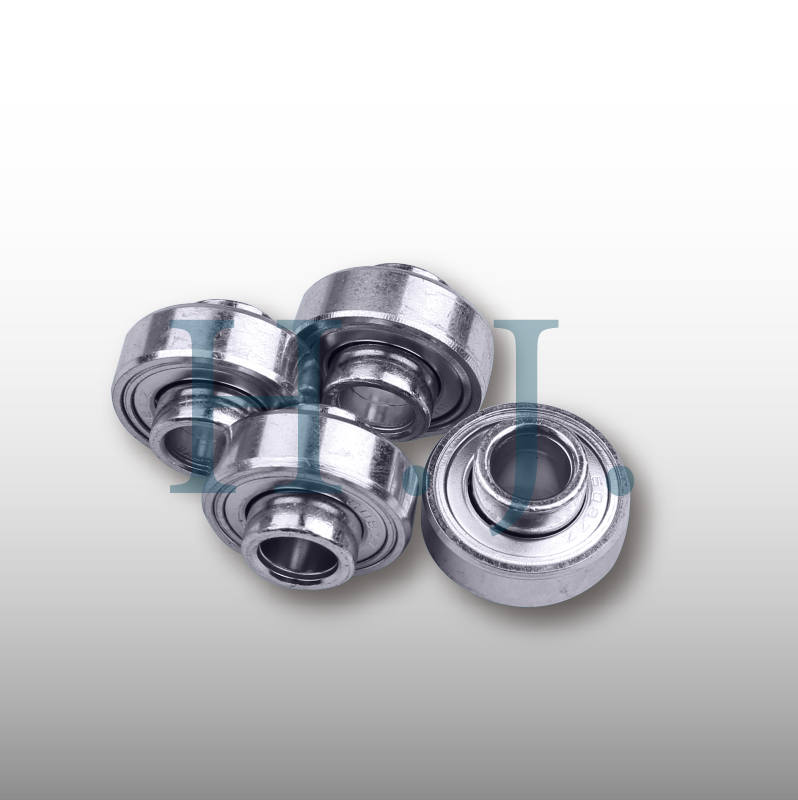
 Bicycle bearing parts OEM
Bicycle Bearing Parts OEM – Custom Bearing Solutions for Bicycle Components
Bicycle bearing parts OEM solutions are designed for bicycle manufacturers, component suppliers, wheel manufacturers, pedal manufacturers, hardware companies, sports-equipment brands, and OEM customers that require bearing components produced according to proprietary dimensions, materials, tolerances, or assembly requirements.
Bearings are used throughout bicycles to support rotating parts, reduce friction, maintain alignment, and improve mechanical movement. Depending on the bicycle design, bearings may be used in wheels, hubs, pedals, crank systems, rollers, pulleys, pivots, or other rotating and guiding components.
HSIAN JI BEARING CO., LTD. is a Taiwan bearing manufacturer providing ball bearings, slide bearings, plastic bearings, stamped bearings, special bearings, and non-standard bearing solutions. The company states that its R&D and manufacturing are based on customer uses and requirements, and that it can develop and manufacture samples according to different customer needs. It also describes a development process that includes product design, prototyping, testing, trial production, and mass production.
For customers requiring bicycle bearing parts OEM, HSIAN JI can evaluate custom projects according to engineering drawings, physical samples, bearing dimensions, shaft or axle dimensions, loads, speed, environmental exposure, materials, tolerances, and production quantities.
What Are Bicycle Bearing Parts?
Bicycle bearing parts are mechanical components used to support rotating or moving sections of a bicycle.
Potential applications can include:
-
Wheel hubs
-
Hub assemblies
-
Pedals
-
Crank systems
-
Pulleys
-
Rollers
-
Pivot mechanisms
-
Small rotating components
-
Bicycle accessories
The exact bearing type depends on the bicycle component and mechanical function.
What Does Bicycle Bearing Parts OEM Mean?
OEM stands for Original Equipment Manufacturer.
In a bicycle bearing parts OEM project, bearings are manufactured or customized according to the bicycle or component manufacturer's own specifications.
OEM requirements can involve:
-
Customer drawings
-
Custom dimensions
-
Special materials
-
Dedicated tolerances
-
Customer part numbers
-
Private packaging
-
Repeat production
This allows the bearing to become an integrated part of the customer's bicycle component.
Custom Bicycle Bearings
Standard catalogue bearings do not fit every bicycle design.
Custom requirements can involve:
-
Special inner diameter
-
Special outer diameter
-
Custom width
-
Flanges
-
External geometry
-
Special sealing
-
Application-specific features
Engineering drawings provide the best basis for custom bearing evaluation.
Ball Bearings for Bicycle Components
Ball bearings are widely used in bicycle applications because rolling elements help reduce friction.
Potential applications can include:
-
Wheel hubs
-
Pedal assemblies
-
Rotating shafts
-
Small rollers
-
Pulley mechanisms
Important specifications include:
-
Bearing ID
-
Bearing OD
-
Width
-
Load
-
Speed
-
Lubrication
-
Sealing
The bearing should be matched to the complete component assembly.
Bicycle Hub Bearings
Wheel hubs are among the most important rotating components on a bicycle.
Hub bearings support the wheel around the axle while allowing smooth rotation.
Important factors include:
-
Axle diameter
-
Hub bore
-
Bearing fit
-
Radial load
-
Side load
-
Rotation speed
-
Water and dirt exposure
Incorrect bearing fit can cause noise, rough rotation, or premature wear.
Bicycle Wheel Bearings
Wheel bearings must support:
-
Rider weight
-
Bicycle weight
-
Dynamic road loads
-
Cornering forces
-
Impact from uneven surfaces
Bearing selection should therefore consider more than static load alone.
Bicycle Pedal Bearings
Pedal systems require bearings to support repeated rotational movement under rider force.
Important considerations include:
-
Pedal spindle diameter
-
Bearing size
-
Load direction
-
Rotation
-
Contamination
Custom bearing dimensions may be required for proprietary pedal designs.
Bicycle Crank Bearings
Crank systems transfer rider force into rotational movement.
Bearing requirements can include:
-
Load support
-
Smooth rotation
-
Alignment
-
Low friction
-
Durability
Actual crank and shaft geometry should be provided for evaluation.
Bicycle Pulley Bearings
Some bicycle systems use small pulley wheels.
Bearing-supported pulleys can be used in:
-
Guide mechanisms
-
Cable systems
-
Small rotating assemblies
The bearing should fit accurately inside the pulley wheel.
Bicycle Roller Bearings
Small rollers may be used in selected bicycle or accessory mechanisms.
A roller assembly may include:
-
Roller body
-
Bearing
-
Shaft
-
Spacer
-
Retaining component
The complete assembly should be evaluated together.
Plastic Bearings for Bicycle Components
Plastic bearings may provide useful characteristics in selected bicycle applications.
Potential benefits include:
-
Corrosion resistance
-
Low weight
-
Reduced noise
-
Design flexibility
However, suitability depends strongly on:
-
Load
-
Speed
-
Wear
-
Temperature
-
Dirt
-
Water
Plastic bearings should not automatically be assumed suitable for high-load rotating applications.
Stamped Bearings for Bicycle Hardware
Stamped bearings can provide compact and efficient structures for selected bicycle or hardware components.
Potential advantages can include:
-
Compact design
-
Low weight
-
Manufacturing efficiency
-
Integration into small mechanisms
Suitability depends on load and speed requirements.
Slide Bearings for Bicycle Mechanisms
Slide bearings can support guided or sliding movement.
Potential applications can include:
-
Adjustment mechanisms
-
Guides
-
Compact sliding systems
The required bearing depends on the type of motion.
Special Bicycle Bearings
Special bearings may be useful when a bicycle product requires:
-
Unique dimensions
-
Limited installation space
-
Special mounting
-
Custom external geometry
-
Proprietary component design
HSIAN JI provides a dedicated Special Bearings category for customer-specific applications.
Non-Standard Bicycle Bearings
Non-standard bearings can be useful when standard dimensions are not compatible with the component design.
Customization can involve:
-
Bore diameter
-
OD
-
Width
-
Flange dimensions
-
External geometry
This is especially relevant to OEM bicycle component manufacturers.
Small Bicycle Bearings
Many bicycle components require compact bearings.
Small bearing projects should consider:
-
Shaft diameter
-
Housing fit
-
Load
-
Speed
-
Environmental contamination
As dimensions become smaller, tolerance control becomes increasingly important.
High-Speed Bicycle Bearings
Wheel and pulley bearings can rotate at relatively high speeds.
Higher speed can affect:
-
Friction
-
Heat
-
Lubrication
-
Noise
-
Service life
Customers should provide estimated RPM where speed is important.
Heavy-Load Bicycle Bearings
Bicycle bearings can experience significant dynamic loads from:
-
Rider weight
-
Road impact
-
Braking
-
Cornering
-
Pedaling force
Actual load conditions should be considered during bearing selection.
Impact Loads in Bicycle Bearings
Road surfaces can generate repeated shock loads.
Examples include:
-
Potholes
-
Curbs
-
Rough pavement
-
Off-road terrain
Impact can produce short-duration forces much higher than normal rolling loads.
Sealed Bicycle Bearings
Bicycle components are often exposed to:
-
Dust
-
Dirt
-
Water
-
Mud
-
Road debris
Sealed bearing configurations may help reduce contamination entering the bearing.
Seal selection should balance protection and friction.
Water-Resistant Bicycle Bearings
A sealed bearing should not automatically be described as waterproof.
Water resistance depends on:
-
Seal design
-
Bearing construction
-
Component housing
-
Exposure
Customers should define actual water exposure.
Corrosion-Resistant Bicycle Bearings
Outdoor bicycle components may require improved corrosion resistance.
Potential material approaches can include:
-
Stainless steel
-
Plastic components
-
Protective treatments
-
Application-specific materials
The actual environment should be specified.
Stainless Steel Bicycle Bearings
Stainless steel may be considered where improved corrosion resistance is needed.
Different grades provide different combinations of:
-
Hardness
-
Corrosion resistance
-
Load capability
-
Cost
The required material grade should be clearly specified.
Low-Friction Bicycle Bearings
Low friction can help improve rotational efficiency.
Bearing friction depends on:
-
Precision
-
Lubrication
-
Seal design
-
Alignment
-
Load
-
Contamination
A low-friction bearing still requires correct shaft and housing fit.
Low-Noise Bicycle Bearings
Noise can result from:
-
Wear
-
Dirt
-
Water
-
Poor lubrication
-
Misalignment
-
Incorrect fit
Low-noise requirements should be defined during OEM development.
Bicycle Bearing Lubrication
Lubrication affects:
-
Friction
-
Heat
-
Wear
-
Noise
-
Service life
The best lubricant depends on load, speed, environment, and maintenance requirements.
Bearing Shaft Fit
The bearing bore must fit correctly around the shaft or axle.
Incorrect fit can cause:
-
Looseness
-
Excessive interference
-
Noise
-
Heat
-
Premature wear
Shaft tolerance should be provided.
Bearing Housing Fit
The bearing OD must fit correctly inside the hub, pedal, pulley, or other housing.
Poor fit can cause:
-
Bearing movement
-
Deformation
-
Poor rotation
-
Assembly problems
The complete component drawing should be supplied.
Bicycle Bearing Parts from Engineering Drawings
Customers can provide:
-
2D engineering drawings
-
3D CAD models
-
Bearing drawings
-
Hub drawings
-
Axle drawings
-
Pedal drawings
-
Assembly drawings
Critical dimensions and tolerances should be clearly marked.
Bicycle Bearing Parts from Physical Samples
When original drawings are unavailable, physical samples can be useful.
Customers can provide:
-
Original bearing
-
Hub sample
-
Pedal component
-
Axle
-
Pulley
-
Roller assembly
A sample can help determine dimensions and assembly relationships.
Prototype Bicycle Bearing Parts
Prototype manufacturing can help verify a new component before mass production.
Potential tests include:
-
Dimensional fit
-
Rotation
-
Load
-
Noise
-
Speed
-
Water and dust exposure
-
Actual bicycle testing
Real-world product testing is recommended.
OEM Bicycle Bearing Development
A custom OEM project may follow a development process such as:
-
Application review
-
Drawing evaluation
-
Sample or prototype development
-
Technical testing
-
Trial production
-
Final approval
-
Mass production
-
Repeat supply
This approach helps reduce the risk of moving directly into high-volume production.
Replacement Bicycle Bearings
Older bicycle components may use bearings that are difficult to source.
A replacement project can begin with:
-
Original bearing
-
Physical sample
-
Component dimensions
-
Application
-
Required quantity
A special or non-standard replacement can then be evaluated.
Obsolete Bicycle Bearing Replacement
Custom manufacturing may be useful when:
-
Original bearing is discontinued
-
Standard replacement does not fit
-
Component remains in service
-
Required quantity justifies production
Actual product testing should verify compatibility.
Low-Volume Bicycle Bearings
Prototype, restoration, and specialty products may initially require smaller quantities.
Feasibility depends on:
-
Bearing design
-
Material
-
Tooling
-
Tolerances
-
Quantity
Customers should provide initial and expected annual demand.
Mass Production of Bicycle Bearing Parts
After samples and drawings are approved, repeat production can be evaluated.
Important information includes:
-
Batch quantity
-
Monthly demand
-
Annual demand
-
Inspection requirements
-
Packaging requirements
-
Delivery schedule
OEM Packaging
Bicycle-component manufacturers may require:
-
Customer part numbers
-
Bulk packaging
-
Individual packaging
-
Private labels
-
Export cartons
Packaging requirements should be identified during quotation.
Quality Control for Bicycle Bearing Parts
Potential inspection items include:
-
Bearing ID
-
Bearing OD
-
Width
-
Critical tolerances
-
Rotation
-
Appearance
-
Fit
Customer-defined critical dimensions should be included in the approved drawing.
How to Choose a Bicycle Bearing Parts OEM Manufacturer
When selecting an OEM bearing manufacturer, buyers should consider:
-
Bearing manufacturing experience
-
Custom-size capability
-
Special and non-standard development
-
Ability to work from drawings
-
Ability to work from physical samples
-
Prototype support
-
Quality control
-
Mass-production capability
-
Repeat supply capability
The manufacturer should understand how the bearing interacts with the hub, axle, pedal, shaft, pulley, load, speed, and outdoor environment.
HSIAN JI – Bicycle Bearing Parts OEM Manufacturer in Taiwan
HSIAN JI BEARING CO., LTD. was established in 1995 and mainly develops and produces Taiwan-made steel ball bearings and slide bearings. The company's product portfolio also includes plastic bearings, stamped bearings, special bearings, and non-standard bearings.
HSIAN JI states that its R&D and manufacturing are based on customer uses and needs, and that it can develop and manufacture samples according to different customer requirements. Its published development process includes design, prototyping, testing, trial production, and mass production.
For bicycle bearing parts OEM inquiries, customers can provide:
-
2D engineering drawing
-
3D CAD model
-
Physical sample
-
Bearing inner diameter
-
Bearing outer diameter
-
Bearing width
-
Shaft or axle diameter
-
Hub dimensions
-
Wheel dimensions
-
Pedal dimensions
-
Radial load
-
Axial load
-
Maximum RPM
-
Impact requirements
-
Sealing requirements
-
Water and dust exposure
-
Material requirements
-
Required tolerances
-
Initial quantity
-
Estimated annual demand
-
Packaging requirements
HSIAN JI can evaluate custom, special, and non-standard bearing solutions for bicycle hubs, wheels, pedals, pulleys, rollers, rotating components, replacement parts, and OEM bicycle hardware.
Bicycle Bearing Parts OEM FAQ
What does bicycle bearing parts OEM mean?
Bicycle bearing parts OEM means bearing components manufactured according to a bicycle or bicycle-component manufacturer's own drawings, dimensions, materials, tolerances, or product specifications.
Does HSIAN JI manufacture custom bearings?
Yes. HSIAN JI states that its R&D and manufacturing are based on customer uses and needs and that it can develop and manufacture samples according to different customer requirements.
What bearing products does HSIAN JI provide?
Its current product categories include:
-
Ball bearings
-
Slide bearings
-
Plastic bearings
-
Stamped bearings
-
Thrust bearings
-
Special bearings
-
Non-standard bearings
Can bicycle bearings be customized?
Yes.
Potential customization includes:
-
Inner diameter
-
Outer diameter
-
Width
-
Flanges
-
External geometry
-
Materials
-
Sealing
Can HSIAN JI manufacture non-standard bicycle bearings?
Yes.
HSIAN JI maintains a dedicated Non-standard Bearings category for customer-specific applications.
Can HSIAN JI manufacture special bicycle bearings?
Yes.
Special bearing requirements can be evaluated according to drawings, samples, load, speed, and quantity.
Can you manufacture from a customer drawing?
Yes.
A dimensioned engineering drawing is one of the best references for OEM manufacturing.
Can you work from a 3D CAD model?
Yes.
A 3D model helps show assembly geometry.
A dimensioned 2D drawing is also recommended for production.
Can you work from a physical sample?
Yes.
HSIAN JI specifically states that it can develop and manufacture samples according to customer requirements.
Can you work from a complete bicycle component?
Potentially.
A hub, pedal, pulley, or other component can provide useful information about bearing fit and assembly.
Can bicycle hub bearings be customized?
Yes, depending on dimensions, load, speed, and manufacturing feasibility.
Can bicycle wheel bearings be customized?
Potentially.
Customers should provide hub, axle, load, and speed specifications.
Can bicycle pedal bearings be customized?
Potentially.
Pedal spindle and housing dimensions should be supplied.
Can bicycle pulley bearings be customized?
Potentially.
Pulley, shaft, load, and bearing dimensions should be provided.
Can bicycle bearings be small?
Yes.
Many bicycle components require compact bearing dimensions.
Can miniature bicycle bearings be manufactured?
Potentially.
Manufacturing feasibility depends on geometry, load, speed, tolerances, and quantity.
Can bicycle bearings operate at high speed?
Potentially.
Actual RPM, load, lubrication, and sealing should be considered.
Does wheel diameter affect bearing RPM?
Yes.
For a given bicycle speed, smaller rotating components generally produce higher RPM.
Does rider weight affect bearing load?
Yes.
Rider weight contributes to wheel, hub, and component loads.
Does road impact affect bicycle bearings?
Yes.
Road impacts can generate dynamic loads much higher than normal rolling loads.
Can bicycle bearings be sealed?
Yes, depending on bearing design.
Are sealed bicycle bearings waterproof?
Not automatically.
Waterproof performance should only be claimed against a defined test condition.
Can bicycle bearings resist rain?
Potentially.
Material and sealing should match the expected water exposure.
Can bicycle bearings resist mud and dust?
Appropriate sealing and housing design can improve contamination resistance.
Can stainless steel bicycle bearings be used?
Potentially.
The required stainless-steel grade should be specified.
Can bicycle bearings be corrosion resistant?
Yes, depending on material and design.
Can plastic bearings be used in bicycle components?
Potentially.
Plastic-bearing suitability depends on load, speed, wear, temperature, and environment.
Can stamped bearings be used?
Potentially.
Stamped bearing designs may be suitable for selected compact or hardware mechanisms.
Can slide bearings be used in bicycle components?
Potentially.
Slide bearings may be useful where guided or sliding movement is required.
Can bicycle bearings be low friction?
Yes.
Rolling resistance depends on bearing design, lubrication, seals, alignment, load, and contamination.
Can bicycle bearings be low noise?
Yes.
Noise depends on bearing quality, fit, lubrication, alignment, wear, and environment.
Does lubrication affect bicycle bearing performance?
Yes.
Lubrication affects:
-
Friction
-
Heat
-
Wear
-
Noise
-
Service life
Can grease be used?
Yes, depending on application requirements.
Can oil be used?
Potentially.
Oil and grease provide different friction and maintenance characteristics.
Does axle tolerance matter?
Yes.
The bearing bore must fit correctly around the axle or shaft.
Does hub tolerance matter?
Yes.
The bearing OD must fit correctly inside the hub or housing.
Can incorrect fit damage the bearing?
Yes.
Excessive interference or looseness can affect rotation and service life.
Can you reproduce discontinued bicycle bearings?
Potentially.
Provide the original bearing, component sample, dimensions, and required quantity.
Can obsolete bicycle bearings be replaced with custom bearings?
Potentially.
A special or non-standard replacement may be evaluated where standard products do not fit.
Can I request a prototype before mass production?
Yes.
Prototype development is appropriate for custom OEM projects.
What should be tested on a prototype?
Potential tests include:
-
Dimensions
-
Fit
-
Rotation
-
Load
-
Speed
-
Noise
-
Impact
-
Water and dust exposure
-
Actual bicycle use
Can HSIAN JI support trial production?
HSIAN JI's published product-development process includes prototyping, testing, production preparation, trial production, and mass production.
Can custom bicycle bearings be produced in small quantities?
Small-batch requirements can be evaluated according to design, material, tooling, and quantity.
Can bicycle bearings be mass produced?
Potentially.
After sample and specification approval, repeat production can be evaluated.
Can HSIAN JI support OEM bicycle brands?
Yes, subject to technical evaluation. HSIAN JI's manufacturing approach is based on customer use and requirements, and it supports sample development and production.
Can HSIAN JI support bicycle component manufacturers?
Yes.
Component manufacturers can provide drawings, samples, dimensions, load, speed, tolerances, and annual demand for evaluation.
Can customer-specific part numbers be used?
Potentially.
Customer part-number requirements can be included in an OEM project.
Can packaging be customized?
Potentially.
Packaging requirements can include bulk packing, individual packing, labels, and export cartons.
Can bicycle bearings be supplied in bulk?
Potentially.
Customers should provide required quantity and annual forecast.
Can HSIAN JI support repeat orders?
Repeat-production requirements can be evaluated after product approval.
What causes bicycle bearings to become noisy?
Possible causes include:
-
Dirt
-
Water
-
Bearing wear
-
Poor lubrication
-
Misalignment
-
Incorrect fit
Why does a bicycle wheel bearing feel rough?
Potential causes include contamination, corrosion, bearing damage, incorrect preload, or poor alignment.
Why does a pedal bearing become loose?
Potential causes include wear, improper fit, component damage, or incorrect assembly.
Why do bicycle bearings become hot?
Potential causes include:
-
Excessive preload
-
Poor lubrication
-
Misalignment
-
High speed
-
Excessive load
Does housing alignment affect bearing life?
Yes.
Poor alignment can increase friction, heat, noise, and wear.
What information should I provide for a quotation?
For a bicycle bearing parts OEM inquiry, provide:
-
2D engineering drawing
-
3D CAD model
-
Physical bearing or component sample
-
Bearing inner diameter
-
Bearing outer diameter
-
Bearing width
-
Shaft or axle diameter
-
Housing or hub dimensions
-
Wheel dimensions
-
Pedal or pulley dimensions
-
Radial load
-
Axial load
-
Maximum RPM
-
Impact requirements
-
Sealing requirements
-
Dust exposure
-
Water exposure
-
Material requirements
-
Critical tolerances
-
Initial quantity
-
Estimated annual demand
-
Packaging requirements
Complete application and quantity information helps improve technical and commercial evaluation.
What is the difference between bicycle bearing parts and bicycle bearings?
"Bicycle bearings" refers specifically to the bearing components.
"Bicycle bearing parts" can be used more broadly for bearings and related components integrated into hubs, pedals, rollers, pulleys, or other bicycle mechanisms.
What is the difference between OEM bicycle bearings and standard bearings?
Standard bearings use predefined catalogue dimensions and specifications.
OEM bicycle bearings can be manufactured according to proprietary dimensions, tolerances, materials, sealing, or part-number requirements.
What is the difference between bicycle hub bearings and pedal bearings?
Hub bearings support wheel rotation around the axle.
Pedal bearings support pedal rotation around the spindle.
Their loads, dimensions, speed, and environmental conditions can differ.
Why choose HSIAN JI for bicycle bearing parts OEM?
HSIAN JI has been manufacturing bearings in Taiwan since 1995 and offers ball bearings, slide bearings, plastic bearings, stamped bearings, special bearings, and non-standard bearings. The company states that product R&D and manufacturing are based on customer uses and requirements and that it can develop and manufacture samples according to customer needs.
Its published development process also includes product design, prototyping, testing, trial production, mass production, quality inspection, packaging, and shipment, which is particularly relevant to OEM projects.
For customers searching for bicycle bearing parts OEM for hubs, wheels, pedals, pulleys, rollers, custom bicycle components, replacement parts, or proprietary OEM products, send HSIAN JI your drawings, physical samples, bearing dimensions, axle or shaft specifications, load, speed, environmental requirements, quantity, and annual demand for technical evaluation.