
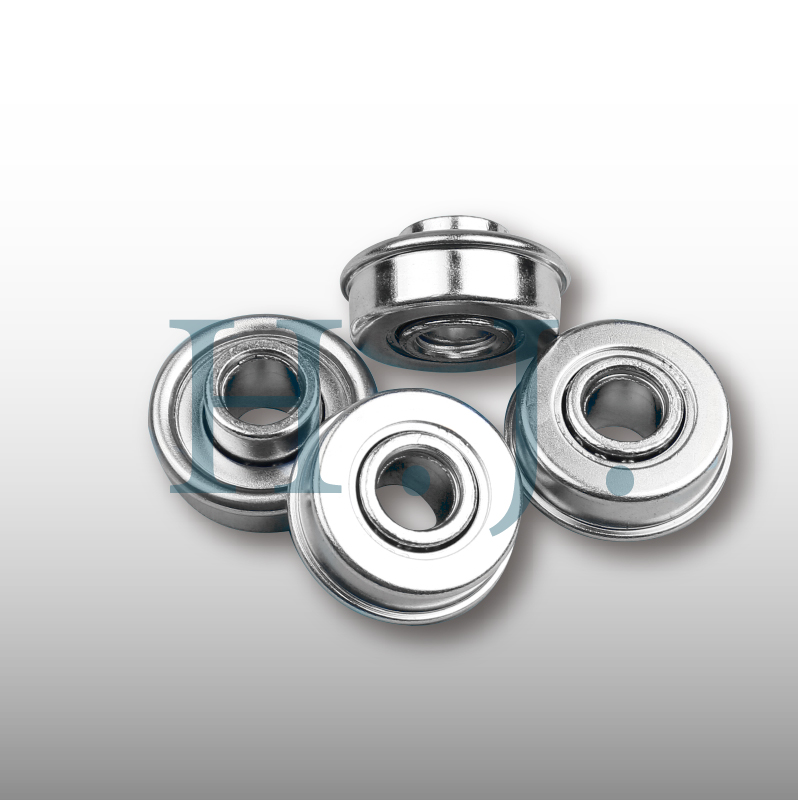
 Heavy load custom bearings
Heavy Load Custom Bearings – Custom Bearing Solutions for High-Load Applications
Heavy load custom bearings are developed for mechanical systems where bearing load requirements exceed what can be conveniently handled by a standard off-the-shelf solution. Industrial machinery, conveyors, automation equipment, transportation systems, rollers, heavy mechanical assemblies, and specialized OEM products may require bearings selected or engineered around high radial loads, axial loads, combined loads, shock conditions, limited installation space, or unique shaft and housing dimensions.
Heavy-load bearing performance depends on more than bearing size alone. Bearing type, load direction, internal geometry, materials, rolling elements, shaft support, housing rigidity, lubrication, speed, temperature, alignment, and operating duty cycle can all influence bearing suitability.
HSIAN JI BEARING CO., LTD. is a Taiwan bearing manufacturer with a published product range that includes ball bearings, thrust bearings, plastic bearings, stamped bearings, slide bearings, special bearings, and non-standard bearings. HSIAN JI's official ball-bearing information states that ball bearings can withstand substantial axial and radial loads, while its thrust-bearing information explains that thrust bearings are specifically designed to support axial forces.
For customers requiring heavy load custom bearings, HSIAN JI can evaluate projects according to technical drawings, physical samples, bearing dimensions, load direction, load magnitude, speed, materials, shaft and housing configuration, operating environment, and production quantities.
What Are Heavy Load Custom Bearings?
Heavy load custom bearings are bearings selected, modified, or manufactured for applications requiring higher load-carrying capability together with customer-specific dimensions or mechanical features.
Customization may involve:
-
Inner diameter
-
Outer diameter
-
Width
-
Bearing geometry
-
Rolling-element configuration
-
Material
-
Flange dimensions
-
Mounting features
-
Shaft interface
-
Housing interface
The correct design depends on how the load is applied to the bearing.
Understanding Bearing Load
Bearing loads can generally be divided into:
-
Radial load
-
Axial load
-
Combined load
-
Static load
-
Dynamic load
-
Shock or impact load
Different bearing types manage these loads differently.
For heavy-duty applications, customers should identify not only the maximum load but also the direction, frequency, and duration of that load.
Radial Load Bearings
Radial load acts primarily perpendicular to the shaft.
Examples can include loads created by:
-
Rollers
-
Wheels
-
Belt systems
-
Pulleys
-
Rotating shafts
-
Machinery components
Ball bearings can support radial loads, and HSIAN JI's published ball-bearing information specifically identifies strong load-bearing capacity as one of their advantages.
For customized applications, bearing dimensions and surrounding mechanical support should also be evaluated.
Axial Load Bearings
Axial load acts along the shaft axis.
HSIAN JI's Thrust Bearings page states that thrust bearings are specifically designed to support and transfer axial loads.
Applications may include:
-
Rotating equipment
-
Compressors
-
Fans
-
Mechanical drives
-
Vertical shaft systems
-
Application-specific machinery
Customers should provide the required axial load and whether it acts in one direction or both directions.
Combined Radial and Axial Loads
Some mechanical systems apply both radial and axial forces at the same time.
These applications require careful bearing selection because the complete load relationship affects bearing life and performance.
Customers should provide:
-
Radial load
-
Axial load
-
Load direction
-
Speed
-
Duty cycle
-
Shaft dimensions
-
Housing dimensions
The bearing should be evaluated according to the combined operating condition.
Heavy Load Ball Bearings
Ball bearings are widely used in industrial machinery and can support both radial and axial loads depending on bearing type and application.
HSIAN JI's official ball-bearing information specifically notes that ball bearings can withstand large axial and radial loads and are suitable for various mechanical applications.
A custom heavy-load ball-bearing project may require:
-
Special dimensions
-
Different internal geometry
-
Material requirements
-
Dedicated shaft fits
-
Housing modifications
-
Application-specific tolerances
Complete load information should always be provided.
Heavy Load Thrust Bearings
Thrust bearings are particularly relevant where axial load is the primary requirement.
HSIAN JI's thrust-bearing information describes one-way and two-way configurations for handling axial forces in one or both directions.
Heavy-load thrust-bearing requirements should include:
-
Inner diameter
-
Outer diameter
-
Thickness
-
Axial load
-
Direction of load
-
Speed
-
Temperature
-
Lubrication
-
Quantity
Heavy Load Special Bearings
Standard bearings may not fit specialized heavy-load machinery.
A special-bearing project can involve:
-
Unusual dimensions
-
Dedicated mounting
-
Heavy-load requirements
-
Unique geometry
-
Special material
-
Limited installation space
HSIAN JI provides special and non-standard bearing categories, which can provide a basis for customer-specific engineering projects.
Heavy Load Non-Standard Bearings
Some heavy-duty applications combine high load with non-standard dimensions.
A project may require:
-
Custom bore diameter
-
Special outside diameter
-
Increased width
-
Unique flange dimensions
-
Dedicated mounting features
-
Special housing relationship
Non-standard bearing development allows the product to be evaluated around the existing machine rather than forcing the machine to use a catalogue bearing.
Heavy Load Bearings for Machinery
Industrial machinery can impose significant loads on bearings.
Applications can include:
-
Production machinery
-
Processing equipment
-
Automation systems
-
Mechanical drives
-
Rollers
-
Conveyors
The correct bearing should be selected according to load, speed, shaft arrangement, lubrication, and service conditions.
Heavy Load Bearings for Conveyors
Conveyor bearings can experience high radial loads from:
-
Product weight
-
Roller loads
-
Belt tension
-
Impact
-
Repeated operation
For heavy conveyor systems, customers should provide:
-
Roller diameter
-
Shaft diameter
-
Bearing dimensions
-
Maximum load
-
Conveyor speed
-
Duty cycle
The bearing and roller assembly should be considered together.
Heavy Load Bearings for Rollers
Heavy-duty rollers can place concentrated loads on bearing components.
Applications may include:
-
Industrial rollers
-
Material-handling systems
-
Packaging machinery
-
Processing equipment
-
Mechanical transport systems
Customers should provide both static and operating loads.
Heavy Load Bearings for Wheels
Wheel systems can produce both radial loads and impact loads.
Important factors can include:
-
Wheel diameter
-
Shaft diameter
-
Load per wheel
-
Speed
-
Shock
-
Operating surface
-
Environment
A custom bearing may be required if the wheel assembly has non-standard dimensions.
Heavy Load Bearings for Automation Equipment
Automation equipment can combine repetitive motion with significant load.
Potential bearing applications can include:
-
Rotary mechanisms
-
Transfer systems
-
Mechanical arms
-
Positioning systems
-
Production equipment
Load direction and duty cycle are particularly important.
Heavy Load Bearings for Transportation Equipment
Transportation-related mechanical products can place demanding loads on bearings.
Requirements may include:
-
High radial load
-
Impact
-
Repeated movement
-
Environmental exposure
-
Long service life
The complete assembly should be evaluated rather than the bearing alone.
Static vs. Dynamic Load
Static load describes load acting when the bearing is stationary or moving very slowly.
Dynamic load applies while the bearing is rotating or moving during operation.
A bearing may perform differently under these two conditions.
Customers should provide both where relevant.
Shock and Impact Loads
Some equipment experiences occasional shock or impact.
Examples can include:
-
Material handling
-
Heavy rollers
-
Transportation systems
-
Industrial machinery
Shock loads can be significantly higher than normal operating loads.
These peak loads should be included in the bearing evaluation.
Load Distribution
Load distribution affects how forces pass through:
-
Rolling elements
-
Rings
-
Shaft
-
Housing
Poor support or misalignment can concentrate load on a small portion of the bearing.
This can reduce service life even when the nominal bearing capacity appears sufficient.
Shaft Rigidity
Heavy-load bearings require proper shaft support.
A shaft that bends excessively can:
-
Misalign the bearing
-
Concentrate load
-
Increase friction
-
Increase wear
Shaft diameter, material, span, and support arrangement should therefore be considered.
Housing Rigidity
Housing deformation can also affect bearing performance.
A heavy load can distort a weak housing and alter bearing alignment.
Customers should provide housing material and geometry when the application is particularly demanding.
Bearing Fits for Heavy Loads
Shaft and housing fits influence how loads are transferred.
Improper fits can cause:
-
Creep
-
Movement
-
Misalignment
-
Heat
-
Wear
Fit requirements should be determined according to load direction and operating conditions.
Lubrication for Heavy Load Bearings
Heavy load increases contact pressure and can place greater demands on lubrication.
Lubrication should consider:
-
Load
-
Speed
-
Temperature
-
Bearing type
-
Maintenance interval
-
Environment
Insufficient lubrication can increase wear and temperature.
Heavy Load Bearings and Speed
Heavy load and high speed can create a particularly demanding combination.
Higher speed can increase heat, while higher load increases contact stress.
If both conditions apply, the bearing should be evaluated specifically for the combined operating point.
Heavy Load Bearings and Temperature
Temperature can affect:
-
Lubricant
-
Bearing clearance
-
Materials
-
Seals
-
Fits
Customers should provide both normal and maximum operating temperatures.
Sealed Heavy Load Bearings
Sealed bearings can help protect against dust, water, and contamination.
However, sealing also affects friction and heat.
Customers should specify:
-
Contamination
-
Water exposure
-
Speed
-
Load
-
Maintenance
The correct balance depends on the application.
Material Selection for Heavy Load Bearings
Material selection should consider:
-
Strength
-
Hardness
-
Wear resistance
-
Fatigue resistance
-
Temperature
-
Corrosion
-
Manufacturing requirements
If the customer has a required material specification, it should be clearly identified on the drawing.
Heavy Load Custom Bearings from Engineering Drawings
Engineering drawings provide a strong basis for technical evaluation.
Customers can submit:
-
2D drawings
-
3D CAD models
-
Assembly drawings
-
Shaft dimensions
-
Housing dimensions
-
Bearing dimensions
-
Material requirements
-
Tolerances
Load information should be submitted together with the drawing.
Heavy Load Bearings from Physical Samples
Some customers may have an existing heavy-duty bearing but no original drawing.
A physical sample can provide useful information about:
-
Dimensions
-
Geometry
-
Mounting
-
Bearing structure
However, a sample alone may not reveal the original load rating or material specification.
Application information should also be provided.
Prototype Heavy Load Custom Bearings
Prototype development can help verify:
-
Fit
-
Installation
-
Dimensions
-
Assembly compatibility
-
Basic movement
For high-load applications, the bearing should then be tested under representative load conditions.
Heavy Load Bearing Testing
Potential tests may involve:
-
Static load
-
Dynamic load
-
Temperature
-
Rotation
-
Wear
-
Application testing
Customer-defined test criteria should reflect real operating conditions.
Low Volume Heavy Load Bearings
Specialized machinery may require heavy-load bearings in relatively small quantities.
Low-volume projects can be evaluated according to:
-
Bearing design
-
Material
-
Dimensions
-
Tooling
-
Quantity
-
Testing requirements
Customers should provide both immediate and future demand.
Replacement Heavy Load Bearings
Older industrial machinery may use special heavy-load bearings that are discontinued.
Customers should provide:
-
Original bearing
-
Part number
-
Drawing
-
Sample
-
Load
-
Speed
-
Shaft and housing dimensions
-
Quantity
A modified or non-standard replacement may then be evaluated.
Heavy Load Bearings for OEM Products
OEM manufacturers may require dedicated heavy-load bearing solutions.
OEM projects can involve:
-
Custom dimensions
-
Special housing
-
Dedicated shaft
-
High radial load
-
High axial load
-
Impact
-
Compact design
Customers should provide complete assembly drawings and annual demand.
Quality Control for Heavy Load Custom Bearings
Heavy-load applications require consistent manufacturing.
Quality control can include:
-
Material verification
-
Dimensional inspection
-
Process control
-
Finished-product inspection
-
Rotational verification
-
Customer-defined load testing
Approved drawings and specifications should provide production references.
How to Select Heavy Load Custom Bearings
Customers should provide:
-
Bearing type
-
Inner diameter
-
Outer diameter
-
Width
-
Maximum radial load
-
Maximum axial load
-
Static load
-
Dynamic load
-
Shock load
-
Speed
-
Temperature
-
Lubrication
-
Shaft dimensions
-
Housing dimensions
-
Expected service life
The phrase "heavy load" alone is not sufficient for correct selection.
Actual loads should be expressed numerically whenever possible.
HSIAN JI – Heavy Load Custom Bearing Solutions from Taiwan
HSIAN JI's published product information provides a relevant foundation for heavy-load bearing projects. Its ball-bearing information specifically identifies the ability to support substantial axial and radial loads, while its thrust-bearing information focuses on axial-load support.
For heavy load custom bearings, customers can provide:
-
Engineering drawings
-
3D CAD models
-
Physical samples
-
Bearing dimensions
-
Radial load
-
Axial load
-
Static load
-
Dynamic load
-
Shock load
-
Speed
-
Temperature
-
Lubrication
-
Shaft and housing dimensions
-
Required quantity
-
Estimated annual demand
HSIAN JI can evaluate whether a ball-bearing, thrust-bearing, special-bearing, modified, or non-standard bearing solution is appropriate for the application.
Heavy Load Custom Bearings FAQ
What are heavy load custom bearings?
Heavy load custom bearings are bearings selected, modified, or manufactured for higher-load applications while also meeting customer-specific dimensional and mechanical requirements.
Does HSIAN JI provide bearings for heavy-load applications?
HSIAN JI's Ball Bearings page states that ball bearings can withstand significant axial and radial loads, while its Thrust Bearings page explains that thrust bearings are designed to support axial loads.
Custom heavy-load requirements should be evaluated according to the actual application.
What is radial load?
Radial load acts perpendicular to the shaft axis.
Examples include loads from rollers, wheels, pulleys, and belt systems.
What is axial load?
Axial load acts along the shaft axis.
Thrust bearings are specifically designed to support axial forces.
Can ball bearings carry heavy loads?
Depending on bearing type and application, ball bearings can support substantial radial and axial loads.
HSIAN JI identifies strong load-bearing capacity as one of the advantages of ball bearings.
Can thrust bearings carry heavy axial loads?
Thrust bearings are specifically intended to support axial loads.
Actual capacity depends on bearing dimensions, design, materials, speed, and application.
What is a combined load?
A combined load includes both radial and axial forces acting on the bearing.
Both components should be provided during bearing evaluation.
What is static bearing load?
Static load is load acting when the bearing is stationary or moving very slowly.
What is dynamic bearing load?
Dynamic load is load acting while the bearing is operating under normal motion.
Does shock load matter?
Yes.
Short-duration impact forces can significantly exceed normal operating loads and should be included in the design requirements.
Can heavy-load bearings have custom dimensions?
Yes.
Custom requirements can involve:
-
Inner diameter
-
Outer diameter
-
Width
-
Flange dimensions
-
Mounting features
Can you manufacture special heavy-load bearings?
Special heavy-load requirements can be submitted for evaluation when standard bearings cannot satisfy dimensional or application requirements.
Can you manufacture non-standard heavy-load bearings?
Yes, non-standard projects can be evaluated when unusual dimensions and high-load requirements occur together.
Can you manufacture heavy-load bearings from my drawing?
Engineering drawings provide a strong basis for custom evaluation.
Customers should also supply numeric load values and operating conditions.
Can you work from a physical sample?
A physical sample can provide dimensional and structural information.
However, load capacity cannot normally be determined from appearance alone.
Can heavy-load bearings operate at high speed?
Potentially.
Applications combining high load and high speed require careful evaluation because both conditions increase heat and stress.
Are heavy-load bearings always slow-speed bearings?
No.
Some heavy-load applications also operate at significant speed.
The combined load and speed must be evaluated together.
Does bearing size affect load capacity?
Yes.
Bearing dimensions and internal geometry have a major influence on load capacity.
Larger does not automatically mean better, because installation and speed requirements must also be considered.
Does bearing width affect load capacity?
Potentially.
Width can influence internal structure and load distribution, but the entire bearing design must be considered.
Does material affect load capacity?
Yes.
Material hardness, fatigue resistance, strength, and heat treatment can influence bearing performance.
Does lubrication matter for heavy loads?
Yes.
Heavy loads increase contact stress, making appropriate lubrication especially important.
Can insufficient lubrication cause bearing failure?
Yes.
Poor lubrication can increase friction, heat, wear, and surface damage.
Does shaft diameter matter?
Yes.
The shaft must provide adequate support and maintain alignment under load.
Does housing strength matter?
Yes.
A weak or deforming housing can change bearing alignment and load distribution.
Does misalignment affect heavy-load bearings?
Yes.
Misalignment can concentrate load and reduce service life.
Can heavy-load bearings be sealed?
Yes, depending on the application.
Seal friction, speed, contamination, and temperature should be considered.
Can heavy-load bearings be corrosion resistant?
Potentially.
Material selection can include corrosion requirements, but corrosion resistance and load capacity must be balanced.
Can heavy-load bearings be stainless steel?
Potentially.
Suitability depends on the required load, stainless steel grade, hardness, speed, and environment.
Can plastic bearings carry heavy loads?
Some engineering-plastic bearings can carry useful loads, but their mechanical characteristics differ significantly from conventional metal bearings.
Heavy-load plastic-bearing applications should be evaluated carefully.
Can ceramic bearings carry heavy loads?
Potentially, depending on ceramic material and bearing construction.
Ceramics have different strength and impact characteristics from steel, so the complete application must be considered.
Can heavy-load bearings be used in conveyors?
Yes.
Conveyors can create high radial loads from rollers, product weight, and belt tension.
Can heavy-load bearings be used in industrial machinery?
Yes.
Industrial machinery is one of the main application areas where high-load bearing requirements can arise.
Can heavy-load bearings be used in rollers?
Yes.
Heavy rollers should be evaluated according to load, speed, shaft support, and bearing dimensions.
Can heavy-load bearings be used in wheels?
Potentially.
Wheel bearings may experience radial load, impact, and environmental contamination.
Can heavy-load bearings be used in automation equipment?
Yes, depending on the mechanism.
Repeated movement and duty cycle should also be considered.
Can heavy-load bearings be used in OEM products?
Yes.
OEM customers can submit assembly drawings, load calculations, dimensions, and annual production requirements.
Can I request a prototype?
Prototype requirements can be evaluated.
For heavy-load applications, the prototype should also be tested under representative load conditions.
How should heavy-load bearings be tested?
Potential tests can include:
-
Static-load testing
-
Dynamic-load testing
-
Rotational testing
-
Temperature monitoring
-
Wear evaluation
-
Customer application testing
Can heavy-load bearings be produced in small quantities?
Low-volume requirements can be submitted for evaluation.
Feasibility depends on materials, design, tooling, manufacturing processes, testing, and quantity.
Can you replace obsolete heavy-load bearings?
Potentially.
Provide the original bearing, drawing, part number, load, dimensions, speed, shaft and housing information, and quantity.
What information should I provide for a quotation?
For a heavy load custom bearings inquiry, provide:
-
Bearing type
-
2D drawing
-
3D CAD model
-
Physical sample
-
Inner diameter
-
Outer diameter
-
Width
-
Radial load
-
Axial load
-
Static load
-
Dynamic load
-
Shock or impact load
-
Speed
-
Temperature
-
Lubrication
-
Shaft dimensions
-
Housing dimensions
-
Required service life
-
Required quantity
-
Estimated annual demand
Numerical load information is particularly important.
What is the difference between heavy-load bearings and high-speed bearings?
Heavy-load bearings emphasize the ability to support greater mechanical forces.
High-speed bearings emphasize stable operation at elevated rotational speed.
A demanding application can require both.
What is the difference between heavy-load bearings and thrust bearings?
Heavy load describes the magnitude of force.
Thrust bearing describes a bearing type designed primarily for axial load.
A thrust bearing can therefore also be a heavy-load bearing if designed for that requirement.
What is the difference between radial-load and thrust-load bearings?
Radial-load bearings primarily support forces perpendicular to the shaft.
Thrust bearings primarily support forces along the shaft axis.
Why choose HSIAN JI for heavy load custom bearing projects?
HSIAN JI's published bearing range includes ball and thrust bearings together with special and non-standard products. Its official ball-bearing information identifies strong radial and axial load-bearing capability, while its thrust-bearing information describes dedicated axial-load support.
If you require heavy load custom bearings for industrial machinery, conveyors, rollers, automation equipment, transportation systems, replacement applications, or OEM products, send HSIAN JI your drawings, numeric load requirements, shaft and housing dimensions, operating speed, temperature, lubrication, and production quantities for technical evaluation.