
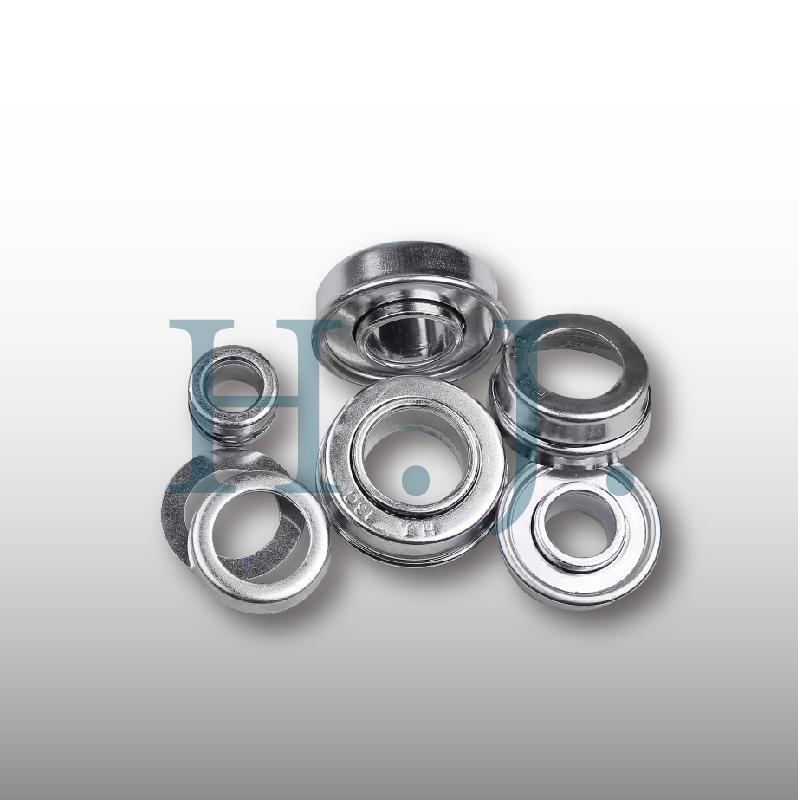
 Cleanroom bearings
Cleanroom Bearings – Custom Bearing Solutions for Low-Contamination Environments
Cleanroom bearings are specialized bearing solutions designed or selected for machinery operating in environments where contamination, particles, lubricant migration, and material cleanliness must be carefully controlled. They are commonly considered for semiconductor equipment, electronics manufacturing, medical and pharmaceutical machinery, laboratory instruments, optical equipment, precision automation, and other applications where conventional industrial bearings may generate unacceptable contamination.
Unlike ordinary industrial environments, cleanrooms are controlled spaces where airborne particles and other contaminants are limited according to defined cleanliness requirements. Mechanical components operating inside these environments can contribute to contamination through wear particles, grease leakage, lubricant scatter, material degradation, or external contamination introduced during manufacturing and handling.
For this reason, selecting cleanroom bearings involves more than choosing the correct dimensions and load capacity. Bearing materials, lubrication, seals, cages, cleanliness, packaging, speed, temperature, and operating environment may all need to be evaluated.
HSIAN JI BEARING CO., LTD. is a Taiwan bearing manufacturer established in 1995. The company's product range includes ball bearings, plastic bearings, thrust bearings, stamped bearings, slide bearings, special bearings, and non-standard bearings.
For customers requiring cleanroom bearings, HSIAN JI can evaluate custom, special, and non-standard bearing projects according to engineering drawings, physical samples, dimensions, material requirements, cleanliness requirements, load, speed, temperature, lubrication, and production quantities.
What Are Cleanroom Bearings?
Cleanroom bearings are bearings intended for equipment operating in environments where contamination control is important.
Depending on the application, important characteristics may include:
-
Low particle generation
-
Controlled lubrication
-
Reduced grease leakage
-
Low outgassing
-
Corrosion resistance
-
Clean materials
-
Suitable seals
-
Precision rotation
-
Low friction
-
Controlled packaging
The exact requirements depend on the cleanroom classification and equipment design.
A bearing should not automatically be described as cleanroom compatible simply because it is sealed or made from stainless steel.
Why Do Cleanrooms Require Special Bearings?
Conventional bearings can potentially release contaminants during operation.
Possible contamination sources include:
-
Wear particles
-
Grease
-
Oil
-
Cage wear
-
Seal wear
-
Surface contamination
-
Manufacturing residue
These contaminants may be acceptable in conventional industrial machinery but problematic in semiconductor, pharmaceutical, optical, or precision-manufacturing environments.
Cleanroom-bearing projects should therefore consider contamination as part of the engineering specification.
Low Particle Generation Bearings
Particle generation is one of the most important concerns in cleanroom applications.
Particles can originate from:
-
Rolling contact
-
Cage wear
-
Seal contact
-
Lubricant contamination
-
External dirt
-
Improper handling
Bearing design, material, lubrication, speed, load, and installation can all affect particle generation.
Customers requiring controlled particle performance should provide measurable requirements or application-specific test criteria.
Low Outgassing Cleanroom Bearings
Outgassing refers to gases or volatile substances released from materials.
Potential sources can include:
-
Lubricants
-
Plastics
-
Elastomers
-
Adhesives
-
Coatings
Low outgassing may be especially important when cleanroom equipment also operates under vacuum or around sensitive optical, semiconductor, or analytical processes.
Material and lubricant selection should therefore be evaluated according to the application.
Cleanroom Bearing Lubrication
Lubrication can be a major contamination source.
Standard bearing grease may migrate, scatter, or release volatile substances depending on operating conditions.
Cleanroom-bearing applications may require:
-
Low-particle grease
-
Low-outgassing grease
-
Controlled grease quantity
-
Special lubricants
-
Application-specific lubrication
Too much grease can potentially increase leakage or scatter, while insufficient lubrication can increase wear.
The correct amount and type should be determined according to speed, load, temperature, cleanliness, and service-life requirements.
Sealed Cleanroom Bearings
Seals can help control contamination entering or leaving the bearing.
Potential advantages include:
-
Reduced grease leakage
-
Reduced external contamination
-
Better protection from particles
However, seal contact can also create friction and wear.
Seal selection should therefore consider:
-
Speed
-
Temperature
-
Friction
-
Particle requirements
-
Lubricant retention
A sealed bearing is not automatically a certified cleanroom bearing.
Cleanroom Ball Bearings
Ball bearings are widely used in precision rotating equipment.
Cleanroom ball-bearing requirements may involve:
-
Precision dimensions
-
Controlled lubrication
-
Sealing
-
Low particle generation
-
Material selection
-
Low noise
-
Low vibration
HSIAN JI currently manufactures ball bearings as one of its principal bearing categories.
Customers requiring cleanroom applications should provide complete technical and environmental specifications.
Cleanroom Plastic Bearings
Plastic bearings may be useful in certain cleanroom applications because engineering plastics can provide characteristics such as:
-
Low weight
-
Corrosion resistance
-
Low noise
-
Low friction
HSIAN JI currently maintains Plastic Bearings as one of its published product categories.
However, plastic does not automatically mean cleanroom compatible.
Particle generation, outgassing, chemical compatibility, wear, and cleanliness requirements must still be evaluated.
Cleanroom Thrust Bearings
Thrust bearings primarily support axial loads.
Cleanroom thrust-bearing projects may require evaluation of:
-
Inner diameter
-
Outer diameter
-
Thickness
-
Axial load
-
Speed
-
Lubrication
-
Material
-
Particle requirements
Customers should also specify whether the bearing operates directly inside the controlled cleanroom environment.
Cleanroom Slide Bearings
Slide bearings support and guide linear movement.
They may be considered for:
-
Automation equipment
-
Guides
-
Doors
-
Precision mechanisms
-
Processing equipment
Plastic or other application-specific materials may be evaluated depending on cleanliness, load, wear, and friction requirements.
Special Cleanroom Bearings
Standard bearing products may not satisfy specialized cleanroom equipment.
Special bearing projects can potentially involve:
-
Custom dimensions
-
Special materials
-
Controlled lubrication
-
Dedicated seals
-
Unique mounting
-
Application-specific geometry
HSIAN JI currently maintains Special Bearings as one of its product categories.
This provides a basis for evaluating specialized cleanroom-bearing requirements.
Non-Standard Cleanroom Bearings
Some cleanroom machinery uses unique mechanical designs.
A non-standard cleanroom bearing may require:
-
Custom bore diameter
-
Special outside diameter
-
Unique width
-
Flange dimensions
-
Special mounting features
-
Dedicated materials
-
Controlled lubrication
HSIAN JI also manufactures and develops non-standard bearing products according to customer requirements.
Cleanroom Bearings for Semiconductor Equipment
Semiconductor manufacturing is one of the most important applications for cleanroom mechanical components.
Potential bearing applications can include:
-
Wafer handling systems
-
Semiconductor production machinery
-
Transfer mechanisms
-
Inspection equipment
-
Positioning systems
-
Automation equipment
These applications can require strict contamination control because particles may interfere with manufacturing processes.
Customers should define the required cleanliness level and bearing operating conditions.
Cleanroom Bearings for Wafer Handling Equipment
Wafer handling equipment requires precise and reliable movement.
Bearings may be used in:
-
Transfer systems
-
Positioning mechanisms
-
Rotating assemblies
-
Handling equipment
Important considerations can include:
-
Low particles
-
Precision
-
Low vibration
-
Lubrication control
-
Clean materials
The complete motion system should be evaluated.
Cleanroom Bearings for Electronics Manufacturing
Electronic component manufacturing can require controlled environments to reduce contamination.
Potential bearing applications include:
-
Assembly equipment
-
Inspection machinery
-
Positioning systems
-
Automated handling systems
Bearing requirements depend on cleanliness, speed, precision, and production conditions.
Cleanroom Bearings for Medical Equipment
Medical equipment may require mechanical components with controlled cleanliness and material properties.
Potential applications can include:
-
Diagnostic equipment
-
Laboratory equipment
-
Medical production machinery
-
Precision instruments
Customers should specify any medical-related material, cleanliness, documentation, or regulatory requirements separately.
Cleanroom Bearings for Pharmaceutical Equipment
Pharmaceutical production environments can require high levels of cleanliness.
Bearing selection may need to consider:
-
Contamination control
-
Cleaning
-
Corrosion resistance
-
Lubrication
-
Materials
Cleanroom compatibility and pharmaceutical compliance are separate requirements and should not be assumed to be identical.
Cleanroom Bearings for Laboratory Equipment
Laboratory instruments can require low-friction, precise mechanical movement while minimizing contamination.
Applications may include:
-
Analytical instruments
-
Scientific equipment
-
Measurement devices
-
Precision mechanisms
Customers should provide environmental and performance requirements.
Cleanroom Bearings for Optical Equipment
Optical equipment can be sensitive to both particles and lubricant contamination.
Potential contamination can affect:
-
Lenses
-
Mirrors
-
Sensors
-
Optical surfaces
Low-particle and low-outgassing bearing configurations may therefore be considered.
Cleanroom Bearings for Precision Automation
Automation equipment can use bearings in:
-
Robotic systems
-
Positioning equipment
-
Transfer systems
-
Rotary mechanisms
-
Linear mechanisms
Cleanroom automation may require a combination of:
-
Precision
-
Low contamination
-
Reliability
-
Low vibration
-
Controlled lubrication
Cleanroom Bearings for Robotics
Cleanroom robots are used in semiconductor, electronics, medical, and other controlled manufacturing environments.
Bearing requirements can involve:
-
Repeated movement
-
Precision
-
Low particles
-
Low lubricant leakage
-
Long operating life
Custom bearing configurations can be evaluated when standard bearings are unsuitable.
Cleanroom Bearings for Vacuum Equipment
Cleanroom and vacuum requirements frequently overlap, particularly in semiconductor and scientific equipment.
A bearing operating under vacuum may require additional consideration of:
-
Outgassing
-
Vapor pressure
-
Special lubrication
-
Material compatibility
A cleanroom bearing is not automatically vacuum rated.
Vacuum conditions should therefore be specified separately.
Cleanroom Bearings vs. Vacuum Bearings
Cleanroom bearings primarily focus on contamination and particle control.
Vacuum bearings primarily focus on operation under reduced atmospheric pressure, including issues such as lubricant evaporation and outgassing.
Some equipment requires both cleanroom and vacuum performance.
In these cases, both sets of requirements must be evaluated together.
Cleanroom Bearings vs. Food Grade Bearings
Cleanroom bearings and food-grade bearings address different requirements.
Cleanroom bearings focus on:
-
Particle generation
-
Lubricant contamination
-
Outgassing
-
Environmental cleanliness
Food-grade bearings may focus on:
-
Food-compatible materials
-
Food-grade lubrication
-
Washdown
-
Hygiene
-
Corrosion resistance
One does not automatically satisfy the requirements of the other.
Cleanroom Bearings vs. Corrosion Resistant Bearings
Corrosion-resistant bearings are selected for resistance to moisture, chemicals, salt, or other corrosive environments.
Cleanroom bearings focus primarily on contamination control.
However, some cleanroom applications may also require corrosion-resistant materials.
Stainless Steel Cleanroom Bearings
Stainless steel can be considered in certain cleanroom applications because it may provide:
-
Corrosion resistance
-
Cleanability
-
Material durability
However, stainless steel construction alone does not make a bearing suitable for a particular cleanroom classification.
Lubrication, particles, seals, handling, and packaging must also be considered.
Plastic Cleanroom Bearing Solutions
Engineering plastics may provide advantages in selected cleanroom applications.
Potential benefits can include:
-
Low weight
-
Corrosion resistance
-
Low noise
-
Design flexibility
However, material outgassing and wear characteristics must be evaluated.
The exact plastic should be selected according to the cleanroom environment.
Low Noise Cleanroom Bearings
Noise and vibration may be important in precision instruments and analytical equipment.
Bearing noise can be influenced by:
-
Precision
-
Surface finish
-
Lubrication
-
Load
-
Speed
-
Installation
Low-noise requirements should be specified during product development.
High Precision Cleanroom Bearings
Some cleanroom equipment requires precise rotational movement.
Important parameters can include:
-
Dimensional tolerance
-
Radial clearance
-
Runout
-
Noise
-
Vibration
Customers should provide measurable precision requirements rather than relying only on the term "high precision."
Custom Cleanroom Bearings
Standard catalogue bearings may not satisfy all cleanroom requirements.
Custom development can potentially involve:
-
Special dimensions
-
Material selection
-
Lubrication requirements
-
Seal configurations
-
Unique mounting
-
Dedicated geometry
HSIAN JI supports customer-specific product development and special/non-standard bearing applications.
Cleanroom Bearings from Engineering Drawings
Customers can provide:
-
2D engineering drawings
-
3D CAD models
-
Assembly drawings
-
Bearing dimensions
-
Material specifications
-
Lubrication requirements
-
Cleanliness specifications
-
Tolerances
Complete documentation helps manufacturers evaluate technical feasibility.
Cleanroom Bearing Development from Samples
A physical bearing sample can provide information about:
-
Dimensions
-
Geometry
-
Mounting
-
Construction
However, the sample alone may not reveal:
-
Original lubricant
-
Particle specification
-
Cleanroom rating
-
Material certification
Customers should provide original technical specifications whenever possible.
Prototype Cleanroom Bearings
Prototype development can be useful for specialized cleanroom equipment.
Prototypes can help verify:
-
Dimensions
-
Fit
-
Movement
-
Installation
-
Assembly compatibility
Cleanliness or particle testing may also be required before production approval.
Testing Cleanroom Bearings
Depending on the application, testing may involve:
-
Dimensional inspection
-
Rotational performance
-
Noise
-
Vibration
-
Particle generation
-
Lubricant leakage
-
Outgassing
The customer should define the required test method and acceptance criteria.
ISO Cleanroom Class Requirements
Cleanrooms may be classified according to applicable standards such as ISO 14644.
However, a complete cleanroom classification applies to the controlled environment rather than automatically providing an individual bearing with the same certification.
Therefore, terms such as "ISO Class 5 bearing" or "ISO Class 6 bearing" should only be used when supported by appropriate product testing or documentation.
Low Volume Cleanroom Bearing Projects
Specialized cleanroom machinery may require relatively small quantities.
Potential projects can include:
-
Prototype equipment
-
Semiconductor machinery
-
Laboratory instruments
-
Medical equipment
-
Specialized automation
Low-volume custom requirements can be evaluated according to material, geometry, lubrication, tooling, testing, and quantity.
Replacement Cleanroom Bearings
Older precision equipment may use specialized bearings that have become obsolete.
Customers should provide:
-
Original bearing
-
Part number
-
Physical sample
-
Engineering drawing
-
Dimensions
-
Material
-
Lubrication requirements
-
Cleanliness requirements
-
Quantity
A special or non-standard replacement can then be evaluated.
Quality Control for Cleanroom Bearing Projects
Cleanroom-bearing projects may require control of:
-
Materials
-
Dimensions
-
Lubrication
-
Cleanliness
-
Packaging
-
Manufacturing processes
HSIAN JI's published capabilities include product development, production, and quality assurance.
Customer-defined cleanliness and testing specifications should be agreed upon before production.
How to Choose Cleanroom Bearings
When selecting cleanroom bearings, consider:
-
Cleanroom environment
-
Particle requirements
-
Bearing type
-
Dimensions
-
Load
-
Speed
-
Temperature
-
Lubrication
-
Outgassing
-
Materials
-
Sealing
-
Precision
-
Service life
For demanding applications, measurable contamination requirements are more useful than simply requesting a "cleanroom bearing."
HSIAN JI – Cleanroom Bearing Project Evaluation from Taiwan
HSIAN JI BEARING CO., LTD. was established in 1995 and currently provides plastic bearings, thrust bearings, stamped bearings, slide bearings, ball bearings, special bearings, and non-standard bearings.
For customers searching for cleanroom bearings, HSIAN JI can evaluate special and non-standard bearing requirements according to technical feasibility.
Please provide:
-
Bearing type
-
2D engineering drawing
-
3D CAD model
-
Physical sample
-
Inner diameter
-
Outer diameter
-
Width
-
Material requirements
-
Lubrication requirements
-
Cleanroom requirements
-
Particle requirements
-
Outgassing requirements
-
Load
-
Speed
-
Temperature
-
Required quantity
-
Estimated annual demand
Complete technical information allows the bearing manufacturer to evaluate an appropriate solution for cleanroom and low-contamination applications.
Cleanroom Bearings FAQ
What are cleanroom bearings?
Cleanroom bearings are bearings designed or selected for mechanical equipment operating in controlled environments where particles, lubricant contamination, outgassing, and cleanliness must be carefully managed.
Does HSIAN JI manufacture cleanroom bearings?
HSIAN JI's current public website does not list Cleanroom Bearings as a separate standard product category.
However, the company manufactures ball, plastic, thrust, stamped, slide, special, and non-standard bearings and supports customer-specific product development. Cleanroom-bearing requirements can therefore be submitted for technical evaluation.
What is different about a cleanroom bearing?
Cleanroom-bearing applications can require greater attention to:
-
Particle generation
-
Lubrication
-
Grease leakage
-
Outgassing
-
Material cleanliness
-
Packaging
The exact requirements depend on the application.
Do cleanroom bearings generate particles?
All mechanical contact has the potential to generate some wear.
The objective of a cleanroom-bearing design is generally to control particle generation according to the application's requirements.
What causes particles in bearings?
Possible sources include:
-
Rolling contact
-
Cage wear
-
Seal wear
-
Lubricant contamination
-
External dirt
-
Improper handling
Speed, load, material, and installation can influence particle generation.
Do cleanroom bearings require special grease?
They may.
Certain applications require controlled, low-particle, low-outgassing, or other specialized lubricants.
The required grease should be selected according to the equipment specification.
Can too much grease contaminate a cleanroom?
Excessive lubricant can potentially increase leakage or grease scatter.
Lubricant quantity should therefore be controlled according to bearing design and operating conditions.
Are sealed bearings cleanroom bearings?
Not automatically.
Seals can help retain lubricant and prevent external contamination, but a sealed bearing does not automatically satisfy cleanroom particle or outgassing requirements.
Are stainless steel bearings suitable for cleanrooms?
Potentially.
Stainless steel can offer corrosion resistance and cleanability, but the complete bearing, including lubricant, cage, seals, cleanliness, and packaging, must be considered.
Are plastic bearings suitable for cleanrooms?
Potentially.
HSIAN JI manufactures plastic bearings, and engineering plastics can provide low weight, low noise, and corrosion resistance.
However, wear particles and outgassing must be evaluated for the specific material.
Are ceramic bearings suitable for cleanrooms?
Ceramic components may be useful in certain precision or specialized cleanroom applications.
However, ceramic construction alone does not establish cleanroom compatibility.
Can ball bearings be used in cleanrooms?
Yes, depending on the application.
Cleanroom ball bearings may require controlled lubrication, sealing, materials, and particle performance.
Can thrust bearings be used in cleanrooms?
Potentially.
Customers should specify axial load, dimensions, speed, lubrication, and cleanliness requirements.
Can slide bearings be used in cleanrooms?
Potentially.
Material, wear, friction, particles, and outgassing should be evaluated.
Can cleanroom bearings be used in semiconductor equipment?
Yes, depending on the specific equipment and cleanliness requirements.
Potential applications include wafer handling, positioning, inspection, automation, and transfer equipment.
Can cleanroom bearings be used in wafer handling systems?
Potentially.
These systems may require low particles, precision movement, low vibration, and controlled lubrication.
Can cleanroom bearings be used in electronics manufacturing?
Potentially.
Bearing requirements depend on the production environment and contamination sensitivity.
Can cleanroom bearings be used in pharmaceutical equipment?
Potentially.
Pharmaceutical applications may require additional material, hygiene, cleaning, or regulatory requirements.
Can cleanroom bearings be used in medical equipment?
Potentially.
Customers should provide the exact cleanliness, material, mechanical, and regulatory requirements.
Can cleanroom bearings be used in laboratory equipment?
Yes, depending on the instrument.
Low contamination, precision, noise, and lubrication may be important.
Can cleanroom bearings be used in optical equipment?
Potentially.
Optical systems can be sensitive to particles and lubricant contamination.
Low-outgassing requirements may also be important.
Can cleanroom bearings operate in a vacuum?
Potentially, but cleanroom suitability does not automatically mean vacuum suitability.
Vacuum applications can require additional control of lubricant vapor pressure and material outgassing.
Are cleanroom bearings the same as vacuum bearings?
No.
Cleanroom bearings focus primarily on contamination control.
Vacuum bearings focus on operation under reduced atmospheric pressure.
Some applications require both.
Are cleanroom bearings food grade?
Not automatically.
Food-grade requirements involve different material, lubricant, hygiene, and regulatory considerations.
Are cleanroom bearings corrosion resistant?
Some can be, depending on material.
Corrosion resistance should be specified separately from cleanliness requirements.
Are cleanroom bearings non magnetic?
Not automatically.
Non-magnetic requirements involve material magnetic properties and should be specified separately.
Are cleanroom bearings waterproof?
Not automatically.
Water resistance depends on seals, housing, material, and complete bearing-system design.
Can cleanroom bearings operate at high speeds?
Potentially.
Speed capability depends on bearing design, precision, lubrication, load, cage, temperature, and cleanliness requirements.
Can cleanroom bearings operate at high temperatures?
Potentially.
Temperature can affect lubricant, seals, materials, clearances, and outgassing.
High-temperature requirements should be specified separately.
Can you manufacture custom-size cleanroom bearings?
Custom dimensional requirements can be submitted for evaluation, including:
-
Inner diameter
-
Outer diameter
-
Width
-
Flange dimensions
-
Mounting features
Cleanliness requirements should be provided at the same time.
Can you manufacture special cleanroom bearings?
HSIAN JI maintains Special Bearings as one of its product categories.
Projects involving specialized dimensions, materials, lubrication, or contamination requirements can be submitted for evaluation.
Can you manufacture non-standard cleanroom bearings?
HSIAN JI also manufactures non-standard bearing products.
Projects combining unusual dimensions with cleanroom requirements can be evaluated according to technical feasibility.
Can you manufacture cleanroom bearings from my drawing?
Engineering drawings can provide the dimensional basis for a custom project.
Customers should also provide cleanliness, lubrication, material, particle, and outgassing requirements.
Can you reproduce a cleanroom bearing from a physical sample?
A physical sample can provide dimensional and structural information.
However, the original cleanroom specification, lubricant, or particle performance may not be identifiable from the sample alone.
Can you replace an obsolete cleanroom bearing?
Potentially.
Provide the original bearing, drawing, sample, dimensions, materials, lubrication, operating conditions, and cleanliness requirements.
Can I request a prototype cleanroom bearing?
Prototype requirements can be evaluated.
The prototype can help verify dimensions, installation, movement, and mechanical compatibility before further cleanliness testing.
Can cleanroom bearings be produced in small quantities?
Small-quantity projects can be submitted for evaluation.
Feasibility depends on materials, lubrication, manufacturing processes, tooling, testing, packaging, and quantity.
What is low outgassing?
Low outgassing refers to reducing the release of gases or volatile substances from materials.
This can be important in vacuum, semiconductor, optical, and other contamination-sensitive environments.
Why is outgassing important for cleanroom bearings?
Volatile substances from lubricants, plastics, seals, or other materials may contaminate sensitive processes or surfaces.
The importance depends on the actual cleanroom application.
What is ISO 14644?
ISO 14644 is a series of international standards related to cleanrooms and controlled environments.
A cleanroom's classification does not automatically mean that every individual mechanical component has an identical ISO classification.
Can you supply ISO Class 5 cleanroom bearings?
A specific ISO Class claim should only be made when the product and application have appropriate supporting test data or documentation.
Customers requiring a defined cleanliness level should provide their test criteria and acceptance requirements.
What information should I provide for a quotation?
For a cleanroom bearings inquiry, provide:
-
Bearing type
-
2D drawing
-
3D CAD model
-
Physical sample
-
Inner diameter
-
Outer diameter
-
Width
-
Material requirements
-
Lubrication requirements
-
Cleanroom classification
-
Particle requirements
-
Outgassing requirements
-
Load
-
Speed
-
Temperature
-
Precision requirements
-
Packaging requirements
-
Required quantity
-
Estimated annual demand
Detailed contamination requirements are particularly important for cleanroom projects.
How should cleanroom bearings be packaged?
Packaging requirements depend on the application.
Sensitive cleanroom projects may require controlled cleaning, handling, and packaging procedures to reduce contamination before installation.
Customers should specify packaging requirements before production.
What is the difference between cleanroom bearings and standard bearings?
Standard bearings are primarily selected according to mechanical requirements such as load, speed, dimensions, and service life.
Cleanroom bearings may additionally require control of particles, lubrication, outgassing, cleanliness, and packaging.
What is the difference between cleanroom bearings and vacuum rated bearings?
Cleanroom bearings emphasize contamination and particle control.
Vacuum rated bearings emphasize operation under reduced atmospheric pressure.
Semiconductor and scientific equipment may require both characteristics.
What is the difference between cleanroom bearings and non magnetic bearings?
Cleanroom bearings focus on contamination control.
Non magnetic bearings focus on minimizing magnetic response.
A specialized application may require both properties.
Why choose HSIAN JI for custom cleanroom bearing projects?
HSIAN JI BEARING CO., LTD. was established in 1995 and currently manufactures and develops plastic, thrust, stamped, slide, ball, special, and non-standard bearing products.
For specialized cleanroom bearings, customers can submit engineering drawings, samples, material requirements, lubrication specifications, cleanliness requirements, operating conditions, and production quantities for technical evaluation.
HSIAN JI's custom-development capabilities make it possible to evaluate special and non-standard bearing solutions where conventional catalogue bearings cannot meet the dimensional or application requirements.