
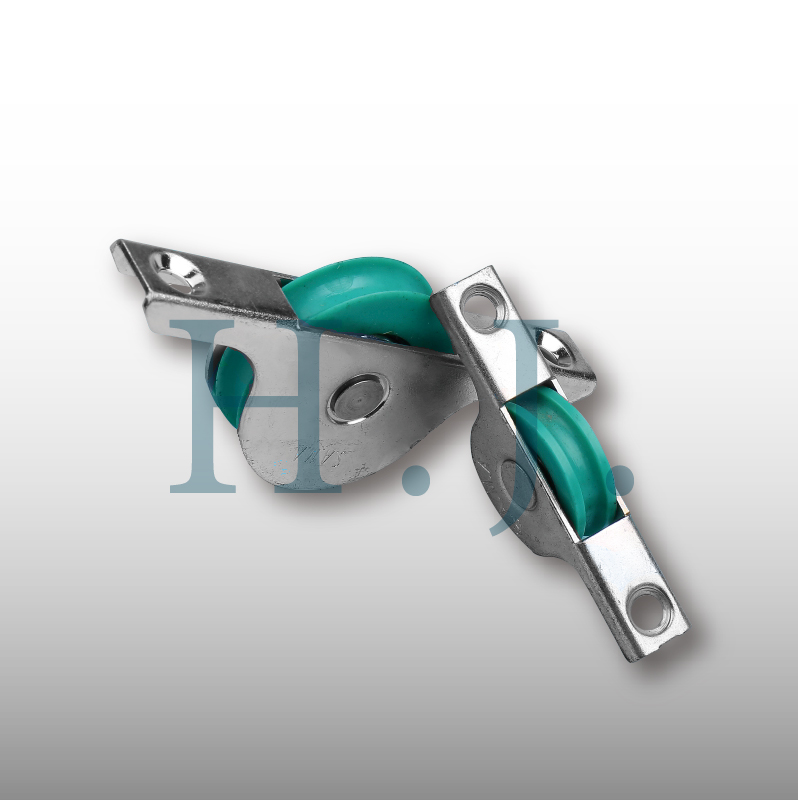
 Sliding door roller manufacturer
Sliding Door Roller Manufacturer – Custom Rollers and Bearings for Sliding Door Systems
Choosing the right sliding door roller manufacturer is important for manufacturers of sliding doors, windows, furniture systems, architectural hardware, partitions, cabinets, and other products that depend on smooth and reliable linear movement.
A sliding door roller may appear to be a simple component, but its performance depends on the complete relationship between the wheel, bearing, shaft, bracket, rail, door weight, mounting position, and operating environment. Poorly matched roller components can create noise, resistance, uneven movement, premature wear, or difficulty opening and closing the door.
HSIAN JI BEARING CO., LTD. is a Taiwan bearing manufacturer established in 1995. The company mainly develops and produces Taiwan-made steel ball bearings and slide bearings and offers bearing products for applications including sliding doors, windows, pulleys, door and window pulleys, drawers, conveyors, scooters, and other mechanical systems.
For customers searching for a sliding door roller manufacturer, HSIAN JI can evaluate standard, special, custom, and non-standard roller-bearing requirements based on engineering drawings, physical samples, rail dimensions, door weight, roller dimensions, shaft dimensions, materials, noise requirements, and production quantities.
What Is a Sliding Door Roller?
A sliding door roller is a wheel or pulley assembly that supports a door and allows it to move smoothly along a rail or track.
Depending on the door design, the roller assembly may include:
-
Bearing
-
Roller or pulley wheel
-
Shaft
-
Rivet
-
Bracket
-
Housing
-
Retaining components
Some door systems use rollers at the bottom to support the door weight, while others use suspended upper rollers.
The correct roller design depends on the complete door system.
What Does a Sliding Door Roller Manufacturer Do?
A sliding door roller manufacturer produces or develops roller and bearing components according to the requirements of door manufacturers and architectural-hardware companies.
The manufacturing process may involve evaluation of:
-
Door weight
-
Roller diameter
-
Bearing dimensions
-
Track geometry
-
Shaft diameter
-
Mounting method
-
Materials
-
Noise
-
Corrosion exposure
-
Required service life
Custom roller projects can also be developed from technical drawings or existing samples.
Sliding Door Bearings from HSIAN JI
HSIAN JI's current product information explicitly lists sliding doors among the applications for its bearing products. One published H30 bearing model, for example, lists drawers, keyboard drawers, sliding doors, windows, conveyors, pulleys, door and window pulleys, scooters, and skates among its applications.
This makes sliding-door systems a direct application area within HSIAN JI's existing bearing portfolio.
Bearings for Door Rollers
The bearing inside a door roller helps reduce friction as the wheel rotates.
Important bearing characteristics can include:
-
Inner diameter
-
Outer diameter
-
Width
-
Load capacity
-
Rotational smoothness
-
Noise
-
Material
-
Sealing
The bearing should be matched to the roller and shaft rather than selected separately.
Sliding Door Pulley Bearings
Many sliding-door systems use pulley-type wheels.
A pulley-bearing assembly may include:
-
Plastic pulley
-
Metal pulley
-
Ball bearing
-
Shaft
-
Bracket
HSIAN JI's published product applications include pulleys as well as door and window pulleys.
Custom pulley-bearing assemblies can therefore be evaluated based on drawings or physical samples.
Sliding Door Roller Bearings
Sliding door roller bearings are used to reduce resistance between the roller and its shaft.
Applications may include:
-
Residential sliding doors
-
Commercial sliding doors
-
Aluminum doors
-
Interior partitions
-
Cabinet doors
-
Wardrobe doors
-
Sliding furniture systems
Each application can require different dimensions and load capacity.
Custom Sliding Door Rollers
Standard roller dimensions do not fit every door system.
Custom sliding door rollers may require:
-
Special wheel diameter
-
Custom bearing ID
-
Custom bearing OD
-
Special roller width
-
Dedicated bracket geometry
-
Custom shaft diameter
Door manufacturers should provide the complete roller or door assembly drawing whenever possible.
Sliding Door Roller Design
A roller should be designed around the complete movement system.
Important parameters include:
-
Door weight
-
Number of rollers
-
Load per roller
-
Rail geometry
-
Roller material
-
Bearing dimensions
-
Shaft size
-
Installation width
For example, a 100 kg door supported by four rollers does not necessarily place exactly 25 kg on each roller because load distribution can vary due to alignment and installation.
A safety margin should therefore be considered.
Bottom Sliding Door Rollers
Bottom-supported sliding doors transfer most of the door weight through the lower rollers.
These rollers may require:
-
Higher load capacity
-
Strong shafts
-
Stable brackets
-
Durable wheel materials
-
Smooth bearings
The track should also distribute the load evenly.
Top Hanging Door Rollers
Suspended sliding doors often use upper rollers to carry the complete door weight.
Important considerations include:
-
Static load
-
Dynamic load
-
Shock load
-
Bracket strength
-
Roller alignment
-
Track engagement
Customers should provide the total door weight and number of supporting rollers.
Sliding Door Rollers for Aluminum Doors
Aluminum sliding-door systems often use compact roller assemblies installed inside narrow frame profiles.
This can require:
-
Small roller diameter
-
Narrow bearing width
-
Low friction
-
Accurate dimensions
-
Corrosion resistance
HSIAN JI's products are also used in windows and door/window pulley applications, making this type of architectural hardware particularly relevant.
Sliding Door Rollers for Glass Doors
Glass sliding doors can be significantly heavier than lightweight cabinet or furniture doors.
The roller system should therefore be evaluated according to:
-
Glass weight
-
Door width
-
Roller quantity
-
Track material
-
Mounting configuration
For heavy glass doors, load calculations are especially important.
Sliding Door Rollers for Wardrobes
Wardrobe doors typically require quiet and smooth movement.
Important features can include:
-
Low noise
-
Compact size
-
Smooth rotation
-
Suitable wheel material
-
Long cycle life
A plastic pulley combined with a bearing may be used depending on the design.
Sliding Door Rollers for Cabinets
Cabinet sliding doors generally carry less load than large architectural doors.
However, compact installation space can make bearing dimensions particularly important.
Custom small rollers can be evaluated when standard products are too large.
Sliding Door Rollers for Furniture
Furniture manufacturers may use sliding rollers in:
-
Cabinets
-
Wardrobes
-
Storage systems
-
Drawers
-
Display furniture
HSIAN JI's current bearing applications include drawers, keyboard drawers, sliding doors, and pulleys, making furniture mechanisms a closely related application category.
Window Rollers
Window rollers operate according to similar principles but generally use smaller components.
Requirements may include:
-
Compact dimensions
-
Low friction
-
Moisture resistance
-
Quiet movement
-
Reliable repeated operation
HSIAN JI also lists windows and door/window pulleys among its current bearing applications.
Plastic Sliding Door Rollers
Plastic wheels can provide advantages such as:
-
Low noise
-
Lightweight construction
-
Corrosion resistance
-
Smooth contact with tracks
Different plastic materials have different wear, load, and temperature characteristics.
Material selection should be based on the actual door system.
Metal Sliding Door Rollers
Metal rollers may be considered where higher load or wear resistance is required.
Potential materials can include different steels or application-specific alloys.
However, metal-on-metal contact can produce more noise than some plastic wheel designs.
The complete rail and wheel material combination should be evaluated.
Ball Bearings for Sliding Door Rollers
Ball bearings are commonly used inside roller assemblies because they reduce rotational friction.
HSIAN JI's company information states that it mainly develops and produces Taiwan-made steel ball bearings and slide bearings.
For sliding-door applications, ball bearings can be integrated into rollers or pulleys according to customer dimensions.
Slide Bearings for Sliding Door Systems
HSIAN JI describes slide bearings as bearing products used to support and guide linear mechanical movement.
Their published advantages include precise linear movement and high rigidity.
Depending on the door or guide design, slide-bearing concepts may also be relevant to linear hardware mechanisms.
Sealed Sliding Door Roller Bearings
Door rollers may be exposed to:
-
Dust
-
Humidity
-
Dirt
-
Outdoor environments
Sealed bearings can help reduce contamination entering the internal rolling area.
However, seal selection should consider friction and required movement.
Corrosion Resistant Door Rollers
Outdoor or semi-outdoor sliding doors can encounter rain, humidity, and condensation.
Potential solutions may involve:
-
Plastic rollers
-
Corrosion-resistant bearing materials
-
Sealed bearing configurations
-
Stainless steel components
The correct solution depends on exposure conditions.
Low Noise Sliding Door Rollers
Noise is one of the most important performance characteristics in residential and furniture applications.
Noise can be affected by:
-
Bearing quality
-
Wheel material
-
Rail surface
-
Lubrication
-
Alignment
-
Load
A properly matched wheel-bearing-track combination can improve operating comfort.
Heavy Duty Sliding Door Rollers
Large sliding doors can require heavy-duty roller assemblies.
Important information includes:
-
Door weight
-
Number of rollers
-
Static load
-
Dynamic load
-
Shock load
-
Track geometry
Rollers should be evaluated according to actual load rather than door size alone.
Custom Roller Dimensions
Custom sliding door projects may require special:
-
Roller outside diameter
-
Roller width
-
Bearing ID
-
Bearing OD
-
Shaft diameter
-
Bracket dimensions
The more complete the drawing, the easier it is to evaluate manufacturing feasibility.
Sliding Door Rollers from Engineering Drawings
Customers can provide:
-
2D roller drawings
-
3D CAD models
-
Door assembly drawings
-
Track drawings
-
Material requirements
-
Critical dimensions
-
Tolerances
Assembly drawings are particularly useful because they show how the roller interacts with the rail and door.
Sliding Door Rollers from Physical Samples
Existing roller assemblies can also provide useful references when original drawings are unavailable.
A physical sample can help determine:
-
Roller diameter
-
Bearing size
-
Shaft dimensions
-
Bracket geometry
-
Mounting arrangement
Customers should also provide door weight and application information.
Replacement Sliding Door Rollers
Older sliding-door systems may use rollers that are no longer available from the original manufacturer.
A replacement project can begin with:
-
Original roller
-
Bearing sample
-
Drawing
-
Track dimensions
-
Door weight
-
Required quantity
A custom replacement can then be evaluated.
Prototype Sliding Door Rollers
Prototype manufacturing can help verify:
-
Roller fit
-
Track compatibility
-
Bearing rotation
-
Noise
-
Door movement
-
Installation
Testing should be performed in the actual door system whenever possible.
Testing Sliding Door Rollers
Potential tests can include:
-
Static load
-
Rolling movement
-
Opening and closing cycles
-
Noise
-
Wear
-
Track compatibility
For commercial products, repeated-cycle testing can be especially useful.
OEM Sliding Door Roller Manufacturing
Door and window manufacturers may require rollers as repeat OEM components.
OEM customers should provide:
-
Drawings
-
Materials
-
Door weight
-
Annual quantity
-
Packaging requirements
-
Quality requirements
Once the roller configuration is approved, repeat production can be evaluated.
Low Volume Sliding Door Rollers
Replacement and specialized architectural-hardware projects may require relatively small quantities.
Small-batch requirements can be submitted for evaluation according to:
-
Roller design
-
Bearing type
-
Materials
-
Tooling
-
Quantity
Quality Control for Sliding Door Rollers
Quality control can include:
-
Bearing dimensional inspection
-
Roller dimensional inspection
-
Rotation testing
-
Shaft-fit checking
-
Assembly inspection
-
Finished-product testing
Small dimensional differences can influence track fit and rolling quality, so consistency is important.
How to Choose a Sliding Door Roller Manufacturer
When choosing a sliding door roller manufacturer, consider:
-
Bearing manufacturing experience
-
Custom sizing capability
-
Roller and pulley application experience
-
Ability to work from samples
-
Special and non-standard bearing capability
-
Quality control
-
OEM production capability
It is also important that the manufacturer understands the complete sliding-door system rather than only the bearing.
HSIAN JI – Sliding Door Roller Manufacturer in Taiwan
HSIAN JI BEARING CO., LTD. was established in 1995 and mainly develops Taiwan-made steel ball bearings and slide bearings. Its current products are used in applications including sliding doors, windows, pulleys, and door and window pulleys, directly supporting the needs of door, window, furniture, and architectural-hardware manufacturers.
For sliding door roller manufacturer inquiries, customers can provide:
-
2D engineering drawing
-
3D CAD model
-
Physical sample
-
Bearing dimensions
-
Roller diameter
-
Roller width
-
Shaft diameter
-
Track dimensions
-
Door weight
-
Number of rollers
-
Material requirements
-
Noise requirements
-
Indoor or outdoor application
-
Required quantity
-
Estimated annual demand
HSIAN JI can evaluate ball-bearing, slide-bearing, pulley, special, and non-standard solutions for customized sliding-door roller projects.
Sliding Door Roller Manufacturer FAQ
What is a sliding door roller manufacturer?
A sliding door roller manufacturer produces or develops roller, pulley, and bearing components used to allow sliding doors to move smoothly along tracks.
The roller may contain a bearing, wheel, shaft, bracket, and other components.
Does HSIAN JI manufacture bearings for sliding doors?
Yes. Sliding doors are explicitly listed among the applications for HSIAN JI products.
Does HSIAN JI manufacture door and window pulley bearings?
Yes. HSIAN JI's published product applications include pulleys and door/window pulleys.
What bearings are used in sliding door rollers?
Ball bearings are commonly used because they reduce rotational friction.
The exact bearing depends on roller size, load, shaft diameter, and environment.
What is the difference between a sliding door roller and a bearing?
The roller is the wheel that contacts the track.
The bearing is typically installed inside the roller and allows the wheel to rotate around its shaft with lower friction.
Can HSIAN JI manufacture complete sliding door roller assemblies?
Custom roller or pulley-related projects can be evaluated according to drawings, physical samples, materials, and production requirements.
The exact scope should be confirmed for each project.
Can you manufacture custom sliding door rollers?
Yes, custom requirements can be evaluated according to roller dimensions, bearing dimensions, shaft size, track configuration, and quantity.
Can roller diameter be customized?
Yes.
Customers should provide the required outside diameter and track geometry.
Can roller width be customized?
Yes, depending on product design and manufacturing feasibility.
Can the bearing size inside the roller be customized?
Potentially.
Custom inner diameter, outer diameter, and width can be evaluated according to application requirements.
Can sliding door rollers be manufactured from drawings?
Yes.
Engineering drawings provide an effective basis for custom roller and bearing evaluation.
Can you manufacture rollers from physical samples?
A physical sample can provide useful dimensions and structural information when drawings are unavailable.
Can you reproduce obsolete sliding door rollers?
Potentially.
Provide the original roller, track information, bearing dimensions, door weight, and required quantity.
Can you manufacture rollers for aluminum sliding doors?
Yes, custom compact roller assemblies can be evaluated for aluminum-frame door systems.
Can you manufacture rollers for glass sliding doors?
Potentially.
Glass doors can be heavy, so total door weight and load per roller must be provided.
Can you manufacture rollers for wardrobe doors?
Yes, wardrobe and furniture sliding systems can be evaluated according to dimensions, load, and noise requirements.
Can you manufacture cabinet door rollers?
Yes.
Small and compact roller requirements can be submitted for evaluation.
Can you manufacture window rollers?
HSIAN JI's existing product applications include windows and door/window pulleys.
Can sliding door rollers use plastic wheels?
Yes, depending on load, wear, temperature, and application.
Plastic wheels can help reduce noise in certain applications.
Can sliding door rollers use metal wheels?
Yes, depending on track design and load requirements.
Material selection should consider noise, wear, corrosion, and load.
What material is best for sliding door rollers?
There is no single best material.
The choice depends on:
-
Door weight
-
Track material
-
Noise requirements
-
Environment
-
Wear
-
Cost
Can sliding door roller bearings be sealed?
Yes, depending on bearing design.
Seals can help reduce dust and moisture ingress.
Are sliding door rollers waterproof?
Not automatically.
Water resistance depends on bearing seals, material, housing, and complete roller design.
Can sliding door rollers be corrosion resistant?
Yes.
Plastic, stainless steel, sealed bearings, or other corrosion-resistant approaches may be evaluated according to the environment.
What is a heavy-duty sliding door roller?
A heavy-duty roller is designed to support higher door loads.
Customers should provide actual total door weight and number of rollers.
How do I calculate load per roller?
A basic estimate can divide door weight by the number of load-supporting rollers, but actual load may not be distributed perfectly evenly.
A suitable safety factor should be considered.
How many rollers does a sliding door need?
This depends on door design, weight, width, track system, and manufacturer requirements.
There is no universal number.
What causes sliding doors to become noisy?
Potential causes include:
-
Worn bearings
-
Damaged rollers
-
Dirty tracks
-
Misalignment
-
Incorrect wheel material
-
Insufficient lubrication
Can low-noise rollers be customized?
Yes.
Noise requirements should be provided during design evaluation.
Why does my sliding door become difficult to move?
Possible causes include:
-
Bearing wear
-
Roller damage
-
Track deformation
-
Dirt
-
Misalignment
-
Excessive load
The complete system should be inspected.
Can ball bearings improve sliding door movement?
Yes.
Ball bearings can reduce rotational friction and improve roller movement when properly selected.
Does HSIAN JI manufacture ball bearings?
Yes. HSIAN JI states that it mainly develops and produces Taiwan-made steel ball bearings and slide bearings.
Does HSIAN JI manufacture slide bearings?
Yes. HSIAN JI has a dedicated slide-bearing range used to support and guide linear motion.
Can sliding door rollers be used outdoors?
Potentially.
Outdoor applications should consider rain, humidity, dust, and corrosion.
Can rollers be used in coastal environments?
Potentially, but salt exposure can increase corrosion risk.
Material and sealing requirements should be defined accordingly.
Can you manufacture architectural sliding door rollers?
Yes, architectural-hardware applications can be evaluated according to door dimensions, load, track geometry, materials, and annual quantities.
Can you manufacture OEM sliding door rollers?
OEM projects can be evaluated from customer drawings, samples, dimensions, and production requirements.
Can sliding door rollers be mass produced?
Yes, approved roller products can potentially move into repeat OEM production.
Can you manufacture small quantities?
Low-volume requirements can be submitted for evaluation.
Feasibility depends on design, materials, tooling, and quantity.
Can I order a prototype?
Prototype development can help verify roller fit, track compatibility, movement, and noise before regular production.
How are sliding door rollers tested?
Potential tests include:
-
Static load
-
Rolling load
-
Cycle testing
-
Noise
-
Wear
-
Track compatibility
How long should a sliding door roller last?
Service life depends on:
-
Load
-
Door-use frequency
-
Bearing quality
-
Track condition
-
Environment
-
Alignment
-
Maintenance
There is no universal life value for all rollers.
What information should I provide for a quotation?
For a sliding door roller manufacturer inquiry, provide:
-
2D engineering drawing
-
3D CAD model
-
Physical sample
-
Roller diameter
-
Roller width
-
Bearing ID
-
Bearing OD
-
Bearing width
-
Shaft diameter
-
Track dimensions
-
Door weight
-
Number of rollers
-
Materials
-
Indoor or outdoor use
-
Noise requirements
-
Required quantity
-
Estimated annual demand
Complete assembly information makes technical evaluation easier.
What is the difference between sliding door rollers and window rollers?
Both use similar rolling principles, but door rollers generally handle different loads and dimensions.
Window rollers are usually smaller and may have tighter installation-space limitations.
What is the difference between sliding door roller bearings and slide bearings?
Sliding door roller bearings rotate inside a wheel or pulley.
Slide bearings are generally used to support and guide linear motion.
The appropriate type depends on the hardware design.
Why choose HSIAN JI as a sliding door roller manufacturer or bearing supplier?
HSIAN JI has a direct connection to this application category. Its published products are explicitly used in sliding doors, windows, pulleys, and door/window pulleys, and the company states that it primarily develops Taiwan-made steel ball bearings and slide bearings.
If you require a sliding door roller manufacturer for residential doors, aluminum doors, glass doors, wardrobe systems, windows, furniture hardware, or customized architectural products, send HSIAN JI your drawings, samples, roller dimensions, track dimensions, door load, and production quantities for technical evaluation.