
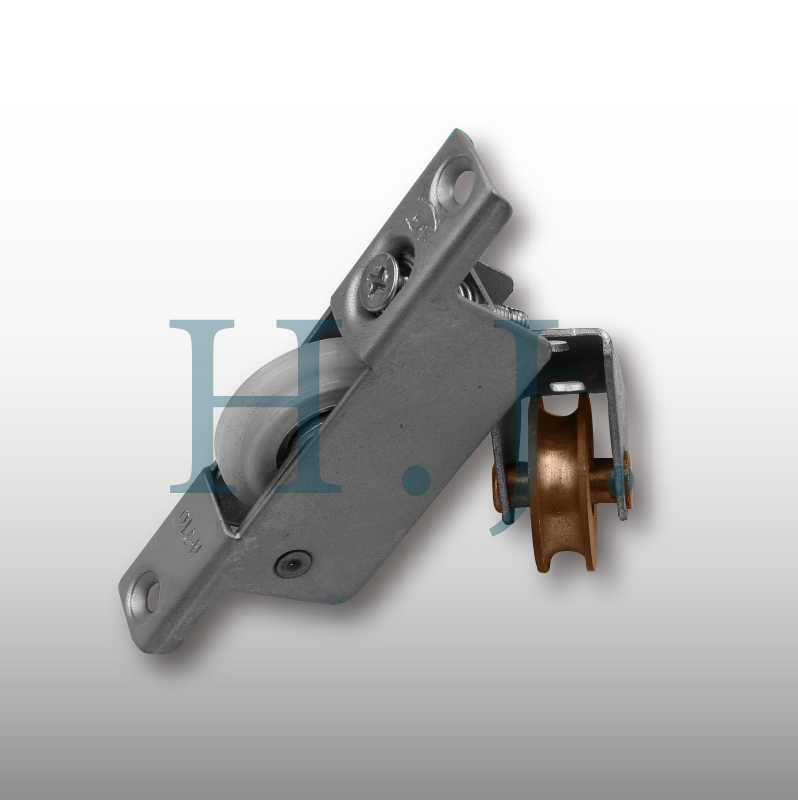
 Furniture pulley manufacturer
Furniture Pulley Manufacturer – Custom Pulley and Bearing Solutions for Furniture Hardware
Choosing the right furniture pulley manufacturer is important for furniture manufacturers, cabinet hardware companies, sliding-door system suppliers, wardrobe manufacturers, drawer-slide producers, and OEM hardware companies that require smooth, quiet, and reliable movement.
Furniture pulley systems are commonly used in drawers, wardrobes, sliding cabinet doors, furniture tracks, storage systems, office furniture, and other products where components must move repeatedly along a rail or guide. Although the pulley itself may be relatively small, its design can significantly affect movement quality, noise, load capacity, wear, and product durability.
HSIAN JI BEARING CO., LTD. is a Taiwan bearing manufacturer established in 1995. The company develops and produces steel ball bearings, slide bearings, plastic bearings, stamped bearings, thrust bearings, special bearings, and non-standard bearing products. Its current product pages repeatedly list furniture pulleys, drawer pulleys, sliding doors, windows, and door and window pulleys among their applications.
For customers searching for a furniture pulley manufacturer, HSIAN JI can evaluate custom pulley and bearing projects based on engineering drawings, physical samples, pulley dimensions, bearing dimensions, shaft size, track geometry, load, materials, noise requirements, and production quantities.
What Is a Furniture Pulley?
A furniture pulley is a wheel or roller component used to support sliding or rolling movement in furniture hardware.
Depending on the product, a pulley assembly may include:
-
Pulley wheel
-
Ball bearing
-
Slide bearing
-
Shaft
-
Rivet
-
Bracket
-
Retaining components
-
Housing
Furniture pulleys may be integrated into drawers, wardrobes, cabinets, sliding furniture, office furniture, or other hardware systems.
What Does a Furniture Pulley Manufacturer Do?
A furniture pulley manufacturer develops or produces pulley-related components according to customer requirements.
The manufacturing process may involve:
-
Pulley design
-
Bearing selection
-
Bearing integration
-
Material selection
-
Shaft matching
-
Custom dimensions
-
Noise reduction
-
Load evaluation
-
OEM production
For custom projects, the complete furniture mechanism should be evaluated rather than only the bearing.
Furniture Pulleys from HSIAN JI
HSIAN JI's current product pages repeatedly list furniture pulleys among their applications.
The same pages also list:
-
Drawers
-
Keyboard drawers
-
Sliding doors
-
Windows
-
Drawer pulleys
-
Door and window pulleys
-
Building materials and hardware
This makes furniture pulley applications a direct part of HSIAN JI's existing bearing business.
Bearings for Furniture Pulleys
The bearing inside a pulley allows the wheel to rotate around the shaft with lower friction.
Important bearing characteristics include:
-
Inner diameter
-
Outer diameter
-
Width
-
Load capacity
-
Rotational smoothness
-
Noise
-
Material
-
Sealing
The pulley and bearing should be selected as one mechanical system.
Ball Bearings for Furniture Pulleys
Ball bearings are commonly used in furniture pulleys because they help reduce rolling friction.
HSIAN JI's Ball Bearings page specifically lists furniture pulleys, drawer pulleys, sliding doors, windows, and door/window pulleys among application areas.
Potential benefits can include:
-
Smooth rotation
-
Low friction
-
Stable movement
-
Compact dimensions
-
Repeated operation
Custom dimensions may be evaluated according to the pulley structure.
Slide Bearings for Furniture Hardware
HSIAN JI also maintains a dedicated Slide Bearings category, and its current product page lists furniture pulleys, drawers, sliding doors, windows, and door/window pulleys among applications.
Slide-bearing concepts can be relevant where a furniture mechanism requires controlled linear movement or dedicated guidance.
Plastic Bearings for Furniture Pulleys
Plastic bearings and plastic pulley components can provide useful characteristics for furniture applications.
Potential benefits include:
-
Reduced noise
-
Low weight
-
Corrosion resistance
-
Smooth movement
-
Design flexibility
HSIAN JI's Plastic Bearings range also lists furniture pulleys and drawer pulleys among applications.
Material selection should consider load, wear, temperature, and expected operating cycles.
Stamped Bearings for Furniture Pulleys
Stamped bearings can provide compact solutions for furniture and hardware assemblies.
HSIAN JI's Stamped Bearings range includes furniture pulleys, drawer pulleys, drawers, sliding doors, and building-material hardware among applications.
These products may be useful where the bearing must integrate with a compact stamped-metal bracket or housing.
Furniture Pulleys for Drawers
Drawers are one of the most common furniture applications for pulleys and bearings.
A drawer pulley system may require:
-
Smooth movement
-
Low noise
-
Compact size
-
Reliable repeated operation
-
Appropriate load capacity
HSIAN JI's product pages repeatedly list both drawers and drawer pulleys among bearing applications.
Furniture Pulleys for Wardrobes
Sliding wardrobe doors may use upper or lower pulley assemblies.
Important factors include:
-
Door weight
-
Pulley diameter
-
Track shape
-
Shaft diameter
-
Noise
-
Number of pulleys
Low-noise operation is especially important in residential furniture.
Furniture Pulleys for Cabinets
Cabinet sliding systems may use compact pulleys where installation space is limited.
Potential requirements include:
-
Small outside diameter
-
Narrow pulley width
-
Low friction
-
Low noise
-
Custom mounting
Custom dimensions can be evaluated when standard products do not fit.
Furniture Pulleys for Sliding Cabinet Doors
Sliding cabinet doors require reliable movement along tracks.
The pulley should be matched to:
-
Door weight
-
Track material
-
Track geometry
-
Wheel profile
-
Bearing dimensions
The complete door system should be considered rather than selecting only the pulley diameter.
Furniture Pulleys for Office Furniture
Office furniture applications can include:
-
Filing cabinets
-
Desk drawers
-
Keyboard drawers
-
Storage units
-
Sliding cabinets
HSIAN JI's current product information also lists office equipment and keyboard drawers among bearing applications.
Smooth and quiet movement can directly affect perceived product quality.
Drawer Pulley Manufacturer
Furniture pulley manufacturing often overlaps with drawer pulley production.
A drawer pulley may involve:
-
Bearing
-
Wheel
-
Shaft
-
Rivet
-
Bracket
Customers should provide the complete drawer-slide or roller assembly drawing whenever possible.
Custom Furniture Pulleys
Standard pulley sizes may not fit every furniture design.
Custom pulley requirements can involve:
-
Wheel outside diameter
-
Wheel width
-
Bearing ID
-
Bearing OD
-
Bearing width
-
Shaft diameter
-
Groove profile
-
Flange geometry
The exact design should be evaluated according to the furniture application.
Custom Pulley Wheel Profiles
The shape of the wheel can affect how it contacts the track.
Possible profiles can include:
-
Flat
-
Grooved
-
Concave
-
Application-specific shapes
The correct profile depends on the rail or track geometry.
Customers should provide a track drawing or physical sample.
Furniture Pulley Materials
Pulley wheels may use different materials depending on the application.
Potential choices can include:
-
Engineering plastics
-
Steel
-
Other metals
-
Application-specific materials
Material selection should consider:
-
Load
-
Noise
-
Wear
-
Track material
-
Humidity
-
Cost
Plastic Furniture Pulleys
Plastic pulley wheels are commonly considered where quiet operation is important.
Potential advantages include:
-
Reduced rolling noise
-
Lower weight
-
Corrosion resistance
-
Good design flexibility
However, load and wear resistance must be evaluated.
Metal Furniture Pulleys
Metal pulley components can be useful where strength or wear resistance is important.
However, metal contact with metal tracks can sometimes generate more noise.
The complete material combination should therefore be considered.
Low Noise Furniture Pulleys
Low noise is a major requirement in residential and office furniture.
Noise can come from:
-
Bearing wear
-
Roller material
-
Track surface
-
Misalignment
-
Lubrication
-
Excessive load
A carefully matched pulley, bearing, and track system can improve user experience.
Heavy Duty Furniture Pulleys
Some furniture products carry significant weight.
Examples include:
-
Large wardrobes
-
Storage cabinets
-
Commercial furniture
-
Heavy sliding panels
Customers should provide actual load information rather than simply specifying "heavy duty."
Important information includes:
-
Total door or drawer weight
-
Number of pulleys
-
Load per pulley
-
Usage frequency
Small Furniture Pulleys
Compact furniture hardware often requires very small pulleys.
Potential requirements include:
-
Small wheel diameter
-
Narrow bearing width
-
Small shaft size
-
Compact bracket
HSIAN JI already manufactures a wide range of compact bearing models used in furniture pulley applications.
Sealed Furniture Pulley Bearings
Sealed bearings can help protect against:
-
Dust
-
Dirt
-
Moisture
This can be useful in furniture used in kitchens, bathrooms, workshops, or other environments with more contamination.
Seal friction should also be considered.
Corrosion Resistant Furniture Pulleys
Furniture located in humid environments may require improved corrosion resistance.
Potential examples include:
-
Bathroom furniture
-
Kitchen cabinets
-
Outdoor furniture
-
Coastal environments
Plastic or stainless-steel components may be considered depending on load and design.
Furniture Pulleys for Bathroom Furniture
Bathroom furniture can experience high humidity and condensation.
Important requirements may include:
-
Corrosion resistance
-
Moisture resistance
-
Smooth operation
-
Low noise
Material selection should reflect the environment.
Furniture Pulleys for Kitchen Cabinets
Kitchen furniture may be exposed to:
-
Humidity
-
Cleaning
-
Grease
-
Repeated use
Durability and contamination protection can therefore be important.
Custom Furniture Pulley Assemblies
Some customers require a complete integrated pulley assembly.
A custom assembly may include:
-
Bearing
-
Pulley wheel
-
Shaft
-
Rivet
-
Bracket
-
Housing
Assembly drawings are particularly useful for these projects.
Furniture Pulleys from Engineering Drawings
Customers can provide:
-
2D engineering drawings
-
3D CAD models
-
Furniture assembly drawings
-
Pulley dimensions
-
Bearing dimensions
-
Shaft dimensions
-
Track geometry
-
Material requirements
-
Tolerances
This helps establish the complete manufacturing requirement.
Furniture Pulleys from Physical Samples
An existing furniture pulley can also provide a useful development reference.
A physical sample can help identify:
-
Pulley diameter
-
Bearing size
-
Wheel profile
-
Shaft dimensions
-
Mounting structure
Customers should also provide the application and load.
Replacement Furniture Pulleys
Older furniture systems may use pulley components that are no longer available.
A replacement project may begin with:
-
Original pulley
-
Physical sample
-
Drawing
-
Track dimensions
-
Load
-
Required quantity
A custom or non-standard replacement can then be evaluated.
Prototype Furniture Pulley Development
Prototype manufacturing can help verify:
-
Fit
-
Track compatibility
-
Rolling movement
-
Noise
-
Load performance
-
Installation
Prototype testing should preferably be performed in the actual furniture system.
Furniture Pulley Cycle Testing
Furniture hardware often operates through thousands of opening and closing cycles.
Testing can evaluate:
-
Rolling smoothness
-
Noise
-
Wear
-
Track condition
-
Bearing condition
Customers should define their required cycle-life criteria.
OEM Furniture Pulley Manufacturing
Furniture manufacturers and hardware companies may require dedicated pulley products for repeat OEM production.
OEM customers can provide:
-
Technical drawings
-
Material requirements
-
Annual demand
-
Packaging requirements
-
Quality requirements
Approved products can then be evaluated for repeat production.
Furniture Pulley Manufacturing for Hardware Companies
Hardware suppliers may manufacture complete drawer, cabinet, wardrobe, or sliding systems and purchase pulley assemblies from specialized bearing suppliers.
A manufacturer capable of supporting:
-
Custom sizes
-
Samples
-
Special bearings
-
Non-standard bearings
-
Repeat production
can provide greater design flexibility.
Low Volume Furniture Pulley Manufacturing
Replacement parts or specialized furniture may require smaller quantities.
Small-batch requirements can be submitted for evaluation according to:
-
Design
-
Materials
-
Tooling
-
Quantity
Quality Control for Furniture Pulleys
Quality control can include:
-
Pulley diameter inspection
-
Bearing dimensional inspection
-
Shaft-fit checking
-
Rotation testing
-
Noise evaluation
-
Assembly inspection
-
Finished-product testing
Consistency is important because small dimensional variations can affect track performance.
How to Choose a Furniture Pulley Manufacturer
When choosing a furniture pulley manufacturer, buyers should consider:
-
Furniture-hardware experience
-
Bearing manufacturing capability
-
Custom pulley design
-
Material options
-
Ability to work from drawings or samples
-
OEM production
-
Quality control
-
Special and non-standard bearing capability
A supplier that understands the complete furniture mechanism can provide more useful engineering support.
HSIAN JI – Furniture Pulley Manufacturer in Taiwan
HSIAN JI BEARING CO., LTD. has a strong published connection to furniture pulley applications. Its current product catalogue repeatedly identifies furniture pulleys, drawer pulleys, drawers, keyboard drawers, sliding doors, windows, and door/window pulleys as application areas for numerous bearing models.
For furniture pulley manufacturer inquiries, customers can provide:
-
2D engineering drawing
-
3D CAD model
-
Physical sample
-
Pulley outside diameter
-
Pulley width
-
Bearing ID
-
Bearing OD
-
Bearing width
-
Shaft diameter
-
Track profile
-
Load per pulley
-
Material requirements
-
Noise requirements
-
Required quantity
-
Estimated annual demand
HSIAN JI can evaluate ball-bearing, slide-bearing, plastic-bearing, stamped-bearing, special, and non-standard solutions for furniture pulley and related hardware applications.
Furniture Pulley Manufacturer FAQ
What is a furniture pulley manufacturer?
A furniture pulley manufacturer produces pulley, roller, and bearing components used in furniture sliding and moving systems.
Applications can include drawers, wardrobes, cabinets, office furniture, and sliding doors.
Does HSIAN JI manufacture bearings used in furniture pulleys?
Yes. HSIAN JI's current product catalogue repeatedly lists furniture pulleys among applications for numerous bearing models.
Does HSIAN JI supply drawer pulley bearings?
Yes. Drawer pulleys are also repeatedly listed among HSIAN JI's published bearing applications.
What bearings are used in furniture pulleys?
Depending on the mechanism, possible bearing solutions can include:
-
Ball bearings
-
Slide bearings
-
Plastic bearings
-
Stamped bearings
-
Special bearings
Are ball bearings suitable for furniture pulleys?
Yes.
HSIAN JI's Ball Bearings product range specifically lists furniture pulleys and drawer pulleys among application areas.
Are slide bearings used in furniture pulleys?
Potentially.
HSIAN JI's Slide Bearings category also lists furniture pulleys and drawer pulleys among applications.
Are plastic bearings suitable for furniture pulleys?
Potentially.
Plastic bearings may help provide low noise, low weight, corrosion resistance, and design flexibility.
HSIAN JI's Plastic Bearings category includes furniture pulley applications.
Are stamped bearings suitable for furniture hardware?
Potentially.
HSIAN JI's Stamped Bearings products also list furniture pulleys and drawer pulleys among applications.
Can furniture pulley size be customized?
Yes, custom dimensions can be evaluated according to design and manufacturing feasibility.
Can pulley outside diameter be customized?
Yes.
Customers should provide the required diameter and track geometry.
Can pulley width be customized?
Yes, depending on design.
Can the bearing inside a pulley be customized?
Potentially.
Custom inner diameter, outer diameter, width, or mounting features can be evaluated.
Can shaft diameter be customized?
The bearing and pulley can be designed around a required shaft size where technically feasible.
Can pulley groove shape be customized?
Potentially.
Customers should provide the rail or track profile so the wheel geometry can be evaluated.
Can you manufacture furniture pulleys from drawings?
Yes.
Engineering drawings provide an effective basis for custom development.
Can you manufacture from a physical sample?
A physical pulley sample can provide useful information when drawings are unavailable.
Can you reproduce an obsolete furniture pulley?
Potentially.
Provide the original pulley, dimensions, bearing information, track geometry, load, and quantity.
Can you manufacture pulleys for drawers?
Yes.
HSIAN JI's current applications include drawers and drawer pulleys.
Can you manufacture pulleys for wardrobes?
Custom wardrobe sliding systems can be evaluated according to drawings, load, track, and pulley dimensions.
Can you manufacture pulleys for cabinets?
Yes, custom cabinet pulley requirements can be submitted for evaluation.
Can you manufacture pulleys for office furniture?
Potentially.
HSIAN JI also lists office equipment and keyboard drawers among its bearing applications.
Can furniture pulleys be low noise?
Yes, depending on pulley material, bearing quality, track condition, alignment, and load.
Which pulley material is quietest?
There is no universal answer.
Engineering-plastic wheel materials can provide low-noise characteristics in many furniture applications, but load and wear must also be considered.
Are plastic furniture pulleys durable?
They can be, depending on material, load, track design, and number of operating cycles.
Are metal furniture pulleys stronger?
Metal components can provide higher strength in certain designs, but overall performance depends on geometry and material.
Can furniture pulleys carry heavy loads?
Yes, depending on design.
Customers should provide the actual load per pulley.
How do I calculate load per furniture pulley?
A basic estimate can divide the supported weight by the number of load-carrying pulleys, but actual load distribution may not be perfectly equal.
A suitable safety margin should be considered.
Can furniture pulleys be sealed?
Bearing components inside the pulley can potentially use sealed configurations.
This may help reduce dust or moisture ingress.
Can furniture pulleys be corrosion resistant?
Yes.
Plastic or corrosion-resistant metallic materials can be considered depending on the environment.
Can furniture pulleys be used in bathrooms?
Potentially.
Bathroom furniture should consider humidity, moisture, and corrosion resistance.
Can furniture pulleys be used in kitchens?
Yes.
Kitchen applications should consider humidity, contamination, cleaning, and usage frequency.
Can furniture pulleys be used outdoors?
Potentially.
Outdoor furniture requires additional evaluation of rain, humidity, UV exposure, dust, and corrosion.
Can furniture pulleys use stainless steel bearings?
Potentially.
Stainless-steel requirements can be evaluated where corrosion resistance is important.
Can furniture pulleys use plastic bearings?
Potentially.
The required load, wear, and operating cycle should be evaluated.
Can furniture pulley assemblies include the shaft?
Depending on the project, complete assembly requirements can be evaluated.
Customers should provide an assembly drawing.
Can furniture pulley assemblies include brackets?
Custom integrated assemblies can be evaluated according to the required scope, drawings, materials, and quantities.
Can furniture pulleys be used for sliding doors?
Furniture pulley and sliding-door pulley technologies often overlap.
HSIAN JI's product applications include both furniture pulleys and sliding doors.
Can furniture pulleys be used in drawer slides?
Depending on the slide design, roller or pulley components can be used to guide drawer movement.
Can you make a prototype before production?
Prototype development can help verify dimensions, track fit, movement, and noise.
How should furniture pulleys be tested?
Testing can include:
-
Static load
-
Rolling performance
-
Cycle testing
-
Noise
-
Wear
-
Track compatibility
Can furniture pulleys be manufactured in small quantities?
Small-quantity projects can be submitted for evaluation.
Feasibility depends on design, material, tooling, and quantity.
Can furniture pulleys be mass produced?
Yes, approved OEM designs can potentially move into repeat production.
What information should I provide for a quotation?
For a furniture pulley manufacturer inquiry, provide:
-
2D engineering drawing
-
3D CAD model
-
Physical sample
-
Pulley outside diameter
-
Pulley width
-
Bearing ID
-
Bearing OD
-
Bearing width
-
Shaft diameter
-
Track profile
-
Load per pulley
-
Material requirement
-
Noise requirement
-
Indoor or outdoor use
-
Required quantity
-
Estimated annual demand
Complete assembly information improves evaluation.
What is the difference between a furniture pulley and a furniture bearing?
The pulley is the wheel or rolling component that contacts the track.
The bearing is normally located inside the pulley and allows smoother rotation around the shaft.
What is the difference between furniture pulleys and drawer pulleys?
Furniture pulley is a broader term covering many furniture mechanisms.
Drawer pulleys are specifically used in drawer or slide systems.
What is the difference between furniture pulleys and door pulleys?
Furniture pulleys are generally used in cabinets, drawers, wardrobes, and furniture products.
Door pulleys are typically designed around larger door panels and may have different load requirements.
Why choose HSIAN JI as a furniture pulley manufacturer or bearing supplier?
HSIAN JI's current product catalogue has a strong direct connection to this market. Numerous bearing models are explicitly listed for furniture pulleys, drawer pulleys, drawers, sliding doors, windows, building materials and hardware, and door/window pulleys.
If you require a furniture pulley manufacturer for drawers, wardrobes, cabinets, sliding furniture, office furniture, or custom OEM hardware, send HSIAN JI your drawings, physical samples, pulley dimensions, bearing dimensions, load requirements, materials, and production quantities for technical evaluation.