
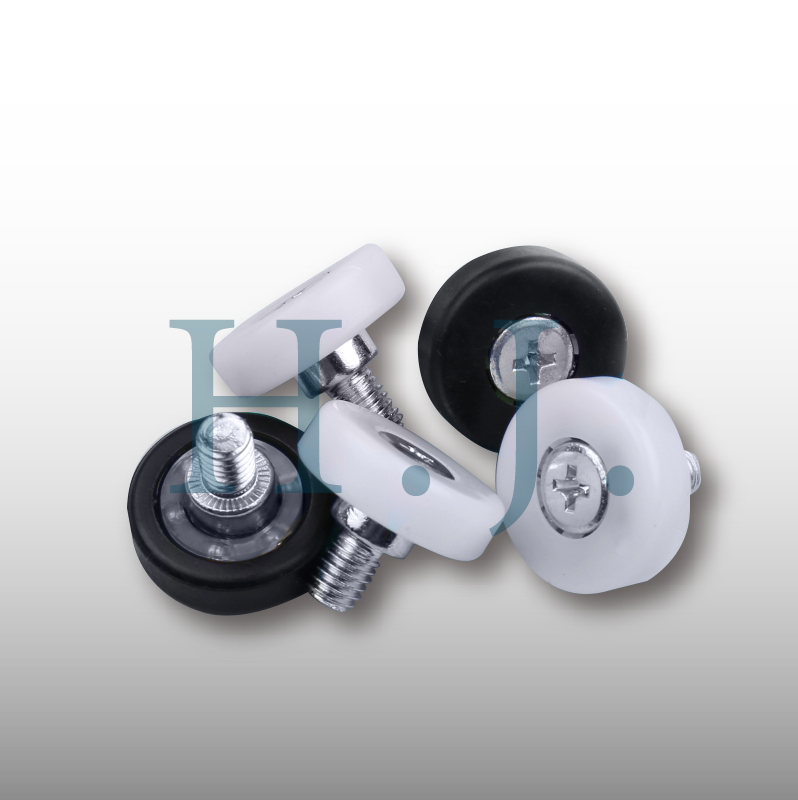
 Custom Bearings – Custom Bearing Solutions Manufacturer in Taiwan
When standard bearings cannot meet specific dimensional, structural, material, or application requirements, custom bearings provide manufacturers and product designers with greater flexibility. From special dimensions and unique structures to application-specific bearing configurations, customized bearing solutions can help engineers develop products without being restricted by standard bearing specifications.
HSIAN JI BEARING CO., LTD. is a bearing manufacturer in Taiwan specializing in the development and production of various bearing products. Established in 1995, we manufacture ball bearings, slide bearings, thrust bearings, stamped bearings, plastic bearings, special bearings, and non-standard bearings.
In addition to existing bearing products, we can develop and manufacture products according to different customer requirements and samples. Whether you require a special bearing for a new product or a non-standard bearing to replace an existing component, custom bearings can be developed according to your specific application requirements.
What Are Custom Bearings?
Custom bearings are bearing products developed or modified according to specific customer requirements rather than standard catalog specifications.
Standard bearings are manufactured in commonly available sizes and configurations. They are suitable for many industrial and commercial applications, but they cannot satisfy every mechanical design.
A product may have limited installation space, a special shaft diameter, unusual mounting requirements, specific load conditions, or a completely unique mechanical structure.
In these situations, custom bearings can provide an alternative solution.
Depending on the application, customization may involve:
-
Inner diameter
-
Outer diameter
-
Bearing width
-
Overall dimensions
-
Bearing structure
-
Housing configuration
-
Material selection
-
Mounting method
-
Load requirements
-
Operating environment
-
Special dimensional requirements
The objective is to develop a bearing that works with the customer's product rather than requiring the customer to redesign the product around an available standard bearing.
Why Choose Custom Bearings?
One of the primary advantages of custom bearing manufacturing is design flexibility.
When engineers are limited to standard bearing sizes, other components may need to be modified simply to accommodate the bearing. This can affect the size, appearance, performance, and manufacturing cost of the final product.
With custom bearings, the bearing can be evaluated according to the mechanical system.
Customized bearings may be suitable when:
-
Standard bearing sizes do not fit
-
Installation space is limited
-
A unique bearing structure is required
-
Existing bearings are difficult to source
-
A discontinued bearing needs replacement
-
A new OEM product requires a special component
-
A particular mounting configuration is needed
-
Existing bearing performance needs to be improved
For OEM and industrial customers, this flexibility can be especially valuable during new product development.
Custom Ball Bearings
Ball bearings are among the most widely used bearing types because they help reduce friction and provide smooth rotational movement.
However, not every application can use a standard ball bearing.
Custom ball bearings may be considered when customers require special dimensions, configurations, materials, or mounting arrangements.
When developing custom bearings, important information can include shaft size, available installation space, operating speed, load direction, environmental conditions, and the intended application.
Understanding these factors helps determine a suitable bearing configuration.
Custom Plastic Bearings
Plastic bearings offer different characteristics compared with conventional metal bearing designs and can be useful in applications where lightweight construction, corrosion considerations, noise reduction, or particular design requirements are important.
Custom plastic bearing configurations may be developed according to customer applications and dimensional requirements.
Potential applications include furniture systems, sliding mechanisms, doors, windows, office equipment, fitness equipment, and other products requiring smooth movement.
The appropriate material and structure should always be evaluated according to actual operating conditions.
Custom Thrust Bearings
Thrust bearings are designed primarily to accommodate axial loads.
In some mechanical systems, standard thrust bearing dimensions or configurations may not be suitable for the available installation space.
Customized thrust bearings can be evaluated according to required dimensions, load direction, structural configuration, and operating environment.
When requesting custom bearings for axial-load applications, customers should provide as much information as possible about the load, dimensions, operating conditions, and installation method.
Custom Slide Bearings
Slide bearings are used in applications requiring guided or linear movement.
They can be found in many mechanical systems, including drawers, sliding doors, industrial equipment, office equipment, medical equipment, and conveyor systems.
A custom slide bearing may incorporate specific dimensions or configurations to fit a customer's sliding mechanism.
Because the bearing is part of a larger mechanical system, understanding the rail, shaft, mounting position, load, and movement is important when developing a customized solution.
Special Bearings and Non-Standard Bearings
Some applications require bearing designs that do not fit conventional categories or standardized dimensions.
These products are often described as special bearings or non-standard bearings.
HSIAN JI manufactures both special and non-standard bearing products.
Non-standard custom bearings can be particularly useful for OEM products because manufacturers may have unique dimensions or mechanical configurations that are not available as standard catalog components.
Instead of selecting the closest available standard bearing and modifying the product around it, manufacturers can explore a bearing solution designed around their actual requirements.
Custom Bearings Developed from Samples
Not every customer has a complete engineering drawing.
This is especially common when an existing machine or product uses an older bearing that is no longer easily available.
In these cases, a physical sample can provide useful information for initial product evaluation.
HSIAN JI can develop and manufacture products according to different customer requirements and samples.
Customers can provide an existing bearing sample together with information about its application, dimensions, operating environment, and required quantity.
This approach can be useful for replacement parts, legacy equipment, specialized machinery, and non-standard applications.
Applications of Custom Bearings
Because bearings are fundamental mechanical components, custom bearings can be used in a wide variety of products and industries.
Typical applications may include:
-
Drawers and furniture systems
-
Keyboard drawers
-
Sliding doors
-
Aluminum doors and windows
-
Conveyor systems
-
Medical equipment
-
Office equipment
-
Kitchen equipment
-
Shower doors
-
Bathroom equipment
-
Fitness equipment
-
Sporting goods
-
Skates
-
Skateboards
-
Scooters
-
Hardware products
-
Machinery
-
Transportation equipment
-
Packaging equipment
Each application has different requirements, which is why understanding the final use of the bearing is an important part of custom development.
From Custom Bearing Development to Production
Developing a custom bearing typically begins with technical information from the customer.
Depending on the project, customers may provide drawings, samples, required dimensions, materials, application information, quantities, and special performance requirements.
The project can then be evaluated for manufacturing feasibility.
The development process may involve design evaluation, sample development, dimensional verification, testing, trial production, and preparation for volume manufacturing.
Clear communication during the early stages can help reduce unnecessary modifications and improve the efficiency of product development.
Quality Control for Custom Bearings
Quality consistency is particularly important for bearings because dimensional variation can affect installation, movement, noise, and overall product performance.
HSIAN JI emphasizes quality throughout manufacturing, inspection, packaging, and shipment.
For custom bearings, inspection requirements can be determined according to customer drawings, specifications, samples, and agreed quality criteria.
Consistent manufacturing processes are especially important for OEM customers that require repeat orders and stable long-term supply.
Custom Bearings Manufacturer in Taiwan
Taiwan has a well-developed manufacturing supply chain supporting machinery, hardware, metal components, plastics, and precision industrial products.
For international buyers, working with an experienced Taiwan bearing manufacturer can provide access to product development and flexible manufacturing capabilities.
HSIAN JI BEARING CO., LTD. has been manufacturing and developing bearing products since 1995.
Our product portfolio includes ball bearings, slide bearings, thrust bearings, stamped bearings, plastic bearings, special bearings, and non-standard bearings.
More importantly, we understand that some applications cannot be solved with standard products alone.
If your project requires custom bearings, special dimensions, non-standard designs, or development based on an existing sample, contact HSIAN JI with your requirements.
Provide your drawing, sample, dimensions, application details, and required quantity, and we can evaluate a suitable custom bearing solution for your project.
Custom Bearings FAQ
1. What are custom bearings?
Custom bearings are bearing products developed or manufactured according to specific customer requirements rather than only standard catalog dimensions or configurations.
Customization may involve dimensions, structure, materials, mounting configuration, or other characteristics.
They are particularly useful when standard bearings cannot fit the available space or satisfy the mechanical requirements of a particular product.
2. When should I consider using custom bearings?
Custom bearings should be considered when commercially available standard bearings cannot meet your product requirements.
Common situations include unusual dimensions, limited installation space, special mounting structures, replacement of discontinued bearings, new OEM product development, or applications requiring a non-standard bearing configuration.
Before developing a new bearing, it is usually helpful to determine whether an existing standard product can meet the application requirements.
3. What types of custom bearings can HSIAN JI provide?
HSIAN JI manufactures a variety of bearing products, including:
-
Ball bearings
-
Slide bearings
-
Thrust bearings
-
Stamped bearings
-
Plastic bearings
-
Special bearings
-
Non-standard bearings
Custom development can be evaluated according to customer requirements, applications, drawings, samples, and manufacturing feasibility.
4. Can you manufacture custom size bearings?
Special dimensional requirements can be evaluated according to the bearing design and manufacturing feasibility.
If you require custom size bearings, provide information such as the inner diameter, outer diameter, width, shaft dimensions, installation space, and other important measurements.
A technical drawing is preferable when available.
5. Can HSIAN JI develop bearings from an existing sample?
Yes. HSIAN JI can evaluate product development and manufacturing according to customer requirements and physical samples.
This can be useful when customers need to replace an existing non-standard bearing but do not have complete engineering drawings.
For a more accurate evaluation, customers should also provide application information, quantity requirements, and any known specifications.
6. Can custom ball bearings be manufactured?
Custom ball bearing requirements can be evaluated based on the customer's specifications and application.
Important factors may include inner and outer dimensions, bearing width, load, speed, mounting requirements, and operating conditions.
Providing a drawing or sample is generally the best way to begin the evaluation process.
7. Are custom plastic bearings available?
HSIAN JI manufactures plastic bearing products, and customized requirements can be evaluated.
Plastic bearings may be useful in applications where weight, corrosion resistance, noise, or specific design characteristics are important.
The appropriate bearing configuration depends on the operating environment, load, movement, temperature, and other application requirements.
8. Can thrust bearings be customized?
Yes, customized thrust bearing requirements can be evaluated.
Because thrust bearings are primarily designed to handle axial loads, customers should provide information about the direction and magnitude of the load, available installation space, dimensions, operating speed, and environmental conditions.
These details can help determine a suitable bearing design.
9. What are non-standard bearings?
Non-standard bearings are bearings that do not conform to commonly available standard dimensions or configurations.
They may have unusual dimensions, structures, mounting methods, or application-specific features.
Non-standard custom bearings are often used in specialized machinery, OEM products, furniture hardware, sliding mechanisms, transportation equipment, and other unique applications.
10. What is the difference between custom bearings and special bearings?
The terms can overlap.
A custom bearing generally refers to a bearing manufactured or modified according to customer-specific requirements.
A special bearing may refer to a bearing with an unusual design, configuration, dimension, or application.
In many projects, a special bearing is also a custom or non-standard bearing.
The important consideration is whether the bearing meets the technical requirements of the customer's application.
11. What information is required to develop custom bearings?
Providing detailed information helps improve project evaluation.
Useful information includes:
-
2D technical drawings
-
3D files when available
-
Physical samples
-
Inner and outer dimensions
-
Bearing width
-
Material requirements
-
Shaft dimensions
-
Load requirements
-
Operating speed
-
Operating temperature
-
Installation method
-
Application environment
-
Estimated order quantity
If some information is unavailable, customers can still provide an existing sample and explain how the bearing will be used.
12. Can you make replacement bearings for old equipment?
Depending on manufacturing feasibility, a custom bearing may be an option for replacing an old or discontinued bearing.
An existing bearing sample can be particularly useful in this situation.
Customers should provide the original sample together with information about the equipment, dimensions, operating conditions, and required quantity.
The manufacturer can then evaluate whether a replacement can be developed.
13. What industries use custom bearings?
Custom bearings can be found in a wide range of applications.
Examples include furniture and drawer systems, doors and windows, conveyor systems, industrial machinery, medical equipment, office equipment, kitchen equipment, bathroom equipment, fitness equipment, sporting goods, skates, scooters, transportation equipment, packaging equipment, and hardware products.
Different industries have different requirements, so the bearing should always be evaluated according to its actual operating environment.
14. What are the benefits of custom bearings for OEM products?
OEM manufacturers often design products with unique mechanical structures.
Using a custom bearing gives designers greater flexibility because they are not necessarily restricted to standard bearing dimensions.
Depending on the project, this can help optimize installation space, simplify component integration, accommodate a particular mechanical structure, or replace a difficult-to-source component.
Custom manufacturing can also support repeat production when an OEM product requires the same non-standard component over a long period.
15. Can I order custom bearings without a technical drawing?
A technical drawing is highly useful but may not always be necessary for an initial evaluation.
If you have an existing bearing, you may provide a physical sample.
You should also provide as much information as possible about dimensions, application, operating conditions, required quantity, and performance requirements.
For production, additional technical confirmation may be required to ensure that both parties agree on the final specifications.
16. How are custom bearings developed?
The exact development process depends on the complexity of the bearing.
A typical process may include:
-
Reviewing customer requirements
-
Evaluating drawings or samples
-
Confirming dimensions and application
-
Evaluating manufacturing feasibility
-
Developing samples or prototypes
-
Inspecting and testing samples
-
Confirming customer requirements
-
Trial production
-
Mass production
Some simple projects may require fewer steps, while more complex custom bearings may require additional evaluation and testing.
17. How do I select the right custom bearing manufacturer?
Look for a manufacturer that has experience with different bearing types and, importantly, has the ability to develop special and non-standard products.
Technical communication, manufacturing capability, quality control, sample development, and stable production are all important considerations.
For long-term OEM projects, consistent production and reliable communication can be just as important as initial pricing.
18. Does HSIAN JI manufacture custom bearings in Taiwan?
HSIAN JI BEARING CO., LTD. is located in Changhua, Taiwan and has been engaged in bearing development and manufacturing since 1995.
The company's products include ball bearings, slide bearings, thrust bearings, stamped bearings, plastic bearings, special bearings, and non-standard bearings.
We can also evaluate development and manufacturing according to different customer requirements and samples.
19. How can I request a quotation for custom bearings?
To request a quotation, provide as much information about your bearing requirement as possible.
Ideally, send:
-
Drawing or sample
-
Required dimensions
-
Bearing type
-
Material requirements
-
Application
-
Operating conditions
-
Estimated quantity
-
Special requirements
Complete technical information allows the manufacturer to evaluate the project more efficiently and prepare a more accurate quotation.
20. Why choose HSIAN JI for custom bearings?
HSIAN JI has been developing and manufacturing bearing products in Taiwan since 1995.
Our experience covers ball bearings, slide bearings, thrust bearings, stamped bearings, plastic bearings, special bearings, and non-standard bearings.
In addition to existing products, we can evaluate products according to customer requirements and samples.
If you are searching for custom bearings for a new OEM product, replacement application, special mechanical design, or non-standard dimensional requirement, contact HSIAN JI to discuss your project and custom bearing requirements.