
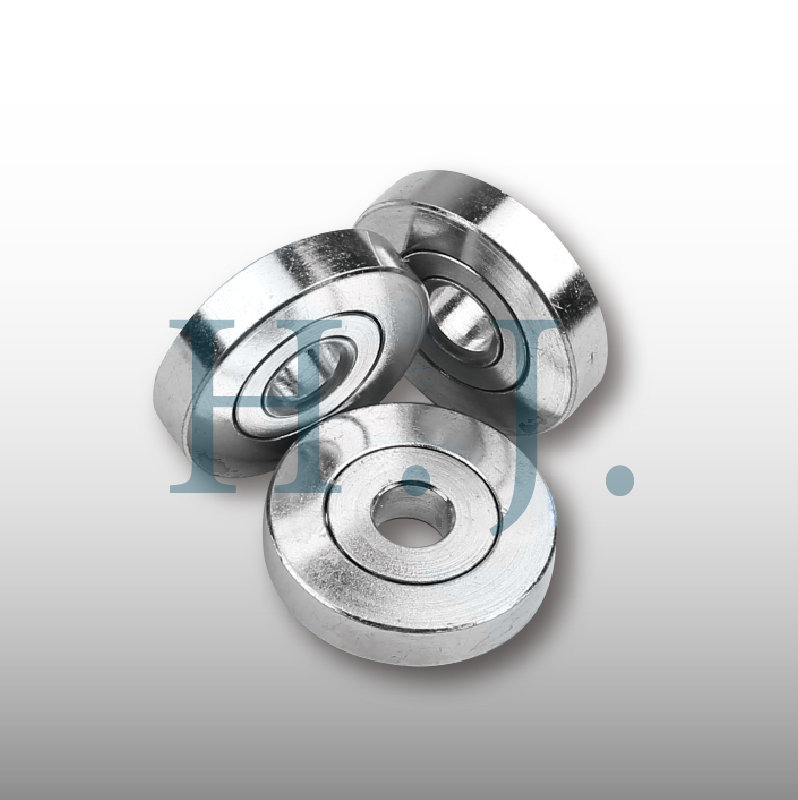
 Industrial material handling bearings
Industrial Material Handling Bearings – Custom Bearing Solutions for Conveyors, Warehousing and Automation
Industrial material handling bearings are essential mechanical components used in equipment that moves, transfers, stores, sorts, packages, or transports materials throughout factories, warehouses, distribution centers, logistics facilities, and automated production lines.
Material-handling systems can include conveyors, rollers, pulleys, guide mechanisms, sorting systems, automated transfer equipment, warehouse machinery, packaging equipment, and transportation systems. Bearings help reduce friction, support loads, guide movement, and improve the reliability of these machines.
HSIAN JI BEARING CO., LTD. is a Taiwan bearing manufacturer with a published product range including ball bearings, slide bearings, plastic bearings, stamped bearings, thrust bearings, special bearings, and non-standard bearings.
HSIAN JI's current product catalogue repeatedly lists conveyors, machinery, transportation, and packaging among its bearing applications. Its slide-bearing information also identifies conveyors and robots as examples of automation equipment where slide bearings are used.
For customers requiring industrial material handling bearings, HSIAN JI can evaluate standard, custom, special, and non-standard bearing projects according to engineering drawings, physical samples, bearing dimensions, loads, speeds, operating environment, materials, and production quantities.
What Are Industrial Material Handling Bearings?
Industrial material handling bearings are bearings used in machinery that moves products, components, raw materials, packages, containers, or other loads from one location to another.
Typical applications include:
-
Conveyor systems
-
Roller conveyors
-
Belt conveyors
-
Transfer equipment
-
Sorting systems
-
Warehouse conveyors
-
Packaging machinery
-
Logistics equipment
-
Automated handling systems
-
Industrial transportation machinery
Depending on the machine design, bearings may support rotating shafts, rollers, pulleys, wheels, guides, or linear mechanisms.
Why Are Bearings Important in Material Handling Equipment?
Material-handling machinery often operates continuously or for long production shifts.
Suitable bearings help provide:
-
Reduced friction
-
Smooth rotation
-
Stable movement
-
Load support
-
Reduced mechanical wear
-
Lower operating noise
-
Reliable repeated operation
A bearing failure can interrupt an entire production or logistics line, making bearing selection an important part of equipment design.
Bearings for Conveyor Systems
Conveyors are one of the most common material-handling systems.
They may transport:
-
Raw materials
-
Components
-
Finished products
-
Cartons
-
Packages
-
Containers
-
Industrial parts
HSIAN JI's current product information repeatedly lists conveyors among its bearing applications.
Bearings can be installed in conveyor rollers, pulleys, shafts, guides, and drive mechanisms.
Ball Bearings for Material Handling Equipment
Ball bearings are widely used in rotating machinery because rolling elements help reduce friction.
Potential applications include:
-
Conveyor rollers
-
Guide rollers
-
Drive rollers
-
Pulleys
-
Transfer wheels
-
Rotating shafts
Important bearing parameters include:
-
Inner diameter
-
Outer diameter
-
Width
-
Radial load
-
Axial load
-
Speed
-
Lubrication
-
Sealing
The complete machine operating condition should be considered.
Slide Bearings for Material Handling Systems
Slide bearings support and guide linearly moving components.
HSIAN JI's Slide Bearings page specifically states that slide bearings are used in automation equipment such as robots and conveyors.
Potential material-handling applications include:
-
Linear guides
-
Transfer mechanisms
-
Positioning systems
-
Adjustment mechanisms
-
Automation equipment
Slide bearings may be particularly useful where controlled linear movement is required.
Stamped Bearings for Material Handling Machinery
Stamped bearings can provide compact and efficient structures for certain industrial machinery applications.
HSIAN JI's Stamped Bearings information explicitly states that stamped bearings are used in industrial machinery such as pumps, fans and conveyors.
Potential advantages can include:
-
Compact dimensions
-
Lightweight construction
-
Efficient production
-
Application-specific configurations
Suitability still depends on load, speed, and machine design.
Plastic Bearings for Material Handling Equipment
Plastic bearings may be useful in selected industrial material-handling environments.
Potential benefits include:
-
Corrosion resistance
-
Reduced weight
-
Lower noise
-
Low friction
-
Design flexibility
They may be considered in wet, humid, or specialized conveyor environments where conventional metal corrosion is a concern.
Material selection should consider load, speed, temperature, chemicals, and wear.
Bearings for Roller Conveyors
Roller conveyors use multiple cylindrical rollers to transport goods.
Bearings are usually installed at the ends of each roller to allow smooth rotation.
Important factors include:
-
Roller diameter
-
Shaft diameter
-
Bearing size
-
Load per roller
-
Conveyor speed
-
Duty cycle
A high-volume roller conveyor may contain hundreds of bearings, so dimensional consistency is particularly important.
Bearings for Belt Conveyors
Belt conveyors use continuous belts supported by rollers and pulleys.
Bearings may be installed in:
-
Drive pulleys
-
Tail pulleys
-
Idler rollers
-
Return rollers
-
Guide rollers
-
Tensioning mechanisms
Bearing selection should consider belt tension, load, speed, dust, and operating hours.
Bearings for Conveyor Pulleys
Pulley bearings support shafts that drive, redirect, or tension conveyor belts.
Potential pulley applications include:
-
Drive pulleys
-
Head pulleys
-
Tail pulleys
-
Tension pulleys
-
Bend pulleys
-
Snub pulleys
Higher belt tension can significantly increase bearing load.
Bearings for Guide Rollers
Guide rollers control the position of belts, products, packages, or materials.
Bearings inside guide rollers should provide:
-
Smooth rotation
-
Low resistance
-
Stable alignment
-
Suitable load support
Guide rollers are common in conveyors, packaging machines, and automated handling equipment.
Bearings for Drive Rollers
Drive rollers actively transfer mechanical power to a belt or transported product.
These bearings may experience:
-
Higher radial loads
-
Drive torque
-
Continuous operation
-
Repeated starting and stopping
Customers should provide actual load and speed information.
Bearings for Warehouse Automation
Modern warehouses use increasingly automated systems to move products between receiving, storage, picking, packing, and shipping areas.
HSIAN JI's own website discusses warehousing together with storage, packaging, transportation, and delivery of goods.
Potential bearing applications include:
-
Warehouse conveyors
-
Sorting systems
-
Transfer units
-
Automated storage systems
-
Package-handling systems
Reliable bearing performance can help reduce unexpected downtime.
Bearings for Sorting Systems
Sorting systems are widely used in logistics and distribution centers.
Bearings may support:
-
Rollers
-
Wheels
-
Diverters
-
Transfer mechanisms
-
Rotating shafts
Smooth mechanical movement helps maintain accurate product routing.
Bearings for Logistics Equipment
Logistics equipment moves goods through warehouses and distribution centers.
Potential applications include:
-
Parcel conveyors
-
Package sorting systems
-
Transfer equipment
-
Roller systems
-
Automated handling machinery
HSIAN JI's current products also list transportation and packaging among their applications.
Bearings for Packaging Machinery
Packaging equipment often forms part of the material-handling process.
Bearing applications may include:
-
Packaging conveyors
-
Feed rollers
-
Guide rollers
-
Transfer systems
-
Labeling equipment
-
Wrapping equipment
-
Cartoning machinery
HSIAN JI's current product catalogue includes multiple bearing models applicable to packaging applications.
Bearings for Transfer Equipment
Transfer equipment moves products between machines or conveyor sections.
Potential mechanisms include:
-
Roller transfers
-
Belt transfers
-
Sliding guides
-
Rotating tables
-
Positioning systems
The required bearing depends on load direction and movement type.
Bearings for Automated Production Lines
Automated production lines rely on synchronized material movement.
Bearings can support mechanisms used for:
-
Feeding
-
Positioning
-
Conveying
-
Sorting
-
Packaging
-
Discharge
Reliable bearing operation helps maintain production consistency.
Bearings for Transportation Machinery
Material-handling machinery can also include transportation equipment used inside production and logistics environments.
HSIAN JI's current bearing models specifically list transportation among their applications.
Bearing requirements depend on the actual machinery and load.
Heavy Load Material Handling Bearings
Heavy industrial equipment may move:
-
Metal components
-
Machinery parts
-
Crates
-
Containers
-
Bulk materials
-
Heavy assemblies
Bearing selection should consider:
-
Static load
-
Dynamic load
-
Radial load
-
Axial load
-
Shock load
-
Duty cycle
Actual numerical load information is preferable.
High-Speed Material Handling Bearings
Automated sorting and packaging lines can operate at relatively high speeds.
High-speed bearing requirements should consider:
-
RPM
-
Lubrication
-
Heat generation
-
Precision
-
Noise
-
Vibration
The actual rotational speed should be supplied during evaluation.
Low-Noise Material Handling Bearings
Noise can be important in:
-
Indoor warehouses
-
Electronics factories
-
Packaging facilities
-
Distribution centers
Bearing noise can be influenced by:
-
Precision
-
Lubrication
-
Roller material
-
Shaft alignment
-
Contamination
Low-noise requirements should be identified during development.
Sealed Material Handling Bearings
Industrial equipment can be exposed to:
-
Dust
-
Dirt
-
Fibers
-
Packaging debris
-
Moisture
Sealed bearing configurations may help reduce contamination entering the bearing.
However, sealing also affects friction and speed.
Corrosion-Resistant Material Handling Bearings
Some material-handling machinery operates in:
-
Humid environments
-
Outdoor locations
-
Food-processing plants
-
Chemical environments
-
Wash-down areas
Potential bearing options may include engineering plastics, stainless steel, or other corrosion-resistant configurations.
Bearings for Food Processing Conveyors
Food-processing material-handling equipment can require additional considerations such as:
-
Water exposure
-
Cleaning chemicals
-
Corrosion resistance
-
Sealing
-
Lubrication
Food-grade requirements should be specified separately where applicable.
Custom Industrial Material Handling Bearings
Standard catalogue bearings do not fit every material-handling system.
Customization can involve:
-
Special inner diameter
-
Custom outer diameter
-
Special width
-
Flange geometry
-
Unique mounting
-
Special materials
-
Application-specific structures
HSIAN JI states that it can develop and manufacture samples according to different customer requirements.
Special Bearings for Material Handling Machinery
Special bearing solutions can be useful where conventional designs cannot meet equipment requirements.
Possible reasons include:
-
Limited installation space
-
Proprietary roller design
-
Unique load conditions
-
Special mounting
-
Non-standard dimensions
HSIAN JI maintains both special and non-standard bearing product categories.
Non-Standard Bearings for Material Handling
HSIAN JI's Non-standard Bearings category includes models directly listed for conveyors, machinery, transportation, and packaging.
This makes non-standard bearing development particularly relevant to custom material-handling machinery.
Bearings from Engineering Drawings
Customers can submit:
-
2D engineering drawings
-
3D CAD models
-
Bearing drawings
-
Roller drawings
-
Shaft drawings
-
Machine assembly drawings
-
Material specifications
-
Tolerances
Assembly drawings are particularly useful because they show how the bearing fits inside the complete mechanism.
Bearings from Physical Samples
If drawings are unavailable, a physical bearing or machine component can provide useful information.
A sample can help determine:
-
Dimensions
-
Construction
-
Mounting
-
Shaft relationship
-
Existing geometry
Application information should also be supplied.
Replacement Material Handling Bearings
Older machinery may use discontinued or difficult-to-source bearings.
A replacement project can begin with:
-
Original bearing
-
Part number
-
Physical sample
-
Machine information
-
Load
-
Speed
-
Required quantity
A special or non-standard replacement can then be evaluated.
Prototype Material Handling Bearings
Prototype development can help verify:
-
Dimensions
-
Fit
-
Rotation
-
Movement
-
Installation
-
Machine compatibility
Testing under actual operating conditions is recommended.
OEM Material Handling Bearings
OEM machinery manufacturers may require proprietary bearing specifications.
OEM projects can involve:
-
Custom dimensions
-
Special materials
-
Customer part numbers
-
Dedicated tolerances
-
Packaging requirements
-
Repeat production
HSIAN JI's published information states that the company can develop and manufacture samples according to customer needs.
Low-Volume Industrial Bearings
Special machinery and replacement projects may require limited quantities.
Low-volume projects can be evaluated according to:
-
Design
-
Materials
-
Tooling
-
Quantity
-
Testing requirements
Quality Control for Material Handling Bearings
Quality control can include:
-
Dimensional inspection
-
Rotation checking
-
Material verification
-
Fit inspection
-
Appearance inspection
-
Customer-specific testing
Consistent bearing quality becomes especially important where large numbers of bearings operate throughout one material-handling system.
How to Choose Industrial Material Handling Bearings
Engineers should consider:
-
Bearing type
-
Load
-
Speed
-
Shaft dimensions
-
Roller dimensions
-
Installation space
-
Temperature
-
Dust
-
Moisture
-
Chemicals
-
Lubrication
-
Service life
The correct bearing depends on the complete mechanical application.
How to Choose an Industrial Material Handling Bearing Supplier
When selecting a supplier, buyers should consider:
-
Conveyor application experience
-
Bearing manufacturing capability
-
Custom-size development
-
Special and non-standard bearing capability
-
Ability to work from drawings and samples
-
Material options
-
Prototype support
-
OEM production
-
Quality control
A supplier should understand not only the bearing but also the roller, pulley, shaft, guide, load, and operating environment.
HSIAN JI – Industrial Material Handling Bearing Solutions from Taiwan
HSIAN JI BEARING CO., LTD. manufactures a broad range of bearing products in Taiwan. Its current product catalogue repeatedly identifies conveyors, machinery, transportation, and packaging as application areas, while its slide-bearing information specifically highlights robots and conveyors as automation-equipment applications.
The company's Non-standard Bearings category also contains multiple products listed for conveyors, transportation, and packaging, and HSIAN JI states that it can develop and manufacture samples according to individual customer requirements.
For industrial material handling bearings, customers can provide:
-
2D engineering drawing
-
3D CAD model
-
Physical sample
-
Bearing ID
-
Bearing OD
-
Bearing width
-
Shaft dimensions
-
Roller or pulley dimensions
-
Radial load
-
Axial load
-
Speed
-
Operating hours
-
Temperature
-
Dust conditions
-
Water or moisture exposure
-
Chemical exposure
-
Material requirements
-
Required quantity
-
Estimated annual demand
HSIAN JI can evaluate ball-bearing, slide-bearing, plastic-bearing, stamped-bearing, special, and non-standard bearing solutions for conveyors, warehouse systems, packaging machinery, sorting equipment, logistics systems, and industrial material-handling machinery.
Industrial Material Handling Bearings FAQ
What are industrial material handling bearings?
Industrial material handling bearings are bearings used in machinery that moves, transfers, sorts, stores, packages, or transports materials within factories, warehouses, logistics facilities, and automated production environments.
Does HSIAN JI supply bearings for material handling equipment?
HSIAN JI's current products repeatedly list conveyors, machinery, transportation, and packaging among their applications.
What bearings are used in material handling systems?
Depending on the machine design, potential solutions include:
-
Ball bearings
-
Slide bearings
-
Plastic bearings
-
Stamped bearings
-
Special bearings
-
Non-standard bearings
Can ball bearings be used in material handling equipment?
Yes.
Ball bearings are commonly used in rotating rollers, pulleys, shafts, and wheels.
Can slide bearings be used in material handling systems?
Yes.
HSIAN JI specifically lists robots and conveyors among automation applications for slide bearings.
Can stamped bearings be used in conveyors?
Yes. HSIAN JI explicitly identifies conveyors among industrial machinery applications for stamped bearings.
Can plastic bearings be used in material handling equipment?
Potentially.
Plastic bearings can provide corrosion resistance, low weight, and reduced noise depending on load, speed, temperature, and environment.
What material handling equipment uses bearings?
Applications can include:
-
Roller conveyors
-
Belt conveyors
-
Sorting systems
-
Warehouse conveyors
-
Packaging machinery
-
Transfer systems
-
Automated handling equipment
-
Transportation machinery
Can bearings be used in roller conveyors?
Yes.
Bearings installed at roller ends allow rollers to rotate smoothly around shafts or axles.
Can bearings be used in belt conveyors?
Yes.
They can support rollers, pulleys, shafts, and tensioning mechanisms.
Can bearings be used in conveyor pulleys?
Yes.
Pulley bearings support shafts used to drive, redirect, or tension conveyor belts.
Can bearings be used in warehouse automation?
Yes.
Automated warehouse systems commonly use bearings in conveyors, rollers, sorting systems, and transfer mechanisms.
Can bearings be used in logistics equipment?
Yes.
HSIAN JI's current website also discusses logistics, warehousing, packaging, and transportation processes.
Can bearings be used in packaging machinery?
Yes.
Packaging is directly listed among HSIAN JI product applications.
Can bearings be used in transportation machinery?
Yes.
Transportation is also directly listed among current HSIAN JI bearing applications.
Can material handling bearings be customized?
Yes.
Custom requirements can involve:
-
Inner diameter
-
Outer diameter
-
Width
-
Flanges
-
Mounting features
-
Materials
-
Special geometry
Can HSIAN JI manufacture non-standard material handling bearings?
HSIAN JI has a dedicated Non-standard Bearings category with products used in conveyors, machinery, transportation, and packaging applications.
Can bearings be manufactured from customer drawings?
Yes.
Engineering drawings can provide the basis for custom technical evaluation.
Can HSIAN JI develop bearings from physical samples?
HSIAN JI states that it can develop and manufacture samples according to different customer needs.
Can you reproduce discontinued material handling bearings?
Potentially.
Provide the original bearing, machine information, load, speed, dimensions, and required quantity.
Can material handling bearings support heavy loads?
Potentially.
Actual radial, axial, static, dynamic, and shock loads should be provided.
Can industrial bearings operate at high speed?
Potentially.
Actual RPM, load, lubrication, and temperature should be specified.
Can material handling bearings operate continuously?
Yes, depending on design and operating conditions.
Customers should provide expected operating hours and duty cycle.
Can material handling bearings be low noise?
Yes.
Noise depends on bearing precision, lubrication, roller material, alignment, and installation.
Can material handling bearings be sealed?
Yes, depending on bearing design.
Seals can help reduce dust and moisture contamination.
Can material handling bearings be corrosion resistant?
Yes.
Material selection can be adapted for humid, wet, chemical, or outdoor environments.
Can stainless steel bearings be used?
Potentially.
Stainless steel may provide improved corrosion resistance depending on grade and application.
Can plastic bearings be used in wet environments?
Potentially.
The exact plastic should be evaluated according to load, speed, water, temperature, and chemicals.
Can material handling bearings be used outdoors?
Potentially.
Outdoor equipment should consider rain, humidity, dust, temperature, and corrosion.
Can they be used in food processing equipment?
Potentially.
Food-related applications may require additional material, lubricant, hygiene, or compliance requirements.
What causes material handling bearing failure?
Potential causes include:
-
Excessive load
-
Contamination
-
Poor lubrication
-
Misalignment
-
Incorrect fit
-
High speed
-
Corrosion
-
High temperature
Why do conveyor bearings become noisy?
Possible causes include:
-
Bearing wear
-
Dirt
-
Misalignment
-
Incorrect fit
-
Lubrication problems
-
Roller damage
Why do material handling bearings become hot?
Potential causes include excessive load, speed, insufficient clearance, poor lubrication, or misalignment.
Does shaft alignment matter?
Yes.
Misalignment can increase friction, vibration, temperature, and uneven loading.
Does roller alignment matter?
Yes.
Poor alignment can place excessive or uneven load on bearings.
Does operating temperature affect bearing life?
Yes.
Temperature affects lubrication, seals, materials, internal clearance, and service life.
Can material handling bearings operate in dusty environments?
Yes, but contamination protection should be considered.
Seals and machine design may help protect the bearing.
Can HSIAN JI support OEM material handling equipment manufacturers?
HSIAN JI states that it can develop and manufacture samples according to customer needs, and its catalogue includes non-standard products for conveyors, transportation, packaging, and machinery.
Can I request a prototype?
Prototype requirements can be evaluated before regular production.
How should prototype bearings be tested?
Testing can include:
-
Fit
-
Rotation
-
Load
-
Speed
-
Temperature
-
Noise
-
Actual machine operation
Can custom bearings be produced in small quantities?
Small-batch requirements can be evaluated depending on design, materials, tooling, and quantity.
Can approved custom bearings be mass produced?
Potentially.
Repeat production can be evaluated after specifications and sample approval.
What information should I provide for a quotation?
For an industrial material handling bearings inquiry, provide:
-
2D engineering drawing
-
3D CAD model
-
Physical sample
-
Bearing inner diameter
-
Bearing outer diameter
-
Bearing width
-
Shaft dimensions
-
Roller or pulley dimensions
-
Radial load
-
Axial load
-
Shock load
-
RPM
-
Operating hours
-
Temperature
-
Dust conditions
-
Moisture exposure
-
Chemical exposure
-
Material requirements
-
Required quantity
-
Estimated annual demand
Complete equipment information helps improve technical evaluation.
What is the difference between material handling bearings and conveyor bearings?
Conveyor bearings are specifically used in conveyor rollers, pulleys, shafts, and related mechanisms.
Industrial material handling bearings is a broader category that also includes bearings used in sorting equipment, warehouse systems, packaging machinery, transfer equipment, logistics systems, and automation.
What is the difference between material handling bearings and packaging machinery bearings?
Material handling bearings focus broadly on moving and transferring products or materials.
Packaging machinery bearings focus specifically on equipment involved in packaging processes such as feeding, sealing, labeling, wrapping, and cartoning.
Why choose HSIAN JI for industrial material handling bearing projects?
HSIAN JI has a strong published connection to material-handling applications. Its current product catalogue repeatedly lists conveyors, machinery, transportation, and packaging, while its Slide Bearings page specifically identifies robots and conveyors as automation-equipment applications.
HSIAN JI also maintains a Non-standard Bearings category containing products for conveyors, transportation, and packaging, and the company states that it can develop and manufacture samples according to customer requirements.
If you require industrial material handling bearings for roller conveyors, belt conveyors, warehouse automation, logistics systems, sorting machines, packaging equipment, transfer systems, or custom industrial machinery, send HSIAN JI your drawings, samples, bearing dimensions, load, speed, environmental requirements, and production quantities for technical evaluation.