
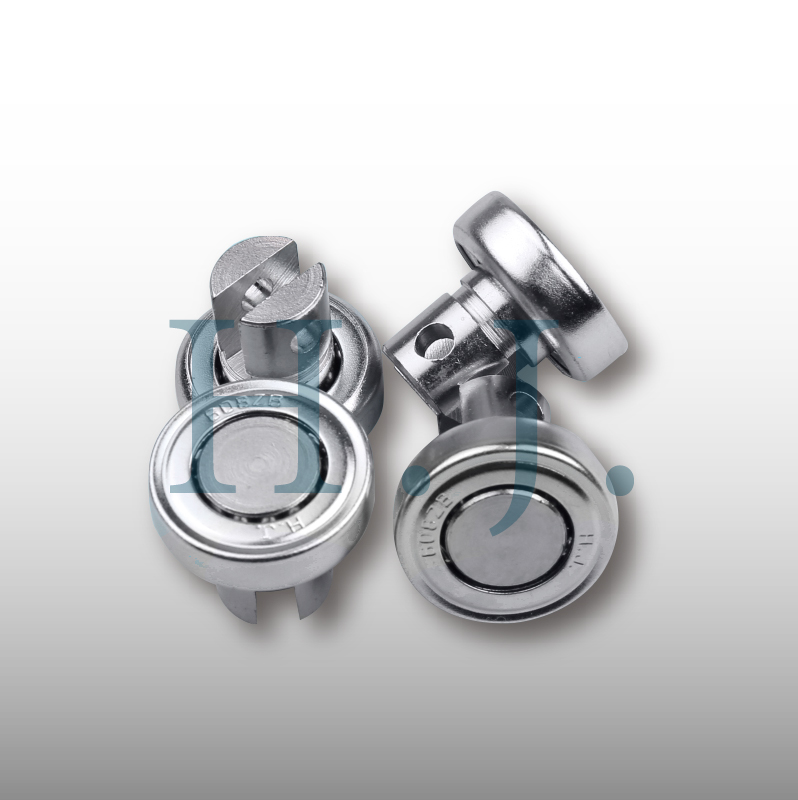
 Chemical resistant bearings
Chemical Resistant Bearings – Custom Bearing Solutions for Corrosive Environments
Mechanical equipment used in chemical plants, food-processing facilities, cleaning systems, laboratories, outdoor equipment, and other demanding environments may be exposed to acids, alkalis, detergents, solvents, moisture, or other aggressive substances. In these conditions, conventional metal bearings may experience corrosion, surface deterioration, lubricant degradation, or shortened service life. Chemical resistant bearings can provide a more suitable solution when material compatibility is carefully matched to the actual operating environment.
Chemical resistance is not determined by one material alone. Bearing material, seals, lubrication, temperature, chemical concentration, exposure duration, load, speed, and surrounding components all influence performance.
HSIAN JI BEARING CO., LTD. is a Taiwan bearing manufacturer established in 1995. Its current product range includes plastic bearings, thrust bearings, stamped bearings, slide bearings, ball bearings, special bearings, and non-standard bearings.
HSIAN JI's official plastic-bearing information specifically states that plastic bearings can be used in environments that corrode metal bearings, including chemical plants and food-processing plants. It also lists corrosion resistance and resistance to rust as key advantages of plastic bearing products.
For customers requiring chemical resistant bearings, HSIAN JI can evaluate plastic, custom, special, and non-standard bearing projects according to drawings, materials, chemical exposure, temperature, load, speed, dimensions, and production quantity.
What Are Chemical Resistant Bearings?
Chemical resistant bearings are bearing products selected or designed to withstand exposure to specific chemicals without unacceptable degradation.
Potential chemical exposure can include:
-
Acids
-
Alkalis
-
Detergents
-
Cleaning agents
-
Disinfectants
-
Salts
-
Industrial process chemicals
-
Food-processing fluids
-
Water-based chemicals
The correct bearing material depends on the exact chemical and operating conditions.
There is no single material that is resistant to every chemical.
Why Are Chemical Resistant Bearings Needed?
Chemical exposure can affect bearings in several ways.
Potential problems include:
-
Corrosion
-
Swelling
-
Cracking
-
Surface deterioration
-
Seal degradation
-
Lubricant breakdown
-
Reduced dimensional stability
-
Increased friction
-
Shortened service life
Selecting the correct bearing material can help reduce these risks.
However, customers should identify the exact chemical environment before a bearing is recommended.
Plastic Chemical Resistant Bearings
Engineering plastics can provide useful chemical resistance in many applications.
HSIAN JI's official plastic-bearing page specifically notes that plastic bearings can be used in environments where metal bearings may corrode, such as chemical plants.
Potential advantages of plastic bearings include:
-
No conventional metal rust
-
Corrosion resistance
-
Low weight
-
Low friction
-
Reduced noise
-
Design flexibility
However, chemical compatibility varies significantly between different plastics.
The specific plastic material must be matched to the actual chemical exposure.
Chemical Resistant Bearings for Chemical Plants
Chemical plants can involve many different substances and operating conditions.
A bearing may be exposed to:
-
Acid vapors
-
Alkaline cleaning agents
-
Process chemicals
-
Salt solutions
-
Water
-
High humidity
-
Chemical splash
HSIAN JI specifically identifies chemical plants as an example of where plastic bearings can be useful.
Customers should provide:
-
Chemical name
-
Concentration
-
Temperature
-
Exposure duration
-
Splash or immersion
-
Load
-
Speed
This information is essential for material selection.
Chemical Resistant Bearings for Food Processing
Food-processing plants may use:
-
Detergents
-
Disinfectants
-
Acids
-
Alkalis
-
Hot water
-
Cleaning chemicals
HSIAN JI also lists food-processing plants as environments where corrosion-resistant plastic bearings may be useful.
However, chemical resistance and food-grade compliance are separate requirements.
Customers should specify any applicable food-contact or hygiene standards.
Acid Resistant Bearings
Acid exposure can be highly aggressive to conventional bearing materials.
Potential applications may involve:
-
Chemical processing
-
Cleaning systems
-
Laboratories
-
Industrial treatment equipment
Customers should specify:
-
Acid type
-
Concentration
-
Temperature
-
Exposure duration
-
Continuous or intermittent contact
Material compatibility should be evaluated individually.
Alkali Resistant Bearings
Alkaline environments can also affect metals, plastics, seals, and lubricants.
Potential sources include:
-
Cleaning agents
-
Industrial processing chemicals
-
Food-processing sanitation systems
-
Chemical production
The bearing material should be selected according to the exact alkaline substance and operating temperature.
Detergent Resistant Bearings
Frequent cleaning can expose bearings to detergents that may attack:
-
Metal surfaces
-
Plastic materials
-
Elastomer seals
-
Lubricants
Customers should identify the detergent or cleaner used, particularly for washdown applications.
Solvent Resistant Bearings
Solvents can affect certain plastics and seals even when the bearing's metal components remain intact.
For solvent-exposed applications, customers should provide:
-
Solvent type
-
Concentration
-
Temperature
-
Contact duration
-
Exposure frequency
Material compatibility must be evaluated before production.
Salt Resistant Bearings
Salt exposure can increase corrosion risk for many metallic components.
Applications can include:
-
Coastal equipment
-
Salt-processing machinery
-
Food-processing systems
-
Outdoor equipment
Plastic or corrosion-resistant material options can be evaluated depending on load, speed, temperature, and chemical exposure.
Chemical Resistant Ball Bearings
Ball bearings are widely used in rotational equipment.
For chemical environments, bearing selection should consider:
-
Ring material
-
Ball material
-
Cage material
-
Seals
-
Lubrication
-
Load
-
Speed
-
Chemical exposure
HSIAN JI currently manufactures ball bearing products as part of its product portfolio.
Chemical-resistant ball-bearing requirements should be submitted with full application information.
Chemical Resistant Plastic Bearings
Plastic bearings are especially relevant to this keyword because HSIAN JI officially identifies corrosion resistance as one of their advantages.
Potential applications include:
-
Chemical equipment
-
Food-processing machinery
-
Wet environments
-
Cleaning systems
-
Sliding mechanisms
Customers should still confirm material compatibility with the exact chemical.
Chemical Resistant Thrust Bearings
Thrust bearings primarily support axial loads.
For chemical applications, customers should provide:
-
Inner diameter
-
Outer diameter
-
Thickness
-
Axial load
-
Speed
-
Chemical exposure
-
Temperature
-
Material requirements
Both mechanical and chemical requirements should be evaluated together.
Chemical Resistant Slide Bearings
Slide bearings support and guide linear movement.
Chemical-resistant slide-bearing solutions may be relevant to:
-
Processing machinery
-
Cleaning equipment
-
Sliding guides
-
Doors
-
Conveyors
-
Industrial systems
Plastic materials can be useful where corrosion or chemical exposure makes metallic components unsuitable.
Chemical Resistant Special Bearings
Some applications require a combination of:
-
Special dimensions
-
Unique mounting
-
Chemical-resistant materials
-
Dedicated geometry
HSIAN JI maintains Special Bearings as one of its published product categories.
Application-specific projects can therefore be evaluated according to customer requirements.
Chemical Resistant Non-Standard Bearings
Non-standard bearings may be required when standard dimensions or structures are unsuitable.
A chemical-resistant non-standard project may involve:
-
Custom bore
-
Special outside diameter
-
Custom width
-
Unique mounting
-
Engineering plastic material
-
Special sealing
HSIAN JI also maintains a dedicated Non-standard Bearings product category.
Stainless Steel Chemical Resistant Bearings
Stainless steel can provide useful corrosion resistance in certain chemical environments.
However, resistance depends on:
-
Stainless steel grade
-
Chemical
-
Concentration
-
Temperature
-
Exposure time
Some chemicals can attack stainless steel aggressively.
Therefore, "stainless steel" should not automatically be considered chemically resistant under all conditions.
Plastic vs. Stainless Steel Chemical Resistant Bearings
Plastic and stainless steel have different advantages.
Plastic bearings may provide:
-
Excellent resistance to certain chemicals
-
No conventional metal rust
-
Low weight
-
Low noise
Stainless steel may provide:
-
Greater mechanical strength in some applications
-
Better high-load capability
-
Metallic bearing structure
The correct choice depends on chemical compatibility and mechanical requirements.
Sealed Chemical Resistant Bearings
Seals can help reduce chemical ingress into the internal bearing area.
However, the seal material itself must also be chemically compatible.
Customers should provide:
-
Chemical type
-
Temperature
-
Exposure method
-
Seal requirements
A chemically resistant ring material combined with an incompatible seal can still lead to premature failure.
Lubrication in Chemical Environments
Chemicals can wash away or degrade lubricants.
Lubrication selection should consider:
-
Chemical compatibility
-
Temperature
-
Speed
-
Load
-
Exposure frequency
-
Relubrication
Some plastic-bearing applications may require different lubrication strategies than conventional metal bearings.
Chemical Resistant Bearings for Washdown Systems
Washdown equipment may use:
-
Water
-
Detergents
-
Disinfectants
-
Acids
-
Alkalis
Customers should define both chemical exposure and water pressure.
A bearing suitable for chemical splash may not be suitable for high-pressure cleaning.
Chemical Resistant Bearings for Outdoor Equipment
Outdoor environments can combine:
-
Rain
-
Humidity
-
Salt
-
Cleaning agents
-
Pollution
The bearing solution should consider corrosion, chemical exposure, sealing, and lubrication.
Chemical Resistant Bearings for Laboratory Equipment
Laboratory equipment may be exposed to small quantities of specialized chemicals.
Bearing selection should consider:
-
Chemical compatibility
-
Precision
-
Noise
-
Load
-
Speed
-
Cleanliness requirements
Application-specific evaluation is recommended.
Custom Chemical Resistant Bearings
Standard bearings may not satisfy both chemical and dimensional requirements.
Customization can involve:
-
Inner diameter
-
Outer diameter
-
Width
-
Material
-
Seal configuration
-
Mounting features
-
External geometry
HSIAN JI supports customer-specific product development and special/non-standard bearing applications.
Chemical Resistant Bearings from Engineering Drawings
Customers can provide:
-
2D engineering drawings
-
3D CAD models
-
Assembly drawings
-
Material specifications
-
Critical dimensions
-
Required tolerances
-
Chemical environment
The chemical information should be included with the mechanical drawing rather than treated as a separate issue.
Chemical Resistant Bearings from Physical Samples
Some customers may have an existing chemical-resistant bearing but no original drawing.
A physical sample can provide information about:
-
Dimensions
-
Geometry
-
Mounting
-
Construction
However, it may not reveal the exact plastic, stainless steel, seal, or lubricant specification.
Original material information should be provided whenever available.
OEM Chemical Resistant Bearings
OEM manufacturers may require dedicated bearings for chemical-processing or cleaning equipment.
OEM requirements can include:
-
Custom dimensions
-
Chemical-resistant materials
-
Special seals
-
Unique mounting
-
Application-specific geometry
Customers should provide drawings, annual demand, and complete chemical exposure information.
Prototype Chemical Resistant Bearings
Prototype development can help verify:
-
Dimensions
-
Fit
-
Installation
-
Movement
-
Assembly compatibility
Chemical compatibility testing may also be required depending on the application.
Chemical Compatibility Testing
For demanding applications, material compatibility should be confirmed using appropriate technical data or testing.
Testing considerations can include:
-
Chemical concentration
-
Temperature
-
Exposure duration
-
Mechanical stress
-
Dimensional change
The customer should define the required acceptance criteria.
Quality Control for Chemical Resistant Bearings
Custom projects can require:
-
Material verification
-
Dimensional inspection
-
Manufacturing-process control
-
Finished-product inspection
-
Customer-defined compatibility testing
HSIAN JI's published product range also includes design/product development and production/quality assurance functions.
How to Choose Chemical Resistant Bearings
Customers should evaluate:
-
Chemical type
-
Concentration
-
Temperature
-
Exposure duration
-
Load
-
Speed
-
Bearing type
-
Sealing
-
Lubrication
-
Service life
The phrase "chemical resistant" alone is not enough to select a bearing.
The exact chemical environment must be defined.
HSIAN JI – Chemical Resistant Bearing Solutions from Taiwan
HSIAN JI BEARING CO., LTD. has been involved in bearing development and manufacturing in Taiwan since 1995. Its current product categories include plastic bearings, thrust bearings, stamped bearings, slide bearings, ball bearings, special bearings, and non-standard bearings.
Most importantly for this keyword, HSIAN JI's official plastic-bearing page states that plastic bearings can be used in environments that corrode metal bearings, including chemical plants, and identifies corrosion resistance as one of the key advantages of plastic bearings.
For chemical resistant bearings, customers should provide:
-
Bearing type
-
Engineering drawing
-
Physical sample
-
Material requirements
-
Chemical name
-
Chemical concentration
-
Operating temperature
-
Exposure duration
-
Splash or immersion conditions
-
Load
-
Speed
-
Seal requirements
-
Required quantity
-
Estimated annual demand
HSIAN JI can evaluate whether plastic, special, custom, or non-standard bearing solutions are appropriate for the application.
Chemical Resistant Bearings FAQ
What are chemical resistant bearings?
Chemical resistant bearings are bearing products designed or selected to withstand specific chemical environments without unacceptable material degradation.
The correct material depends on the exact chemical, concentration, temperature, and exposure conditions.
Does HSIAN JI offer chemical resistant bearing solutions?
HSIAN JI's official plastic-bearing page states that plastic bearings can be used in environments that corrode metal bearings, including chemical plants.
Chemical-resistant projects can therefore be evaluated using suitable plastic, special, or non-standard bearing approaches.
Are plastic bearings chemical resistant?
Many engineering plastics provide good resistance to specific chemicals.
HSIAN JI identifies corrosion resistance as an advantage of plastic bearings.
However, compatibility depends on the exact plastic and chemical.
Are chemical resistant bearings corrosion resistant?
Often, but the terms are not identical.
Corrosion resistance broadly covers resistance to material deterioration.
Chemical resistance specifically focuses on compatibility with defined chemical substances.
Are chemical resistant bearings waterproof?
Not automatically.
Chemical resistance concerns material compatibility.
Waterproofing concerns water ingress and sealing.
A bearing may require both properties.
Can chemical resistant bearings be used in chemical plants?
Potentially.
HSIAN JI specifically identifies chemical plants as an environment where plastic bearings can be useful.
The exact chemical conditions must still be evaluated.
Can chemical resistant bearings be used in food-processing plants?
Potentially.
HSIAN JI also identifies food-processing plants as an application environment for corrosion-resistant plastic bearings.
Food-grade compliance should be evaluated separately.
Can chemical resistant bearings withstand acids?
Potentially, depending on material and acid type.
Customers should provide acid name, concentration, temperature, and exposure duration.
Can chemical resistant bearings withstand alkalis?
Potentially.
Material compatibility depends on the exact alkaline solution and conditions.
Can chemical resistant bearings withstand detergents?
Depending on the bearing material, seal, and lubricant.
Customers should provide the detergent specification and cleaning conditions.
Can chemical resistant bearings withstand solvents?
Some bearing materials may resist particular solvents, while others may swell or degrade.
The exact solvent must be identified.
Are stainless steel bearings chemical resistant?
Some stainless steel grades provide good resistance to certain chemicals.
However, no stainless steel should be assumed resistant to every chemical.
Are plastic bearings better than stainless steel for chemicals?
It depends.
Some engineering plastics provide excellent chemical resistance, while stainless steel can provide greater strength for certain applications.
The chemical and mechanical requirements must be evaluated together.
Can chemical resistant bearings be sealed?
Yes, depending on the application.
However, the seal material must also be compatible with the chemical exposure.
Can chemical resistant bearings use grease?
Potentially.
The grease must be chemically compatible and suitable for load, speed, and temperature.
Can chemicals wash bearing grease away?
Yes.
Cleaning solutions and process chemicals can remove or degrade lubricants.
Lubrication strategy should be evaluated accordingly.
Can you manufacture custom-size chemical resistant bearings?
Custom dimensions can be evaluated, including:
-
Inner diameter
-
Outer diameter
-
Width
-
Flange dimensions
-
Mounting features
Material and chemical requirements should be specified together.
Can you manufacture special chemical resistant bearings?
HSIAN JI maintains Special Bearings among its current product categories.
Special chemical-resistant projects can be submitted for evaluation.
Can you manufacture non-standard chemical resistant bearings?
HSIAN JI also maintains a dedicated Non-standard Bearings category.
Custom dimensions combined with chemical-resistant materials can be evaluated according to technical feasibility.
Can you manufacture chemical resistant ball bearings?
Ball-bearing projects can be evaluated according to ring material, rolling elements, seals, lubrication, load, speed, and chemical exposure.
Can you manufacture chemical resistant plastic bearings?
Plastic bearings are directly relevant to chemical environments because HSIAN JI identifies corrosion resistance and chemical-plant applications among their advantages.
Customers should provide the exact chemical environment.
Can chemical resistant bearings be used for washdown equipment?
Potentially.
Customers should provide chemical type, water pressure, temperature, and cleaning frequency.
Can chemical resistant bearings be submerged in chemicals?
Continuous immersion is a demanding application.
Material compatibility, seals, lubrication, temperature, and mechanical loading must all be evaluated.
Can you develop chemical resistant bearings from my drawing?
Yes.
Engineering drawings can provide the dimensional basis, while chemical exposure information should define the material requirements.
Can you develop a bearing from a physical sample?
A physical sample can provide dimensions and structural information.
However, the exact original material may not be identifiable from appearance alone.
Can chemical resistant bearings replace obsolete bearings?
Potentially.
Customers should provide the original bearing, drawing, material information, chemical exposure, load, speed, and quantity.
Can I request a prototype?
Prototype requirements can be evaluated for custom projects.
Chemical compatibility may also require application-specific testing.
Can chemical resistant bearings be produced in small quantities?
Small-quantity projects can be submitted for evaluation.
Feasibility depends on material, design, manufacturing process, tooling, and quantity.
What material should I choose for chemical resistant bearings?
There is no universal best material.
Selection depends on:
-
Chemical
-
Concentration
-
Temperature
-
Load
-
Speed
-
Wear
-
Required service life
Engineering plastics or corrosion-resistant metals may be considered depending on the application.
How do I know if a plastic is compatible with my chemical?
Customers should provide the chemical name, concentration, temperature, and exposure duration.
Material compatibility data or testing may then be used to evaluate suitability.
What information should I provide for a quotation?
For a chemical resistant bearings inquiry, provide:
-
Bearing type
-
2D engineering drawing
-
3D CAD model
-
Physical sample
-
Dimensions
-
Material requirement
-
Chemical name
-
Chemical concentration
-
Operating temperature
-
Exposure duration
-
Splash or immersion
-
Load
-
Speed
-
Seal requirement
-
Lubrication requirement
-
Required quantity
-
Estimated annual demand
Complete chemical information is essential.
How does HSIAN JI control product quality?
HSIAN JI's site lists Design and Product Development and Production and Quality Assurance alongside its bearing categories.
Custom projects can include material verification, dimensional inspection, process control, finished-product inspection, and customer-defined requirements.
What is the difference between chemical resistant bearings and corrosion resistant bearings?
Chemical resistant bearings emphasize resistance to specific chemicals.
Corrosion resistant bearings are a broader category covering resistance to moisture, salt, chemicals, and other corrosive conditions.
What is the difference between chemical resistant and food grade bearings?
Chemical resistance concerns material compatibility.
Food-grade bearings may additionally require compliant materials, lubricants, seals, hygiene considerations, and documentation.
What is the difference between chemical resistant and waterproof bearings?
Chemical-resistant bearings focus on material compatibility with chemicals.
Waterproof or water-resistant bearings focus on limiting water ingress.
Many processing applications may require both.
Why choose HSIAN JI for chemical resistant bearing projects?
HSIAN JI BEARING CO., LTD. currently offers plastic, thrust, stamped, slide, ball, special, and non-standard bearing categories, together with product-development and quality-assurance capabilities.
Most importantly, HSIAN JI's official plastic-bearing page explicitly states that plastic bearings can be used in environments that corrode metal bearings, including chemical plants, making this keyword closely aligned with the company's published capabilities.
If you require chemical resistant bearings for chemical-processing equipment, cleaning systems, food-processing machinery, wet environments, custom machinery, or specialized OEM products, send HSIAN JI your drawings, material requirements, chemical specifications, operating conditions, and production quantities for technical evaluation.