
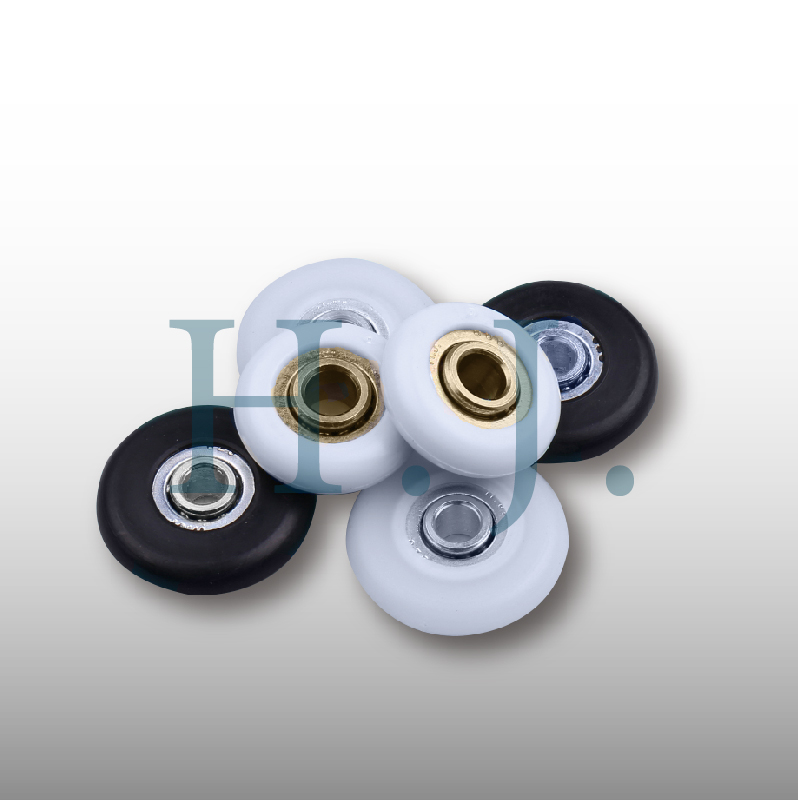
 Fitness equipment pulleys manufacturer
Fitness Equipment Pulleys Manufacturer – Custom Pulley and Bearing Solutions
A reliable fitness equipment pulleys manufacturer plays an important role in the performance, smooth movement, noise control, and durability of modern exercise machines. Pulleys are widely used in strength-training machines, cable machines, home gyms, functional trainers, weight-stack systems, and other fitness equipment where cables or belts must move smoothly through repeated exercise cycles.
Although a pulley may appear to be a simple component, its design can significantly influence the operation of the entire fitness machine. Pulley diameter, groove geometry, bearing selection, shaft dimensions, material, load capacity, alignment, and manufacturing accuracy all affect movement and service life.
HSIAN JI BEARING CO., LTD. is a Taiwan manufacturer specializing in bearings and related mechanical components. The company's product range includes ball bearings, plastic bearings, slide bearings, stamped bearings, thrust bearings, special bearings, and non-standard bearings. Fitness equipment and sports equipment are among the applications identified within HSIAN JI's bearing business.
For customers looking for a fitness equipment pulleys manufacturer, HSIAN JI can evaluate custom pulley and bearing requirements according to customer drawings, samples, dimensions, materials, loads, cable specifications, shaft dimensions, and production quantities.
What Are Fitness Equipment Pulleys?
Fitness equipment pulleys are rotating wheel components used to guide cables, belts, or similar transmission elements through an exercise machine.
A typical pulley assembly may include:
-
Pulley wheel
-
Bearing
-
Shaft or axle
-
Spacer
-
Bolt
-
Bushing
-
Retaining hardware
As the user exercises, the cable moves around the pulley, transferring force between handles, weight stacks, resistance mechanisms, and other moving components.
Applications of Pulleys in Fitness Equipment
Pulleys are commonly found in:
-
Cable machines
-
Functional trainers
-
Home gyms
-
Multi-station gyms
-
Lat pulldown machines
-
Cable crossover machines
-
Seated row machines
-
Strength-training machines
-
Weight-stack equipment
-
Rehabilitation exercise machines
Different equipment designs may use several pulleys to redirect the cable and create the required movement path.
Gym Equipment Pulleys
Commercial gym equipment may operate for many hours each day and can experience thousands of repeated exercise cycles.
Pulley requirements can therefore include:
-
Smooth rotation
-
Reliable bearing support
-
Suitable load capacity
-
Low operating noise
-
Accurate alignment
-
Wear resistance
-
Consistent dimensions
Commercial fitness-equipment manufacturers should evaluate the complete pulley system rather than selecting a pulley based only on outside diameter.
Exercise Machine Pulleys
Exercise machines use pulleys to transfer resistance from a weight stack or other resistance system to the user.
The pulley may influence:
-
Cable movement
-
Resistance consistency
-
Operating noise
-
Exercise feel
-
Cable wear
A correctly designed pulley should allow the cable to move smoothly without excessive friction or abnormal contact.
Weight Stack Pulleys
Weight-stack fitness machines frequently use multiple pulleys.
When the user pulls a handle, bar, or attachment, the cable travels through the pulley system and lifts the selected weight plates.
Important considerations include:
-
Pulley load
-
Cable diameter
-
Groove geometry
-
Bearing size
-
Shaft dimensions
-
Alignment
Incorrect pulley geometry can potentially increase cable wear.
Cable Machine Pulleys
Cable machines require pulleys capable of supporting repeated cable movement.
Typical applications include:
-
Cable crossover machines
-
Functional trainers
-
Lat pulldown machines
-
Triceps machines
-
Rowing stations
-
Adjustable cable systems
The cable and pulley should be designed as a compatible system.
Functional Trainer Pulleys
Functional trainers often use multiple pulleys to provide a wide range of exercise angles.
Some designs include adjustable pulley positions.
These mechanisms may require:
-
Smooth pulley rotation
-
Compact bearings
-
Stable mounting
-
Low friction
-
Reliable repeated movement
Pulley quality can influence the overall feel of the machine.
Lat Pulldown Machine Pulleys
Lat pulldown machines use cable-and-pulley systems to transfer the user's pulling force to a weight stack.
The pulley system must operate smoothly while supporting repeated loading.
Important factors include:
-
Bearing load capacity
-
Cable alignment
-
Pulley groove
-
Shaft fit
-
Pulley diameter
Cable Crossover Pulleys
Cable crossover equipment may contain numerous pulleys throughout the machine.
Accurate pulley alignment is especially important because the cable travels through several direction changes.
Misalignment can contribute to:
-
Cable rubbing
-
Noise
-
Uneven movement
-
Premature cable wear
Home Gym Pulleys
Home fitness equipment can also use sophisticated cable-and-pulley systems.
Important characteristics can include:
-
Compact size
-
Low noise
-
Smooth movement
-
Durability
-
Cost efficiency
Low-noise operation can be especially valuable for equipment used in homes and apartments.
Bearings for Fitness Equipment Pulleys
The bearing inside a fitness pulley allows the pulley wheel to rotate around its shaft or axle.
Potential bearing solutions can include:
-
Ball bearings
-
Plastic bearing components
-
Special bearings
-
Non-standard bearings
The appropriate bearing depends on pulley size, load, speed, shaft design, and operating environment.
Ball Bearings for Gym Pulleys
Ball bearings are commonly used where smooth rotational movement and low rolling friction are required.
Important specifications include:
-
Inner diameter
-
Outer diameter
-
Width
-
Load capacity
-
Clearance
-
Lubrication
-
Sealing
The bearing should be matched to the pulley and shaft.
Custom Fitness Equipment Pulleys
Standard pulley sizes may not fit proprietary exercise-machine designs.
A fitness equipment pulleys manufacturer may need to develop custom components according to customer specifications.
Customization can include:
-
Pulley outside diameter
-
Pulley width
-
Groove width
-
Groove depth
-
Groove profile
-
Bearing dimensions
-
Bore size
-
Shaft size
-
Mounting geometry
Customers should provide detailed engineering drawings whenever possible.
Custom Pulley Groove Design
The groove guides the cable around the pulley.
Groove design should consider:
-
Cable diameter
-
Cable construction
-
Cable coating
-
Required bending radius
-
Operating load
A groove that is too narrow or incorrectly shaped can increase cable contact and wear.
Fitness Pulley Diameter
Pulley diameter is an important design parameter.
Larger pulleys may provide a larger cable bending radius, while smaller pulleys can help create compact machine designs.
The correct diameter depends on:
-
Cable specification
-
Installation space
-
Machine geometry
-
Required cable path
Pulley diameter should not be selected independently from the cable.
Plastic Fitness Equipment Pulleys
Engineering plastics can be useful for fitness pulley wheels.
Potential benefits may include:
-
Reduced weight
-
Low operating noise
-
Corrosion resistance
-
Design flexibility
-
Smooth cable contact
Material selection should consider load, wear, temperature, and long-term cycling.
Metal Fitness Equipment Pulleys
Metal pulleys may be used where the design requires greater rigidity or other mechanical characteristics.
Potential materials can include steel, stainless steel, aluminum, or other application-specific materials.
The appropriate material depends on:
-
Load
-
Weight
-
Corrosion requirements
-
Cable type
-
Manufacturing process
Low-Noise Fitness Equipment Pulleys
Noise is an important consideration in both commercial gyms and home fitness equipment.
Pulley noise can be influenced by:
-
Bearing quality
-
Pulley material
-
Cable material
-
Alignment
-
Lubrication
-
Wear
A quiet pulley system requires proper integration of all components.
Low-Friction Gym Pulleys
Low friction can improve the smoothness of an exercise machine.
Friction may come from:
-
Bearings
-
Cable contact
-
Misalignment
-
Pulley deformation
-
Contamination
A quality bearing helps reduce rotational resistance, but the complete pulley system must also be correctly designed.
Heavy-Load Fitness Equipment Pulleys
Strength-training machines may place significant loads on pulley systems.
Actual pulley load can depend on:
-
Weight stack
-
Pulley arrangement
-
Mechanical advantage
-
User force
-
Dynamic movement
Manufacturers should provide expected working loads and maximum loads during development.
High-Cycle Fitness Pulleys
Commercial fitness equipment can experience a large number of repeated cycles.
Long-term performance depends on:
-
Bearing durability
-
Pulley wear
-
Cable wear
-
Shaft condition
-
Alignment
-
Maintenance
Cycle testing can help evaluate the complete assembly.
Sealed Pulley Bearings
Fitness equipment can be exposed to:
-
Dust
-
Sweat
-
Cleaning products
-
General indoor contamination
Sealed bearing configurations may help reduce contamination entering the bearing.
The appropriate seal depends on friction and environmental requirements.
Corrosion-Resistant Fitness Pulleys
Fitness equipment may be exposed to humidity, perspiration, and cleaning agents.
Corrosion-resistant materials may therefore be considered for selected components.
Potential approaches can include:
-
Stainless steel components
-
Engineering plastics
-
Appropriate surface treatments
Material compatibility should be evaluated according to the actual environment.
Pulley Shaft and Axle Design
The shaft or axle supports the pulley assembly.
Important specifications include:
-
Shaft diameter
-
Shaft tolerance
-
Material
-
Surface finish
-
Alignment
Incorrect shaft fit can contribute to noise, looseness, excessive friction, or premature bearing wear.
Pulley Alignment
Pulley alignment is critical in cable-driven fitness equipment.
Incorrect alignment can cause the cable to contact the pulley flange or other machine components.
Potential consequences include:
-
Noise
-
Increased friction
-
Cable wear
-
Uneven resistance
The pulley mounting structure should therefore maintain proper alignment.
Fitness Pulley Bearings from Engineering Drawings
Customers can provide:
-
2D engineering drawings
-
3D CAD models
-
Pulley drawings
-
Bearing drawings
-
Shaft drawings
-
Assembly drawings
-
Cable specifications
Assembly drawings are particularly useful for understanding how the pulley operates inside the fitness machine.
Fitness Pulleys from Physical Samples
Existing pulley samples can be useful when original drawings are unavailable.
A physical sample can help identify:
-
Pulley diameter
-
Pulley width
-
Groove geometry
-
Bearing dimensions
-
Bore size
-
Mounting structure
However, application information should also be supplied.
Replacement Fitness Equipment Pulleys
Older gym equipment may use pulley components that are difficult to source.
Replacement development may be possible using:
-
Original pulley
-
Physical sample
-
Original bearing
-
Equipment model
-
Dimensional information
Custom manufacturing can be particularly useful for non-standard or discontinued components.
Obsolete Gym Pulley Replacement
Commercial fitness facilities may continue using machines long after original replacement parts become unavailable.
A custom replacement project can evaluate:
-
Pulley dimensions
-
Bearing dimensions
-
Groove geometry
-
Shaft size
-
Operating load
Compatibility should be verified in the actual machine.
Prototype Fitness Equipment Pulleys
Prototype production can help verify a new pulley before mass production.
Potential testing includes:
-
Dimensional fit
-
Bearing rotation
-
Cable tracking
-
Noise
-
Load
-
Wear
-
Repeated cycling
Actual equipment testing is recommended.
OEM Fitness Equipment Pulleys
OEM fitness-equipment manufacturers often require proprietary pulley components.
OEM requirements can include:
-
Custom dimensions
-
Customer drawings
-
Special materials
-
Customer part numbers
-
Dedicated tolerances
-
Packaging
-
Repeat production
HSIAN JI can evaluate custom bearing and pulley-related requirements according to customer specifications.
Small-Batch Fitness Pulleys
Prototype projects, specialized machines, and replacement applications may require relatively small quantities.
Feasibility depends on:
-
Pulley design
-
Material
-
Bearing requirements
-
Tooling
-
Quantity
Customers should provide initial and estimated annual demand.
Mass Production of Fitness Equipment Pulleys
After design and sample approval, repeat production can be evaluated.
Important production information includes:
-
Batch quantity
-
Monthly demand
-
Annual demand
-
Inspection requirements
-
Packaging requirements
-
Delivery schedule
Quality Control for Fitness Equipment Pulleys
Potential inspection items can include:
-
Pulley outside diameter
-
Pulley width
-
Groove dimensions
-
Bearing ID
-
Bearing OD
-
Bearing width
-
Rotation
-
Appearance
Critical dimensions should be clearly marked on the engineering drawing.
How to Choose a Fitness Equipment Pulleys Manufacturer
When selecting a fitness equipment pulleys manufacturer, buyers should consider:
-
Bearing manufacturing experience
-
Custom development capability
-
Ability to produce non-standard sizes
-
Drawing-based manufacturing
-
Sample-based development
-
Material options
-
Quality control
-
OEM production capability
A good supplier should understand the relationship between the pulley, bearing, cable, shaft, load, and fitness-machine structure.
HSIAN JI – Fitness Equipment Pulley and Bearing Solutions from Taiwan
HSIAN JI provides bearing solutions for a broad range of machinery and equipment, including fitness and sports equipment.
The company's bearing portfolio includes:
-
Ball bearings
-
Plastic bearings
-
Slide bearings
-
Stamped bearings
-
Thrust bearings
-
Special bearings
-
Non-standard bearings
For fitness equipment pulleys manufacturer inquiries, customers can provide:
-
2D engineering drawing
-
3D CAD model
-
Physical pulley sample
-
Pulley outside diameter
-
Pulley width
-
Groove width
-
Groove depth
-
Cable diameter
-
Bearing ID
-
Bearing OD
-
Bearing width
-
Shaft diameter
-
Working load
-
Maximum load
-
Material requirements
-
Noise requirements
-
Initial order quantity
-
Estimated annual demand
HSIAN JI can evaluate custom pulley-bearing components for fitness machines, commercial gym equipment, home gyms, cable machines, functional trainers, weight-stack systems, and related exercise equipment.
Fitness Equipment Pulleys Manufacturer FAQ
What is a fitness equipment pulleys manufacturer?
A fitness equipment pulleys manufacturer produces pulley wheels and related bearing components used in cable-driven exercise machines, strength-training equipment, home gyms, and commercial fitness machines.
What fitness equipment uses pulleys?
Common examples include:
-
Cable machines
-
Functional trainers
-
Lat pulldown machines
-
Cable crossover machines
-
Home gyms
-
Multi-station gyms
-
Weight-stack machines
-
Strength-training equipment
What is the function of a pulley in fitness equipment?
The pulley guides a cable or belt and changes the direction of force through the exercise machine.
Why are bearings used inside fitness pulleys?
Bearings allow the pulley wheel to rotate more smoothly around the shaft or axle while reducing rotational friction.
What bearings can be used in fitness equipment pulleys?
Depending on the design, possible solutions include:
-
Ball bearings
-
Special bearings
-
Non-standard bearings
-
Plastic bearing components
Are ball bearings suitable for fitness pulleys?
Yes, depending on load, dimensions, speed, and operating conditions.
Ball bearings are commonly considered where smooth rotational movement is required.
Can fitness equipment pulleys be customized?
Yes.
Potential customization includes:
-
Outside diameter
-
Width
-
Groove dimensions
-
Bearing dimensions
-
Bore size
-
Material
-
Mounting geometry
Can pulley diameter be customized?
Potentially.
Customers should provide the required diameter and cable specifications.
Can pulley width be customized?
Potentially.
The required installation space and cable dimensions should be supplied.
Can the pulley groove be customized?
Yes, depending on manufacturing feasibility.
Groove dimensions should be designed around the cable.
Can groove width be customized?
Potentially.
Cable outside diameter and construction should be provided.
Can groove depth be customized?
Potentially.
The groove should provide suitable cable guidance without creating excessive contact.
Can groove shape be customized?
Potentially.
Different cable designs may require different groove profiles.
Why is cable diameter important?
The pulley groove and diameter must be compatible with the cable.
Incorrect geometry can contribute to poor tracking or cable wear.
Does pulley diameter affect cable life?
Yes.
Pulley diameter affects how sharply the cable bends as it travels around the pulley.
The cable manufacturer's recommended bending requirements should be considered.
Can plastic pulleys be used in fitness equipment?
Yes, depending on the design.
Engineering plastics can potentially provide low weight, low noise, corrosion resistance, and design flexibility.
Can metal pulleys be used?
Yes.
Metal may be selected when higher rigidity or other mechanical characteristics are required.
Which is better, plastic or metal pulleys?
Neither is universally better.
The correct choice depends on:
-
Load
-
Cable type
-
Noise
-
Weight
-
Wear
-
Environment
-
Cost
Can stainless steel be used?
Potentially.
Stainless steel may be considered where corrosion resistance is important.
Can aluminum be used for pulley components?
Potentially.
Load, wear, weight, manufacturing method, and cable contact should be considered.
Can fitness pulleys be low noise?
Yes.
Pulley material, bearing quality, cable design, alignment, and lubrication all influence noise.
Can bearings reduce gym-machine noise?
Correctly selected bearings can reduce rotational friction and bearing-related noise.
Other machine components can also generate noise.
Can fitness pulleys handle heavy loads?
Potentially.
The actual working and maximum loads should be provided for evaluation.
What load information should I provide?
Provide:
-
Normal working load
-
Maximum load
-
Dynamic load
-
Shock load, if applicable
Is weight-stack size enough to determine pulley load?
Not always.
Pulley arrangement and mechanical advantage can change the forces acting on individual pulleys.
Can fitness pulleys withstand repeated use?
They can be designed for repeated operation.
Commercial equipment should be evaluated for expected operating cycles.
Can pulleys be cycle tested?
Yes.
Testing can evaluate:
-
Bearing wear
-
Pulley wear
-
Cable wear
-
Noise
-
Rotation
-
Alignment
Are sealed bearings useful in fitness equipment?
Potentially.
Seals can help reduce dust and contamination entering the bearing.
Can sweat damage fitness equipment bearings?
Moisture and salts from perspiration may contribute to corrosion or contamination depending on the bearing material and exposure.
Can corrosion-resistant bearings be used?
Potentially.
Stainless steel or other corrosion-resistant solutions can be considered according to the application.
Can fitness pulleys resist cleaning chemicals?
Material compatibility depends on the exact cleaning chemical.
Customers should provide chemical information if exposure is significant.
Does shaft diameter matter?
Yes.
The bearing bore and shaft diameter must provide the appropriate fit.
Does shaft tolerance matter?
Yes.
Incorrect shaft tolerance can create looseness or excessive interference.
Does shaft surface finish matter?
Potentially.
The importance depends on the bearing and mounting design.
Does pulley alignment matter?
Yes.
Incorrect alignment can cause cable rubbing, increased friction, noise, and wear.
What causes a fitness pulley to become noisy?
Possible causes include:
-
Worn bearing
-
Damaged pulley
-
Poor alignment
-
Cable wear
-
Contamination
-
Incorrect installation
Why does a gym cable feel rough?
Potential causes include:
-
Damaged bearings
-
Misaligned pulleys
-
Cable damage
-
Dirt
-
Pulley wear
-
Excessive friction
Why does a cable rub against the pulley flange?
Possible causes include incorrect alignment, improper groove geometry, pulley mounting problems, or cable-path issues.
Can HSIAN JI manufacture custom gym pulleys?
HSIAN JI can evaluate customer-specific pulley and bearing component requirements based on drawings, samples, dimensions, materials, loads, and production quantities.
Can you manufacture from a 2D drawing?
Yes.
A dimensioned engineering drawing is one of the best references for custom development.
Can you manufacture from a 3D CAD model?
A 3D model can help communicate the complete component and assembly geometry.
A dimensioned 2D drawing is recommended for critical manufacturing specifications.
Can you work from a physical pulley sample?
Yes.
A physical sample can provide useful information about pulley dimensions, groove geometry, bearing dimensions, and mounting design.
Can you copy an existing replacement pulley?
A replacement component can potentially be developed from a sample and application information.
Compatibility should be verified before regular production.
Can you replace discontinued fitness-machine pulleys?
Potentially.
Custom manufacturing may be useful when the original pulley is obsolete or unavailable.
Can you manufacture non-standard fitness pulleys?
Potentially.
Non-standard dimensions and bearing configurations can be evaluated according to the customer's requirements.
Can you manufacture special pulley bearings?
Special bearing requirements can be evaluated based on dimensions, load, design, material, and quantity.
Can I request a prototype?
Yes.
Prototype evaluation is recommended for new custom pulley designs.
What should be tested on a pulley prototype?
Potential tests include:
-
Dimensional fit
-
Rotation
-
Cable tracking
-
Load
-
Noise
-
Wear
-
Cycle life
Should the prototype be tested in the actual fitness machine?
Yes.
Testing in the actual machine provides valuable information about cable alignment, noise, load, and movement.
Can custom pulleys be manufactured in small quantities?
Small-batch requirements can be evaluated according to design, materials, tooling, and quantity.
Can fitness equipment pulleys be mass produced?
Potentially.
After specifications and samples are approved, repeat production can be evaluated.
Can HSIAN JI support OEM fitness equipment manufacturers?
Yes. Fitness equipment is among the applications associated with HSIAN JI's bearing products, and custom bearing and pulley-related requirements can be evaluated for OEM projects.
Can you manufacture pulleys for home gyms?
Potentially.
Customers should provide drawings, samples, loads, cable specifications, and quantities.
Can you manufacture pulleys for commercial gym equipment?
Potentially.
Commercial applications should include expected loads and operating-cycle requirements.
Can you manufacture functional trainer pulleys?
Potentially.
Pulley dimensions, cable geometry, bearing requirements, and mounting details should be provided.
Can you manufacture lat pulldown pulleys?
Potentially.
The pulley can be evaluated according to cable size, load, bearing dimensions, and machine geometry.
Can you manufacture cable crossover pulleys?
Potentially.
Multi-pulley systems require careful consideration of alignment and cable path.
Can you manufacture weight-stack pulleys?
Potentially.
The actual pulley load and cable specifications should be supplied.
Can custom bearings be integrated into a pulley design?
Potentially.
A custom or non-standard bearing may be considered where standard bearing dimensions do not fit the pulley.
Can the bearing ID be customized?
Potentially.
The required shaft diameter and fit should be provided.
Can the bearing OD be customized?
Potentially.
Pulley geometry and bearing structure must be considered together.
Can bearing width be customized?
Potentially.
Custom dimensions should be evaluated according to load and manufacturing feasibility.
What information should I provide for a quotation?
For a fitness equipment pulleys manufacturer inquiry, provide:
-
2D engineering drawing
-
3D CAD model
-
Physical sample
-
Pulley outside diameter
-
Pulley width
-
Groove width
-
Groove depth
-
Groove profile
-
Cable diameter
-
Cable material
-
Bearing inner diameter
-
Bearing outer diameter
-
Bearing width
-
Shaft diameter
-
Normal working load
-
Maximum load
-
Required material
-
Environmental conditions
-
Noise requirements
-
Initial quantity
-
Estimated annual quantity
Providing the complete pulley assembly and application information helps improve technical evaluation.
What is the difference between a fitness pulley and a fitness pulley bearing?
The fitness pulley is the wheel that guides the cable.
The pulley bearing is the component installed inside the pulley that allows the wheel to rotate around its shaft.
What is the difference between a gym pulley and a cable pulley?
A gym pulley describes a pulley used in fitness equipment.
A cable pulley describes its mechanical function of guiding a cable. Many gym pulleys are therefore cable pulleys.
What is the difference between standard and custom fitness pulleys?
Standard pulleys use predetermined dimensions.
Custom fitness pulleys can be developed around specific:
-
Cable dimensions
-
Pulley diameter
-
Groove geometry
-
Bearing size
-
Shaft size
-
Equipment structure
Why choose HSIAN JI for fitness equipment pulley and bearing projects?
HSIAN JI is a Taiwan bearing manufacturer with experience across ball bearings, plastic bearings, slide bearings, stamped bearings, special bearings, and non-standard bearings. Fitness and sports equipment are among the applications identified within its bearing product range.
This is particularly useful for OEM projects where the pulley and bearing must be considered together rather than sourcing the bearing as an isolated component.
For customers looking for a fitness equipment pulleys manufacturer, HSIAN JI can evaluate custom pulley-bearing requirements for commercial gym equipment, home gyms, functional trainers, cable machines, lat pulldown machines, cable crossover systems, weight-stack equipment, and other exercise machines.
Send your drawings, physical samples, pulley dimensions, cable specifications, bearing dimensions, shaft size, load requirements, and estimated quantities to HSIAN JI for technical evaluation.