
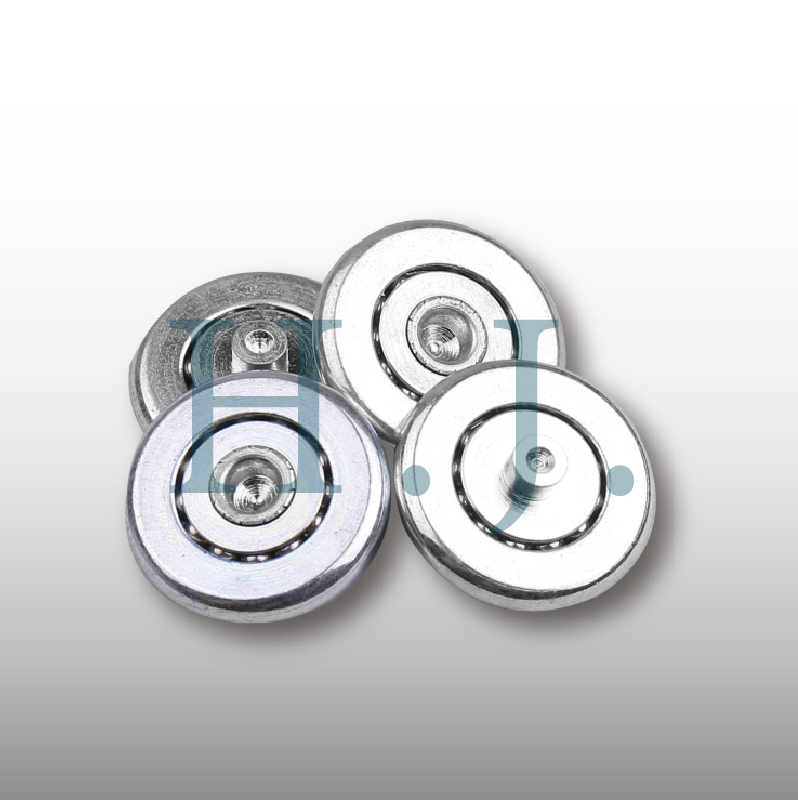
 Stainless steel bearing manufacturer
Stainless Steel Bearing Manufacturer – Custom Bearing Solutions from Taiwan
Choosing the right stainless steel bearing manufacturer is important for mechanical applications where corrosion resistance, durability, dimensional accuracy, and reliable movement are required. Compared with conventional bearing materials, stainless steel can provide advantages in environments involving moisture, humidity, water exposure, cleaning processes, or other conditions where corrosion may be a concern.
However, selecting a stainless steel bearing involves more than simply choosing a material. Engineers must also consider bearing type, dimensions, load, speed, operating temperature, lubrication, installation, environmental exposure, tolerances, and production quantity.
HSIAN JI BEARING CO., LTD. is a bearing manufacturer based in Taiwan. Established in 1995, HSIAN JI develops and manufactures different bearing products for industrial and OEM applications. Our product portfolio includes ball bearings, plastic bearings, thrust bearings, stamped bearings, slide bearings, special bearings, and non-standard bearings.
For customers looking for a stainless steel bearing manufacturer, HSIAN JI can evaluate customized bearing projects according to engineering drawings, physical samples, dimensional requirements, materials, operating conditions, and order quantities.
What Are Stainless Steel Bearings?
Stainless steel bearings are bearing products in which specified components are manufactured from suitable stainless steel materials.
Depending on the bearing design, stainless steel may be considered for components such as:
-
Inner rings
-
Outer rings
-
Rolling elements
-
Washers
-
Housings
-
Shafts
-
Other bearing-related components
The exact material configuration depends on the bearing structure and application.
Stainless steel is generally selected where corrosion resistance is an important design consideration.
Why Choose Stainless Steel Bearings?
Conventional bearing materials can perform effectively in many industrial environments. However, moisture and corrosive conditions may create additional challenges.
Stainless steel bearings can be considered for applications involving:
-
Humidity
-
Moisture
-
Water exposure
-
Frequent cleaning
-
Outdoor environments
-
Corrosive conditions
-
Equipment requiring improved corrosion resistance
The actual corrosion performance depends on the stainless steel grade, environment, bearing construction, lubrication, and other factors.
For this reason, customers should provide detailed operating conditions when requesting a quotation.
Stainless Steel Bearing Manufacturer for Custom Applications
Not every stainless steel bearing requirement can be satisfied by a standard catalogue product.
OEM manufacturers may require special:
-
Inner diameters
-
Outer diameters
-
Widths
-
Flange dimensions
-
Mounting structures
-
External geometry
-
Bearing configurations
A manufacturer with custom development capabilities can evaluate the bearing according to the complete mechanical application.
Customers should provide drawings whenever possible.
Custom Stainless Steel Bearings
Custom stainless steel bearings can be developed when standard dimensions or structures do not meet the application.
Customization may involve:
-
Custom bore size
-
Custom outside diameter
-
Special width
-
Special flange
-
Dedicated mounting features
-
Application-specific geometry
The manufacturing feasibility of each feature depends on bearing type, material, dimensions, tolerances, and quantity.
The complete design should therefore be reviewed before production.
Stainless Steel Ball Bearings
Ball bearings are widely used to support rotational movement while reducing friction between moving components.
Stainless steel ball bearings may be considered when rotational applications also require corrosion resistance.
Important selection factors include:
-
Inner diameter
-
Outer diameter
-
Width
-
Radial load
-
Axial load
-
Speed
-
Shaft fit
-
Housing fit
-
Operating environment
Customers should provide the complete application requirements rather than specifying only the bearing dimensions.
Stainless Steel Thrust Bearings
Thrust bearings are primarily designed to support axial loads.
For applications where moisture or corrosion is also a concern, stainless steel components may be evaluated depending on the bearing design.
Customers should provide:
-
Inner diameter
-
Outer diameter
-
Thickness
-
Axial load
-
Speed
-
Shaft dimensions
-
Installation space
-
Environment
Material selection should be considered together with the mechanical requirements.
Stainless Steel Special Bearings
Special bearings are developed for mechanical applications that cannot be fully satisfied by conventional catalogue products.
A stainless steel special bearing may combine corrosion-resistant material requirements with:
-
Special dimensions
-
Dedicated mounting structures
-
Unique external geometry
-
Custom shaft relationships
-
Custom housing relationships
HSIAN JI maintains special bearings as one of its dedicated bearing product categories.
Customers can submit drawings or samples for technical evaluation.
Stainless Steel Non-Standard Bearings
Non-standard bearings are especially relevant when customers require a combination of unusual dimensions and specific material requirements.
A project may require:
-
Non-standard bore
-
Unusual outside diameter
-
Special width
-
Unique mounting features
-
Stainless steel construction
HSIAN JI manufactures non-standard bearing products and supports customer-specific development.
A complete technical drawing is recommended for these projects.
Stainless Steel Bearings from Engineering Drawings
Engineering drawings provide an effective starting point for customized bearing manufacturing.
Customers can submit:
-
2D drawings
-
3D CAD models
-
Assembly drawings
-
Material specifications
-
Critical dimensions
-
Required tolerances
-
Surface requirements
-
Mounting information
Critical characteristics should be clearly identified.
The drawing should also specify the required stainless steel grade when the customer has a mandatory material specification.
Stainless Steel Bearings from Physical Samples
Some customers have an existing stainless steel bearing but no original engineering drawing.
This situation may occur with:
-
Older machinery
-
Imported equipment
-
OEM products
-
Discontinued components
-
Specialized equipment
A physical sample can provide useful information about dimensions, geometry, and structure.
However, appearance alone may not reliably identify the exact original material or performance requirements.
Customers should provide available specifications and application information whenever possible.
Selecting Stainless Steel Materials for Bearings
There are different stainless steel grades, and they do not provide identical mechanical or corrosion characteristics.
Material selection should consider factors such as:
-
Corrosion environment
-
Required hardness
-
Wear
-
Load
-
Temperature
-
Manufacturing process
-
Mechanical properties
Customers with a specified stainless steel grade should include it in the drawing or purchasing specification.
When the grade is not predetermined, operating conditions should be provided for evaluation.
Corrosion Resistance
Corrosion resistance is one of the main reasons engineers consider stainless steel bearings.
However, "stainless steel" does not mean completely corrosion-proof under every condition.
Performance can vary depending on:
-
Stainless steel grade
-
Salt exposure
-
Chemicals
-
Moisture
-
Temperature
-
Cleaning agents
-
Lubrication
-
Surface condition
For demanding environments, customers should clearly describe the chemicals, moisture, temperature, or other substances that may contact the bearing.
Stainless Steel Bearings for Humid Environments
High-humidity environments can increase corrosion concerns for mechanical components.
Potential applications can include:
-
Outdoor equipment
-
Machinery near water
-
Cleaning equipment
-
Moist production environments
-
Sliding mechanisms
A stainless steel bearing may provide improved corrosion resistance compared with some conventional materials, but suitability should be confirmed according to actual operating conditions.
Stainless Steel Bearings for Outdoor Applications
Outdoor equipment can experience:
-
Rain
-
Humidity
-
Temperature changes
-
Dust
-
Environmental contamination
Bearing selection should consider both corrosion resistance and mechanical requirements.
Sealing, lubrication, housing design, and maintenance may also affect bearing service life.
Stainless Steel Bearings for Washdown Applications
Some equipment is regularly cleaned with water or cleaning agents.
For these applications, the manufacturer should understand:
-
Cleaning frequency
-
Water exposure
-
Cleaning chemicals
-
Temperature
-
Bearing location
-
Sealing requirements
Stainless steel can be part of a corrosion-management strategy, but the complete bearing system should be evaluated.
Stainless Steel Bearings for Food-Related Equipment
Stainless steel is widely associated with food-processing environments because of corrosion resistance and cleanability.
However, a bearing used in food-related equipment may require more than stainless steel construction.
Depending on the application, requirements may involve:
-
Appropriate lubrication
-
Sealing
-
Material compliance
-
Cleaning resistance
-
Hygiene requirements
Customers should specify applicable regulations and certification requirements.
A stainless steel bearing should not automatically be described as "food grade" without confirming the complete product specification.
Stainless Steel Bearings for Medical Equipment
Some medical equipment may use bearing components where corrosion resistance or cleanability is important.
However, medical applications can have specific technical and regulatory requirements.
Customers should provide:
-
Application
-
Material requirements
-
Dimensions
-
Load
-
Speed
-
Cleaning conditions
-
Required standards
Suitability must be evaluated for the specific equipment.
Stainless Steel Bearings for Machinery
Industrial machinery may require stainless steel bearings where conventional bearing materials are exposed to moisture or corrosive conditions.
Applications can involve:
-
Production machinery
-
Packaging equipment
-
Conveyors
-
Automation systems
-
Specialized machinery
The correct bearing should be selected according to load, speed, environment, dimensions, and maintenance conditions.
Stainless Steel Bearings for Conveyor Systems
Conveyors are used across many industrial environments.
Where conveyors operate in humid, wet, or frequently cleaned areas, corrosion resistance can become an important consideration.
Customers should provide:
-
Roller dimensions
-
Shaft dimensions
-
Bearing dimensions
-
Load
-
Speed
-
Environment
-
Cleaning requirements
The bearing should be evaluated as part of the complete conveyor system.
Stainless Steel Bearings for OEM Applications
OEM manufacturers may require stainless steel bearings specifically designed around their products.
A custom project may involve:
-
Dedicated dimensions
-
Compact installation space
-
Unique mounting
-
Special housing
-
Custom shaft
-
Corrosion-resistant material requirements
OEM customers should provide complete engineering information together with initial and estimated annual quantities.
Prototype Stainless Steel Bearings
Prototype manufacturing can be useful before committing to larger production quantities.
A prototype can help verify:
-
Dimensions
-
Shaft fit
-
Housing fit
-
Installation
-
Movement
-
Assembly compatibility
The customer can also evaluate the bearing in the actual operating environment.
If changes are necessary, the design can be reviewed before regular production.
Low Volume Stainless Steel Bearing Manufacturing
Specialized equipment, replacement applications, and new OEM products may initially require relatively small quantities.
Low-volume requirements can be submitted for evaluation according to:
-
Bearing type
-
Material
-
Dimensions
-
Manufacturing process
-
Tooling
-
Quantity
Customers should provide both the initial order quantity and estimated future demand.
Stainless Steel Replacement Bearings
An older machine may use a stainless steel bearing that is discontinued or difficult to source.
Replacement projects can begin with:
-
Original bearing
-
Physical sample
-
Original drawing
-
Part number
-
Shaft dimensions
-
Housing dimensions
-
Application information
If a standard replacement is unavailable, a special or non-standard bearing can potentially be evaluated.
Quality Control for Stainless Steel Bearings
Consistent manufacturing is important for both standard-type and customized bearings.
Quality control can include:
-
Material verification
-
Dimensional inspection
-
Manufacturing process control
-
Finished-product inspection
-
Functional testing
-
Packaging inspection
For custom projects, approved engineering drawings and samples can provide production references.
Choosing a Stainless Steel Bearing Manufacturer
When selecting a stainless steel bearing manufacturer, buyers should consider more than price.
Important factors include:
-
Bearing manufacturing experience
-
Customization capability
-
Engineering communication
-
Material selection
-
Prototype support
-
Quality control
-
Production flexibility
-
OEM experience
-
Ability to manufacture special and non-standard products
The supplier should also be willing to understand the actual operating environment rather than recommending a bearing according to dimensions alone.
HSIAN JI – Stainless Steel Bearing Manufacturer in Taiwan
HSIAN JI BEARING CO., LTD. has been involved in bearing manufacturing and development in Taiwan since 1995.
Our bearing product portfolio includes:
-
Ball bearings
-
Plastic bearings
-
Thrust bearings
-
Stamped bearings
-
Slide bearings
-
Special bearings
-
Non-standard bearings
For customers searching for a stainless steel bearing manufacturer, HSIAN JI can evaluate custom and application-specific projects based on technical requirements.
Please provide:
-
2D engineering drawing
-
3D CAD model
-
Physical sample
-
Bearing dimensions
-
Stainless steel grade, if specified
-
Required tolerances
-
Shaft dimensions
-
Housing dimensions
-
Load
-
Speed
-
Temperature
-
Moisture or chemical exposure
-
Required quantity
-
Estimated annual demand
Whether your project requires a stainless steel bearing for machinery, conveyors, sliding equipment, OEM products, replacement applications, or specialized mechanical systems, HSIAN JI can evaluate your requirements and discuss an appropriate bearing manufacturing solution.
Stainless Steel Bearing Manufacturer FAQ
What is a stainless steel bearing manufacturer?
A stainless steel bearing manufacturer produces bearing products using appropriate stainless steel materials for applications where corrosion resistance or other material properties are required.
Depending on the product, stainless steel may be used for rings, rolling elements, washers, housings, or other components.
Does HSIAN JI manufacture custom bearings?
Yes. HSIAN JI develops bearing products according to different customer applications and requirements.
The company's product range includes ball, plastic, thrust, stamped, slide, special, and non-standard bearings.
Can HSIAN JI evaluate custom stainless steel bearings?
Yes. Customers can submit stainless steel bearing requirements for technical evaluation.
Provide drawings, dimensions, material specifications, operating conditions, and quantities.
What are the advantages of stainless steel bearings?
Potential advantages can include:
-
Improved corrosion resistance
-
Suitability for humid environments
-
Better resistance to certain environmental conditions
-
Durability in appropriate applications
Actual performance depends on stainless steel grade and operating conditions.
Are stainless steel bearings completely rust-proof?
No.
Stainless steel generally provides improved corrosion resistance, but it is not completely immune to corrosion under all conditions.
Salt, chemicals, moisture, temperature, and stainless steel grade can all affect corrosion performance.
Which stainless steel grade should I use for a bearing?
The appropriate grade depends on the bearing design and application.
Factors can include:
-
Corrosion exposure
-
Hardness
-
Load
-
Wear
-
Temperature
-
Manufacturing requirements
If your engineering specification requires a particular grade, identify it clearly on the drawing.
Can stainless steel bearings be used around water?
They can be considered for applications involving water or moisture because corrosion resistance is often one reason stainless steel is selected.
However, material grade, seals, lubrication, water chemistry, and operating conditions should all be evaluated.
Are stainless steel bearings waterproof?
Stainless steel material and waterproofing are different concepts.
A stainless steel bearing may provide corrosion resistance, but that does not automatically make the complete bearing waterproof.
Sealing and bearing construction determine resistance to water ingress.
Are stainless steel bearings suitable for saltwater?
Saltwater can be highly corrosive.
Suitability depends on the stainless steel grade, exposure conditions, bearing structure, lubrication, and other materials in the assembly.
Customers should specifically identify saltwater exposure when requesting a quotation.
Are stainless steel bearings chemical resistant?
Resistance depends on the particular stainless steel grade and chemical.
No stainless steel should be assumed to resist every chemical.
Customers should identify the chemical, concentration, temperature, and exposure conditions.
Are stainless steel bearings suitable for food equipment?
They may be suitable for certain food-equipment applications, but stainless steel construction alone does not automatically make a bearing food-grade.
Lubrication, seals, materials, and applicable regulatory requirements must also be considered.
Can you manufacture food-grade stainless steel bearings?
If an application has food-contact or food-processing requirements, customers should provide the required standards, material specifications, lubricant requirements, and certification needs.
The project can then be evaluated against those requirements.
Are stainless steel bearings suitable for medical equipment?
They may be considered for certain medical-equipment applications depending on the required material, corrosion resistance, cleaning conditions, load, speed, and regulatory requirements.
The exact application must be evaluated.
Can stainless steel bearings be used outdoors?
Yes, stainless steel can be considered for outdoor applications where moisture and corrosion are concerns.
The complete operating environment should still be evaluated.
Can stainless steel bearings be used in conveyors?
Yes, depending on the conveyor design and operating conditions.
Stainless steel bearings can be considered where moisture, cleaning, or corrosive conditions make material selection important.
Can stainless steel bearings be used in industrial machinery?
Yes.
Industrial applications should be evaluated according to load, speed, dimensions, temperature, environment, and maintenance requirements.
Can you manufacture custom-size stainless steel bearings?
Custom dimensions can be evaluated according to bearing design and manufacturing feasibility.
Possible custom dimensions include:
-
Inner diameter
-
Outer diameter
-
Width
-
Flange dimensions
-
Mounting dimensions
Customers should provide a detailed engineering drawing.
Can you manufacture non-standard stainless steel bearings?
HSIAN JI manufactures non-standard bearing products.
Projects combining non-standard dimensions with stainless steel material requirements can be submitted for evaluation.
Can you manufacture special stainless steel bearings?
Yes, special bearing requirements can be evaluated according to application, design, dimensions, materials, and quantity.
HSIAN JI maintains Special Bearings as a dedicated product category.
Can you manufacture stainless steel ball bearings?
Stainless steel ball-bearing requirements can be submitted for evaluation according to dimensions, materials, load, speed, shaft and housing fit, and quantity.
Can you manufacture stainless steel thrust bearings?
Stainless steel thrust-bearing requirements can be evaluated according to bearing structure, dimensions, axial load, operating conditions, material, and quantity.
Can you manufacture bearings from my engineering drawing?
Yes. Engineering drawings are one of the best ways to communicate custom bearing requirements.
Customers should clearly specify dimensions, tolerances, materials, and critical features.
Can you manufacture stainless steel bearings from a physical sample?
A physical sample can provide useful information for a replacement or custom-bearing project.
However, customers should also provide material specifications and application conditions whenever available.
Can you identify the stainless steel grade from an old bearing?
The appearance of an old bearing alone is generally not enough to reliably determine its exact material grade.
If the original specification is unavailable, additional material evaluation may be necessary.
Can you manufacture a replacement for a discontinued stainless steel bearing?
Potentially.
Customers should provide the original bearing, part number, drawing, dimensions, material information, shaft and housing dimensions, and application requirements.
Can you manufacture obsolete stainless steel bearings?
Obsolete bearing projects can be submitted for evaluation.
If no standard replacement is available, a custom or non-standard solution may be considered depending on manufacturing feasibility.
Can I request a prototype stainless steel bearing?
Prototype manufacturing can be evaluated for custom projects.
A prototype can help verify dimensions, fit, installation, movement, and application compatibility before larger production quantities.
Can stainless steel bearings be manufactured in low quantities?
Low-volume requirements can be submitted for evaluation.
Feasibility depends on bearing structure, material, tooling, manufacturing processes, tolerances, and required quantity.
Can stainless steel bearings be manufactured in small batches?
Small-batch requirements can also be evaluated.
Customers should provide the quantity per batch, expected order frequency, and estimated annual demand.
What information should I provide for a quotation?
For a stainless steel bearing manufacturer inquiry, provide:
-
Bearing type
-
2D engineering drawing
-
3D CAD model
-
Physical sample
-
Inner diameter
-
Outer diameter
-
Width
-
Stainless steel grade
-
Required tolerances
-
Shaft dimensions
-
Housing dimensions
-
Load
-
Speed
-
Temperature
-
Water or moisture exposure
-
Chemical exposure
-
Required quantity
-
Estimated annual demand
Complete information helps the manufacturer evaluate the project accurately.
How important are load and speed when selecting stainless steel bearings?
Load and speed are important because material selection alone does not determine bearing suitability.
A bearing must satisfy both mechanical and environmental requirements.
Customers should therefore provide operating load and speed whenever possible.
How important is lubrication?
Lubrication can influence friction, wear, temperature, corrosion protection, and bearing service life.
The appropriate lubricant depends on bearing design, speed, temperature, environment, and application requirements.
Do stainless steel bearings require seals?
Not every stainless steel bearing requires the same sealing arrangement.
Sealing requirements depend on exposure to water, dust, contaminants, chemicals, and other environmental conditions.
Material corrosion resistance does not replace the function of a seal.
How do you control stainless steel bearing quality?
Quality control can include:
-
Material verification
-
Dimensional inspection
-
Process control
-
Finished-product inspection
-
Functional testing
-
Customer-specific inspection requirements
Custom drawings and specifications provide important production references.
What industries use stainless steel bearings?
Depending on design and material requirements, stainless steel bearings can be relevant to:
-
Industrial machinery
-
Conveyors
-
Automation equipment
-
Packaging equipment
-
Outdoor equipment
-
Food-related machinery
-
Medical equipment
-
Sliding systems
-
Specialized OEM products
Each application should be evaluated individually.
What is the difference between stainless steel bearings and corrosion-resistant bearings?
A stainless steel bearing describes the material used in specified bearing components.
A corrosion-resistant bearing describes the desired performance characteristic.
Stainless steel is one possible material approach for improving corrosion resistance, but the complete bearing design and operating environment also affect performance.
What is the difference between stainless steel bearings and waterproof bearings?
Stainless steel primarily addresses material corrosion resistance.
Waterproof or water-resistant performance relates more directly to bearing sealing and the ability to prevent water ingress.
A bearing may use stainless steel and still require an appropriate sealing system.
Why choose a Taiwan stainless steel bearing manufacturer?
Taiwan has an established manufacturing supply chain supporting bearings, metalworking, precision components, plastics, machinery, and OEM manufacturing.
International customers can benefit from engineering communication, customization, sample development, production flexibility, and manufacturing support.
Why choose HSIAN JI as your stainless steel bearing manufacturer?
HSIAN JI BEARING CO., LTD. has been involved in bearing manufacturing and development in Taiwan since 1995.
Our capabilities cover ball bearings, plastic bearings, thrust bearings, stamped bearings, slide bearings, special bearings, and non-standard bearings, providing a foundation for customer-specific bearing projects.
If you are searching for a stainless steel bearing manufacturer for a standard-type, custom, special, non-standard, replacement, or OEM application, send HSIAN JI your drawings, physical samples, stainless steel requirements, operating conditions, and production quantities for evaluation.