
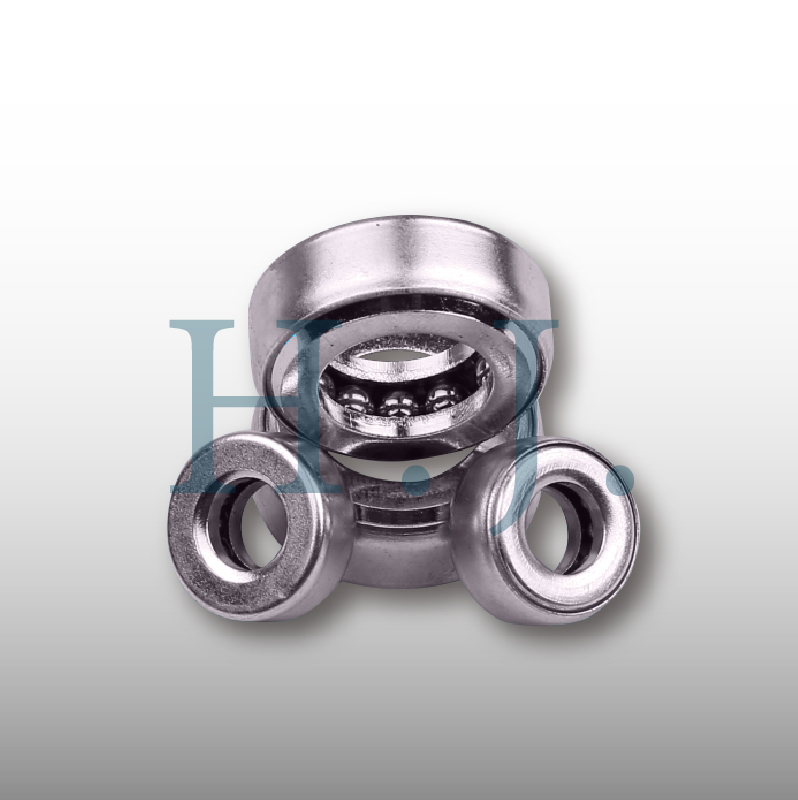
 Gym equipment bearing supplier
Gym Equipment Bearing Supplier – Custom Bearings for Fitness and Exercise Machines
Choosing a reliable gym equipment bearing supplier is important for fitness-equipment manufacturers, commercial gym-machine producers, home-fitness brands, OEM machinery companies, and replacement-parts suppliers that require smooth movement, reliable load support, low friction, and consistent mechanical performance.
Bearings are used throughout modern exercise machines. They can support rotating shafts, pulleys, rollers, wheels, adjustment systems, guide mechanisms, flywheels, pedals, and other moving parts. Depending on the equipment, the bearing may experience continuous rotation, repeated start-and-stop movement, dynamic loading, user-generated force, vibration, or impact.
HSIAN JI BEARING CO., LTD. is a Taiwan bearing manufacturer whose product range includes ball bearings, slide bearings, plastic bearings, stamped bearings, thrust bearings, special bearings, and non-standard bearings. Fitness equipment and sports equipment are directly included among the company's published bearing applications.
For customers searching for a gym equipment bearing supplier, HSIAN JI can evaluate standard, custom, special, and non-standard bearing requirements according to engineering drawings, physical samples, bearing dimensions, shaft sizes, loads, speeds, operating environment, noise requirements, and production quantities.
What Are Gym Equipment Bearings?
Gym equipment bearings are mechanical components used to reduce friction and support rotating, rolling, or sliding movement in fitness machines.
Typical applications can include:
-
Treadmills
-
Exercise bikes
-
Elliptical machines
-
Rowing machines
-
Cable machines
-
Functional trainers
-
Weight-stack machines
-
Home gyms
-
Strength-training machines
-
Rehabilitation exercise equipment
The correct bearing depends on the machine and the function of the moving component.
What Does a Gym Equipment Bearing Supplier Do?
A gym equipment bearing supplier provides bearings for fitness-machine manufacturers and replacement applications.
A supplier may support:
-
Standard bearing selection
-
Custom bearing sizes
-
Special bearing structures
-
Non-standard bearings
-
OEM bearing production
-
Sample development
-
Replacement bearing projects
For custom equipment, the bearing should be evaluated together with the shaft, housing, roller, pulley, load, and movement.
Fitness Equipment Applications from HSIAN JI
HSIAN JI's official website specifically lists fitness equipment and sports equipment among applications for its bearing products.
This makes gym and exercise equipment a direct application area within HSIAN JI's existing bearing business.
Ball Bearings for Gym Equipment
Ball bearings are widely used in rotating fitness-machine components because rolling elements help reduce friction.
Potential applications include:
-
Treadmill rollers
-
Exercise-bike shafts
-
Flywheels
-
Gym pulleys
-
Rowing-machine rollers
-
Rotating joints
Important specifications include:
-
Bearing inner diameter
-
Bearing outer diameter
-
Width
-
Radial load
-
Axial load
-
Speed
-
Lubrication
-
Sealing
The complete mechanical system should be considered.
Slide Bearings for Fitness Equipment
Slide bearings are used where linear or guided movement is required.
Potential applications include:
-
Seat adjustment systems
-
Weight-machine guides
-
Sliding mechanisms
-
Positioning components
-
Adjustable fitness equipment
Slide-bearing selection should consider load, travel distance, frequency, and alignment.
Plastic Bearings for Gym Equipment
Plastic bearings may provide useful characteristics in selected fitness applications.
Potential benefits include:
-
Lower weight
-
Reduced noise
-
Corrosion resistance
-
Design flexibility
They may be considered for guides, low-load rollers, adjustment mechanisms, or other components depending on load and speed.
Stamped Bearings for Exercise Machines
Stamped bearings can provide compact and efficient structures for selected mechanical applications.
Potential uses can include:
-
Small rollers
-
Pulley mechanisms
-
Adjustment components
-
Compact fitness hardware
Suitability depends on dimensions, load, speed, and duty cycle.
Custom Gym Equipment Bearings
Standard catalogue bearings may not fit proprietary fitness-machine designs.
Customization can involve:
-
Custom bore
-
Custom OD
-
Special width
-
Flange geometry
-
Mounting features
-
Special external profiles
-
Application-specific materials
HSIAN JI states that it can develop and manufacture samples according to different customer requirements.
Non-Standard Gym Bearings
Non-standard bearings can be useful when:
-
Standard dimensions do not fit
-
Installation space is limited
-
Equipment geometry is proprietary
-
An obsolete bearing must be replaced
-
A special mounting configuration is required
Custom drawings provide the best basis for evaluation.
Bearings for Treadmills
Treadmills can contain bearings in:
-
Front rollers
-
Rear rollers
-
Motor systems
-
Belt-support mechanisms
-
Adjustment components
Treadmill roller bearings may operate continuously and support significant dynamic loads.
Important considerations include:
-
Roller diameter
-
Shaft size
-
Belt tension
-
RPM
-
User load
Treadmill Roller Bearings
Treadmill rollers rotate repeatedly whenever the machine is running.
The bearing must support smooth roller movement while helping maintain proper belt motion.
Poor bearing condition may contribute to:
-
Noise
-
Increased friction
-
Heat
-
Rough movement
The roller, shaft, and bearing should be evaluated together.
Bearings for Exercise Bikes
Exercise bikes can use bearings in:
-
Crank systems
-
Pedal assemblies
-
Flywheels
-
Rotating shafts
-
Adjustment mechanisms
Bearing requirements vary according to whether the machine uses magnetic resistance, friction resistance, or another mechanism.
Exercise Bike Flywheel Bearings
Flywheel bearings may experience continuous rotational movement.
Important considerations include:
-
Rotational speed
-
Flywheel mass
-
Shaft alignment
-
Radial load
-
Lubrication
Smooth bearing operation can influence the feel and noise of the machine.
Bearings for Elliptical Machines
Elliptical trainers contain multiple moving joints and rotating mechanisms.
Potential bearing locations include:
-
Crank assemblies
-
Pedal mechanisms
-
Rollers
-
Linkage pivots
-
Flywheel systems
Bearing performance can affect smoothness and user comfort.
Bearings for Rowing Machines
Rowing machines may contain bearings in:
-
Seat rollers
-
Flywheels
-
Pulley systems
-
Guide rollers
-
Mechanical resistance systems
Seat roller bearings are particularly important because the user repeatedly moves forward and backward along the rail.
Bearings for Cable Machines
Cable-driven gym equipment uses bearings in pulley systems and other moving components.
Potential applications include:
-
Lat pulldown machines
-
Cable crossover systems
-
Functional trainers
-
Multi-station gyms
-
Weight-stack equipment
The bearing inside a pulley helps reduce rotational friction.
Bearings for Functional Trainers
Functional trainers often contain multiple pulleys and adjustable mechanisms.
Bearing requirements can include:
-
Smooth movement
-
Low noise
-
Compact size
-
Reliable repeated operation
Custom dimensions may be required for proprietary machine designs.
Bearings for Weight-Stack Machines
Weight-stack equipment creates repeated load cycles.
Bearings may be used in:
-
Pulleys
-
Rollers
-
Adjustment mechanisms
-
Pivot systems
Actual loads depend on the pulley arrangement and machine geometry.
Bearings for Strength-Training Machines
Strength machines can create complex loads through user movement.
Potential bearing applications include:
-
Pivot joints
-
Rollers
-
Pulleys
-
Shafts
-
Adjustment systems
Bearing selection should consider dynamic loading rather than static weight alone.
Bearings for Home Gym Equipment
Home fitness equipment often emphasizes:
-
Compact size
-
Quiet operation
-
Cost efficiency
-
Smooth movement
Low-noise bearing solutions can be particularly important in apartments and residential environments.
Bearings for Commercial Gym Equipment
Commercial gym machines may operate for many hours every day.
Bearing requirements can include:
-
High cycle life
-
Reliable load support
-
Low noise
-
Consistent dimensions
-
Reduced maintenance
Commercial equipment manufacturers should provide expected usage conditions.
Heavy-Load Gym Equipment Bearings
Strength-training equipment can generate significant bearing loads.
Customers should provide:
-
Normal working load
-
Maximum load
-
Dynamic load
-
Shock load
-
Load direction
Actual load information is preferable to general descriptions such as "heavy duty."
High-Speed Gym Equipment Bearings
Some fitness-machine components rotate at relatively high speeds.
Examples include:
-
Flywheels
-
Rollers
-
Rotating shafts
High-speed applications should consider:
-
RPM
-
Lubrication
-
Heat generation
-
Bearing clearance
-
Balance
Low-Noise Gym Equipment Bearings
Noise is important in both commercial gyms and home fitness environments.
Bearing noise can be influenced by:
-
Bearing quality
-
Lubrication
-
Shaft alignment
-
Contamination
-
Load
-
Wear
The complete machine structure also affects total noise.
Sealed Gym Equipment Bearings
Gym equipment can be exposed to:
-
Dust
-
Sweat
-
Cleaning agents
-
General indoor contamination
Sealed bearings may help reduce contamination entering the bearing.
Seal friction should also be considered.
Corrosion-Resistant Fitness Bearings
Perspiration, humidity, and cleaning can contribute to corrosion.
Potential solutions can include:
-
Stainless steel bearings
-
Plastic bearings
-
Other corrosion-resistant materials
The actual environment should be specified.
Bearings for Gym Equipment Pulleys
Pulley bearings allow cable-guiding wheels to rotate around their shafts.
Important requirements can include:
-
Pulley load
-
Bearing size
-
Shaft size
-
Cable alignment
-
Operating cycles
The bearing and pulley should be evaluated together.
Bearings for Fitness Rollers
Fitness-machine rollers may support belts, seats, or moving mechanisms.
Applications can include:
-
Treadmill rollers
-
Rowing-machine seat rollers
-
Guide rollers
-
Adjustable mechanisms
Roller bearing dimensions must match the roller and shaft accurately.
Bearing Shaft Fit
Correct shaft fit is important for bearing operation.
Incorrect fit can cause:
-
Looseness
-
Excessive interference
-
Noise
-
Heat
-
Premature wear
Shaft dimensions and tolerance should be provided.
Housing Fit
The bearing outer diameter must fit correctly inside the housing, roller, or pulley.
Poor fit can lead to:
-
Bearing movement
-
Deformation
-
Excess friction
-
Assembly problems
The complete housing dimensions should be supplied.
Bearing Lubrication
Lubrication helps reduce friction and wear.
The appropriate lubricant depends on:
-
Bearing type
-
Load
-
Speed
-
Temperature
-
Environment
Maintenance requirements should also be considered.
Replacement Gym Equipment Bearings
Older fitness machines may use bearings that are difficult to source.
A replacement project can begin with:
-
Original bearing
-
Physical sample
-
Machine model
-
Bearing dimensions
-
Application information
A custom or non-standard replacement can then be evaluated.
Obsolete Fitness Equipment Bearings
Custom manufacturing may be useful when:
-
Original parts are discontinued
-
Equipment remains in service
-
Bearing dimensions are unusual
-
Replacement quantity is sufficient
Compatibility should be confirmed in the actual machine.
Bearings from Engineering Drawings
Customers can provide:
-
2D engineering drawings
-
3D CAD models
-
Bearing drawings
-
Shaft drawings
-
Roller drawings
-
Pulley drawings
-
Assembly drawings
Critical dimensions and tolerances should be clearly identified.
Bearings from Physical Samples
Physical samples can provide useful information when drawings are unavailable.
A sample can help identify:
-
Bearing dimensions
-
External geometry
-
Mounting arrangement
-
Existing construction
Load and speed requirements should also be supplied.
Prototype Gym Equipment Bearings
Prototype development can help verify a custom bearing before repeat production.
Testing may include:
-
Dimensions
-
Fit
-
Rotation
-
Load
-
Noise
-
Speed
-
Machine compatibility
Actual equipment testing is recommended.
OEM Gym Equipment Bearings
OEM fitness-machine manufacturers may require proprietary bearing components.
OEM requirements can include:
-
Customer drawings
-
Custom sizes
-
Special materials
-
Customer part numbers
-
Dedicated tolerances
-
Packaging requirements
-
Repeat production
HSIAN JI's ability to develop products according to customer requirements is particularly relevant to OEM fitness projects.
Small-Batch Gym Equipment Bearings
Prototype projects, replacement parts, and specialized machines may require smaller quantities.
Feasibility depends on:
-
Bearing design
-
Material
-
Tooling
-
Quantity
Customers should provide initial and future demand.
Mass Production of Fitness Equipment Bearings
Once the design is approved, repeat production can be evaluated.
Important information includes:
-
Batch quantity
-
Monthly demand
-
Annual demand
-
Inspection requirements
-
Packaging
-
Delivery schedule
Quality Control for Gym Bearings
Potential inspection items include:
-
Bearing ID
-
Bearing OD
-
Width
-
Rotation
-
Fit
-
Appearance
-
Customer-specific dimensions
Consistent quality is particularly important for OEM production.
How to Choose a Gym Equipment Bearing Supplier
When selecting a gym equipment bearing supplier, consider:
-
Fitness-equipment application experience
-
Bearing manufacturing capability
-
Custom sizes
-
Special and non-standard bearing development
-
Ability to work from drawings
-
Ability to work from samples
-
Prototype support
-
Quality control
-
OEM production capability
The supplier should understand how the bearing interacts with the shaft, roller, pulley, load, speed, and complete fitness machine.
HSIAN JI – Gym Equipment Bearing Supplier in Taiwan
HSIAN JI BEARING CO., LTD. provides multiple bearing technologies, including ball bearings, slide bearings, plastic bearings, stamped bearings, thrust bearings, special bearings, and non-standard bearings.
HSIAN JI's official website directly identifies fitness equipment and sports equipment among its bearing applications and states that the company can develop and manufacture samples according to different customer requirements.
For gym equipment bearing supplier inquiries, customers can provide:
-
2D engineering drawing
-
3D CAD model
-
Physical sample
-
Bearing inner diameter
-
Bearing outer diameter
-
Bearing width
-
Shaft diameter
-
Housing dimensions
-
Roller or pulley dimensions
-
Radial load
-
Axial load
-
Maximum RPM
-
Operating cycles
-
Environmental conditions
-
Material requirements
-
Noise requirements
-
Initial quantity
-
Estimated annual demand
HSIAN JI can evaluate standard, custom, special, and non-standard bearing solutions for treadmills, exercise bikes, elliptical machines, rowing machines, cable equipment, functional trainers, commercial gym machines, home fitness products, and other exercise equipment.
Gym Equipment Bearing Supplier FAQ
What is a gym equipment bearing supplier?
A gym equipment bearing supplier provides bearings used in fitness machines, exercise equipment, rollers, pulleys, rotating shafts, adjustment mechanisms, and other moving components.
Does HSIAN JI supply bearings for fitness equipment?
Yes. Fitness equipment is directly listed among HSIAN JI's published bearing applications.
Does HSIAN JI supply bearings for sports equipment?
Yes. Sports equipment is also included among the company's applications.
What types of bearings can be used in gym equipment?
Depending on the machine, potential solutions include:
-
Ball bearings
-
Slide bearings
-
Plastic bearings
-
Stamped bearings
-
Thrust bearings
-
Special bearings
-
Non-standard bearings
Are ball bearings commonly used in fitness machines?
Yes.
Ball bearings can be used in rollers, flywheels, shafts, pulleys, and other rotating mechanisms.
Can slide bearings be used in fitness equipment?
Yes, depending on the mechanism.
Slide bearings can support guided linear movement in adjustable or sliding components.
Can plastic bearings be used in gym equipment?
Potentially.
Plastic bearings may provide low weight, corrosion resistance, and reduced noise in suitable applications.
Can stamped bearings be used in fitness equipment?
Potentially.
Stamped bearing suitability depends on load, speed, dimensions, and mechanism design.
Can gym equipment bearings be customized?
Yes.
Potential customization includes:
-
Bearing ID
-
Bearing OD
-
Width
-
Flange geometry
-
External shape
-
Mounting features
Can HSIAN JI manufacture non-standard gym bearings?
HSIAN JI offers non-standard bearing solutions and states that products can be developed according to customer requirements.
Can you manufacture bearings from customer drawings?
Custom bearing requirements can be evaluated from engineering drawings and technical specifications.
Can you work from a 3D CAD model?
Yes.
A 3D CAD model helps show assembly geometry, while a dimensioned 2D drawing is recommended for manufacturing.
Can you work from a physical sample?
Yes.
A physical sample can provide dimensional and structural information.
Can you reproduce discontinued gym bearings?
Potentially.
Provide the original bearing, machine information, sample, and required quantity.
What bearings are used in treadmills?
Treadmills may use bearings in:
-
Front rollers
-
Rear rollers
-
Motor systems
-
Adjustment mechanisms
The correct bearing depends on the treadmill design.
What bearings are used in treadmill rollers?
Ball bearings are commonly considered for rotating roller assemblies.
The bearing should match the roller tube, shaft, belt load, and speed.
What bearings are used in exercise bikes?
Potential applications include:
-
Flywheels
-
Cranks
-
Pedal systems
-
Rotating shafts
What bearings are used in elliptical trainers?
Elliptical machines may use bearings in:
-
Crank mechanisms
-
Rollers
-
Flywheel systems
-
Linkage pivots
What bearings are used in rowing machines?
Potential applications include:
-
Seat rollers
-
Flywheels
-
Pulleys
-
Guide mechanisms
What bearings are used in cable machines?
Bearings may be installed inside pulley wheels and other rotating components.
What bearings are used in functional trainers?
Functional trainers often use bearing-supported pulleys and adjustable mechanisms.
Can gym bearings support heavy loads?
Potentially.
Actual radial, axial, dynamic, and shock loads should be provided.
Can bearings be used in commercial gym equipment?
Yes.
Commercial equipment should be evaluated for high cycle counts and repeated loading.
Can bearings be used in home gym equipment?
Yes.
Home equipment may emphasize compact size and low noise.
Can gym bearings operate at high speed?
Potentially.
Actual RPM, load, lubrication, and temperature should be specified.
Can gym bearings be low noise?
Yes.
Noise depends on bearing precision, lubrication, alignment, fit, load, and wear.
Can sealed bearings be used in fitness equipment?
Yes, depending on the application.
Seals can help reduce dust and contamination.
Can gym bearings resist sweat?
Material and sealing selection can improve resistance to moisture and salts, but the exact exposure should be considered.
Can gym bearings be corrosion resistant?
Potentially.
Stainless steel, plastic, or other corrosion-resistant approaches can be evaluated.
Can stainless steel bearings be used?
Potentially.
The required grade and operating conditions should be specified.
Can plastic bearings reduce gym-machine noise?
Potentially.
Plastic materials may provide quieter operation in certain low-load or guiding applications.
Can bearings be used in gym pulleys?
Yes.
Pulley bearings allow the pulley wheel to rotate smoothly around its shaft.
Can bearings be used in treadmill rollers?
Yes.
Roller bearings support repeated rotational movement.
Can bearings be used in rowing-machine seat rollers?
Potentially.
The roller and rail design, user load, and cycle requirements should be provided.
Can bearings be used in weight-stack machines?
Yes, depending on the mechanism.
Potential applications include pulleys, pivot systems, and adjustment components.
Can bearings be used in rehabilitation exercise equipment?
Potentially.
The bearing should be evaluated according to the actual mechanism and requirements.
Does user weight affect bearing selection?
Yes.
User weight can contribute to static and dynamic loads on fitness-machine components.
Does belt tension affect treadmill bearings?
Yes.
Treadmill belt tension can influence the load applied to roller bearings.
Does pulley load affect gym-machine bearings?
Yes.
Pulley bearing load depends on cable tension and pulley arrangement.
Does shaft size affect bearing selection?
Yes.
The bearing bore must match the shaft and required fit.
Does housing fit matter?
Yes.
Incorrect housing fit can cause looseness, deformation, or excessive friction.
Does alignment affect bearing life?
Yes.
Misalignment can increase noise, friction, heat, and uneven loading.
Does lubrication matter?
Yes.
Lubrication influences friction, wear, temperature, and service life.
What causes treadmill bearings to become noisy?
Possible causes include:
-
Bearing wear
-
Belt tension
-
Misalignment
-
Contamination
-
Lubrication problems
-
Roller damage
Why does an exercise-bike bearing become noisy?
Potential causes include wear, contamination, poor alignment, incorrect preload, or lubrication issues.
What causes a gym pulley bearing to fail?
Possible causes include excessive load, contamination, misalignment, incorrect shaft fit, or bearing wear.
Can gym bearings be cycle tested?
Yes.
Cycle testing can help evaluate repeated operation.
Can I request a prototype bearing?
Yes.
Prototype testing can help verify:
-
Fit
-
Rotation
-
Load
-
Speed
-
Noise
-
Machine compatibility
Should prototype bearings be tested in the actual gym machine?
Yes.
Actual machine testing provides the best information about load, alignment, vibration, and noise.
Can custom gym bearings be produced in small quantities?
Small-batch requirements can be evaluated according to design, materials, tooling, and quantity.
Can custom gym bearings be mass produced?
Potentially.
After specifications and samples are approved, repeat production can be evaluated.
Can HSIAN JI support OEM fitness-equipment manufacturers?
Yes. HSIAN JI specifically lists fitness and sports equipment among its applications and states that it can develop and manufacture samples according to different customer needs.
Can I use my own OEM part number?
Customer-specific part numbers and packaging requirements can be discussed as part of an OEM project.
Can HSIAN JI develop a bearing from an existing machine part?
Potentially.
An existing bearing or mechanical sample can provide a basis for dimensional evaluation.
What information should I provide for a quotation?
For a gym equipment bearing supplier inquiry, provide:
-
2D engineering drawing
-
3D CAD model
-
Physical sample
-
Bearing type
-
Bearing ID
-
Bearing OD
-
Bearing width
-
Shaft diameter
-
Housing dimensions
-
Roller or pulley dimensions
-
Radial load
-
Axial load
-
Dynamic load
-
Maximum RPM
-
Operating cycles
-
Operating temperature
-
Sweat or moisture exposure
-
Dust conditions
-
Material requirements
-
Noise requirements
-
Initial quantity
-
Estimated annual demand
Complete machine information helps improve technical evaluation.
What is the difference between gym equipment bearings and gym pulleys?
A gym equipment bearing is the bearing component used to reduce friction and support movement.
A gym pulley is a wheel that guides a cable and usually contains a bearing inside it.
What is the difference between a gym equipment bearing supplier and pulley manufacturer?
A bearing supplier focuses on the bearing components used throughout the machine.
A pulley manufacturer focuses specifically on pulley-wheel assemblies.
Some custom projects may require the bearing and pulley to be evaluated together.
What is the difference between standard and custom gym bearings?
Standard bearings use predefined catalogue dimensions.
Custom or non-standard bearings can use proprietary dimensions, materials, geometry, or mounting features.
Why choose HSIAN JI as a gym equipment bearing supplier?
HSIAN JI has a direct published connection to the fitness industry. Its official website specifically identifies fitness equipment and sports equipment among applications for its bearing products. The company also states that it can develop and manufacture samples according to different customer requirements.
For manufacturers searching for a gym equipment bearing supplier for treadmills, exercise bikes, ellipticals, rowing machines, cable machines, functional trainers, weight-stack machines, home gyms, commercial fitness equipment, or custom OEM products, send HSIAN JI your drawings, samples, bearing dimensions, load, speed, operating conditions, and production quantities for technical evaluation.