
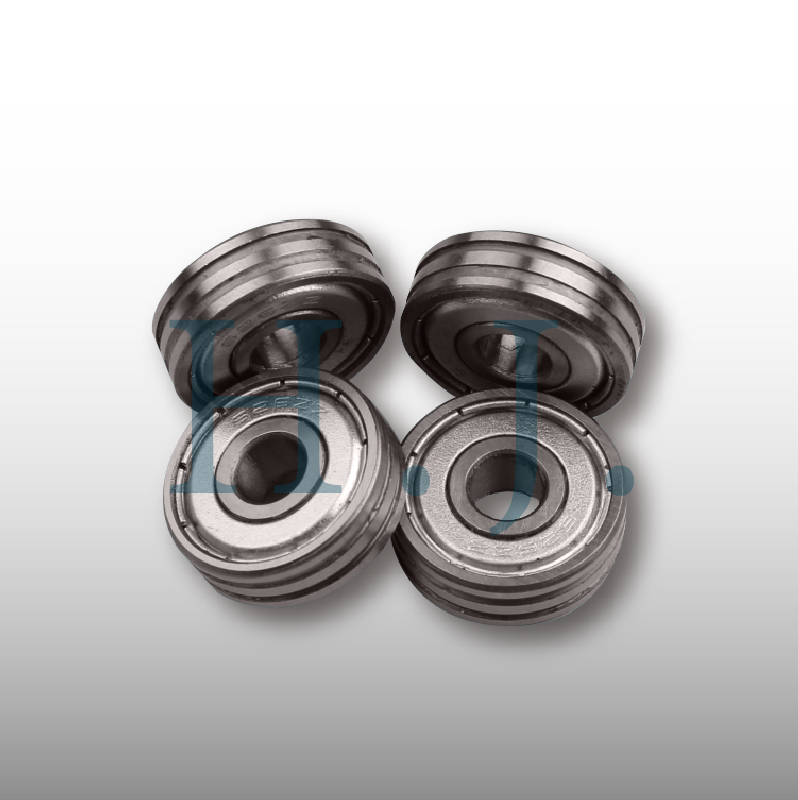
 Waterproof bearing manufacturer
Waterproof Bearing Manufacturer – Custom Sealed Bearing Solutions for Wet Environments
Selecting the right waterproof bearing manufacturer is important for machinery and mechanical products exposed to water, moisture, washdown, rain, condensation, or other wet operating conditions. Bearings used in these environments must be evaluated differently from components operating in clean, dry indoor applications.
The term "waterproof bearing" is commonly used by buyers searching for bearings that can resist water ingress. In engineering terms, however, actual water resistance depends on the complete bearing system, including seals, shields, material selection, lubrication, housing design, mounting, pressure, exposure duration, and operating conditions.
HSIAN JI BEARING CO., LTD. is a Taiwan bearing manufacturer established in 1995. The company's current product categories include ball bearings, plastic bearings, thrust bearings, stamped bearings, slide bearings, special bearings, and non-standard bearings.
For customers looking for a waterproof bearing manufacturer, HSIAN JI can evaluate custom, sealed, special, and non-standard bearing requirements based on technical drawings, physical samples, dimensions, water exposure, material requirements, load, speed, operating environment, and production quantities.
What Are Waterproof Bearings?
Waterproof bearings are commonly understood as bearings designed to resist water entering the internal bearing area.
In practice, there are different levels of water exposure:
-
High humidity
-
Condensation
-
Occasional splash
-
Rain
-
Frequent washdown
-
Direct water spray
-
Temporary immersion
-
Continuous immersion
A bearing suitable for occasional splash may not be suitable for high-pressure washdown or continuous underwater operation.
For this reason, customers should always define the exact water-exposure conditions.
Waterproof Bearings vs. Water Resistant Bearings
The terms "waterproof" and "water resistant" are often used interchangeably in commercial searches, but technically they can imply different levels of protection.
A water-resistant bearing may provide protection against moisture or occasional splash.
A truly waterproof bearing would imply a much higher level of water-ingress protection.
Bearing suppliers should therefore avoid making broad waterproof claims without understanding the test conditions.
Customers should specify:
-
Water pressure
-
Exposure duration
-
Exposure direction
-
Temperature
-
Frequency
-
Whether immersion occurs
How Do Bearings Resist Water?
Water resistance can be influenced by several design factors.
These include:
-
Contact seals
-
Non-contact seals
-
Shields
-
Labyrinth arrangements
-
Housing design
-
Lubrication
-
Bearing material
-
Shaft fit
-
Installation orientation
No single feature guarantees waterproof performance under every condition.
The complete system should be evaluated.
Sealed Bearings for Wet Environments
Seals are one of the most important components in a water-resistant bearing system.
A sealed bearing can help reduce water, dirt, and contaminant ingress.
Seal selection depends on:
-
Speed
-
Temperature
-
Shaft condition
-
Water exposure
-
Friction requirements
-
Service life
More aggressive sealing can improve contamination resistance but may also increase friction.
The appropriate balance depends on the application.
Shielded vs. Sealed Bearings
Bearing shields and seals are different.
Metal shields generally provide limited protection against larger contaminants while allowing relatively low friction.
Contact seals can provide stronger protection against moisture and contaminants but usually create more friction.
For applications requiring water resistance, the manufacturer should evaluate whether shields alone are sufficient or whether a sealed configuration is more appropriate.
Waterproof Ball Bearing Applications
Ball bearings are commonly used in rotating equipment exposed to moisture.
Potential applications can include:
-
Outdoor equipment
-
Conveyors
-
Rollers
-
Sliding systems
-
Wheels
-
Washdown machinery
-
Processing equipment
HSIAN JI currently manufactures ball bearings as one of its published product categories.
Water-resistant ball-bearing requirements should be evaluated according to sealing, dimensions, load, speed, material, and environment.
Waterproof Plastic Bearing Solutions
Plastic bearings can be useful in wet applications because many engineering plastics do not rust like conventional steel.
Plastic bearing solutions may provide benefits including:
-
Moisture resistance
-
Corrosion resistance
-
Lightweight construction
-
Low noise
-
Design flexibility
However, plastic bearings are not automatically waterproof.
Water resistance still depends on the complete product design and the way the bearing interacts with shafts, guides, housings, or surrounding components.
Waterproof Thrust Bearing Applications
Thrust bearings primarily support axial loads.
Where thrust bearings operate in wet environments, customers should provide:
-
Inner diameter
-
Outer diameter
-
Thickness
-
Axial load
-
Speed
-
Water exposure
-
Material requirements
-
Lubrication
-
Quantity
The complete mounting arrangement should also be evaluated because water may enter through surrounding gaps.
Waterproof Slide Bearing Applications
Slide bearings support and guide linear mechanical movement. HSIAN JI describes slide bearings as a special bearing type used to support and guide linearly moving components.
Sliding systems can be exposed to moisture in applications such as:
-
Doors
-
Windows
-
Outdoor equipment
-
Furniture
-
Machinery
-
Processing systems
Plastic or corrosion-resistant materials may be considered for some wet sliding environments depending on the application.
Waterproof Special Bearings
Special bearing configurations can be useful when standard bearing designs cannot satisfy water resistance and mechanical requirements simultaneously.
A special project may involve:
-
Custom seals
-
Special external geometry
-
Dedicated housing
-
Custom dimensions
-
Alternative materials
-
Application-specific mounting
HSIAN JI currently maintains Special Bearings as one of its published bearing categories.
Waterproof Non-Standard Bearings
Non-standard bearing requirements can arise when a customer needs both unusual dimensions and protection against water exposure.
A project may involve:
-
Custom bore diameter
-
Special outer diameter
-
Unique width
-
Dedicated mounting structure
-
Sealing requirements
-
Corrosion-resistant materials
HSIAN JI also lists Non-standard Bearings among its principal product categories.
Waterproof Bearings for Washdown Equipment
Washdown applications can be particularly demanding.
Customers should identify:
-
Water pressure
-
Cleaning frequency
-
Water temperature
-
Cleaning chemicals
-
Spray direction
-
Exposure duration
High-pressure cleaning can force water past seals that perform adequately under ordinary splash conditions.
For this reason, washdown applications require specific evaluation.
Bearings for Food Processing Equipment
Food-processing machinery often undergoes frequent cleaning and may operate in humid or wet conditions.
Bearing requirements can involve:
-
Water resistance
-
Corrosion resistance
-
Sealing
-
Washdown compatibility
-
Lubrication requirements
-
Material requirements
However, "waterproof" does not automatically mean "food grade."
Customers should separately specify any food-contact, hygiene, lubricant, or regulatory requirements.
Bearings for Outdoor Applications
Outdoor equipment may be exposed to:
-
Rain
-
Humidity
-
Condensation
-
Dust
-
Temperature changes
A water-resistant bearing solution may involve appropriate seals combined with corrosion-resistant materials.
Housing design should also prevent water from collecting around the bearing.
Bearings for Rain Exposure
Rain exposure is different from full immersion or high-pressure washdown.
For equipment exposed mainly to rain, the bearing system should prevent direct water ingress while also allowing appropriate drainage around the assembly.
Customers should identify whether the equipment is:
-
Permanently outdoors
-
Used intermittently outdoors
-
Covered
-
Fully exposed
These details can influence design decisions.
Bearings for High Humidity
Even without direct water contact, high humidity and condensation can affect bearing life.
Potential solutions can involve:
-
Corrosion-resistant materials
-
Suitable lubrication
-
Sealing
-
Protective housing
Customers should provide humidity conditions and whether condensation regularly forms on the equipment.
Bearings for Water Splash
Occasional water splash can occur in:
-
Processing equipment
-
Conveyors
-
Cleaning systems
-
Outdoor machinery
-
Transportation products
The frequency, direction, and pressure of splash should be defined during bearing evaluation.
Bearings for Direct Water Spray
Direct spray creates greater ingress risk than humidity or occasional splash.
Customers should specify:
-
Spray pressure
-
Distance
-
Frequency
-
Temperature
-
Cleaning chemicals
This information can help determine appropriate sealing requirements.
Bearings for Immersion
Immersion applications should be treated separately from ordinary waterproof-bearing requests.
Temporary or continuous immersion can create much more demanding sealing and lubrication conditions.
Customers should specify:
-
Water depth
-
Immersion duration
-
Continuous or intermittent immersion
-
Water temperature
-
Water chemistry
-
Speed during immersion
A standard sealed bearing should not automatically be assumed suitable.
Waterproof vs. Corrosion Resistant Bearings
Water resistance and corrosion resistance are related but different.
Waterproof or water-resistant bearings focus on limiting water ingress.
Corrosion resistant bearings focus on preventing material degradation when exposed to water or corrosive substances.
A bearing can have excellent corrosion-resistant materials but still allow water into the internal bearing area.
Likewise, a sealed bearing can limit water ingress while its external surfaces may still corrode.
The best solution may require both properties.
Stainless Steel Waterproof Bearing Solutions
Stainless steel is often considered for wet applications because it can provide improved corrosion resistance compared with conventional steel.
However, stainless steel does not make a bearing waterproof.
A stainless steel bearing may still require:
-
Seals
-
Appropriate lubrication
-
Housing protection
-
Correct material grade
The specific stainless steel grade should be selected according to the operating environment.
Plastic Bearings for Water Exposure
Plastic bearings may be useful where water exposure and corrosion are important concerns.
Unlike steel, many engineering plastics do not rust.
They can therefore be considered for certain:
-
Wet environments
-
Chemical environments
-
Washdown systems
-
Sliding applications
Material compatibility with water temperature, chemicals, load, and speed should still be verified.
Lubrication for Waterproof Bearings
Water can reduce lubrication effectiveness or wash lubricant away.
Lubricant selection should consider:
-
Water exposure
-
Temperature
-
Speed
-
Load
-
Bearing material
-
Seal configuration
-
Maintenance interval
For demanding wet environments, lubricant compatibility can be as important as the bearing material itself.
Waterproof Bearings and Chemical Cleaning
Cleaning applications may involve detergents, disinfectants, acids, alkalis, or other chemicals.
Customers should provide:
-
Chemical name
-
Concentration
-
Temperature
-
Exposure duration
A seal or bearing material that performs well in clean water may not tolerate chemical cleaning agents.
Custom Waterproof Bearings
Standard sealed bearings may not fit every application.
A custom project can potentially involve:
-
Special dimensions
-
Dedicated seals
-
Custom materials
-
Special housing
-
Unique mounting
-
Application-specific geometry
HSIAN JI maintains design and product-development capabilities and states that it can develop, produce, and manufacture products.
Waterproof Bearings from Engineering Drawings
Customers can submit:
-
2D engineering drawings
-
3D CAD files
-
Assembly drawings
-
Material specifications
-
Seal requirements
-
Critical dimensions
-
Tolerances
The drawing should be accompanied by complete water-exposure information.
Waterproof Bearings from Physical Samples
Some customers may have an existing sealed or water-resistant bearing but no original technical drawing.
A physical sample can provide useful information about:
-
Dimensions
-
Seal arrangement
-
Geometry
-
Mounting features
Customers should also provide application and environmental requirements.
OEM Waterproof Bearing Applications
OEM manufacturers may require dedicated water-resistant bearing solutions for products such as:
-
Outdoor equipment
-
Processing machines
-
Sliding systems
-
Conveyors
-
Wheels
-
Specialized machinery
OEM customers should provide drawings, annual demand, environmental conditions, and any test requirements.
Prototype Waterproof Bearings
Prototype development can be useful for custom wet-environment applications.
A prototype can help verify:
-
Dimensions
-
Fit
-
Installation
-
Movement
-
Seal arrangement
-
Assembly compatibility
Water-ingress testing should be performed according to the actual intended conditions.
Testing Waterproof Bearing Performance
A bearing should not be described with a specific waterproof rating unless it has been tested according to an appropriate defined method.
Potential testing considerations can include:
-
Splash exposure
-
Spray exposure
-
Water pressure
-
Immersion
-
Duration
-
Temperature
Customer-defined tests should reflect the actual application.
Waterproof Bearings and IP Ratings
IP ratings are commonly used to describe enclosure protection against solids and water.
However, a bearing by itself does not automatically receive the same IP rating as a complete motor, housing, or machine assembly.
If an OEM product requires a specific IP rating, the complete assembly should be tested and certified accordingly.
The bearing is only one part of that system.
Low Volume Waterproof Bearing Projects
Specialized waterproof or sealed-bearing projects may initially require limited quantities.
HSIAN JI's current site indicates it supports product development and a broad range of bearing categories.
Customers should provide:
-
Initial quantity
-
Expected annual demand
-
Test requirements
-
Environmental conditions
The project can then be evaluated according to technical and production feasibility.
Replacement Waterproof Bearings
Existing equipment may use a sealed or water-resistant bearing that has become discontinued or difficult to source.
Replacement projects should include:
-
Original bearing
-
Part number
-
Physical sample
-
Drawing
-
Seal configuration
-
Water exposure
-
Load
-
Speed
-
Quantity
A custom or non-standard replacement can then be evaluated.
Quality Control for Waterproof Bearing Projects
HSIAN JI maintains a Production and Quality Assurance function and publishes product-development and manufacturing capabilities on its current site.
Quality requirements for wet-environment bearings can include:
-
Material verification
-
Dimensional inspection
-
Seal inspection
-
Manufacturing-process control
-
Finished-product inspection
-
Customer-defined water testing
Approved drawings and specifications should provide clear production references.
How to Choose a Waterproof Bearing Manufacturer
When selecting a waterproof bearing manufacturer, buyers should evaluate:
-
Bearing manufacturing capability
-
Sealing knowledge
-
Material options
-
Custom-development capability
-
Special and non-standard bearing capability
-
Prototype support
-
Quality control
-
Technical communication
Most importantly, the supplier should ask what "waterproof" actually means in the customer's application.
A splash-resistant outdoor bearing and an immersed bearing are completely different engineering requirements.
HSIAN JI – Waterproof Bearing Project Evaluation from Taiwan
HSIAN JI BEARING CO., LTD. was established in 1995. Its current product range includes plastic, thrust, stamped, slide, ball, special, and non-standard bearings, and its website lists both Design and Product Development and Production and Quality Assurance capabilities.
For customers searching for a waterproof bearing manufacturer, HSIAN JI can evaluate sealed, custom, special, and non-standard bearing requirements according to technical feasibility.
Please provide:
-
Bearing type
-
2D engineering drawing
-
3D CAD model
-
Physical sample
-
Inner diameter
-
Outer diameter
-
Width
-
Material requirements
-
Seal requirements
-
Water exposure type
-
Water pressure
-
Exposure duration
-
Operating temperature
-
Load
-
Speed
-
Chemical cleaning conditions
-
Required quantity
-
Estimated annual demand
Complete information helps determine an appropriate water-resistant bearing solution for the application.
Waterproof Bearing Manufacturer FAQ
What is a waterproof bearing manufacturer?
A waterproof bearing manufacturer supplies or develops bearing solutions intended for wet environments where resistance to water ingress is important.
Actual performance depends on seals, materials, lubrication, housing, load, speed, and water-exposure conditions.
Are bearings really waterproof?
Some bearing systems can provide a high level of water resistance, but the word "waterproof" should be used carefully.
Performance varies between humidity, splash, washdown, spray, and immersion.
The exact requirement should always be defined.
Does HSIAN JI currently list waterproof bearings as a standard product category?
HSIAN JI's current public product categories include plastic, thrust, stamped, slide, ball, special, and non-standard bearings. Waterproof bearings are not currently listed as a separate standard category.
Water-resistant requirements should therefore be evaluated as application-specific projects.
Can HSIAN JI evaluate waterproof bearing projects?
HSIAN JI maintains Design and Product Development and Production and Quality Assurance capabilities and states that it can develop, produce, and manufacture products.
Customers can submit sealed or water-resistant bearing requirements for technical evaluation.
What is the difference between waterproof and water-resistant bearings?
Water-resistant bearings generally resist limited water exposure.
Waterproof implies a much stronger level of protection.
Because there is no useful universal claim without defined test conditions, customers should specify their actual exposure requirements.
What is the difference between waterproof and corrosion-resistant bearings?
Waterproofing focuses on stopping water from entering the bearing.
Corrosion resistance focuses on material resistance to rust or chemical attack.
A wet-environment application may require both.
Do seals make a bearing waterproof?
Seals can significantly improve water-ingress resistance, but they do not guarantee waterproof performance under every condition.
Seal type, pressure, speed, temperature, shaft condition, and exposure duration all matter.
Are sealed bearings waterproof?
Not automatically.
A sealed bearing can provide better contamination and moisture resistance than an open bearing, but actual water protection depends on the seal design and operating conditions.
Are shielded bearings waterproof?
Generally, shields provide less water protection than contact seals.
They are mainly intended to reduce contamination while maintaining relatively low friction.
Can ball bearings be waterproof?
Ball-bearing systems can be designed with seals and appropriate materials to improve water resistance.
The exact application should be evaluated according to speed, load, dimensions, and water exposure.
Can plastic bearings be used in wet environments?
Potentially, yes.
Plastic bearings can be useful because many engineering plastics do not rust like conventional steel.
However, material compatibility, load, speed, temperature, and chemical exposure must still be evaluated.
Can stainless steel bearings be waterproof?
Stainless steel improves corrosion resistance but does not itself create a waterproof bearing.
Seals and complete system design are still required to control water ingress.
Can waterproof bearings be used outdoors?
Potentially.
Outdoor bearings should be evaluated for rain, humidity, dust, temperature changes, and corrosion.
Can waterproof bearings be exposed to rain?
Potentially, depending on bearing design and installation.
Rain exposure should be distinguished from direct pressure washing or immersion.
Can waterproof bearings be used in washdown equipment?
Potentially.
Customers should specify water pressure, cleaning temperature, detergent, frequency, and spray direction.
Can waterproof bearings be pressure washed?
This requires specific evaluation.
High-pressure water can penetrate seals that are adequate for ordinary splash exposure.
Pressure and distance from the nozzle should be defined.
Can waterproof bearings be immersed in water?
Some specialized systems may be suitable for immersion, but standard sealed bearings should not automatically be assumed suitable.
Water depth, duration, speed, lubrication, and material requirements should be specified.
Can waterproof bearings operate underwater continuously?
Continuous underwater operation is a specialized requirement.
The complete bearing, lubrication, sealing, material, shaft, and housing system should be engineered and tested for the application.
Can waterproof bearings be used in food-processing equipment?
Potentially.
Wet and washdown environments are common in food-processing machinery.
However, waterproof performance and food-grade compliance are separate issues.
Can waterproof bearings be food grade?
Only if the materials, lubricant, seals, and other relevant components comply with applicable food-related requirements.
Water resistance alone does not establish food-grade status.
Can waterproof bearings resist cleaning chemicals?
That depends on the seal, lubricant, bearing material, and chemical.
Customers should provide chemical name, concentration, temperature, and exposure duration.
Can waterproof bearings be customized?
Custom requirements can be evaluated according to application and manufacturing feasibility.
Customization may involve:
-
Inner diameter
-
Outer diameter
-
Width
-
Seal arrangement
-
Material
-
Mounting features
-
External geometry
Can you manufacture non-standard waterproof bearings?
HSIAN JI currently publishes a Non-standard Bearings category and supports custom product development.
Projects combining non-standard dimensions with water-resistance requirements can be submitted for evaluation.
Can you manufacture special waterproof bearings?
Special Bearings is also one of HSIAN JI's current product categories.
Water-resistant special-bearing projects can be evaluated according to drawings, sealing requirements, materials, and environment.
Can you manufacture waterproof bearings from my drawing?
Engineering drawings can provide the technical basis for custom evaluation.
Customers should also specify water exposure, seal requirements, load, speed, and operating temperature.
Can you reproduce a waterproof bearing from a physical sample?
A physical sample can provide information about dimensions and seal construction.
However, the original waterproof performance or test rating may not be identifiable from the sample alone.
Can waterproof bearings replace discontinued bearings?
Potentially.
Customers should provide the original bearing, drawing, sample, seal configuration, water exposure, load, speed, and quantity.
Can I request a prototype waterproof bearing?
Prototype requirements can be evaluated for custom projects.
The prototype should then be tested under water-exposure conditions representative of the real application.
How should waterproof bearings be tested?
Testing can involve splash, spray, pressure, immersion, exposure duration, and temperature.
The test should reflect the intended application rather than relying on an undefined "waterproof" claim.
Do bearings have IP ratings?
IP ratings normally apply to complete enclosures or assemblies rather than automatically to an individual bearing.
If a product requires a specific IP rating, the full product assembly should be evaluated and tested accordingly.
Can waterproof bearings be manufactured in small quantities?
Small-quantity custom requirements can be submitted for evaluation.
Feasibility depends on bearing design, seals, materials, tooling, processes, and quantity.
What information should I provide for a waterproof-bearing quotation?
For a waterproof bearing manufacturer inquiry, provide:
-
Bearing type
-
2D engineering drawing
-
3D CAD model
-
Physical sample
-
Dimensions
-
Material requirements
-
Seal requirements
-
Load
-
Speed
-
Operating temperature
-
Water exposure type
-
Water pressure
-
Exposure duration
-
Immersion depth, if applicable
-
Cleaning chemicals
-
Required quantity
-
Estimated annual demand
Complete environmental information is especially important.
How does HSIAN JI control bearing quality?
HSIAN JI currently maintains a dedicated Production and Quality Assurance capability alongside its bearing manufacturing and product-development functions.
For custom projects, agreed drawings, specifications, inspection requirements, and test criteria can provide production references.
What applications use waterproof bearings?
Water-resistant bearing solutions can be relevant to:
-
Outdoor equipment
-
Conveyors
-
Washdown machinery
-
Processing equipment
-
Sliding systems
-
Packaging machinery
-
Food-processing equipment
-
Transportation products
-
Specialized OEM equipment
The correct configuration depends on actual water exposure and mechanical requirements.
Why choose HSIAN JI for waterproof bearing requirements?
HSIAN JI BEARING CO., LTD. was established in 1995 and currently manufactures and develops multiple bearing categories, including ball, plastic, thrust, stamped, slide, special, and non-standard bearings. It also maintains design/product-development and production/quality-assurance capabilities.
If you require a waterproof bearing manufacturer for a sealed, water-resistant, custom, special, or non-standard application, send HSIAN JI your drawings, samples, sealing requirements, water-exposure conditions, operating specifications, and production quantities for technical evaluation.