
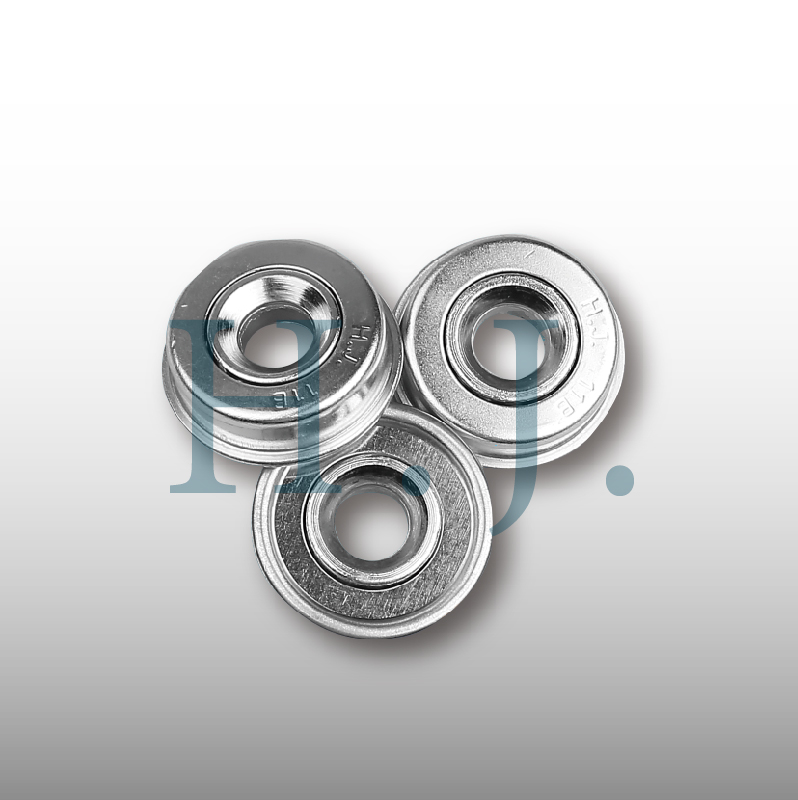
 High speed custom bearings
High Speed Custom Bearings – Precision Bearing Solutions for High-Speed Applications
High speed custom bearings are developed for mechanical applications where rotational speed, low friction, heat generation, precision, vibration, lubrication, and dimensional requirements must be carefully controlled. Standard catalogue bearings may be suitable for many machines, but specialized motors, rollers, automation equipment, precision machinery, OEM products, and compact mechanical systems may require bearings designed or modified around specific high-speed operating conditions.
High-speed bearing performance depends on much more than the basic bearing dimensions. Bearing type, internal geometry, rolling elements, cage design, material, precision, lubricant, preload, clearance, shaft fit, housing fit, load, temperature, and surrounding mechanical components can all influence performance.
HSIAN JI BEARING CO., LTD. is a Taiwan bearing manufacturer. Its published bearing range includes ball bearings, thrust bearings, plastic bearings, stamped bearings, slide bearings, special bearings, and non-standard bearings.
HSIAN JI's official ball-bearing information highlights low rolling friction and notes that ball bearings can provide relatively high running accuracy during high-speed operation. For customers requiring high speed custom bearings, projects can be evaluated according to technical drawings, application requirements, dimensions, speed, load, precision, lubrication, materials, and production quantities.
What Are High Speed Custom Bearings?
High speed custom bearings are bearings selected, modified, or developed for applications operating at elevated rotational speeds while also meeting customer-specific dimensional and mechanical requirements.
Customization may involve:
-
Inner diameter
-
Outer diameter
-
Width
-
Bearing geometry
-
Cage design
-
Material
-
Lubrication
-
Internal clearance
-
Sealing
-
Precision requirements
-
Mounting features
The correct solution depends on the complete operating system.
Why Are High-Speed Bearings Different?
As bearing speed increases, several factors become more important.
These include:
-
Friction
-
Heat generation
-
Lubricant performance
-
Rolling-element centrifugal forces
-
Cage behavior
-
Vibration
-
Balance
-
Dimensional accuracy
-
Shaft alignment
A bearing that performs well at lower speed may not automatically perform well at much higher rotational speed.
Low Friction for High-Speed Operation
Low friction is especially important for high-speed bearings.
Excessive friction can lead to:
-
Heat
-
Energy loss
-
Lubricant degradation
-
Increased wear
-
Reduced service life
HSIAN JI's published Ball Bearings page identifies low friction as one of the main advantages of ball-bearing construction.
This characteristic makes ball-bearing designs particularly relevant to many high-speed applications.
High-Speed Ball Bearings
Ball bearings are widely used in high-speed rotating systems because rolling contact can reduce friction compared with sliding contact.
Potential applications can include:
-
Electric motors
-
Fans
-
Rollers
-
Precision machinery
-
Automation equipment
-
Mechanical drives
-
Specialized OEM products
Customers should provide:
-
Inner diameter
-
Outer diameter
-
Width
-
Operating RPM
-
Radial load
-
Axial load
-
Temperature
-
Lubrication requirements
-
Required precision
The bearing should then be evaluated according to the complete operating condition.
Custom Dimensions for High-Speed Bearings
High-speed machinery may require custom dimensions because of:
-
Limited installation space
-
Special shafts
-
Compact housings
-
OEM-specific mechanical layouts
-
Weight reduction requirements
Customization can involve:
-
Custom bore diameter
-
Special outside diameter
-
Reduced width
-
Flange dimensions
-
Mounting features
Changing bearing dimensions can also affect speed capability, rigidity, load capacity, and heat generation.
For this reason, custom dimensions should not be evaluated independently.
Bearing Precision and High Speed
Precision becomes increasingly important as rotational speed rises.
Potential requirements can involve:
-
Dimensional accuracy
-
Raceway accuracy
-
Runout
-
Roundness
-
Internal clearance
-
Shaft fit
-
Housing fit
Poor dimensional control may lead to vibration, noise, heat, or unstable rotation.
Customers should specify measurable precision requirements whenever possible.
High-Speed Bearing Lubrication
Lubrication has a major influence on high-speed bearing performance.
Too little lubrication can increase friction and wear.
Too much grease can create additional resistance and heat.
Important lubrication factors include:
-
Grease type
-
Oil viscosity
-
Lubricant quantity
-
Operating temperature
-
Speed
-
Load
-
Maintenance interval
The appropriate lubricant should be selected according to the actual application.
Grease Lubrication for High-Speed Bearings
Grease is widely used because it can simplify maintenance.
However, high-speed operation requires careful grease selection and quantity control.
Excess grease can increase churning and heat.
Customers should provide expected speed, temperature, and operating duration.
Oil Lubrication for High-Speed Bearings
Certain high-speed systems may use oil lubrication.
Potential advantages can include improved lubrication control and heat removal, depending on the equipment.
The correct lubrication method depends on:
-
Speed
-
Load
-
Temperature
-
Bearing design
-
Machine structure
Customers should identify their preferred or existing lubrication system.
Cage Design for High-Speed Bearings
The cage keeps rolling elements properly spaced.
At higher speed, cage design and material become increasingly important because the cage experiences dynamic forces.
Important considerations can include:
-
Cage material
-
Geometry
-
Weight
-
Strength
-
Lubrication
-
Temperature
Cage selection should be evaluated as part of the complete bearing design.
Heat Generation in High-Speed Bearings
High-speed rotation can generate heat through friction and lubricant resistance.
Excessive heat can affect:
-
Lubrication
-
Internal clearance
-
Materials
-
Seals
-
Bearing service life
Customers should provide both ambient and expected bearing temperatures.
Cooling arrangements around the bearing may also influence performance.
Internal Clearance
Bearing internal clearance can influence high-speed operation.
Operating temperature and shaft/housing fits can reduce or alter effective clearance.
If clearance becomes insufficient, heat and friction may increase.
Therefore, customers should provide:
-
Shaft material
-
Housing material
-
Fits
-
Temperature
-
Speed
These factors can help with technical evaluation.
Shaft Balance and Alignment
A high-quality bearing cannot compensate for severe shaft imbalance or misalignment.
High-speed systems should consider:
-
Shaft straightness
-
Balance
-
Concentricity
-
Housing alignment
-
Installation accuracy
Mechanical-system quality is as important as bearing quality.
Sealed High-Speed Bearings
Sealed bearings can help retain lubricant and prevent contaminants from entering.
However, contact seals can also increase friction.
For high-speed applications, the balance between sealing and friction must be considered.
Customers should specify:
-
Speed
-
Contamination
-
Water exposure
-
Dust
-
Maintenance
Open High-Speed Bearings
Open bearing configurations may reduce seal-related friction in clean environments.
However, they provide less protection against contamination.
The appropriate design depends on the machine.
High-Speed Special Bearings
Standard catalogue products may not fit specialized high-speed equipment.
Special bearing requirements can involve:
-
Custom dimensions
-
Unique mounting
-
Reduced mass
-
Different materials
-
Dedicated lubrication
-
Application-specific geometry
HSIAN JI maintains Special Bearings as a dedicated product category.
Projects with elevated-speed requirements can be submitted for application-specific evaluation.
High-Speed Non-Standard Bearings
Some applications require both non-standard dimensions and high rotational speed.
HSIAN JI also maintains a dedicated Non-standard Bearings category used across machinery, conveyors, medical equipment, office equipment, transportation, packaging, furniture, scooters, and other applications.
A non-standard high-speed bearing project may include:
-
Custom ID
-
Custom OD
-
Special width
-
Special mounting
-
Precision requirements
-
High-speed lubrication
Complete technical drawings are recommended.
High-Speed Bearings for Electric Motors
Electric motors are a common high-speed bearing application.
Important factors can include:
-
RPM
-
Radial load
-
Axial load
-
Noise
-
Vibration
-
Lubrication
-
Temperature
Custom motor-bearing projects should be evaluated according to the complete motor design.
High-Speed Bearings for Fans
Fans can operate continuously at relatively high speed.
Bearing selection should consider:
-
Shaft diameter
-
RPM
-
Blade balance
-
Load
-
Temperature
-
Noise
-
Service life
Low friction and stable rotation can be important.
High-Speed Bearings for Rollers
Rollers used in machinery, conveyors, printing, packaging, and processing equipment can require high rotational speeds.
Customers should provide:
-
Roller diameter
-
Shaft diameter
-
Bearing dimensions
-
Speed
-
Load
-
Environment
The bearing and roller assembly should be evaluated together.
High-Speed Bearings for Automation Equipment
Automation systems may use high-speed rotating mechanisms in:
-
Transfer systems
-
Robotics
-
Positioning equipment
-
Assembly machines
-
Packaging equipment
Important characteristics can include:
-
Precision
-
Low noise
-
Low vibration
-
Reliability
-
Compact size
Customized bearing dimensions may be required.
High-Speed Bearings for Precision Machinery
Precision machinery can require a combination of:
-
High speed
-
Low runout
-
Low vibration
-
Stable temperature
-
Precise dimensional control
Customers should define measurable performance requirements rather than only specifying "high speed."
High-Speed Bearings for Packaging Equipment
Packaging machinery often operates with repeated and rapid motion.
Bearing applications can involve:
-
Rollers
-
Shafts
-
Guides
-
Rotating mechanisms
HSIAN JI's non-standard bearing range includes packaging among its published application areas.
High-Speed Bearings for OEM Products
OEM manufacturers may require dedicated bearings developed around their own product designs.
Custom OEM requirements can involve:
-
Special dimensions
-
Compact design
-
High rotational speed
-
Low noise
-
Special lubrication
-
Dedicated mounting
Customers should provide:
-
Drawing
-
RPM
-
Load
-
Temperature
-
Required life
-
Initial quantity
-
Annual demand
High-Speed Bearings from Engineering Drawings
Engineering drawings provide a strong basis for custom bearing evaluation.
Customers can submit:
-
2D technical drawings
-
3D CAD models
-
Assembly drawings
-
Dimensions
-
Tolerances
-
Material requirements
-
Shaft and housing fits
Operating speed should always be supplied with the drawing.
High-Speed Bearings from Physical Samples
An existing high-speed bearing may need to be reproduced or replaced.
A physical sample can provide useful dimensional and structural information.
However, it may not reveal:
-
Original precision grade
-
Lubricant specification
-
Internal clearance
-
Speed rating
-
Cage specification
Customers should provide original specifications whenever available.
Prototype High-Speed Custom Bearings
Prototype manufacturing can help verify a custom design.
A prototype can be evaluated for:
-
Dimensions
-
Fit
-
Installation
-
Rotation
-
Noise
-
Vibration
High-speed testing should then be conducted under representative operating conditions.
High-Speed Testing
Testing may include:
-
Rotational speed
-
Temperature
-
Vibration
-
Noise
-
Lubrication behavior
-
Running stability
The customer should define required test conditions and acceptance criteria.
High-Speed vs. High-Precision Bearings
High speed and high precision are related but different requirements.
A bearing can be very precise but not suitable for a particular high-speed application.
Likewise, a bearing may tolerate high RPM without satisfying extremely tight runout requirements.
Both specifications should be defined independently.
High-Speed vs. Heavy-Load Bearings
High speed and heavy load can create conflicting design priorities.
Higher loads can increase contact stress and heat.
If both high speed and high load are required, the application should be treated as a combined engineering problem.
High-Speed vs. Ceramic Bearings
Ceramic rolling elements can be useful in some high-speed bearing applications because of characteristics such as lower density.
However, ceramic construction is not automatically required for every high-speed application.
Steel bearing configurations can also perform effectively depending on speed, load, size, and lubrication.
High-Speed vs. Sealed Bearings
Seals provide contamination protection but may increase friction.
High-speed applications should balance:
-
Seal protection
-
Friction
-
Heat
-
Lubricant retention
The best configuration depends on the operating environment.
Low Volume High-Speed Bearings
Specialized OEM projects may initially require low quantities.
Feasibility depends on:
-
Bearing design
-
Precision
-
Materials
-
Tooling
-
Testing
-
Quantity
Customers should provide both initial quantity and estimated future annual demand.
Replacement High-Speed Bearings
Older machinery may use a special high-speed bearing that is discontinued.
Customers should provide:
-
Original bearing
-
Part number
-
Drawing
-
Sample
-
RPM
-
Load
-
Lubrication
-
Temperature
A modified, special, or non-standard replacement can then be evaluated.
Quality Control for High-Speed Bearings
High-speed applications require consistent manufacturing.
Quality control can involve:
-
Material inspection
-
Dimensional inspection
-
Raceway control
-
Process control
-
Finished-product inspection
-
Rotational testing
Customer-defined performance requirements should be agreed upon before production.
How to Select High Speed Custom Bearings
Customers should provide:
-
Maximum RPM
-
Continuous RPM
-
Inner diameter
-
Outer diameter
-
Width
-
Radial load
-
Axial load
-
Temperature
-
Lubrication
-
Noise requirements
-
Vibration requirements
-
Precision requirements
-
Seal requirements
-
Expected service life
There is no single RPM value that defines every "high-speed bearing."
Speed capability depends on bearing size and complete application conditions.
HSIAN JI – High Speed Custom Bearing Solutions from Taiwan
HSIAN JI BEARING CO., LTD. publishes a broad bearing range that includes ball bearings, special bearings, and non-standard bearings. Its Ball Bearings information emphasizes low friction and relatively high running accuracy during high-speed operation.
For high speed custom bearings, customers can provide:
-
Bearing type
-
2D engineering drawing
-
3D CAD model
-
Physical sample
-
Inner diameter
-
Outer diameter
-
Width
-
Continuous RPM
-
Maximum RPM
-
Radial load
-
Axial load
-
Precision requirements
-
Lubrication
-
Temperature
-
Seal requirements
-
Required quantity
-
Estimated annual demand
HSIAN JI can evaluate whether a ball-bearing, special-bearing, modified, or non-standard bearing approach is appropriate for the application.
High Speed Custom Bearings FAQ
What are high speed custom bearings?
High speed custom bearings are bearings selected, modified, or manufactured according to customer-specific dimensions and operating requirements for elevated rotational speeds.
Does HSIAN JI manufacture bearings suitable for high-speed applications?
HSIAN JI's Ball Bearings page states that ball bearings have low friction and can provide relatively high running accuracy during high-speed operation.
Custom high-speed requirements should be evaluated individually according to speed, load, dimensions, lubrication, and other conditions.
What RPM is considered high speed?
There is no universal RPM threshold.
A speed that is moderate for a small bearing may be extremely demanding for a much larger bearing.
Bearing size, speed, load, lubrication, and design must be considered together.
What information is needed to evaluate bearing speed?
Provide:
-
Bearing size
-
Continuous RPM
-
Maximum RPM
-
Radial load
-
Axial load
-
Temperature
-
Lubrication
-
Service life
This information allows a more meaningful evaluation.
Are ball bearings suitable for high speeds?
Ball bearings are widely used in high-speed applications because rolling contact reduces friction.
HSIAN JI specifically identifies low friction and high-speed running accuracy among ball-bearing advantages.
Are thrust bearings suitable for high speed?
Potentially, depending on bearing design, axial load, lubrication, and speed.
Thrust bearings are primarily intended to carry axial load.
Can high-speed bearings have custom dimensions?
Yes.
Custom dimensions can be evaluated according to manufacturing and performance requirements.
Can you manufacture special high-speed bearings?
HSIAN JI maintains a Special Bearings product category, and custom high-speed requirements can be submitted for evaluation.
Can you manufacture non-standard high-speed bearings?
HSIAN JI also maintains a dedicated Non-standard Bearings category.
Projects requiring both special dimensions and elevated speed can be evaluated individually.
Can you manufacture high-speed bearings from my drawing?
Yes, technical drawings provide an effective starting point.
Customers should also provide speed, load, temperature, lubrication, and required precision.
Can you work from a physical sample?
A physical sample can help establish dimensions and structure.
However, speed capability cannot normally be determined from external appearance alone.
What type of lubrication is best for high-speed bearings?
There is no universal best lubricant.
Selection depends on:
-
Speed
-
Load
-
Temperature
-
Bearing size
-
Application
-
Maintenance
Grease and oil systems have different advantages.
Can too much grease reduce high-speed performance?
Yes.
Excess grease can increase resistance and heat during rotation.
Lubricant quantity should be controlled appropriately.
Why do high-speed bearings become hot?
Heat can result from:
-
Friction
-
Lubricant resistance
-
Excess preload
-
Insufficient clearance
-
Poor alignment
-
Excess load
-
High speed
The complete mechanical system should be evaluated.
Does bearing size affect maximum speed?
Yes.
Bearing size is an important factor in rotational-speed capability.
RPM alone is not enough to compare different bearings.
What is bearing speed factor?
Bearing speed is sometimes evaluated using a combination of rotational speed and bearing diameter.
This is why bearing dimensions should always be supplied together with RPM.
Does internal clearance matter at high speed?
Yes.
Temperature, shaft fit, and housing fit can change effective operating clearance.
Incorrect clearance can increase friction and heat.
Does shaft alignment matter?
Yes.
Misalignment can increase load, vibration, friction, and heat.
Proper installation is essential for high-speed operation.
Does shaft balance matter?
Yes.
Imbalance becomes increasingly important as rotational speed increases.
A high-quality bearing cannot fully compensate for an unbalanced shaft or rotor.
Are sealed bearings suitable for high speed?
Potentially.
However, seals can add friction.
The appropriate seal design depends on speed and contamination requirements.
Are open bearings better for high speed?
Open bearings can avoid seal-contact friction, but they provide less protection against contaminants.
The correct configuration depends on the operating environment.
Are ceramic bearings better for high-speed applications?
Ceramic rolling elements may provide advantages in some high-speed applications, but ceramic bearings are not automatically required.
The correct solution depends on speed, load, precision, temperature, and cost.
Can stainless steel bearings operate at high speeds?
Potentially.
Material is only one factor.
Bearing geometry, heat treatment, lubrication, load, precision, cage, and temperature must also be considered.
Can high-speed bearings also handle heavy loads?
Potentially, but high speed and heavy load create additional heat and stress.
Applications requiring both should be evaluated carefully.
Can high-speed bearings be used in electric motors?
Yes.
Electric motors are a common application for bearings operating at elevated rotational speeds.
Noise, vibration, temperature, and lubrication can also be important.
Can high-speed bearings be used in fans?
Yes.
Bearing selection should consider fan speed, shaft size, rotor balance, load, temperature, and required life.
Can high-speed bearings be used in conveyors?
Potentially.
Conveyor rollers can operate at different rotational speeds depending on roller diameter and conveyor speed.
Can high-speed bearings be used in packaging equipment?
Potentially.
HSIAN JI's non-standard bearing product range includes packaging applications.
Can high-speed bearings be used in precision machinery?
Yes.
High-speed precision machinery may also require tight control of runout, vibration, noise, temperature, and lubrication.
Can high-speed custom bearings be used in OEM products?
Yes.
OEM customers can submit custom dimensions, application drawings, RPM, loads, precision requirements, and annual quantities for evaluation.
Can I request a prototype?
Prototype requirements can be evaluated for specialized designs.
High-speed performance should then be verified under representative application conditions.
How should high-speed bearings be tested?
Potential tests include:
-
RPM testing
-
Temperature monitoring
-
Noise testing
-
Vibration testing
-
Running stability
-
Lubrication evaluation
The test should reflect the actual application.
Can high-speed bearings be produced in small quantities?
Small-quantity requirements can be submitted for evaluation.
Feasibility depends on design, materials, precision, manufacturing processes, tooling, testing, and quantity.
Can you replace obsolete high-speed bearings?
Potentially.
Provide the original bearing, drawing, part number, dimensions, operating RPM, load, lubrication, and application information.
How important is precision in a high-speed bearing?
Very important for many applications.
Poor dimensional or rotational accuracy can contribute to vibration, noise, heat, and unstable operation.
Are high-speed bearings always high precision?
Not necessarily.
High speed and high precision are separate specifications.
Customers should define both requirements where applicable.
Are high-speed bearings always more expensive?
Not necessarily, but higher precision, special materials, custom dimensions, specialized cages, lubrication, testing, or smaller production quantities can increase cost.
How do I request a quotation?
For a high speed custom bearings inquiry, provide:
-
Bearing type
-
2D drawing
-
3D CAD model
-
Physical sample
-
Inner diameter
-
Outer diameter
-
Width
-
Continuous RPM
-
Maximum RPM
-
Radial load
-
Axial load
-
Temperature
-
Lubrication
-
Precision requirements
-
Noise requirements
-
Vibration requirements
-
Seal requirements
-
Required quantity
-
Estimated annual demand
Complete information allows a more accurate technical evaluation.
What is the difference between high-speed bearings and precision bearings?
High-speed bearings emphasize rotational-speed capability.
Precision bearings emphasize dimensional and rotational accuracy.
Many demanding applications require both.
What is the difference between high-speed bearings and ceramic bearings?
High speed describes an operating requirement.
Ceramic describes a material configuration.
Ceramic rolling elements may be useful for some high-speed applications, but they are not required for every high-speed bearing.
What is the difference between high-speed bearings and heavy-load bearings?
High-speed bearings focus on stable performance at elevated rotational speeds.
Heavy-load bearings focus on carrying greater radial or axial forces.
A bearing required to do both must be designed around the combined condition.
Why choose HSIAN JI for high speed custom bearing projects?
HSIAN JI provides ball bearings, special bearings, and a broad range of non-standard bearings for mechanical and OEM applications. Its published Ball Bearings information specifically highlights low friction and relatively high running accuracy at high speed.
If you require high speed custom bearings for motors, fans, rollers, automation equipment, packaging machinery, precision systems, or specialized OEM applications, send HSIAN JI your technical drawings, RPM, load, lubrication, temperature, precision requirements, and production quantities for evaluation.