
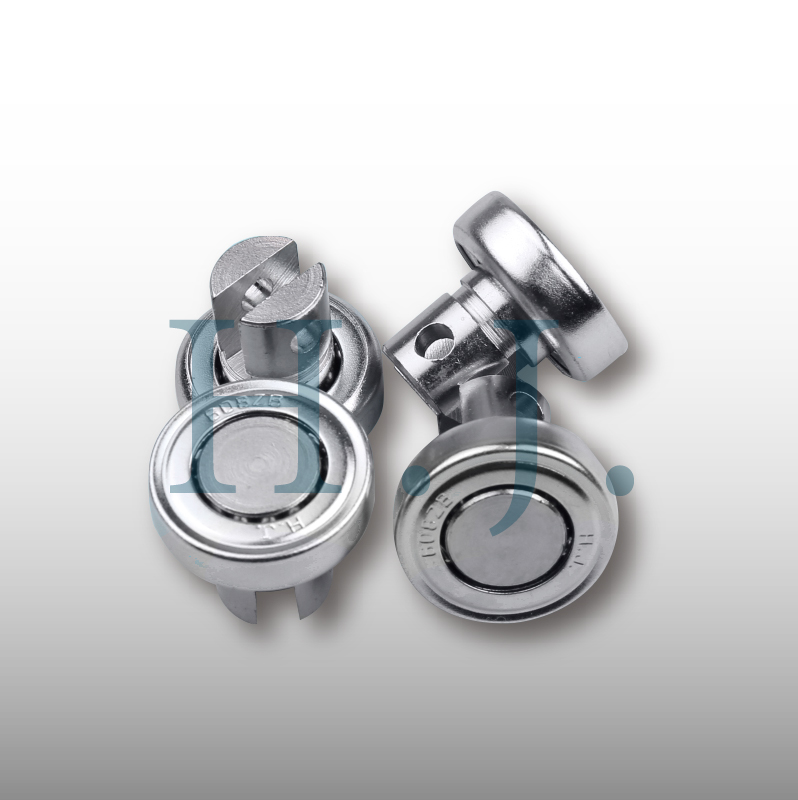
 Machinery hardware bearings bulk
Machinery Hardware Bearings Bulk – Wholesale and Custom Bearing Solutions for Industrial Hardware
Companies purchasing machinery hardware bearings bulk usually require more than a standard catalog bearing. Industrial hardware manufacturers, machinery factories, conveyor-equipment producers, packaging-machine manufacturers, building-hardware suppliers, transportation-equipment companies, and OEM customers often need bearings in large quantities with consistent dimensions, stable quality, repeat production, custom sizes, or application-specific configurations.
Bearings used in machinery and hardware products may support rollers, shafts, pulleys, sliding mechanisms, wheels, guides, brackets, and other moving components. Depending on the equipment, buyers may require standard ball bearings, slide bearings, stamped bearings, plastic bearings, special bearings, or non-standard bearing products.
HSIAN JI BEARING CO., LTD. is a Taiwan bearing manufacturer established in 1995. The company mainly develops and produces Taiwan-made steel ball bearings and slide bearings. Its current product portfolio also includes plastic bearings, thrust bearings, stamped bearings, special bearings, and non-standard bearings.
HSIAN JI's current non-standard bearing catalogue repeatedly lists applications including hardware parts, building materials and hardware, machinery, conveyors, transportation, packaging, furniture pulleys, drawer pulleys, and door and window pulleys. This makes the company particularly relevant to buyers looking for bulk bearing supply for machinery and hardware production.
For customers requiring machinery hardware bearings bulk, HSIAN JI can evaluate bearing requirements according to engineering drawings, physical samples, dimensions, materials, load, speed, operating environment, order quantity, and estimated annual demand.
What Are Machinery Hardware Bearings?
Machinery hardware bearings are bearing components used in industrial machines, mechanical hardware, building hardware, transportation equipment, conveyors, packaging machinery, and other products requiring controlled movement.
Typical applications can include:
-
Machinery components
-
Hardware parts
-
Conveyor systems
-
Rollers
-
Pulleys
-
Sliding systems
-
Packaging equipment
-
Transportation machinery
-
Building hardware
-
Furniture hardware
The correct bearing depends on the mechanical function of the component.
What Does Machinery Hardware Bearings Bulk Mean?
The phrase machinery hardware bearings bulk generally refers to purchasing bearings in larger quantities for production, distribution, OEM manufacturing, or repeat industrial use.
Bulk orders may involve:
-
Standard bearings
-
Custom bearings
-
Special bearings
-
Non-standard bearings
-
OEM bearing production
-
Repeated monthly orders
-
Annual supply programs
Bulk purchasing can be particularly important for manufacturers that use the same bearing across multiple products.
Bulk Bearing Supply for Machinery Manufacturers
Machinery manufacturers may require bearings for:
-
Shafts
-
Rollers
-
Wheels
-
Pulleys
-
Guides
-
Conveyor mechanisms
-
Moving assemblies
Bulk procurement helps maintain consistent component availability during production.
Customers should provide annual demand when requesting quotations because production quantity can influence manufacturing planning.
Bulk Bearings for Hardware Manufacturers
Hardware manufacturers can use bearings in:
-
Sliding hardware
-
Building hardware
-
Door hardware
-
Window hardware
-
Furniture hardware
-
Mechanical accessories
HSIAN JI's non-standard bearing product listings specifically include hardware parts and building materials and hardware among their applications.
This makes hardware manufacturing a direct application area for HSIAN JI bearing products.
Ball Bearings for Machinery Hardware
Ball bearings are widely used in rotating mechanical systems.
Potential machinery-hardware applications include:
-
Wheels
-
Rollers
-
Pulleys
-
Shafts
-
Rotating mechanisms
-
Hardware assemblies
Ball bearings help reduce friction between moving components while supporting mechanical loads.
Bulk ball-bearing requirements should specify exact dimensions and annual quantities.
Slide Bearings for Industrial Hardware
Slide bearings support and guide linearly moving components.
Potential applications include:
-
Sliding mechanisms
-
Guides
-
Automation equipment
-
Conveyor systems
-
Hardware assemblies
HSIAN JI currently maintains a dedicated Slide Bearings product category.
Custom slide-bearing requirements can be evaluated according to dimensions and application.
Stamped Bearings for Machinery Hardware
Stamped bearings can be particularly relevant to bulk industrial applications because the stamping process can provide compact and efficient bearing structures.
HSIAN JI's Stamped Bearings page identifies advantages including:
-
Lower manufacturing cost
-
Light weight
-
Compact structure
The same page states that stamped bearings are used in industrial machinery such as pumps, fans, and conveyors.
For high-volume applications, stamped bearing configurations may therefore provide an attractive option depending on load and speed requirements.
Plastic Bearings for Hardware Applications
Plastic bearings can provide useful properties for certain machinery and hardware products.
Potential benefits include:
-
Corrosion resistance
-
Reduced weight
-
Low noise
-
Low friction
-
Design flexibility
Plastic-bearing suitability should be evaluated according to:
-
Load
-
Speed
-
Temperature
-
Wear
-
Chemical exposure
-
Moisture
Bulk plastic-bearing projects can be developed according to customer requirements.
Special Bearings for Machinery Hardware
Standard bearings may not fit every machine or hardware product.
Special bearing projects can involve:
-
Unique dimensions
-
Dedicated mounting
-
Modified geometry
-
Application-specific materials
-
Integrated features
Special bearings can help manufacturers design products without being limited by standard catalogue dimensions.
Non-Standard Bearings for Bulk Orders
HSIAN JI maintains a dedicated Non-standard Bearings category.
Current models in this category are explicitly listed for:
-
Hardware parts
-
Building materials and hardware
-
Machinery
-
Conveyors
-
Transportation
-
Packaging
-
Furniture pulleys
-
Drawer pulleys
-
Door and window pulleys
This makes non-standard bearings one of the strongest product categories for machinery hardware bearings bulk procurement.
Custom Dimensions for Bulk Bearing Orders
Bulk customers may require non-standard dimensions such as:
-
Custom inner diameter
-
Custom outer diameter
-
Special width
-
Flange dimensions
-
Custom external geometry
-
Special mounting features
Engineering drawings should be provided for dimensional evaluation.
OEM Machinery Hardware Bearings
OEM manufacturers often require bearings designed specifically for their own machinery or hardware products.
OEM projects may involve:
-
Customer drawings
-
Custom dimensions
-
Customer part numbers
-
Special materials
-
Dedicated packaging
-
Repeat production
Once the bearing specification is approved, regular supply can be planned according to expected demand.
ODM Bearing Development
Some customers may require more than manufacturing from an existing drawing.
ODM-related projects can involve:
-
Application review
-
Dimensional development
-
Material selection
-
Prototype development
-
Sample testing
The exact scope depends on the bearing and application.
Bearings for Industrial Machinery
Industrial machinery can use bearings in:
-
Pumps
-
Fans
-
Conveyors
-
Production machinery
-
Packaging equipment
-
Transfer systems
HSIAN JI's Stamped Bearings information explicitly identifies pumps, fans, and conveyors as industrial machinery applications.
Bearings for Conveyor Hardware
Conveyor systems contain numerous mechanical components requiring bearings.
Applications can include:
-
Roller ends
-
Guide rollers
-
Pulleys
-
Shafts
-
Transfer mechanisms
Bulk supply can be important because large conveyor systems may use hundreds or thousands of bearing components.
Bearings for Packaging Machinery
HSIAN JI's current non-standard bearing catalogue repeatedly identifies packaging among applicable areas.
Packaging machinery can use bearings in:
-
Feed rollers
-
Guide rollers
-
Conveyor components
-
Wrapping systems
-
Labeling systems
-
Transfer mechanisms
OEM packaging-machine manufacturers can submit custom bearing requirements for evaluation.
Bearings for Transportation Equipment
Transportation is also directly listed among HSIAN JI's current non-standard bearing applications.
Possible applications can include:
-
Rollers
-
Wheels
-
Transfer systems
-
Mechanical transportation equipment
-
Logistics machinery
Bulk supply requirements should include annual quantities and delivery expectations.
Bearings for Building Hardware
Building-hardware manufacturers can require bearings for:
-
Sliding doors
-
Windows
-
Pulleys
-
Rollers
-
Track systems
-
Architectural hardware
HSIAN JI's current products repeatedly list building materials and hardware among applicable areas.
Bearings for Furniture Hardware
Furniture manufacturers can use bearings in:
-
Drawers
-
Keyboard drawers
-
Furniture pulleys
-
Drawer pulleys
-
Sliding systems
Many HSIAN JI non-standard bearing models are already listed for these applications.
Bulk Bearings for Rollers
Roller manufacturers may purchase bearings in bulk for:
-
Conveyor rollers
-
Transportation rollers
-
Guide rollers
-
Furniture rollers
-
Door rollers
-
Window rollers
The bearing should match the roller tube, shaft, load, and speed.
Bulk Bearings for Pulleys
Pulley manufacturers may require bearings for:
-
Door pulleys
-
Window pulleys
-
Furniture pulleys
-
Conveyor pulleys
-
Hardware pulleys
Custom bearing dimensions can help integrate the bearing directly into the pulley design.
Bulk Bearings for OEM Hardware Production
Hardware manufacturers producing thousands of identical components often require stable repeat supply.
Important purchasing considerations include:
-
Dimensional consistency
-
Material consistency
-
Production capacity
-
Inspection requirements
-
Batch quantities
-
Delivery schedule
Approved specifications should remain consistent across production batches.
High-Volume Bearing Manufacturing
High-volume bearing production should be planned around customer forecasts.
Buyers can provide:
-
Monthly demand
-
Quarterly demand
-
Annual demand
-
Minimum batch quantity
-
Delivery schedule
Forecast information helps manufacturers plan materials and production capacity.
Low-Volume to Mass Production
Some custom projects begin with relatively small volumes.
A typical development path may involve:
Prototype → Sample Approval → Trial Production → Small Batch → Mass Production
This allows both the customer and manufacturer to verify the product before committing to larger quantities.
Bulk Bearing Pricing
Bulk bearing prices depend on many factors, including:
-
Bearing type
-
Dimensions
-
Materials
-
Precision
-
Manufacturing process
-
Tooling
-
Order quantity
-
Packaging
-
Inspection requirements
Therefore, quantity alone does not determine price.
Complete specifications are necessary for accurate quotation.
Minimum Order Quantity
MOQ can vary significantly between standard and custom products.
Factors affecting MOQ include:
-
Material availability
-
Tooling
-
Setup requirements
-
Manufacturing process
-
Bearing dimensions
Customers should provide both initial quantity and expected annual demand.
Custom Packaging for Bulk Bearings
Bulk industrial customers may require:
-
Individual packaging
-
Bulk cartons
-
Customer labels
-
Part numbers
-
Export packaging
-
Production-lot identification
Packaging requirements should be specified during quotation.
Export Bearing Supply
International machinery and hardware buyers may require repeat overseas shipments.
Important information can include:
-
Destination country
-
Order quantity
-
Packaging
-
Shipping requirements
-
Delivery schedule
Export packaging should protect the bearings during transportation and storage.
Quality Control for Bulk Bearings
Quality control becomes particularly important when thousands of bearings are supplied for repeat production.
Potential inspection items include:
-
Inner diameter
-
Outer diameter
-
Width
-
Rotation
-
Appearance
-
Material
-
Customer-specific dimensions
Inspection requirements should be agreed upon before mass production.
Lot Consistency
Industrial manufacturers need bearings from different production batches to remain dimensionally consistent.
Lot consistency helps reduce:
-
Assembly problems
-
Production interruptions
-
Product variation
-
Quality complaints
Approved drawings provide a common reference for both customer and manufacturer.
Bearings from Engineering Drawings
Bulk custom projects can begin from:
-
2D technical drawings
-
3D CAD models
-
Assembly drawings
-
Material specifications
-
Tolerances
A dimensioned drawing is especially useful for non-standard bearing development.
Bearings from Physical Samples
If drawings are unavailable, physical samples can provide useful information about:
-
Dimensions
-
Geometry
-
Mounting
-
Construction
However, operating load, speed, and material requirements should also be provided.
Replacement Bearings in Bulk
Some industrial customers require replacement bearings for older machinery or hardware products.
Replacement projects can involve:
-
Obsolete bearings
-
Discontinued parts
-
Legacy machinery
-
Old hardware designs
Customers should provide the original sample and expected annual demand.
Prototype Bearings Before Bulk Production
For custom machinery-hardware bearings, prototype development can help verify:
-
Dimensions
-
Fit
-
Rotation
-
Assembly
-
Application compatibility
Once approved, the specification can be used for repeat production.
Long-Term Bearing Supply
Long-term supply relationships can be useful for OEM manufacturers with regular production requirements.
Customers should communicate:
-
Forecast quantities
-
Order frequency
-
Safety-stock requirements
-
Delivery schedules
-
Specification changes
This helps reduce sourcing risk.
How to Choose a Bulk Machinery Hardware Bearing Supplier
When selecting a supplier, buyers should consider:
-
Bearing manufacturing experience
-
Custom-size capability
-
Non-standard bearing development
-
High-volume production capability
-
Quality control
-
Ability to work from drawings
-
Ability to reproduce samples
-
OEM support
-
Export capability
Price should be considered together with consistency and supply reliability.
HSIAN JI – Machinery Hardware Bearings Bulk Supplier in Taiwan
HSIAN JI BEARING CO., LTD. was established in 1995 and mainly develops and produces Taiwan-made steel ball bearings and slide bearings.
Its current non-standard bearing catalogue has a particularly strong connection to the machinery hardware bearings bulk market because numerous models are explicitly listed for hardware parts, building materials and hardware, machinery, conveyors, transportation, packaging, furniture pulleys, drawer pulleys, and door/window pulleys.
For bulk bearing inquiries, customers can provide:
-
2D engineering drawing
-
3D CAD model
-
Physical sample
-
Bearing type
-
Bearing ID
-
Bearing OD
-
Bearing width
-
Material requirements
-
Radial load
-
Axial load
-
Speed
-
Operating environment
-
Initial quantity
-
Order quantity per batch
-
Estimated monthly demand
-
Estimated annual demand
-
Packaging requirements
HSIAN JI can evaluate ball bearings, slide bearings, plastic bearings, stamped bearings, special bearings, and non-standard bearing solutions for industrial machinery, hardware products, conveyors, packaging equipment, transportation machinery, building hardware, and OEM manufacturing.
Machinery Hardware Bearings Bulk FAQ
What does machinery hardware bearings bulk mean?
Machinery hardware bearings bulk generally refers to purchasing bearings in larger quantities for machinery, hardware products, OEM manufacturing, distribution, or repeat industrial production.
Does HSIAN JI supply bearings for machinery applications?
Yes. Machinery is directly listed among applications for numerous HSIAN JI non-standard bearing products.
Does HSIAN JI supply bearings for hardware parts?
Yes. HSIAN JI's current non-standard bearing catalogue repeatedly lists hardware parts among its applications.
Does HSIAN JI supply bearings for building hardware?
Yes. Building materials and hardware are also directly listed among current product applications.
What types of bearings are available for machinery hardware?
Depending on the application, potential solutions include:
-
Ball bearings
-
Slide bearings
-
Plastic bearings
-
Stamped bearings
-
Thrust bearings
-
Special bearings
-
Non-standard bearings
Can I buy ball bearings in bulk?
Bulk ball-bearing requirements can be evaluated according to size, specification, quantity, and application.
Can I buy non-standard bearings in bulk?
Yes. Custom and non-standard bulk requirements can be evaluated according to drawings, samples, dimensions, and quantities.
Can stamped bearings be suitable for bulk production?
Potentially.
Stamped bearings can be attractive for certain volume applications because the stamping process can offer efficient production, low weight, and compact structures.
Can plastic bearings be purchased in bulk?
Potentially.
Bulk plastic-bearing projects can be evaluated according to material, dimensions, load, environment, and quantity.
Can special bearings be mass produced?
Yes, depending on design and manufacturing feasibility.
A project may begin with prototypes before moving into mass production.
Can you manufacture bearings according to my drawing?
Custom bearing projects can be evaluated from customer engineering drawings.
Can you manufacture from a physical sample?
Yes.
A sample can provide dimensional and geometric information when drawings are unavailable.
Can you reproduce discontinued bearings in bulk?
Potentially.
Provide the original bearing, sample, application information, and required annual quantity.
Can bearing dimensions be customized?
Yes.
Possible custom dimensions include:
-
Inner diameter
-
Outer diameter
-
Width
-
Flange dimensions
-
External geometry
Can you customize bearing materials?
Potentially.
Material requirements should be clearly identified during the inquiry.
Can you supply OEM bearings?
Yes.
OEM bearing projects can be evaluated according to customer drawings, part numbers, specifications, packaging, and quantities.
Can you support ODM bearing projects?
Application-specific development can be evaluated depending on technical requirements and project scope.
What industries use machinery hardware bearings?
Applications can include:
-
Industrial machinery
-
Conveyors
-
Packaging equipment
-
Transportation equipment
-
Building hardware
-
Furniture hardware
-
Mechanical products
Can bearings be used in conveyor equipment?
Yes.
Conveyors are directly included among HSIAN JI product applications.
Can bearings be used in packaging machinery?
Yes.
Packaging is directly listed among numerous HSIAN JI non-standard bearing applications.
Can bearings be used in transportation machinery?
Yes.
Transportation is also repeatedly listed in the company's current product catalogue.
Can bearings be used in door and window hardware?
Yes.
Door and window pulleys, sliding doors, windows, and building materials and hardware are all listed among current product applications.
Can bearings be used in furniture hardware?
Yes.
Furniture pulleys, drawer pulleys, drawers, and keyboard drawers are included among current HSIAN JI bearing applications.
What is the minimum bulk order quantity?
MOQ depends on:
-
Bearing type
-
Dimensions
-
Material
-
Tooling
-
Manufacturing process
-
Packaging
Customers should request a quotation with the required quantity.
Does a larger quantity reduce bearing price?
Often, production volume can affect unit cost, but price also depends on material, precision, manufacturing process, tooling, and packaging.
Can I request pricing for several quantities?
Yes.
For example, buyers may request quotations for:
-
1,000 pcs
-
5,000 pcs
-
10,000 pcs
-
50,000 pcs
This can help compare production-volume economics.
Should I provide annual demand?
Yes.
Estimated annual demand helps manufacturers evaluate production planning and pricing.
Can you support monthly deliveries?
Potentially.
Customers should provide expected monthly volume and delivery schedule for evaluation.
Can you support repeat production?
Yes.
Once a custom bearing specification is approved, repeat-production requirements can be evaluated.
Can you provide private part numbers?
OEM customers can specify their own identification or packaging requirements subject to project agreement.
Can bearings be bulk packed?
Packaging options can be discussed according to product type and customer requirements.
Can bearings be individually packed?
Potentially.
Individual packaging requirements should be specified during quotation.
Can you provide export packaging?
Export orders can require packaging designed to protect bearings during transportation and storage.
Can bulk bearings be supplied internationally?
International supply can be evaluated according to destination, quantity, packaging, and shipping requirements.
Can machinery hardware bearings be sealed?
Yes, depending on bearing design.
Sealed configurations can help reduce contamination.
Can bulk bearings be corrosion resistant?
Potentially.
Corrosion-resistant materials can be evaluated according to environment.
Can stainless steel bearings be supplied in bulk?
Potentially.
Customers should provide the required stainless-steel grade and quantities.
Can bulk bearings handle heavy loads?
Potentially.
Actual radial, axial, static, and dynamic loads should be provided.
Can bulk bearings operate at high speed?
Potentially.
Actual RPM, load, lubrication, and temperature should be specified.
Can machinery bearings be customized for low noise?
Noise requirements can be included in technical evaluation depending on bearing type and application.
Can bearings be used in dusty environments?
Yes, depending on design.
Sealing and contamination protection may be important.
Can machinery hardware bearings be used outdoors?
Potentially.
Outdoor applications should consider rain, humidity, dust, temperature, and corrosion.
Can bearings be used in wet environments?
Potentially.
Materials, seals, lubrication, and water exposure should be evaluated.
Can I order samples before bulk production?
Prototype or sample requirements can be evaluated before mass production.
Why is sample approval important?
Sample approval can help verify:
-
Dimensions
-
Fit
-
Rotation
-
Application compatibility
-
Assembly
This reduces risk before larger production quantities.
What quality information should I specify?
Customers should identify:
-
Critical dimensions
-
Tolerances
-
Material
-
Inspection requirements
-
Functional requirements
These should be agreed upon before production.
How is bulk bearing quality controlled?
Quality control may include:
-
Dimensional inspection
-
Rotation checks
-
Material verification
-
Appearance inspection
-
Customer-specific testing
Can every bearing in a bulk order be identical?
Manufacturing processes always operate within defined tolerances.
The goal is consistent production within the approved specification and tolerance range.
What causes problems in bulk bearing sourcing?
Common issues can include:
-
Unclear drawings
-
Inconsistent specifications
-
Incorrect material
-
Poor dimensional control
-
Inadequate packaging
-
Supply instability
Detailed technical specifications can reduce these risks.
What information should I provide for a bulk quotation?
For a machinery hardware bearings bulk inquiry, provide:
-
Bearing type
-
2D engineering drawing
-
3D CAD model
-
Physical sample
-
Inner diameter
-
Outer diameter
-
Width
-
Material
-
Load
-
Speed
-
Operating environment
-
Required tolerance
-
Initial order quantity
-
Quantity per batch
-
Monthly demand
-
Annual demand
-
Packaging requirements
-
Destination country
Complete technical and quantity information allows a more accurate quotation.
What is the difference between bulk bearings and wholesale bearings?
The terms are often similar.
Bulk bearings generally emphasizes purchasing larger quantities, while wholesale bearings may emphasize resale or distributor purchasing.
OEM factories may purchase in bulk directly for manufacturing rather than resale.
What is the difference between machinery bearings and hardware bearings?
Machinery bearings are generally used in industrial equipment and machines.
Hardware bearings are often used in components such as rollers, pulleys, sliding mechanisms, doors, windows, furniture, and building hardware.
HSIAN JI's product range serves both categories.
What is the difference between standard and non-standard bulk bearings?
Standard bearings follow common catalogue dimensions.
Non-standard bearings use custom dimensions, geometry, materials, or mounting features.
Why choose HSIAN JI for machinery hardware bearings bulk?
HSIAN JI has a direct published connection to machinery and hardware applications. Its current Non-standard Bearings catalogue repeatedly lists hardware parts, building materials and hardware, machinery, conveyors, transportation, packaging, furniture pulleys, drawer pulleys, and door/window pulleys among its applications.
HSIAN JI was established in 1995 and primarily develops and produces Taiwan-made steel ball bearings and slide bearings. Its Stamped Bearings are also specifically described for industrial machinery including pumps, fans, and conveyors.
If you require machinery hardware bearings bulk for industrial machinery, hardware products, conveyors, packaging equipment, transportation systems, building hardware, rollers, pulleys, or OEM manufacturing, send HSIAN JI your drawings, samples, specifications, required quantities, and estimated annual demand for technical and commercial evaluation.