
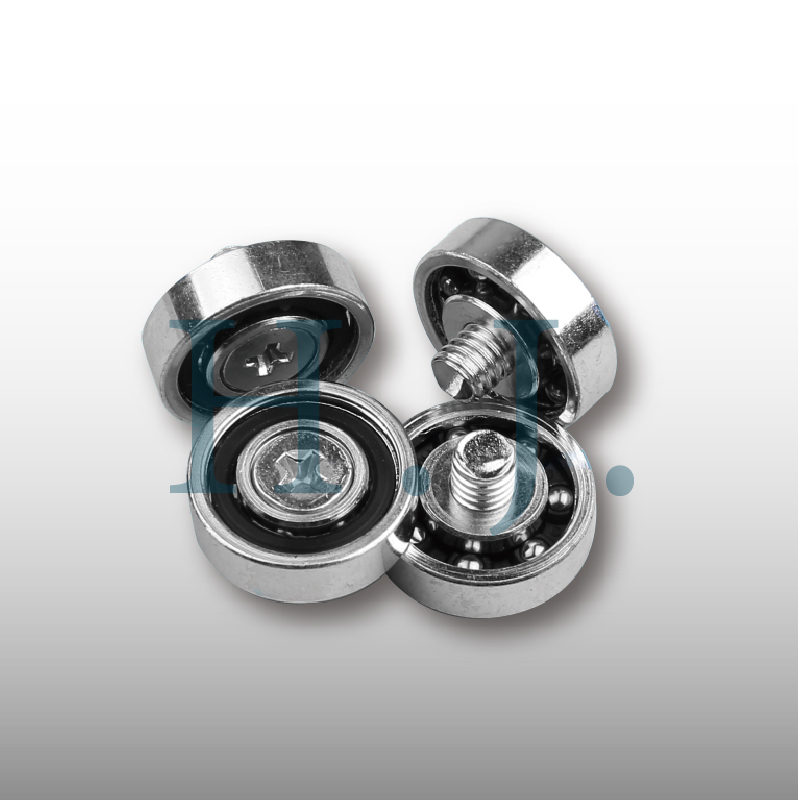
 Corrosion resistant bearings
Corrosion Resistant Bearings – Custom Bearing Solutions for Demanding Environments
Mechanical equipment operating in humid, wet, chemical, outdoor, food-processing, cleaning, or corrosive environments requires careful bearing selection. Conventional bearings can perform effectively in many applications, but exposure to moisture, chemicals, cleaning agents, salt, or other corrosive substances may shorten bearing life. In these situations, corrosion resistant bearings can provide a more suitable solution.
Corrosion resistance is not determined by one factor alone. Bearing material, sealing, lubrication, operating temperature, exposure duration, chemical concentration, load, speed, and surrounding components all affect performance.
HSIAN JI BEARING CO., LTD. is a Taiwan bearing manufacturer established in 1995. The company develops and manufactures ball bearings, plastic bearings, thrust bearings, stamped bearings, slide bearings, special bearings, and non-standard bearings.
HSIAN JI's official plastic-bearing information specifically identifies corrosion resistance as one of the advantages of plastic bearings and notes that they can be used in environments that may corrode metal bearings, including chemical plants and food-processing plants.
For customers requiring corrosion resistant bearings, HSIAN JI can evaluate special, plastic, custom, and non-standard bearing projects according to drawings, materials, operating environment, dimensions, load, speed, and production quantity.
What Are Corrosion Resistant Bearings?
Corrosion resistant bearings are bearing products designed or selected to better withstand environments that can cause corrosion or material degradation.
Depending on the application, corrosion resistance can involve:
-
Bearing material
-
Rolling-element material
-
Housing material
-
Cage material
-
Coatings
-
Seals
-
Lubrication
-
Environmental protection
There is no single bearing material that is ideal for every corrosive environment.
The correct solution depends on the exact conditions.
Why Is Corrosion Resistance Important?
Corrosion can affect more than the appearance of a bearing.
It can lead to:
-
Surface deterioration
-
Increased friction
-
Rough movement
-
Material loss
-
Contamination
-
Reduced dimensional accuracy
-
Shorter service life
-
Unexpected maintenance
Where bearings are exposed to water, chemicals, humidity, or cleaning processes, corrosion resistance should be considered during product selection rather than after failures begin.
What Causes Bearing Corrosion?
Bearing corrosion can result from exposure to:
-
Water
-
Humidity
-
Condensation
-
Salt
-
Cleaning chemicals
-
Acids
-
Alkalis
-
Industrial chemicals
-
Food-processing fluids
-
Outdoor weather
Temperature and exposure time can also affect the severity of corrosion.
Customers should describe the operating environment as precisely as possible.
Plastic Corrosion Resistant Bearings
Plastic bearings can provide excellent corrosion resistance in certain environments because many engineering plastics are not affected by corrosion in the same way as conventional steel.
HSIAN JI's official plastic-bearing page specifically states that plastic bearings can be used in environments that corrode metal bearings, including chemical plants and food-processing plants.
Plastic bearings may also provide advantages such as:
-
Lightweight construction
-
Low friction
-
Reduced noise
-
Moisture resistance
-
Design flexibility
However, plastic material selection should also consider load, temperature, speed, wear, and chemical compatibility.
Corrosion Resistant Ball Bearings
Ball bearings are widely used for rotational movement.
For corrosive environments, material and sealing requirements may need to be modified compared with conventional applications.
Customers should provide:
-
Inner diameter
-
Outer diameter
-
Width
-
Load
-
Speed
-
Water exposure
-
Chemical exposure
-
Temperature
-
Required life
-
Quantity
The complete bearing construction should be considered, not just the rolling elements or rings.
Corrosion Resistant Thrust Bearings
Thrust bearings primarily support axial loads.
For applications involving moisture or chemicals, material selection can become especially important.
Customers should provide:
-
Inner diameter
-
Outer diameter
-
Thickness
-
Axial load
-
Speed
-
Environmental exposure
-
Material requirements
-
Quantity
The bearing should be evaluated according to both mechanical and corrosion-related requirements.
Corrosion Resistant Slide Bearings
Slide bearings support and guide linear movement.
They may be used in environments involving:
-
Doors
-
Windows
-
Furniture systems
-
Machinery
-
Conveyors
-
Processing equipment
Where corrosion is a concern, plastic or other corrosion-resistant material options can potentially provide an advantage.
Customers should provide information about the rail, guide, load, movement, temperature, and environmental exposure.
Corrosion Resistant Special Bearings
Some applications require a special bearing configuration together with corrosion resistance.
A project may involve:
-
Special dimensions
-
Unique mounting
-
Custom housing
-
Different materials
-
Application-specific geometry
HSIAN JI maintains Special Bearings as a dedicated product category and supports customer-specific product development.
This can provide a basis for evaluating applications where standard products are insufficient.
Corrosion Resistant Non-Standard Bearings
Non-standard bearings can be relevant where both geometry and environmental resistance require customization.
A non-standard corrosion-resistant project may include:
-
Custom bore size
-
Special outside diameter
-
Special width
-
Unusual mounting
-
Plastic or corrosion-resistant material requirements
HSIAN JI maintains a dedicated Non-standard Bearings product category.
Customers should provide complete technical drawings and environmental information.
Corrosion Resistant Bearings for Chemical Plants
Chemical plants can expose mechanical components to aggressive substances.
HSIAN JI specifically identifies chemical plants as one potential application where plastic bearings may be useful because they can resist environments that corrode metal bearings.
Customers should provide:
-
Chemical name
-
Chemical concentration
-
Temperature
-
Exposure method
-
Exposure duration
-
Load
-
Speed
Chemical resistance should never be assumed without knowing the exact chemical environment.
Bearings for Food Processing Plants
Food-processing environments can involve:
-
Water
-
Cleaning
-
Detergents
-
Humidity
-
Food residues
-
Repeated washdown
HSIAN JI's plastic-bearing information also identifies food-processing plants as a possible environment where corrosion-resistant plastic bearings can be useful.
However, corrosion resistance alone does not automatically make a bearing food-grade.
Food-related applications may also require specific materials, lubricants, seals, or certifications.
Bearings for Wet Environments
Wet environments can create corrosion challenges, especially when bearings remain damp for extended periods.
Potential applications include:
-
Processing equipment
-
Washing equipment
-
Outdoor machinery
-
Conveyors
-
Cleaning systems
-
Water-related equipment
Material, sealing, drainage, and maintenance should all be considered.
Bearings for Humid Environments
High humidity and condensation can cause corrosion even without direct water contact.
Applications may include:
-
Coastal areas
-
Food plants
-
Warehouses
-
Outdoor equipment
-
Humid production facilities
The bearing solution should be evaluated according to the actual humidity and condensation conditions.
Bearings for Outdoor Applications
Outdoor bearings can experience:
-
Rain
-
Humidity
-
Dust
-
Temperature variation
-
Environmental contamination
Corrosion-resistant materials may help improve durability, but seals and lubrication are also important.
Customers should provide the complete outdoor environment rather than simply specifying "outdoor use."
Bearings for Salt Exposure
Salt can significantly increase corrosion risk.
This can occur in:
-
Coastal environments
-
Marine-adjacent equipment
-
Salt-processing facilities
-
Outdoor transportation equipment
The exact salt exposure should be identified.
Not every corrosion-resistant material is equally suitable for salt or chloride environments.
Chemical Resistant vs. Corrosion Resistant Bearings
These terms overlap but are not identical.
Corrosion resistant bearings describes products designed to resist material deterioration caused by moisture or corrosive environments.
Chemical resistant bearings emphasizes compatibility with specific chemicals.
A bearing may resist water corrosion but still be unsuitable for a particular acid, solvent, or alkali.
Customers should always identify the actual chemicals involved.
Stainless Steel Corrosion Resistant Bearings
Stainless steel is often considered for corrosion-resistant applications.
However, different stainless steel grades provide different levels of corrosion resistance, hardness, and mechanical properties.
Customers should specify:
-
Required stainless steel grade
-
Water exposure
-
Chemicals
-
Temperature
-
Load
-
Speed
Stainless steel should not be assumed to resist every corrosive environment.
Plastic vs. Stainless Steel Corrosion Resistant Bearings
Both plastic and stainless steel can be considered for corrosion-resistant applications, but their characteristics are different.
Plastic bearings may provide:
-
Excellent resistance to certain chemicals
-
Lightweight construction
-
Low noise
-
No conventional metal rust
Stainless steel may provide:
-
Higher mechanical strength in some applications
-
Metallic bearing construction
-
Good corrosion resistance depending on grade
The correct choice depends on load, speed, temperature, chemical environment, and bearing structure.
Sealed Corrosion Resistant Bearings
Seals can help protect the internal bearing from water, dirt, and contaminants.
However, sealing does not replace material corrosion resistance.
The complete design may need to combine:
-
Corrosion-resistant material
-
Appropriate seals
-
Suitable lubrication
-
Correct housing design
Customers should identify whether the bearing is exposed to splash, immersion, washdown, or humidity.
Lubrication and Corrosion Protection
Lubrication can provide both friction reduction and some corrosion protection.
However, lubricant suitability depends on:
-
Bearing material
-
Speed
-
Load
-
Temperature
-
Chemicals
-
Water exposure
-
Relubrication interval
Some chemicals can attack or wash away conventional lubricants.
The complete application must therefore be evaluated.
Custom Corrosion Resistant Bearings
Standard catalogue products may not fit every corrosive application.
Custom requirements may involve:
-
Special dimensions
-
Different materials
-
Unique mounting
-
Dedicated seals
-
Application-specific geometry
HSIAN JI can develop products according to different customer requirements and supports special and non-standard bearing projects.
Corrosion Resistant Bearings from Engineering Drawings
Engineering drawings provide a strong basis for custom development.
Customers can provide:
-
2D technical drawings
-
3D CAD models
-
Assembly drawings
-
Material requirements
-
Critical dimensions
-
Tolerances
-
Mounting features
The drawing should be accompanied by environmental information.
Corrosion Resistant Bearings from Physical Samples
Some customers have an existing bearing but no original drawing.
A physical sample can provide:
-
Dimensions
-
Geometry
-
Mounting information
-
Basic structure
HSIAN JI states that it can develop and manufacture samples according to different customer requirements.
Customers should also provide information about moisture, chemicals, load, speed, temperature, and application.
Corrosion Resistant Bearings for OEM Products
OEM manufacturers may require dedicated bearing solutions for products exposed to challenging environments.
Applications can involve:
-
Outdoor equipment
-
Processing machinery
-
Food-related equipment
-
Chemical equipment
-
Transportation products
-
Specialized machinery
OEM customers should provide complete drawings, material requirements, environmental conditions, quantity, and estimated annual demand.
Prototype Corrosion Resistant Bearings
Prototype development can be useful for new corrosion-resistant bearing projects.
A prototype can help verify:
-
Dimensions
-
Fit
-
Installation
-
Movement
-
Assembly compatibility
Environmental testing can also be performed according to customer requirements.
HSIAN JI's development process includes prototype development, testing, production preparation, and trial production.
Quality Control for Corrosion Resistant Bearings
HSIAN JI's production and quality-assurance information describes controls covering raw materials, manufacturing processes, inspection, testing, and continuous improvement.
For corrosion-resistant projects, quality requirements may include:
-
Material verification
-
Dimensional inspection
-
Manufacturing process control
-
Finished-product inspection
-
Customer-defined environmental testing
Approved drawings and specifications should provide production references.
How to Choose Corrosion Resistant Bearings
Customers should evaluate:
-
Corrosive substance
-
Concentration
-
Temperature
-
Exposure time
-
Load
-
Speed
-
Bearing dimensions
-
Lubrication
-
Sealing
-
Maintenance
The phrase "corrosion resistant" is too broad by itself.
The actual environment should always be defined.
HSIAN JI – Corrosion Resistant Bearing Solutions from Taiwan
HSIAN JI BEARING CO., LTD. was established in 1995 and develops and manufactures Taiwan-made bearing products. Its product range includes plastic, thrust, stamped, slide, ball, special, and non-standard bearings. The company also supports customer-specific sample development and maintains dedicated product-development and quality-assurance functions.
HSIAN JI's official plastic-bearing information specifically identifies corrosion resistance and suitability for environments such as chemical plants and food-processing plants as benefits of plastic bearing products.
For corrosion resistant bearings, customers can provide:
-
Bearing type
-
Engineering drawing
-
Physical sample
-
Dimensions
-
Material requirements
-
Load
-
Speed
-
Temperature
-
Water or humidity exposure
-
Chemical type
-
Chemical concentration
-
Required quantity
-
Estimated annual demand
HSIAN JI can evaluate whether a plastic, special, custom, or non-standard bearing approach is appropriate for the application.
Corrosion Resistant Bearings FAQ
What are corrosion resistant bearings?
Corrosion resistant bearings are bearing products designed or selected for environments where water, humidity, chemicals, salt, or other substances may cause corrosion.
Material, seals, lubrication, and operating conditions all affect corrosion performance.
Does HSIAN JI offer corrosion resistant bearing options?
HSIAN JI's plastic-bearing page explicitly identifies corrosion resistance as one of the advantages of plastic bearings and states that they can be used in environments that corrode metal bearings.
Custom corrosion-resistant requirements can also be submitted for evaluation.
Are plastic bearings corrosion resistant?
Many engineering plastics do not corrode like conventional metal bearing materials.
HSIAN JI specifically describes corrosion resistance as an advantage of its plastic bearing products.
Chemical compatibility still depends on the exact plastic and environment.
Are corrosion resistant bearings rust-proof?
Not necessarily.
"Corrosion resistant" means improved resistance to corrosion under defined conditions.
No bearing should automatically be considered completely immune to every environment.
Can corrosion resistant bearings be used in chemical plants?
Potentially.
HSIAN JI's plastic-bearing information specifically mentions chemical plants as an example of environments where plastic bearings may be useful.
The exact chemical and operating conditions must still be evaluated.
Can corrosion resistant bearings be used in food processing plants?
Potentially.
HSIAN JI also identifies food-processing plants as an application example for corrosion-resistant plastic bearings.
Food-grade compliance is a separate requirement and should be confirmed according to applicable standards.
Are corrosion resistant bearings suitable for water?
Potentially.
The material, seals, lubricant, water chemistry, temperature, and exposure method should all be considered.
Can corrosion resistant bearings be submerged in water?
Submersion is different from occasional splash or humidity.
Customers should clearly identify continuous immersion requirements so materials, sealing, and lubrication can be evaluated.
Are corrosion resistant bearings waterproof?
Not necessarily.
Corrosion resistance relates mainly to material durability.
Waterproof or water-resistant performance depends on bearing seals and construction.
Are corrosion resistant bearings suitable for saltwater?
Some materials may offer better saltwater resistance than others.
Saltwater should always be identified specifically because chloride exposure can be highly corrosive.
Are stainless steel bearings corrosion resistant?
Stainless steel can provide useful corrosion resistance depending on the grade and environment.
However, not all stainless steels provide the same resistance to salt, acids, chemicals, or high humidity.
Are plastic bearings better than stainless steel for corrosion resistance?
It depends on the environment.
Plastic bearings may provide excellent resistance to certain chemicals and moisture, while stainless steel can offer higher strength in some mechanical applications.
Material selection must balance chemical and mechanical requirements.
Are corrosion resistant bearings chemical resistant?
Not automatically.
A bearing that resists moisture corrosion may still be incompatible with a specific chemical.
Chemical name, concentration, temperature, and exposure time should be provided.
Can corrosion resistant bearings be used with acids?
Potentially, depending on the material and acid.
Customers should specify acid type, concentration, temperature, and exposure.
Can corrosion resistant bearings be used with alkalis?
Potentially.
Compatibility depends on material and exact alkaline environment.
Testing or material compatibility data may be required.
Can corrosion resistant bearings be used outdoors?
Yes, depending on the application.
Outdoor exposure should be evaluated for rain, humidity, dust, temperature changes, and contaminants.
Can corrosion resistant bearings be used in coastal environments?
Potentially.
Coastal applications should specifically consider salt and chloride exposure.
The bearing material and sealing should be evaluated accordingly.
Can corrosion resistant bearings be used in washdown equipment?
Potentially.
Customers should provide water pressure, cleaning frequency, detergent type, temperature, and sealing requirements.
Can corrosion resistant bearings be food grade?
Corrosion resistance does not automatically mean food-grade compliance.
Food applications may require approved materials, lubricants, seals, and documentation.
Can corrosion resistant bearings have custom dimensions?
Yes.
Custom dimensions can be evaluated according to bearing type and manufacturing feasibility.
Possible requirements include:
-
Inner diameter
-
Outer diameter
-
Width
-
Flange dimensions
-
Mounting features
Can you manufacture non-standard corrosion resistant bearings?
HSIAN JI maintains a dedicated Non-standard Bearings category and supports customer-specific product development.
Projects combining custom dimensions with corrosion-resistant materials can be submitted for evaluation.
Can you manufacture special corrosion resistant bearings?
Special-bearing projects can be evaluated according to material, dimensions, environment, load, speed, and quantity.
HSIAN JI currently lists Special Bearings among its product categories.
Can you manufacture corrosion resistant bearings from my drawing?
Engineering drawings can provide the basis for technical evaluation.
Customers should also specify the corrosive environment and material requirements.
Can you develop corrosion resistant bearings from a physical sample?
HSIAN JI states that it can develop and manufacture samples according to customer requirements.
A sample should be accompanied by information about the environment, load, speed, and material where known.
Can corrosion resistant bearings replace obsolete bearings?
Potentially.
If an old bearing is unavailable and corrosion resistance is required, the original sample, drawings, dimensions, and environmental requirements can be evaluated.
Can I request a prototype?
Prototype development can be evaluated for custom projects.
HSIAN JI's development process includes prototyping, testing, production preparation, and trial production.
Can corrosion resistant bearings be manufactured in small quantities?
Small-quantity requirements can be submitted for evaluation.
HSIAN JI's official FAQ states that there is no universal minimum order quantity for every product; it depends on product type.
What information should I provide for a quotation?
For a corrosion resistant bearings inquiry, provide:
-
Bearing type
-
Engineering drawing
-
Physical sample
-
Inner diameter
-
Outer diameter
-
Width
-
Material requirement
-
Load
-
Speed
-
Temperature
-
Humidity level
-
Water exposure
-
Chemical name
-
Chemical concentration
-
Required quantity
-
Estimated annual demand
Complete environmental information is especially important.
How should I choose the right bearing material?
Material selection should consider both mechanical and chemical requirements.
Important factors include:
-
Load
-
Speed
-
Temperature
-
Corrosive substance
-
Chemical concentration
-
Moisture
-
Wear
-
Service life
A corrosion-resistant material that lacks the required mechanical properties may still be unsuitable.
How does HSIAN JI control product quality?
HSIAN JI's published quality-assurance information describes controls covering raw materials, manufacturing processes, inspection, testing, and continuous improvement.
Custom specifications can also provide project-specific inspection references.
What is the difference between corrosion resistant bearings and stainless steel bearings?
Stainless steel describes a material choice.
Corrosion resistant bearings describe the desired performance characteristic.
Stainless steel is one possible approach, while engineering plastics or other materials may also provide corrosion resistance depending on the environment.
What is the difference between corrosion resistant bearings and chemical resistant bearings?
Corrosion resistant bearings are broadly intended to withstand corrosive conditions such as moisture, salt, or chemicals.
Chemical resistant bearings specifically emphasize compatibility with defined chemical substances.
The actual chemical environment should always be identified.
What is the difference between corrosion resistant and waterproof bearings?
Corrosion resistance concerns material degradation.
Waterproof or water-resistant performance concerns preventing water from entering the bearing.
A corrosion-resistant bearing may still require seals for water ingress protection.
Why choose HSIAN JI for corrosion resistant bearing projects?
HSIAN JI BEARING CO., LTD. was established in 1995 and develops and manufactures multiple bearing categories, including plastic, ball, thrust, stamped, slide, special, and non-standard bearings. The company also supports customer-specific sample development and maintains dedicated product-development and quality-assurance functions.
Most importantly for this keyword, HSIAN JI's official plastic-bearing page specifically identifies corrosion resistance and suitability for environments such as chemical plants and food-processing plants as advantages of plastic bearings.
If you require corrosion resistant bearings for wet, humid, chemical, food-processing, outdoor, or specialized OEM applications, send HSIAN JI your drawings, material requirements, environmental conditions, and production quantities for technical evaluation.